
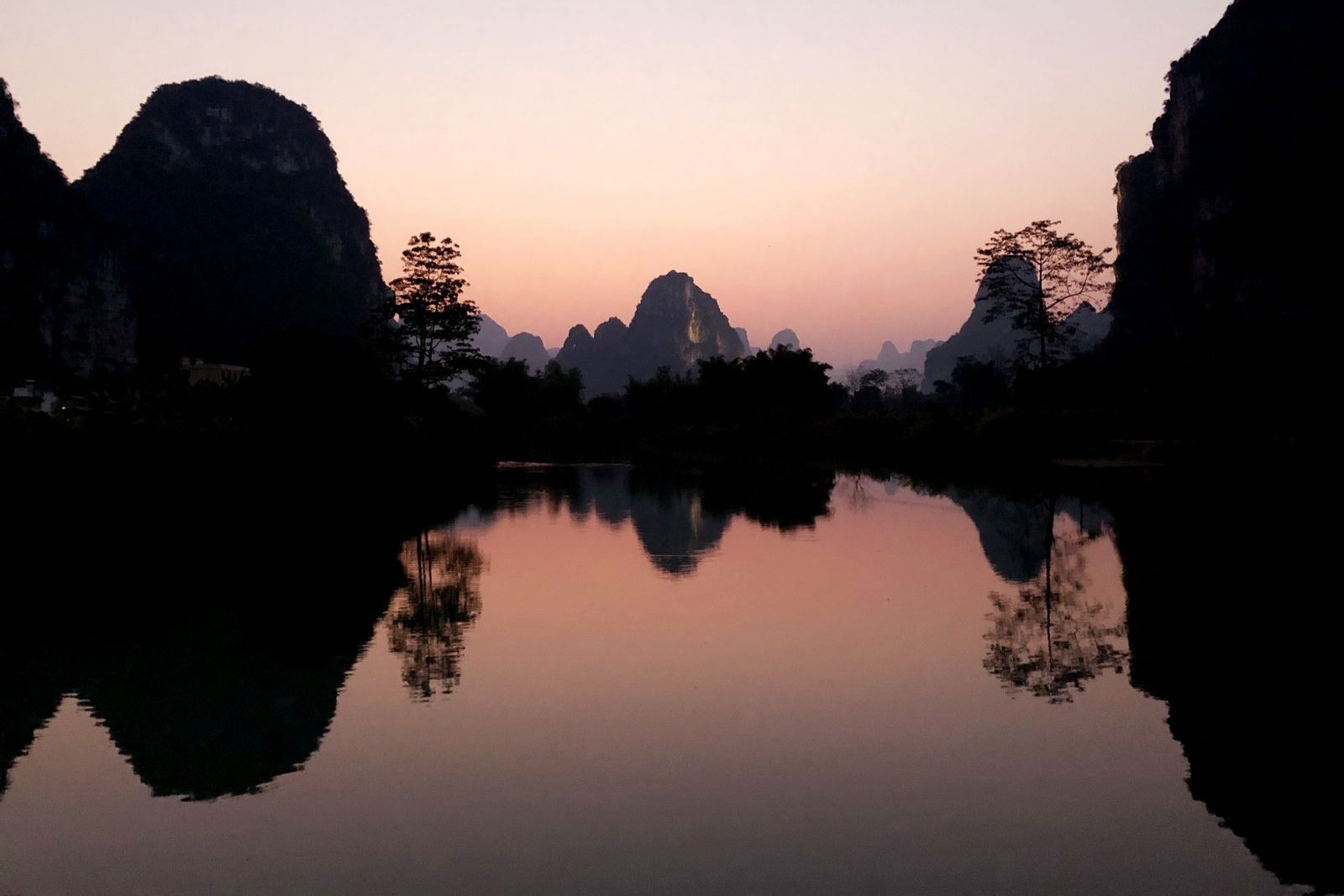
The seven limestone peaks stand in the water directly outside the window, which is the whole argument for staying on this shore. 七星岩 Qīxīngyán, Seven Star Crags, is a park of karst hills rising out of a lake at the northern edge of 肇庆 Zhàoqìng, and the older hotels of the city line the road along its southern bank. A room on the fourth floor or above, facing north, looks over the water at the peaks, the causeways that link them and the pavilions on the islands between. The city centre is behind you and the park gates are a few minutes on foot, which means the lake can be walked at the hour when locals do it, before the tour buses and after the heat.
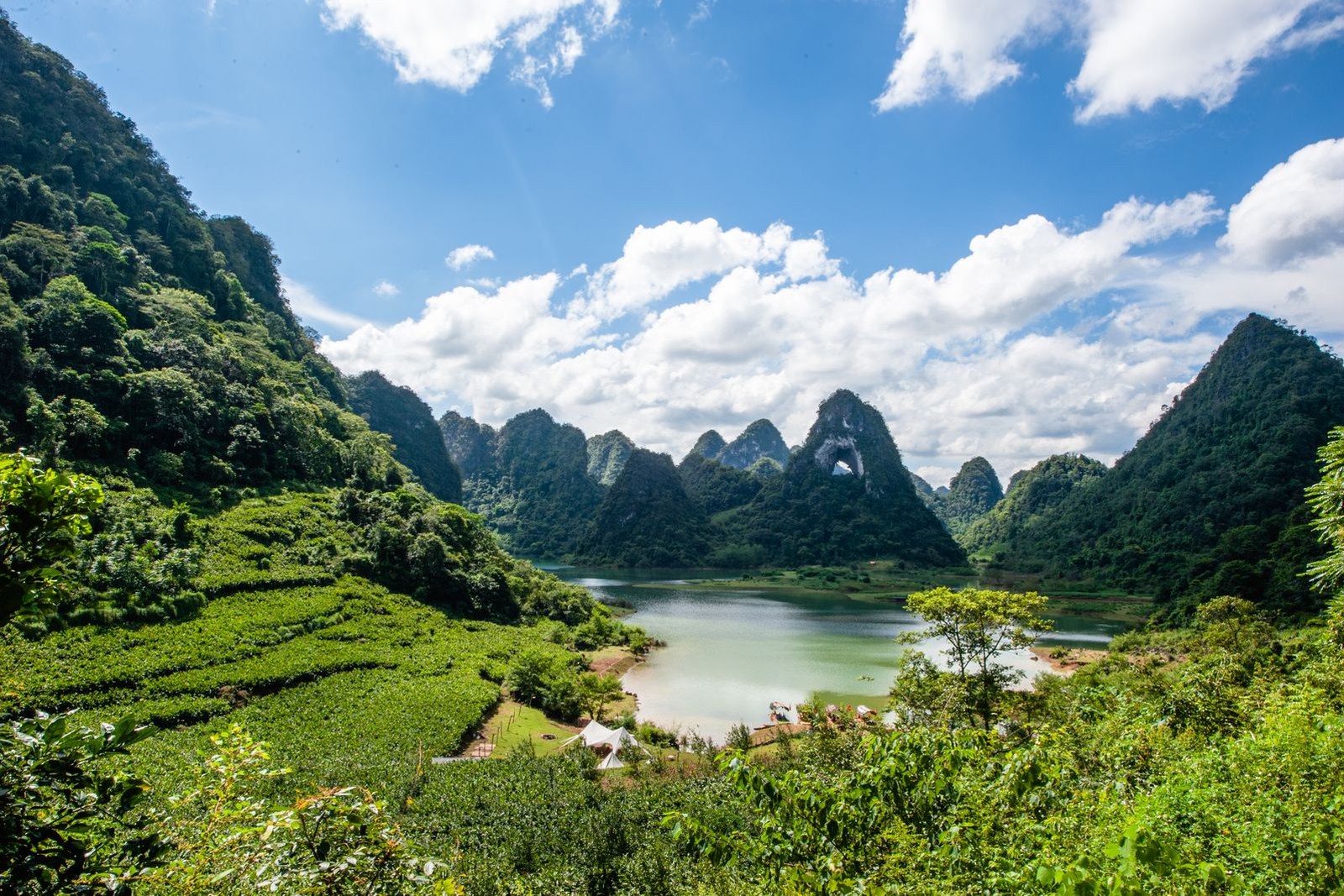
The lake is not decorative. It is the flood basin of the 西江 Xī Jiāng, the West River, and the crags are the eroded cores of older limestone that the river cut through, which is why they rise so abruptly and why the water around them is so wide. The whole thing was made into a park early in the modern era and is now a national scenic area, with causeways, boat landings, and inscriptions cut into the cliff faces by visitors going back a thousand years. Staying on the bank puts the 七星岩 Qīxīngyán and the 星湖 Xīnghú wetlands on one side and the old city, the 宋城墙 Sòng chéngqiáng and the 阅江楼 Yuèjiāng Lóu on the other, with the 鼎湖山 Dǐnghú Shān reserve half an hour east by road.
What the Rooms Are Like
The hotels on the lake road divide into the older state-built blocks, which have large rooms, generous balconies and dated fittings, and the newer business hotels, which have smaller rooms, better bathrooms and less of a view for the same money. Ask which side of the building the room faces, because the difference between a lake view and a street view is larger here than in most cities, and the lake side is also quieter at night. Floors four to eight are the sweet spot: high enough to clear the road and the trees, low enough that the peaks are still framed by the window rather than seen from above. Rooms facing the lake take the morning sun directly, which in summer makes them warm by nine unless the air conditioning is good.
Practicalities
Price. A double on the lake side runs roughly ¥240 to ¥700 a night. The lower end is a lake-facing room in one of the older government-style hotels, which is often the best value in the city; the upper end buys a renovated room with a balcony in one of the international-brand properties. Weekend rates in spring and autumn jump sharply, since this is where Guangzhou comes for the 七星岩 Qīxīngyán in the flowering season.
Address. The lake-front hotels are strung along 星湖大道 Xīnghú Dàdào and the roads off it on the northern edge of 端州 Duānzhōu, the old district of 肇庆市 Zhàoqìng Shì, facing 七星岩 Qīxīngyán across the water.
Rooms. Ask for a room above the fourth floor on the lake side, and ask whether the window opens, since some of the older blocks have sealed units. Confirm whether the rate includes the park entrance, as several of the lake hotels sell combined tickets. If the view matters to you, ask for a photograph of the actual room rather than a category name, because the buildings are irregular and the same category can face either way.
Getting there. The lake road is about fifteen minutes by taxi from 肇庆站 Zhàoqìng Zhàn and around twenty-five minutes from 肇庆东站 Zhàoqìng Dōng Zhàn, the high-speed station on the 贵广 Guì-Guǎng line, which puts the city around an hour and a half from Guangzhou South. Buses run along the lake front and the park gates are walkable from most of the hotels on the road.
flowcloud would say that a lake view in Zhaoqing is worth paying for precisely because the crags are low and close, so a modest room on the right floor sees more of them than an expensive one on the wrong side.
Where to stay: on the northern lake shore along 星湖大道 Xīnghú Dàdào, facing 七星岩 Qīxīngyán, on the fourth floor or above and on the water side. Confirm the room faces the lake rather than the road, ask whether the window opens and whether the park ticket is included, and walk the causeways early in the morning when the water is still and the mist has not lifted.