
信宜市 Xìn yí shì is the hill country in the north of 茂名市 Mào míng shì, on the border with 广西, and a lodge on the 西江 Xī jiāng here is a bed at the foot of a mountain with hot water under it. The county town sits in a valley on the 鉴江 Jiàn jiāng system, the ridges around it run up towards a thousand metres at 天马山 Tiān mǎ shān and 石根山 Shí gēn shān, and the 西江温泉 Xī jiāng wēn quán at 北界镇 Běi jiè zhèn, about twenty kilometres north-west of the town, comes out of the ground above eighty degrees. It is the only hot spring of any size in the city, and for most of the year it is the reason people drive up here.
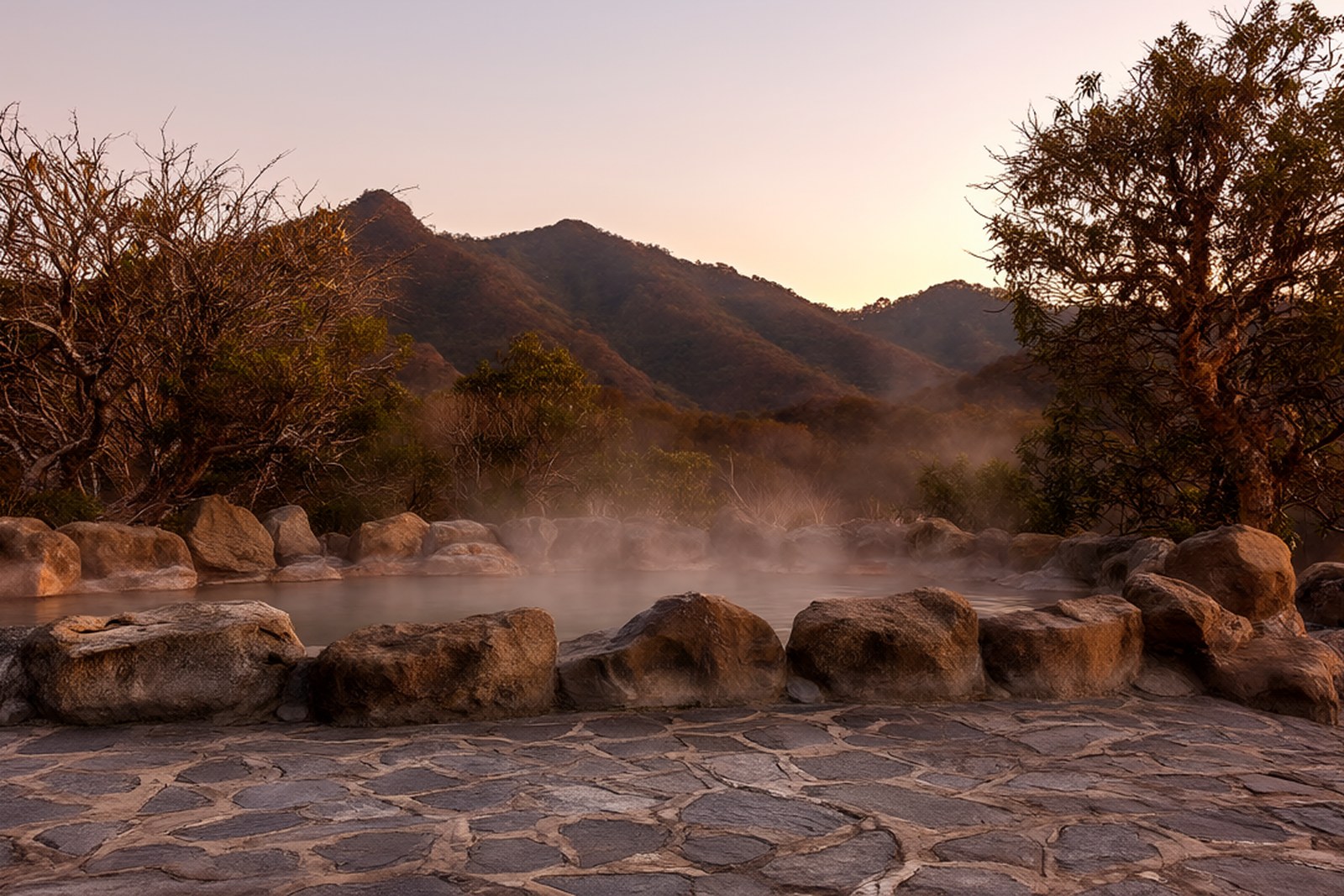
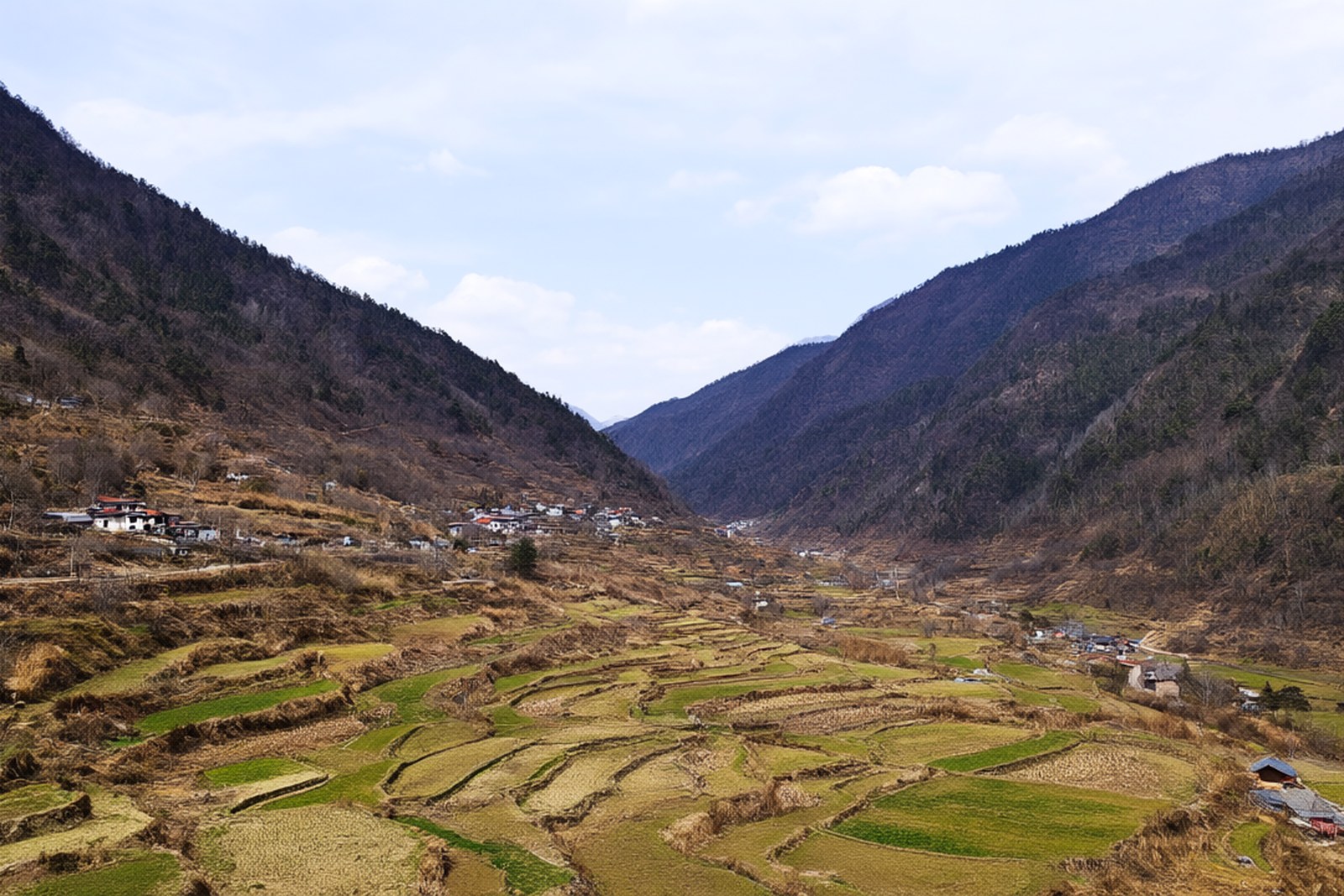
The county’s landscape is why it is worth more than a night. 天马山 is the higher of the two ridges at about a thousand and eighty metres, and the village inside the scenic area has a few hundred residents and a local reputation for longevity – the county’s own material calls it the 寿星村 shòu xīng cūn, the village of long life – which the county attributes to the altitude, the clean air and the water. 石根山 is the other, at nine hundred and eighty-eight metres, and it is described as the highest stone massif in western 广东, a single peak with a wild maple grove, a suspended glass walkway and a cable car, and a negative-ion count the county quotes at eight and a half thousand per cubic centimetre. Further out there is 马安竹海 Mǎ ān zhú hǎi, ten thousand mu of bamboo, and 虎跳峡 Hǔ tiào xiá, a gorge on the 黄华江 Huáng huá jiāng at 怀乡镇 Huái xiāng zhèn with a boat and a water park. The old county town at 镇隆镇 Zhèn lóng zhèn has a 窦州古城 Dòu zhōu gǔ chéng with its own walled lanes and academy.
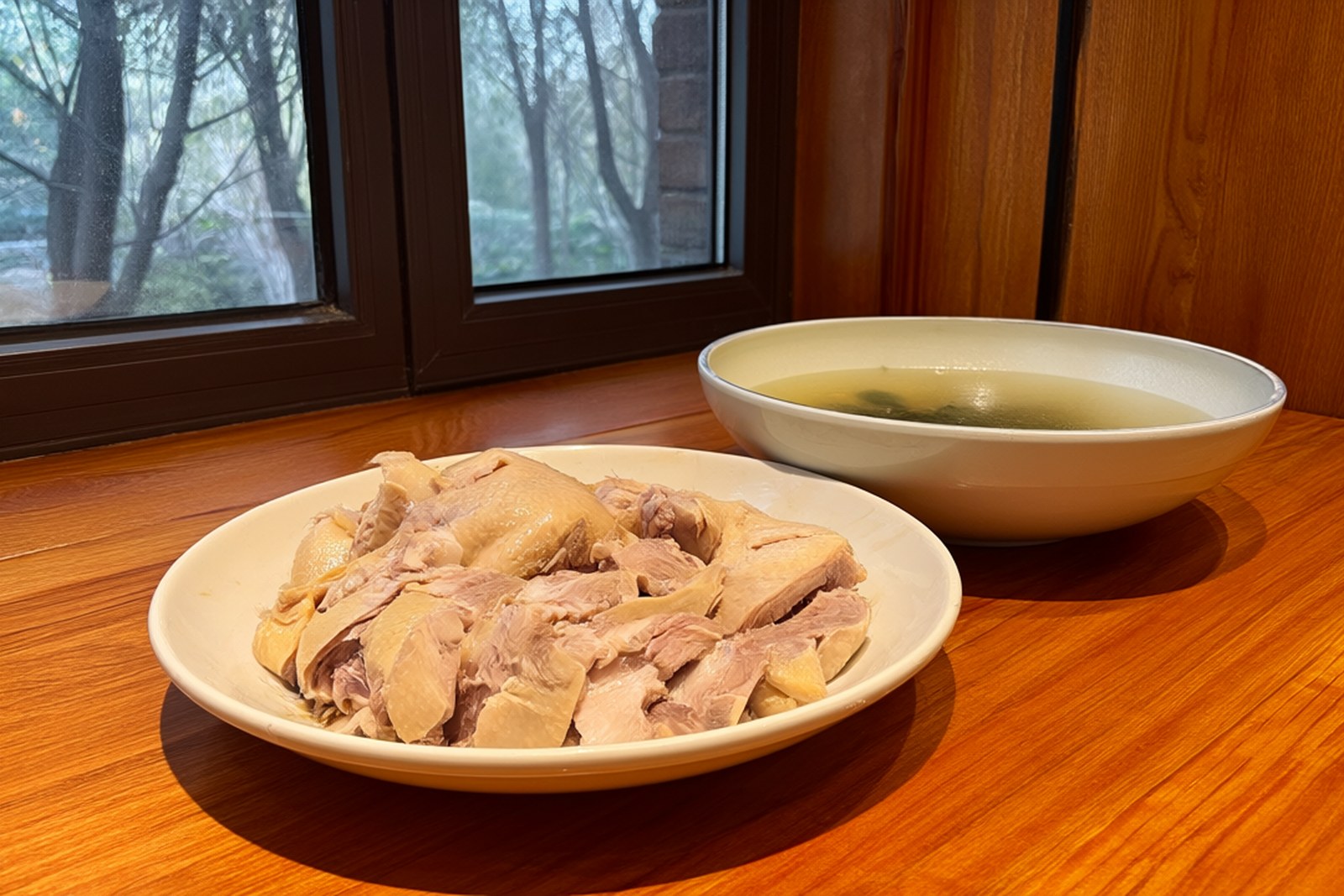
The food up here is the food of the hills, and it is the second reason to come. 信宜怀乡鸡 xìn yí huái xiāng jī is the local breed, raised free-range in the orchards and cooked poached and cut cold, and it is the standard against which the city judges a kitchen. 镇隆杨桃鸭 zhèn lóng yáng táo yā, starfruit duck, is the old town’s braise, six hundred years old and entered on the county’s heritage list in 2022, made with sour starfruit to cut the fat of a field duck. 氹仔鱼 dàng zǎi yú is the pond-raised grass carp, a practice the county’s records trace to the Tang, poached whole and firm-fleshed. 平塘茶香肉 píng táng chá xiāng ròu uses fresh 铁观音 leaves with belly pork. The slopes grow 三华李 sān huá lǐ, the plum the county is known for, along with bamboo, tea, star anise and 鸡骨草 jī gǔ cǎo, the herb that turns up in every local soup.
The lodges cluster around the hot spring itself and along the road up to it, and a few are inside the scenic areas. The spring is the county’s facility rather than a wild pool: the water is piped into baths and pools at the resorts, and the entry fee to the bathing area is modest by the standards of a comparable facility in the east of the province, around fifty-five yuan for an adult. The county also has the usual tourist apparatus at the mountains – 石根山 charges thirty yuan and 天马山 fifty, with cable cars, glass walkways and the like – and the plums bring crowds in June, when the 三华李 season fills the roads. Anyone arriving for the hot water should know that the resort is a day-out destination for local families at weekends and holidays, and that a weekday visit is a different and much quieter thing.
What the Rooms Are Like
Expect twenty-five to forty square metres in a resort building or a family lodge, with a firm bed, air conditioning, a kettle and a bathroom with a normal shower; the better places pipe the spring water to private baths, which is worth asking about at booking rather than assuming. Ask for a room with a hillside view and away from the pool machinery, because the pumps run at night. Rooms in the lodges up the mountain roads are simpler, with less reliable hot water, and are chosen for the view rather than for the facilities. In winter and on public holidays the good rooms go early, so book ahead; out of season the rates fall sharply and the pools are yours.
Practicalities
Price. A room in a 信宜 hot-spring lodge runs ¥220 to ¥600 a night depending on whether the spring water reaches the room; entry to the public bathing pools at 西江温泉 is around ¥55 for an adult, and the mountain scenic areas charge ¥30 to ¥50 each.
Address. The lodges are in 信宜市 in the north of 茂名市, concentrated around 北界镇 Běi jiè zhèn on the 西江 and along the roads to 天马山 Tiān mǎ shān and 石根山 Shí gēn shān; the county town is about twenty kilometres from the spring.
Rooms. Ask whether the room’s bath is fed by the spring or by the ordinary supply, which is the single question that determines whether the price is fair; ask for a hillside view, a room away from the pump house, and for the current opening hours of the pools, which change with the season. Ask about the plum season if you are travelling in June, because the roads to the orchards fill.
Getting there. 信宜 is reached by road and coach from 茂名市 in about an hour and a half and from 广州 in about four hours, and it sits on the 包茂 expressway corridor north of the city; the nearest railhead is 茂名站 Mào míng zhàn on the 深湛 railway. There is no airport, and arrivals come through 湛江 or 广州. A car is the practical way to move between the spring, the mountains and the old town at 镇隆镇.
Where to stay: a lodge on the 西江温泉 at 北界镇 in 信宜市, or a simpler place up on the roads to 天马山 and 石根山. Take the spring water to the room if you can, eat the 怀乡鸡 and the starfruit duck, and go on a weekday.
flowcloud would say that a county which grows a chicken slow enough to taste of the hills it walked, raises carp in pits dug for firefighting in the Tang, and has a hot spring eighty degrees warm at the bottom of a mountain road, has assembled a weekend out of things it already had.