
新盈镇 Xīn yíng zhèn is the fishing town on the north-western coast of 临高县 Lín gāo xiàn, sitting inside 后水湾 Hòu shuǐ wān where the bay meets 琼州海峡 Qióng zhōu hǎi xiá and looking west over 北部湾 Běi bù wān towards 越南 Yuè nán. The town is 54 square kilometres of land against 22.5 kilometres of coastline, with five harbour basins, a built-up area of about 5 square kilometres, fifteen village and neighbourhood committees, one town-run farm and sixty-two village groups; its population is about 58,000, the second largest in the county, and more than half of the working population is in the fishing trade. It is one of 海南省 Hǎi nán shěng’s twenty-eight demonstration towns and one of its ten named cultural towns, which is a strange pair of honours for a place whose whole identity is a harbour. A guest arriving for the first time should fix three things in mind before looking at a room. The first is that this is not a tourist port with a fishing quarter attached; it is a working port, and the harbour is the reason the town exists. The second is that the town is small enough to cross on foot in half an hour, so almost every room in it is within a kilometre or so of the wharf. The third is that the port’s clock, not the visitor’s, sets the schedule here, and the part of the day worth travelling for happens before sunrise. The town is also one of the province’s ten named cultural towns, and the culture it is named for is a coastal one. 苏东坡 Sū Dōng pō and 胡铨 Hú Quán are both recorded as passing through or staying on this coast, which the town’s own material is fond of noting; nearly a hundred temples stand across the township, forty-three of them in the coastal villages alone; fishing boats leave harbour flying red and coloured flags for safety, and the crews belong to shrines such as the 明王庙 Míng wáng miào at 隆安村 Lóng ān cūn. At 端午 Duān wǔ the harbour runs dragon-boat races that the county reports drew more than 60,000 spectators in 2025, a record for the town, and the boats are built by the fishermen themselves rather than bought in. The old division of labour still describes the place better than any brochure: the men take the sea and the women run the shore.
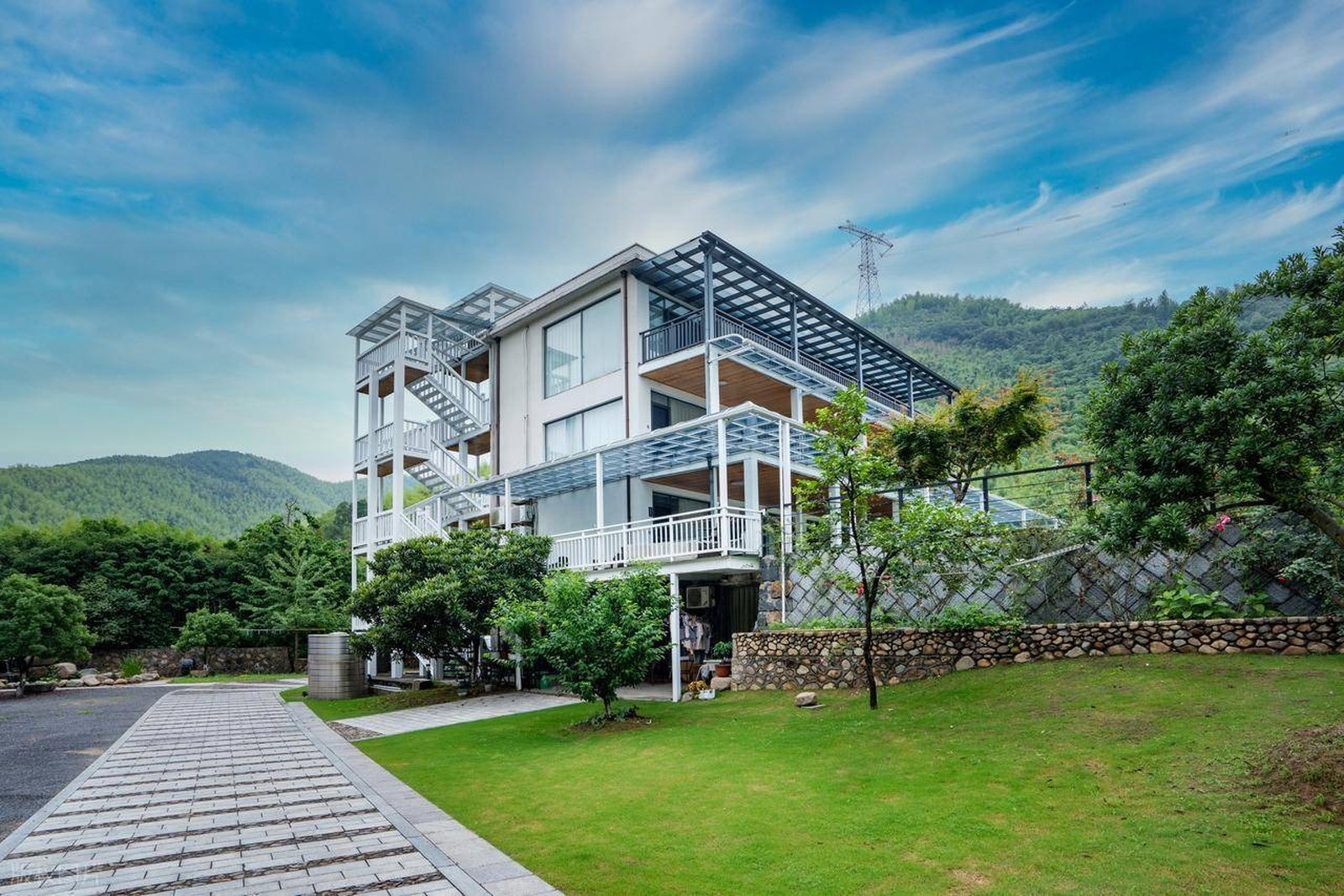
The harbour itself has the deepest history in the county. 新盈港 Xīn yíng gǎng was founded in the Song, renamed in the Republican period, and by the late Qing it was the largest fishing-boat wharf in 海南 Hǎi nán; in 1990 the Ministry of Agriculture approved it as a national first-class mass fishery harbour, a status the county’s own planning documents still refer to, and the harbour is the centre of what the provincial plans call the 临高 Lín gāo fishing-port economic zone, with 新盈 as its central harbour and 武莲 and 调楼 as the first-class and second-class ports beside it. A minority of the reference pages describe it as a national central fishing port outright, which the county and provincial papers do not, so the safer form is the one used here. The 新盈中心渔港 Xīn yíng zhōng xīn yú gǎng sits between 新盈村 Xīn yíng cūn and 安全村 Ān quán cūn, next to 头咀港 Tóu zuǐ gǎng on the south and touching 昆社港 Kūn shè gǎng and 黄龙港 Huáng lóng gǎng on the north. Its basin covers about 500,000 square metres and can berth more than 1,400 boats, and dredging has taken the depth to six metres. On 16 August 2023 the province held its annual 开渔 kāi yú ceremony and the opening of the Lingao fishing festival here, which is the local equivalent of a national holiday. In 2025 the port began an upgrade that includes 1.2215 million cubic metres of basin dredging and new berths for a 1,500-tonne refrigerated carrier, a fuel barge and leisure fishing boats, so a guest sleeping a kilometre away will hear the work as well as the fleet.
The fleet is the reason for all of it, and the numbers differ by source in a way worth stating honestly rather than smoothing over. The county government’s own town profile, dated 28 February 2025, gives the town more than 2,800 boats of all kinds plus over a thousand deep-sea cages, which the material calls the largest such cage base in Asia; an encyclopaedia entry gives about 2,770 boats and an annual catch of roughly 200,000 tonnes; a provincial news report gives 2,682 boats; and the provincial newspaper in August 2026 gives nearly 2,700. The useful way to hold them together is that 新盈 is a town of roughly 2,700 to 2,800 boats, that it accounts for more than half of the county’s total of 5,432 registered marine fishing vessels, and that its catch runs about 200,000 tonnes a year. There is a second industry hidden in the same street: net-making. The town has nine specialist net-weaving factories covering 10,800 square metres and employing more than 160 skilled workers, and the nylon they weave runs from 0.15 millimetres to two centimetres across the full range, which is why the provincial press can say that most of Hainan’s fishing nets come out of this one town. A guest who walks the lanes behind the harbour in the closed season will see the work being done on the ground, in the shade, by hand and by machine, with the finished netting piled white as cloud in front of the doors. The cultural layer of this town is a fishing layer too, and the best known piece of it is a song. 哩哩美 lī lī měi is a fishermen’s work song from the seaside villages here, listed on 23 May 2011 in the third batch of national intangible cultural heritage and traced by the material to the 绍兴 Shào xīng years of the Southern Song, between 1131 and 1162, with roots it pushes back as far as the Han; the phrase used for it is a living fossil of sea song, and it began as the answering calls of men hauling nets and the singsong of women selling the catch. Between the 1960s and the 1980s the village kept a 女子馆 nǚ zǐ guǎn, a young women’s house where unmarried women of an age lived together and where a suitor had to come and answer in song before he was let in. The costume that belongs to the tradition is practical before it is picturesque: a wide-brimmed pointed bamboo hat, wooden clogs, a collarless jacket fastening on the left with vents at the sides and short tight sleeves, and loose straight trousers cut from black coarse cloth. The left-side fastening has a reason and it is a working one – a right-hand closure catches on net ropes and fishing line when a woman casts with her right hand. Once cloth was plentiful the jackets came in every colour except white.
The four hours that justify the room run from four to six in the morning in the fishing season. The boats come in one after another, their engines audible long before the hulls, and the catch goes ashore in baskets to be sorted, weighed, iced and either iced again for storage or loaded straight onto a refrigerated truck; the local reporting describes the whole market clearing in about four hours and calls the first month after the closed season the busiest of the year, when the first fish of the season fetch the best prices. The trade is organised in the 海南西部(临高)水产国际交易市场 Hǎi nán xī bù Lín gāo shuǐ chǎn guó jì jiāo yì shì chǎng, the west Hainan aquatic products market at the port, whose first phase holds forty trading bays with cold storage, an ice works, live seafood tanks and a cold-chain fleet, and which recorded 650 million yuan of trade in 2023, with a second phase finishing in 2025. The one thing a visitor gets wrong is trying to buy at the quay. The catch is largely spoken for by wholesalers before it lands, and the practical alternative, which local accounts recommend, is to walk the road from the port towards 新盈市场 Xīn yíng shì chǎng, the town market at the far end of 疏港大道 Shū gǎng dà dào, where stalls shell shrimp and dress fish in the open and will quote you a price across a trestle table. What to do with the fish is the best custom in town. Almost no restaurant here hangs a sign offering to cook your seafood; ordinary small eateries simply will, if you bring it in and ask, and the going rate is around 10 to 25 yuan a jin depending on the shop and the dish. The same source that describes the practice notes that a seafood lunch which would cost a thousand yuan in a city hotel elsewhere comes to a couple of hundred yuan here. The town’s sweet side sits at the same market: stalls selling 糖水 táng shuǐ, sweet soups of mung bean, sweet potato and 鸡屎藤 jī shǐ téng, along with glutinous rice cakes and the steamed 碱水馍 jiǎn shuǐ mó and 白馍 bái mó, and the chive fritters that sell for a yuan or so for several. 新盈’s food has a reputation across the whole county, and most of it is inside one market block.
What the Rooms Are Like
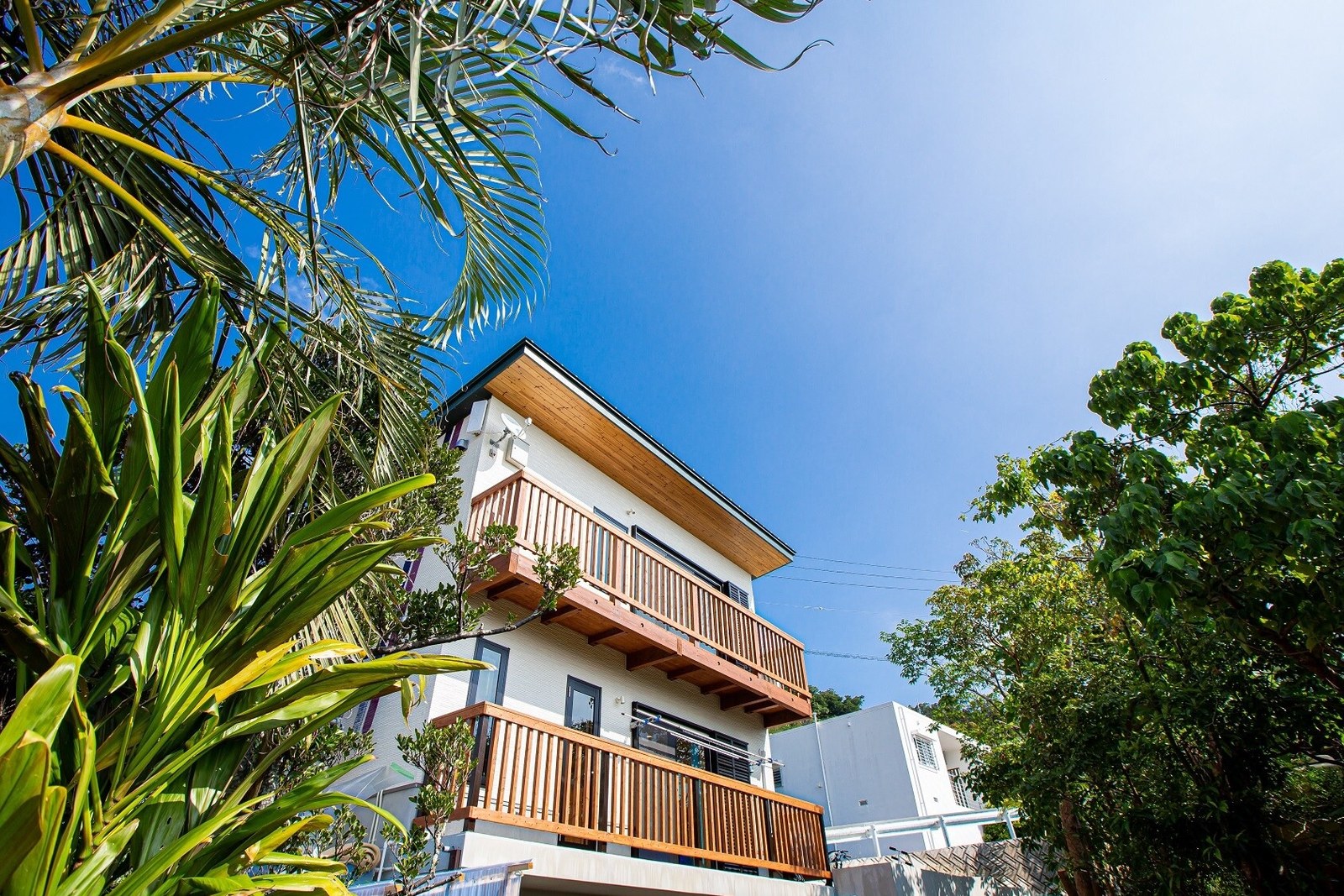
The lodging stock is small-town business-hotel stock, and the pattern is easy to describe. Around the port the county counts sixteen hotels and guesthouses and a hundred and fifty-two places to eat, which is a lot of restaurants for a town this size and reflects both the working population and the fact that the county’s own fishing culture sits here. The named addresses are unremarkable and that is the point: an economy chain-grade hotel on 规划大街 guī huá dà jiē, the street that runs back from the water, with a lift, a card key, a room of eighteen to twenty-five square metres, a tiled floor, a firm bed or two, split air conditioning, a kettle, a television, a shower and a window; a newer one opened in 2024 about a kilometre from the port selling slightly larger rooms with a projector and a sea-view category; and a small guesthouse near the bus station at the bottom of the price range. What none of them has is the thing a resort would sell, which is quiet. The port works at night, the trucks use the same street, and a room on the harbour side will hear both. Two things are worth asking for. Ask for a room away from 规划大街 if you can get one, because the street is the town’s main road and the traffic starts before the boats do. And ask what time breakfast is served, then ignore it and go to the market instead, because nothing a hotel can put on a plate competes with congee and a fried chive cake eaten standing up at half past six.
Practicalities
Price. A double in 新盈镇 runs about 150 to 230 yuan a night, which is the whole documented range: the small guesthouses near the bus station from about 150 yuan, the economy hotels on 规划大街 from about 195 and about 223, and farm-style accommodation on the edge of the neighbouring township from about 149. There is no high-star hotel in the town and the honest position is that there is no upper tier to compare against, so the choice is between a good cheap room and a plainer one. The season that matters is not the tourist season but the fishing one: the closed season from noon on 1 May to noon on 16 August leaves the wharf quiet and the seafood dear, and the weeks around the August reopening and the October national holiday are when the town is fullest and the rooms tighten. Treat every figure as a range and check the live rate.
Address. The rooms are in 新盈镇 Xīn yíng zhèn in 临高县 Lín gāo xiàn, on and around 规划大街 guī huá dà jiē and the streets between the town centre and the water, with the 新盈中心渔港 Xīn yíng zhōng xīn yú gǎng and its 海南西部(临高)水产国际交易市场 between 新盈村 and 安全村, 新盈市场 at the end of 疏港大道 Shū gǎng dà dào, and the neighbouring ports of 头咀港, 昆社港 and 黄龙港 along the same stretch of coast.
Rooms. Ask for a room on the side away from the main street and, if there is a choice, above the second floor, because the port and the trucks run all night and the town is small enough that everything is audible. Ask whether the room has a window that opens, since the older economy buildings are sealed and the newer ones are not, and ask about the water heater, because a wall boiler in a full house runs out in the evening and the sequence here is early to bed rather than early to rise. Ask whether the hotel will keep a bag after check-out, since the useful morning at the market is over by seven and the boats are back out by nine. And ask the desk where to buy fish and where to take it: the honest answer is the market street rather than the quay, and almost any small eatery will cook what you bring for around 10 to 25 yuan a jin. If a host offers to arrange a boat trip on the bay, ask what the boat is and what it costs before agreeing, because nothing in the published material sets a price for it.
Getting there. 临高南站 Lín gāo nán zhàn, on the 海南西环高铁 Hǎi nán xī huán gāo tiě, is the rail arrival, and from there the town centre is about 20 kilometres by county minibus, which account-level reports put at around forty minutes; the county’s own red minibuses also run between 临城镇 Lín chéng zhèn and 新盈. By road the 海南环岛旅游公路 Hǎi nán huán dǎo lǚ yóu gōng lù brings a driver in on its 新盈 Xīn yíng spur, which runs around the mangroves towards the port, and the harbour is the last stop of that spur rather than a place you pass. The district is at the western end of the county against 儋州 Dān zhōu, which is worth knowing because a guest combining the port with the mangrove reserve at 彩桥 Cǎi qiáo is moving a few kilometres rather than repeating a drive.
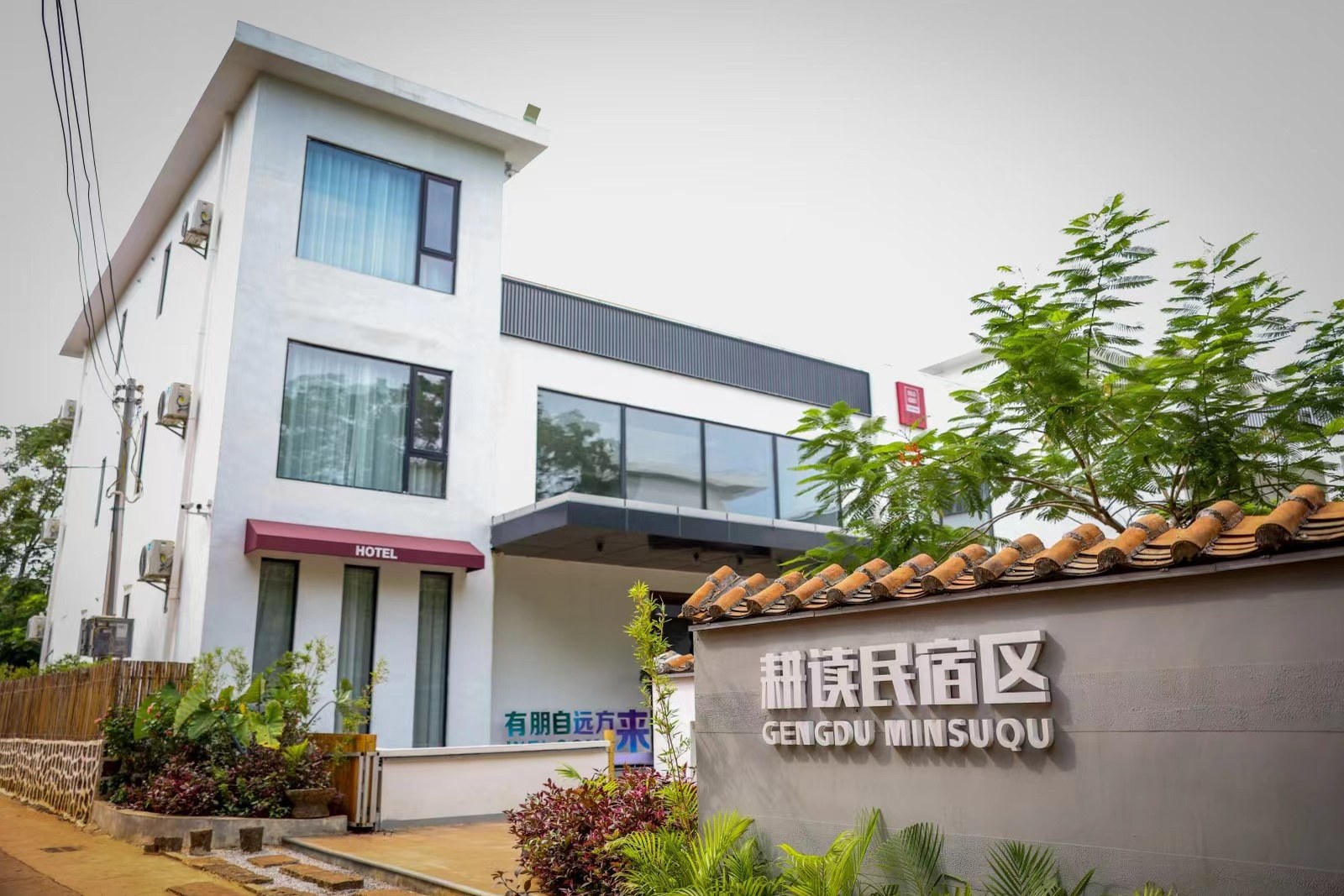
Where to stay: an upper-floor room at one of the small hotels on 规划大街 guī huá dà jiē in 新盈镇 Xīn yíng zhèn, a kilometre or less from the 新盈中心渔港 Xīn yíng zhōng xīn yú gǎng, where the dawn market, the fish stalls and the town’s sweet-soup shops are all on foot. Take the room for the four hours before sunrise rather than for the view, buy your fish at the market and have a small eatery cook it, and time the visit for the weeks after the August reopening rather than for the closed season.
flowcloud would say that a town which owns more than half of a province’s fishing fleet and most of its nets has no need of a hotel district, because the harbour already runs on a schedule older than tourism – and that the only correct way to sleep beside fourteen hundred boats is to be awake when they come home, and to eat the evidence two hours later at a table somebody else owns.