
A minsu in the pineapple fields of 徐闻县 Xúwén xiàn is a farmhouse with the rows running to the horizon on every side of the yard, and it only makes sense in one place in the country, because only here is the crop big enough to be a landscape. 徐闻 occupies the southern tip of the 雷州半岛 Léizhōu bàndǎo, where the soil is a deep red 砖红壤 zhuān hóng rǎng and the land is a low volcanic plateau; the county plants thirty-five thousand hectares of pineapple, close to a third of the national crop, and the country around 曲界镇 Qūjiè zhèn is called 菠萝的海 bō luó de hǎi, a sea of pineapples, for the obvious reason. A stay here is not a resort: it is a room in a working farm, in the middle of the thing you came to look at.
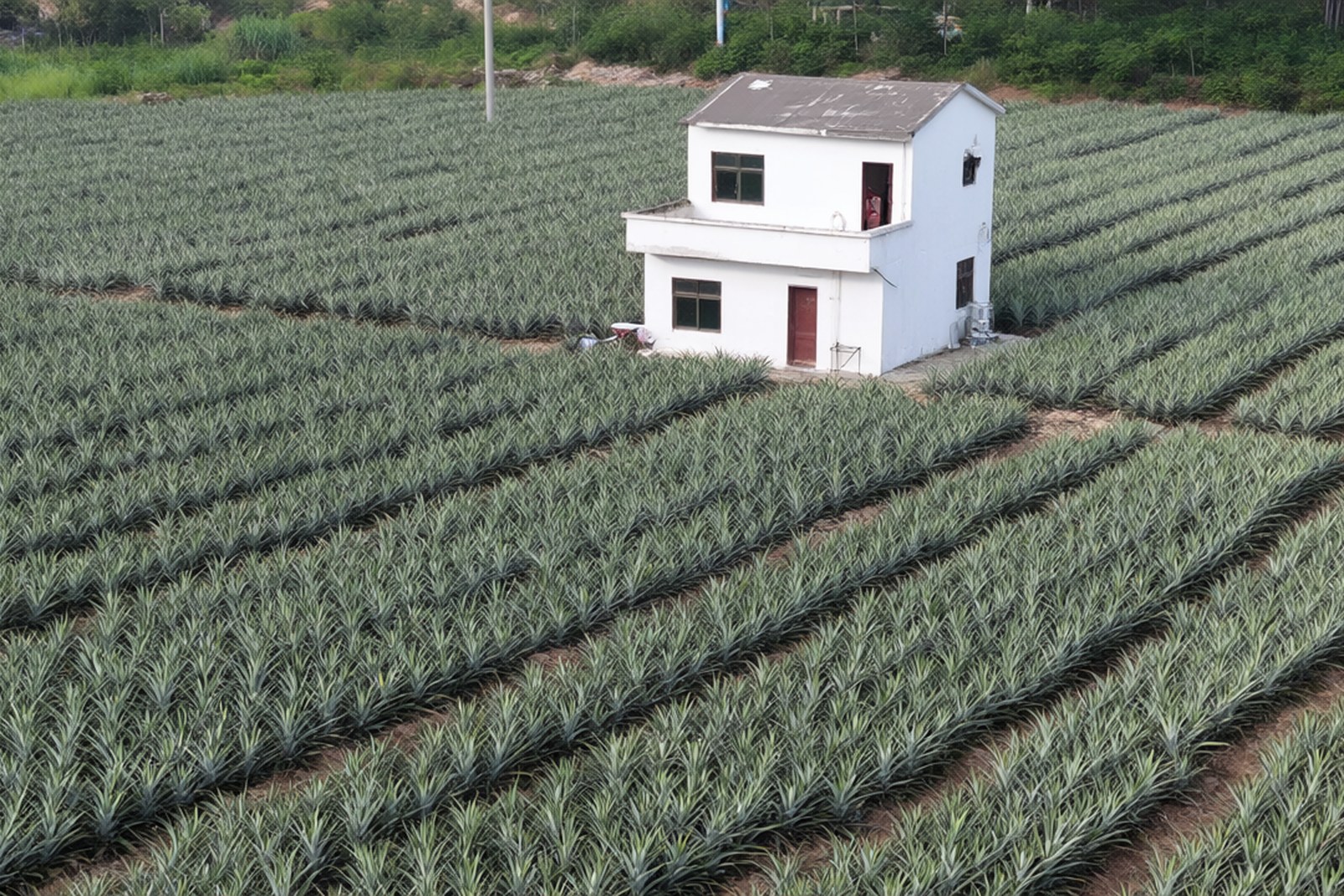
The crop came home with a returned emigrant. In 1926 倪国良 Ní Guóliáng, a 徐闻 man who had been working in Singapore, brought two hundred 巴厘 Bālí suckers back to 愚公楼 Yúgōnglóu and planted them out, and the strain he carried is still the main one in the county; the local geographical indication, registered in 2005, is named 愚公楼菠萝 after that village. For most of the century since, this was smallholder ground, grown in among the scrub and sold green or dried. What changed it was the 1980s and 1990s, when the fields were laid out in blocks and the peninsula became the pineapple capital of the country. The 菠萝的海 is a working farm and not a park: the harvest runs from March to June with a smaller flush in the autumn, the pickers come in for the season, and the road through 曲界 is lined with stalls for kilometre after kilometre in the peak weeks.
The distance between the two ends of the peninsula is the rest of what makes a night here worth having. 徐闻 is the southernmost county of the mainland, and 灯楼角 Dēng lóu jiǎo at 角尾乡 Jiǎo wěi xiāng, at the end of a long spit, is the southernmost point of it, with the 琼州海峡 Qióngzhōu hǎi xiá on one side and the 北部湾 Běibù Wān on the other meeting in a line of disturbed water, a lighthouse on the point and a coral reef offshore. Back towards the fields at 五里 Wǔ lǐ and 二桥 Èr qiáo are the 大汉三墩 Dà hàn sān dūn, the Han wharves, and the 徐闻古港 Xúwén gǔ gǎng, the old port that is one of the places put forward as the departure point of the Han maritime silk road. The mangroves, the salt pans and the coral are all within an hour of the yard.
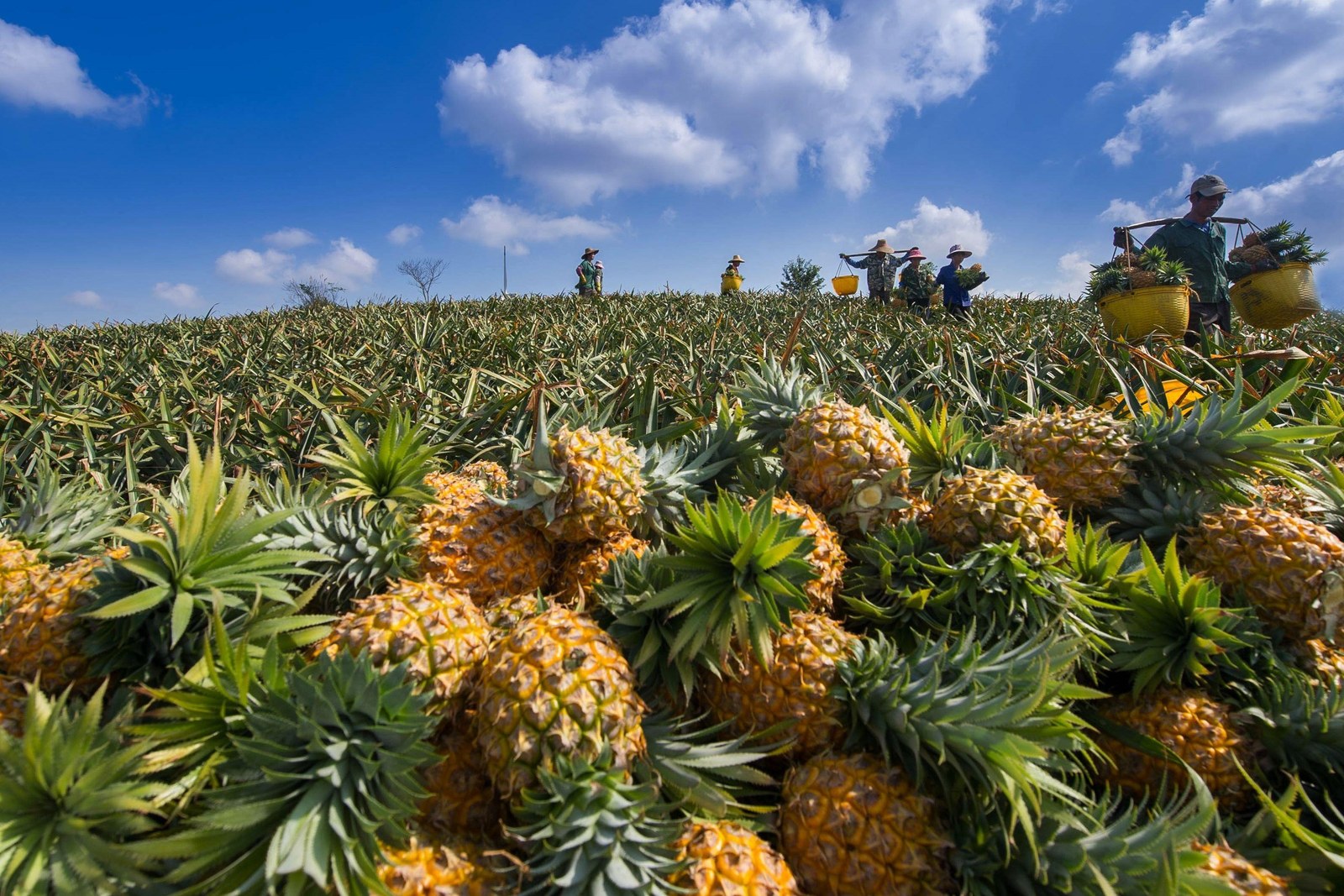
The eating is farm eating and coast eating and it is very good. There are pineapples in everything while they are in season and dried slices and juice when they are not; 徐闻 also grows 香蕉 xiāng jiāo, bananas, and 芒果 máng guǒ, and the coast villages put on the ordinary 湛江 seafood: 生蚝, 沙虫 where you can find it, 花蟹, and the small fish fried whole. Breakfast in a village is a bowl of rice noodle or congee, and the kitchen of a working minsu will generally cook for guests if the arrangement is made in the morning. A day runs from before dawn, because that is when the light is on the fields and when the pickers are out; the middle of the day is a dead hour and the houses shut; and the late afternoon is the second good light, when the road stalls put their fruit out and the sky goes over the flat ground in a way it does not over hills.
What the Rooms Are Like
Expect a room in a converted farmhouse: a double bed, an air conditioner, a bathroom with a shower, and a door that opens onto the yard or onto the field. Standards vary more here than in a city hotel, so check that the room has an en-suite and hot water before you book, and expect the wifi to be thin and the mobile signal to be no more than adequate. Ask for a room with a window on the field side rather than the road side, and take insect repellent, because the fields and the standing water bring mosquitoes in the evening.
Practicalities
Price. A double room in a 徐闻 pineapple-field minsu runs ¥120 to ¥300 a night, and a simple village room with a shared bathroom can be under ¥100. Meals, where they are offered, are ¥30 to ¥60 a person and are usually cooked from whatever came out of the market that morning.
Address. The minsu is at 曲界镇 Qūjiè zhèn or one of the villages around it, 徐闻县, 湛江市, Guangdong, on the road that runs north from 徐闻 towards 雷州, in the middle of the 菠萝的海 bō luó de hǎi.
Rooms. Ask for a field-facing room, confirm hot water and an en-suite, and ask whether the house cooks for guests. Say how many nights you are staying and when you will arrive, because the family will often meet you at the county town or send directions, and the roads between the field blocks are not signposted.
Getting there. 徐闻站 Xúwén zhàn on the 深湛 high-speed line is at the northern end of the county, about forty minutes by road from 曲界. The 琼州海峡 ferry to 海口 leaves from 徐闻港 Xú wén gǎng at 南山, about fifty minutes south of the fields, and the crossing to 海南 takes roughly two hours. By road 湛江市 is about two hours north, 雷州 about an hour, and 灯楼角 a further hour south.
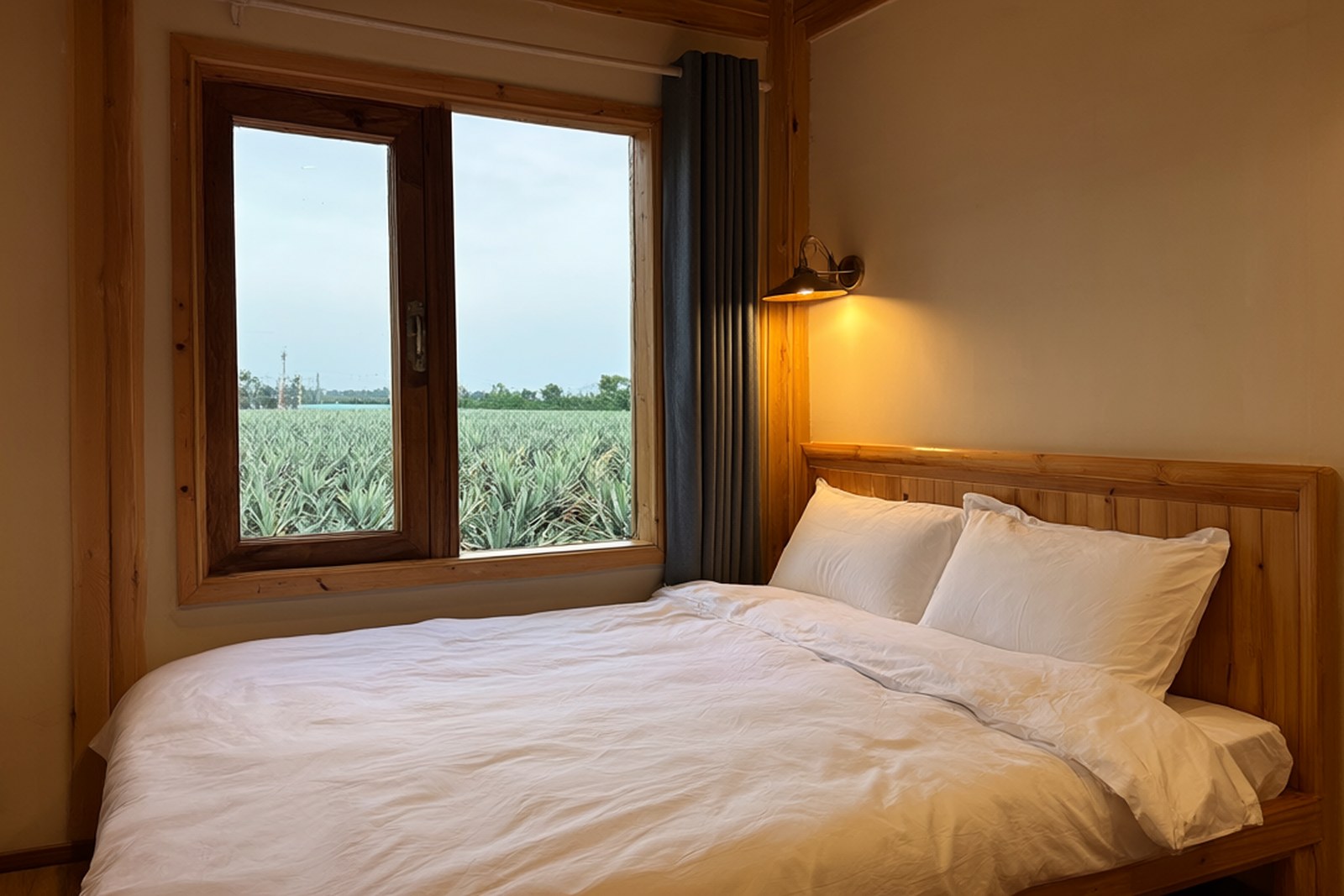
Where to stay: the farmhouse minsu of 曲界镇 and the villages around it in 徐闻县, in the middle of the 菠萝的海, within an hour of 灯楼角 and the Han wharves. Come during the harvest from March to June if you want the fields at work, take a field-facing room, and let the family feed you.
flowcloud would say that a place which turned a hundred suckers carried home in a suitcase into a third of a country’s crop, and then opened its farmyards to people who want to look at it, has made a tourism out of a monoculture and made it work.