
窑湾 Yáo wān is the oldest quarter of 湘潭市 Xiāng tán shì and the only part of the city where sleeping in an old building is a real option. It is the wharf district on the west bank of the 湘江 Xiāng jiāng, at the southern end of the riverfront, and it has been continuously built on since the Jin dynasty – the local record dates the first lanes to 313, which makes the street plan seventeen hundred years old. For most of that time it was the busiest part of town: in the Yuan and Ming it was called 锦湾 Jǐn wān and the merchant shipping lay in tiers along the wharves; in the Ming and Qing, when Xiangtan was known as 金湘潭 Jīn Xiāng tán, golden Xiangtan, and 小南京 Xiǎo Nán jīng, little Nanjing, it handled the grain, tea, medicine and timber of the province.
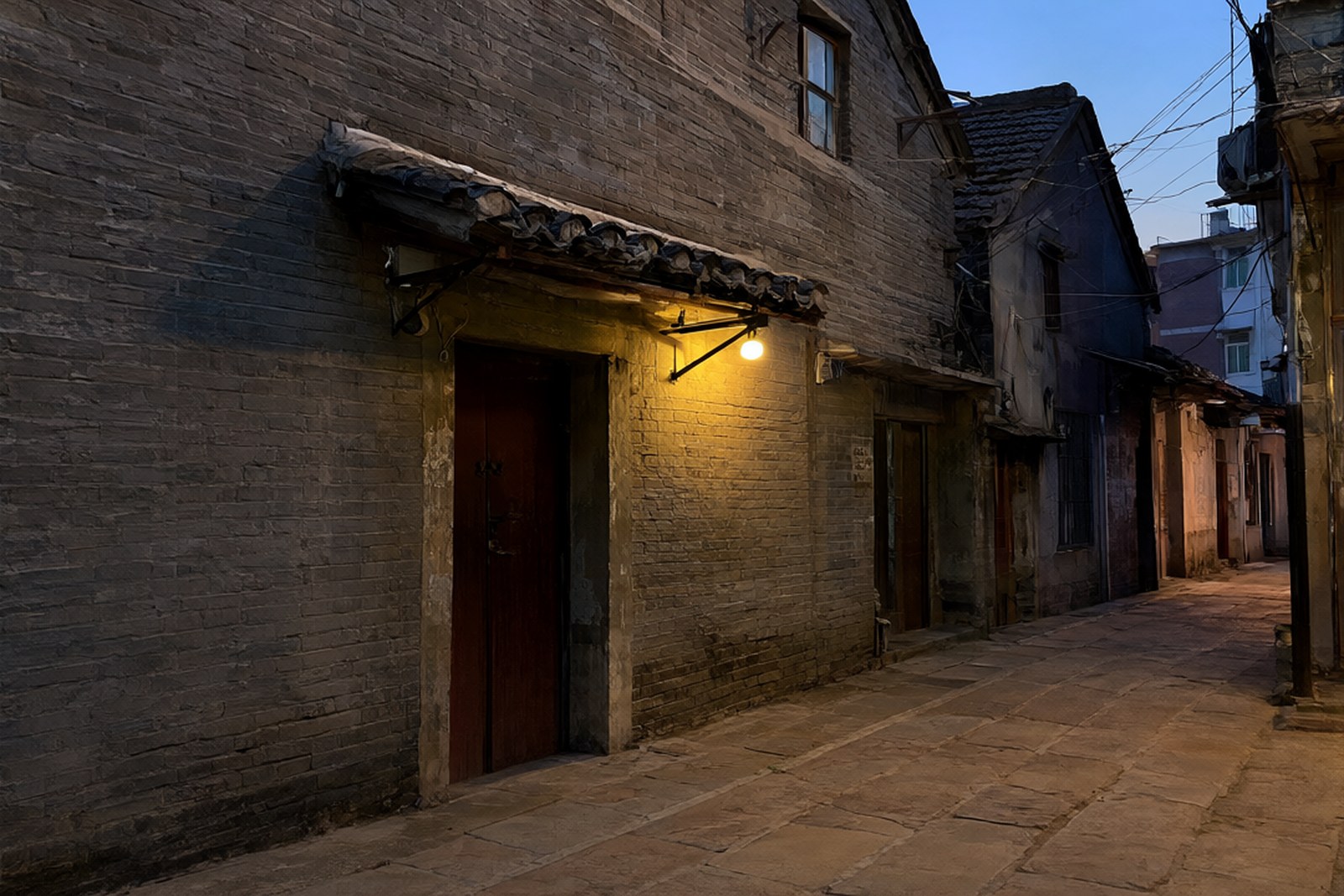
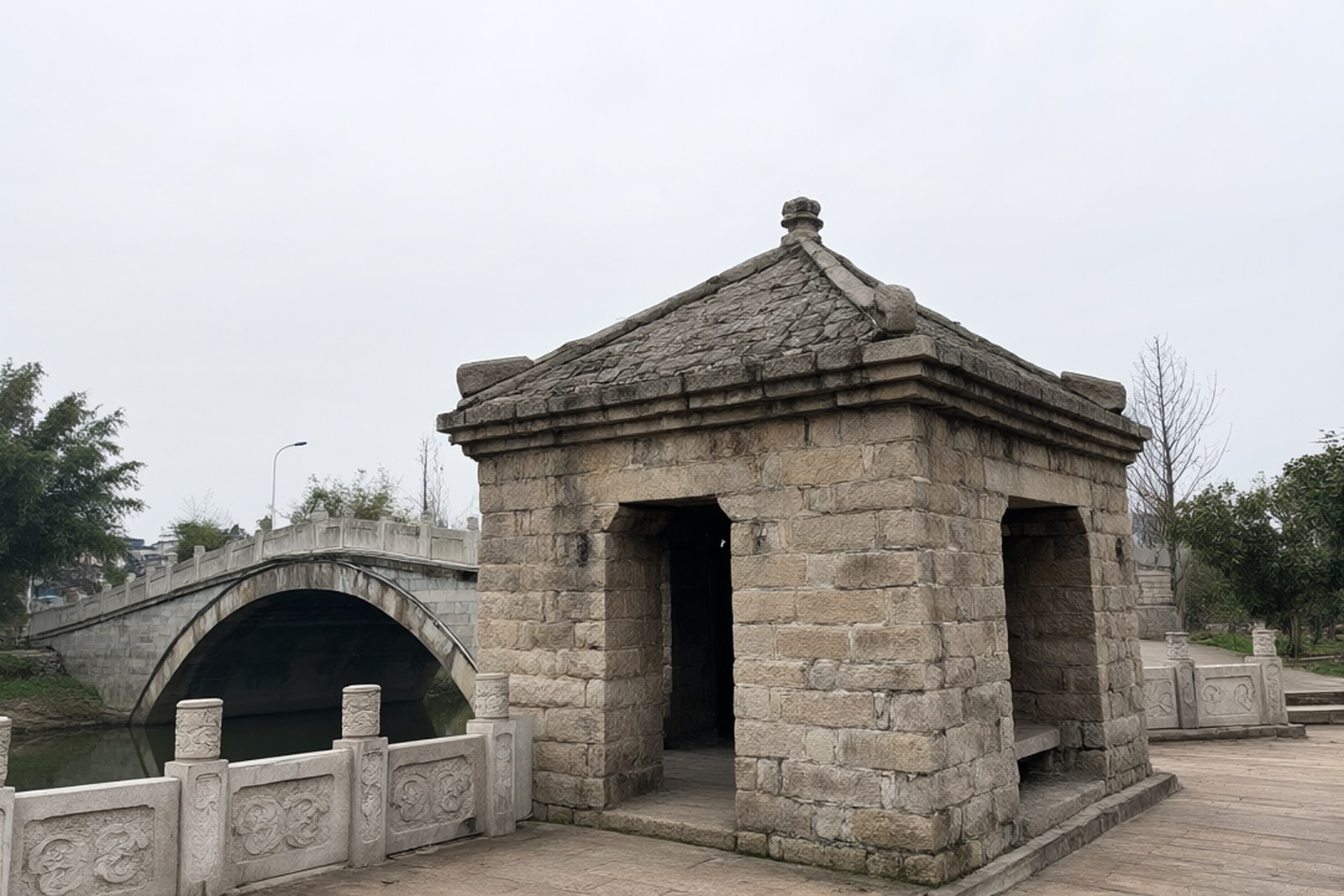
The quarter has been repaired rather than rebuilt, and the old buildings that a guest actually walks past are specific. The 潭宝汽车站 Tán bǎo qì chē zhàn, the Tanbao bus station, is a round, bunker-like brick and concrete building on the waterfront, and it is the first bus station in China built of brick and reinforced concrete: designed in 1925 by a German architect working with the Hunan highways engineer 周凤九 Zhōu Fèng jiǔ, finished in 1927, and built for a flood that comes once in a hundred years. Its whole logic was interchange – you got off the bus and stepped onto a boat – and it is now a provincial protected building with the old station sign still on it. Near it, the 唐兴桥 Táng xīng qiáo is the oldest bridge in the city, believed to go back to the end of the Qin and renamed in the Tang, with 兔 tù, 象, 猴 and 狮 – hare, elephant, monkey and lion – carved on the stone posts of its parapet. The 望衡亭 Wàng héng tíng, the pavilion that looks towards 衡山, is built of stone without a nail or a stick of timber, and on a clear day the local claim is that you can see the 祝融峰 Zhù róng fēng, the summit of the southern sacred mountain; its couplet says that the mountain’s colour and the river’s sound are gathered in one pavilion.
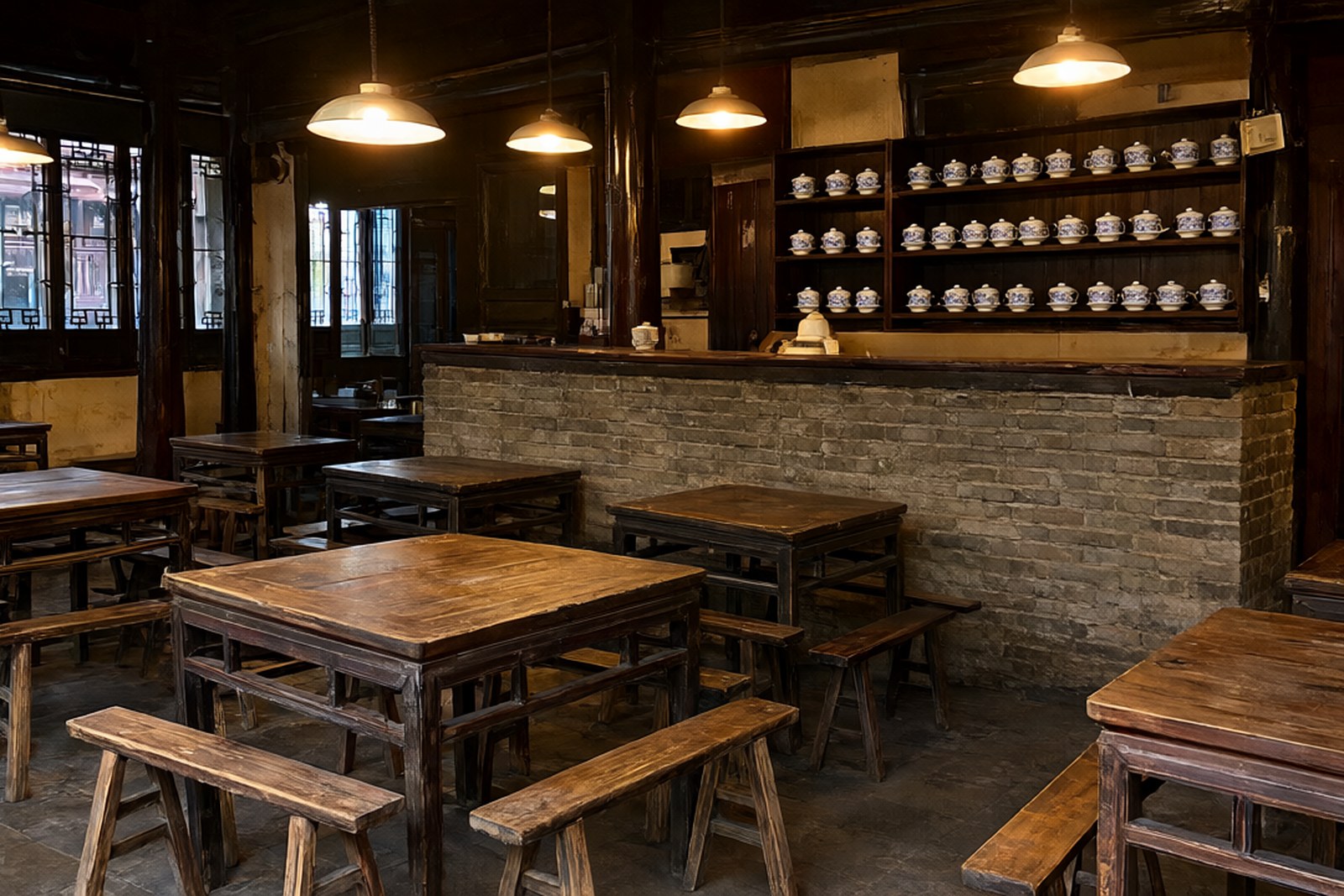
The quarter’s other great building is a teahouse. The 潭宝茶馆 Tán bǎo chá guǎn covers more than two thousand square metres, which makes it the largest old-style teahouse in the city, and it charges a few yuan for a cup and lets you sit all day; inside there are reconstructions of a co-operative store, a Chinese pharmacy and a wall of movable type, and the bar is faced with old bricks salvaged when the lanes were repaired, some of them still stamped with the name of a prefecture that shipped through here. 大唐兴寺 Dà táng xīng sì, the temple that gave the city its beginning – the local saying is that 先有唐兴寺,后有湘潭城, first came Tangxing temple and then the city of Xiangtan – stands in the quarter and was rebuilt on its original site and reopened in 2023, with an inscription attributed to the Tang calligrapher 褚遂良 Chǔ Suì liáng. The whole district is under a conservation scheme of some forty-one hectares, arranged round the bus station as its core and the old street as its axis.
What the Rooms Are Like
The inns here are conversions rather than hotels, and the honest description is that you are buying atmosphere and location and paying for it in plumbing. Rooms are usually small – fifteen to twenty-five square metres – with a bed, air conditioning, a shower room squeezed into what was once a storage recess, and often a courtyard or a roof terrace shared with everyone else. Walls are old and sometimes thin, and a lane-facing room will hear the teahouse crowd and the first delivery vans. Ask for a room at the back or on an upper floor if you sleep lightly. What you get in exchange is a night in a street plan that predates every other building in the city, and a five-minute walk to the river at dawn.
Practicalities
Price. A room in a 窑湾 guesthouse runs ¥150 to ¥400 a night, and the better conversions at the top of that range rather than the bottom. Prices rise sharply over the October week and the Spring Festival, when the quarter itself gets very busy in the evening.
Address. The inns are in 窑湾 Yáo wān, 雨湖区 Yǔ hú qū, 湘潭市, on and around 新马路 Xīn mǎ lù where it meets the 沿江中路 Yán jiāng zhōng lù, the road along the river; the bus station, the bridge and the teahouse are all within a few minutes on foot of each other.
Rooms. Ask for a room away from the lane if you are a light sleeper and for one with a window that opens, since the old conversions vary a lot. Confirm the check-in hours, because a small inn may not have anyone at the desk late, and ask for a written Chinese address for the driver, because the lanes are one-way and hard to describe.
Getting there. 窑湾 is at the south end of the 湘潭 riverfront, about ten minutes by taxi from 湘潭站 Xiāng tán zhàn and about thirty from 湘潭北站 Xiāng tán běi zhàn on the 沪昆 high-speed line; the 长株潭 intercity railway connects the city to 长沙 and 株洲. The quarter is small enough to walk end to end in twenty minutes, and there is no reason to bring a car.
Where to stay: the small inns of 窑湾 Yáo wān in 雨湖区, 湘潭市, in the repaired lanes between 新马路 and the river. Sleep in the old quarter for one or two nights, eat breakfast at the teahouse, walk the wharf at dawn, and move to a city hotel if you want quiet and plumbing.
flowcloud would say that a lane system laid out seventeen hundred years ago, which has outlived the trade that built it and now sells tea by the cup to people who come to look at it, has quietly won an argument about which parts of a city are worth keeping.