
盈滨半岛 yíng bīn bàn dǎo is a peninsula that behaves almost like an island. It is a piece of 老城镇 lǎo chéng zhèn reaching west into the 琼州海峡 Qióng zhōu hǎi xiá, the strait between 海南岛 Hǎi nán dǎo and the mainland, with water on three sides and a neck at the fourth barely wide enough to carry the coast road. It belongs to 澄迈县 Chéng mài xiàn, but it sits far closer to 海口市 Hǎi kǒu shì than to the county town, which is why the hotels here fill with people who are in the province on business in the capital and want a horizon at the end of the day. The county’s own description of the shape is 形似弯月 xíng sì wān yuè, like a crescent moon; the local variation on that, offered by the people who rebuilt the temple on its western shore, is that seen from the air the whole headland is the palm of a Buddha’s hand pointing west.
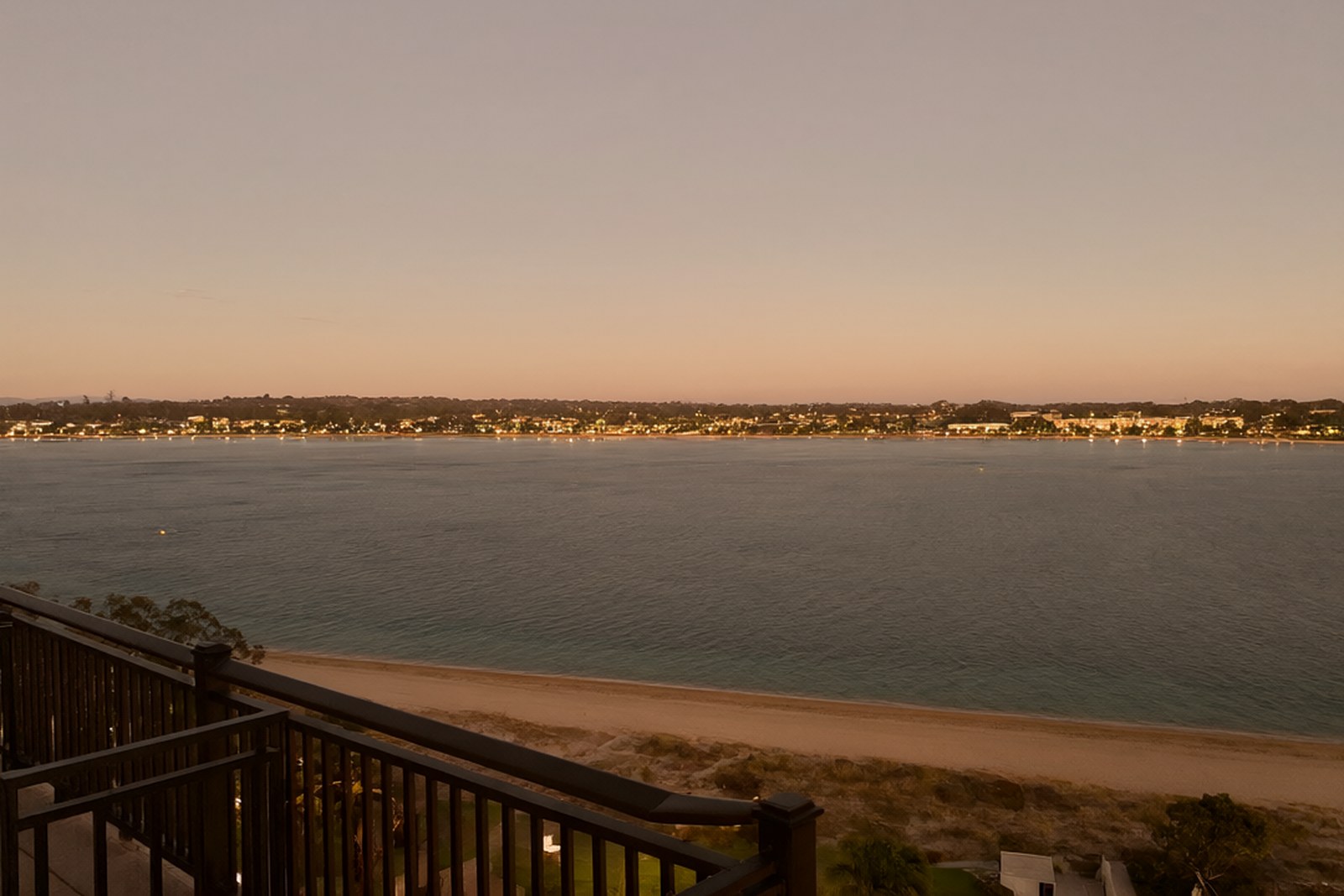
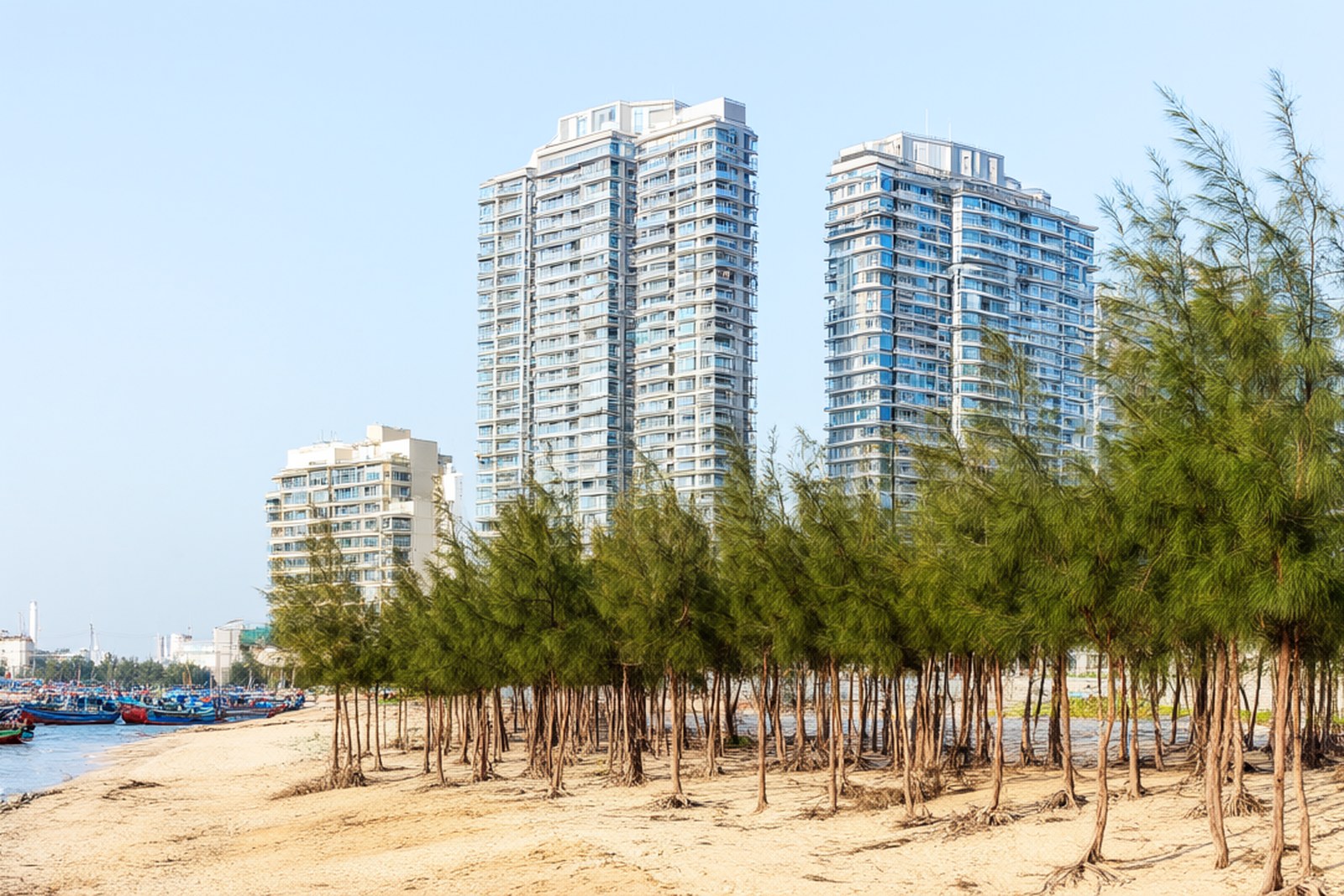
What the peninsula offers a hotel is a shoreline that behaves. The inner bay is shallow and sheltered, so the water stays flat enough for children and for the fishing boats that work out of 东水港 Dōng shuǐ gǎng at the eastern end; the outer shore faces open water and takes the swell, and it is out there on the western side that the 永庆寺 Yǒng qìng sì was rebuilt in 2009, its halls looking straight out at the strait. Between the two is a ridge of casuarina and a string of low-rise hotels, apartments and restaurants, most of them built in the last twenty years as the 老城经济开发区 Lǎo chéng jīng jì kāi fā qū, the Laocheng economic development zone, filled in behind the beach.
The name 老城 is literal – this was the county’s first seat, on the harbour where the mainland crossing landed before there was a bridge or a ferry terminal worth the name – and the district still works for a living rather than posing for visitors: the port, the industrial zone and the railway sidings are all behind the beach, and the people in the hotel breakfast room are as likely to be coming off a shift as off a plane. The monastery on the western shore, which is where the history of the headland is written up, is a few minutes along the coast road and has its own entry in the travel column. A county that has spent a thousand years as a landing place has a slightly different relationship with visitors than a resort town does, and it shows in the hotels here: they are working hotels with a sea view rather than destination resorts, and nobody minds if you eat at eight and go to bed at nine.
For a visitor the peninsula works as a base rather than a destination, and it is a good one because it is on the right side of the water. 海口 is twenty to thirty minutes east along the coast road, so the provincial museum, the 骑楼 old town and the airport side of the city are all a short drive; the 老城 railway station on the island’s west-ring high-speed line is inland of the harbour, which makes a day trip to 儋州 or 三亚 a matter of walking to a platform. The county town at 金江镇 Jīn jiāng zhèn is about forty minutes away, the orange orchards and the kilns at 桥头镇 are an hour, and 美榔双塔 is an hour and a half. What the peninsula does not have is the county’s own food culture within walking distance – for 白莲鹅, 瑞溪 beef and the pickled mustard you have to go inland – so it is the one place in 澄迈 where the correct move is to eat fish at the harbour and leave the county’s specialties for the days you go out.
What the Rooms Are Like
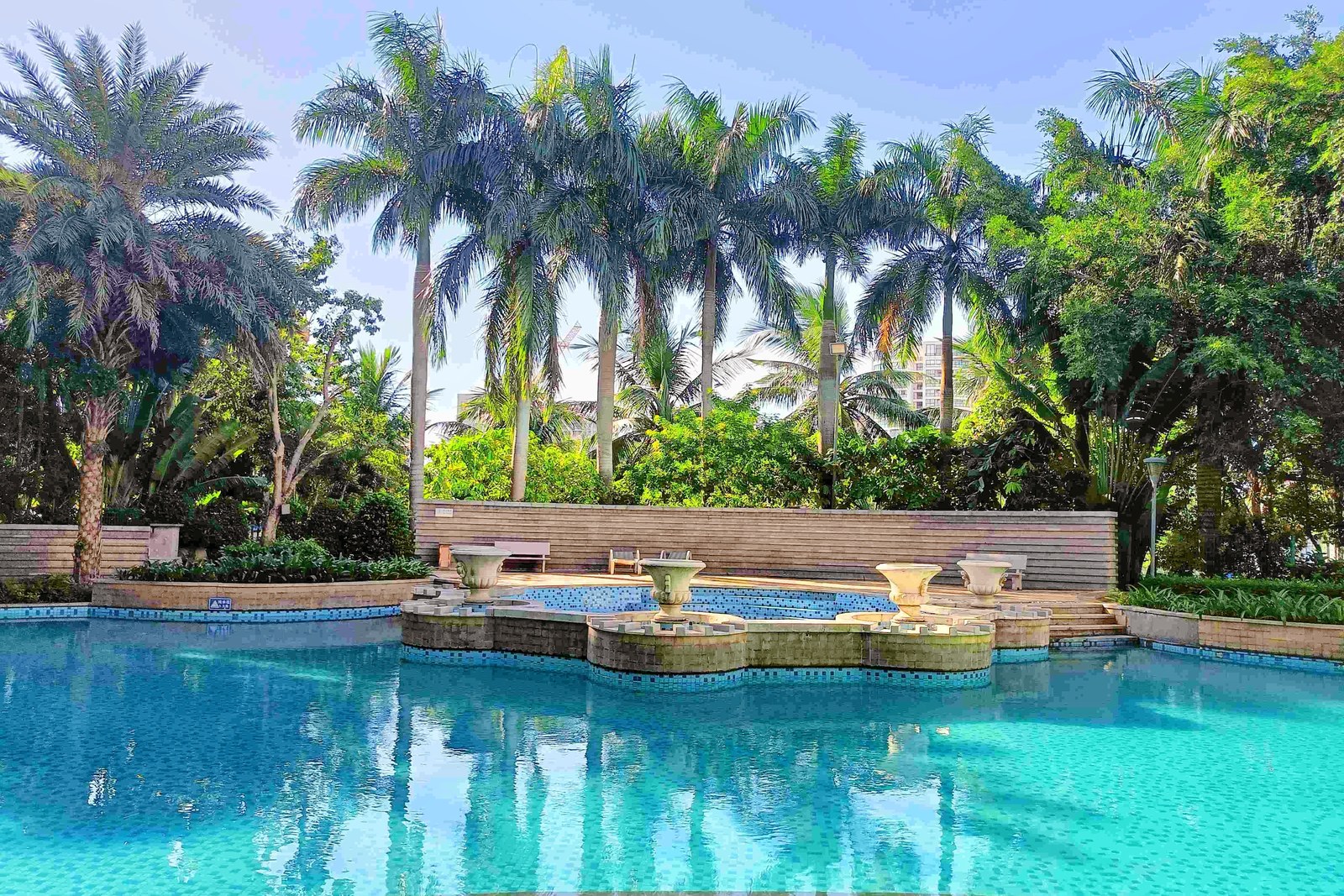
The hotels are mid-market towers of eight to twenty storeys, most of them built in the last two decades, and the standard double is a modern Chinese hotel room: pale tile floors, a big bed, air conditioning and a kettle, a bathroom with a shower rather than a tub, and a balcony if you paid for the sea view. Ask for the seaward side and a high floor, because the ground floors on the landward side look at the car park and the road; the difference in price is usually modest and the difference in the room is the whole point of being here. The apartment-style blocks that have gone up alongside them rent by the month and suit anyone staying a fortnight, but they come without service, and the hotels are livelier and cheaper than their lobbies suggest.
Practicalities
Price. A double with a sea view on the 盈滨半岛 runs about ¥300 to ¥700 a night in ordinary weeks, and climbs hard for the Spring Festival, the May holiday and the first week of October; the same hotels drop to the bottom of that range out of season, when the peninsula is quiet and the water is at its clearest. Rooms without the sea view, or in the apartment blocks behind, are a good deal cheaper and five minutes from the same shore.
Address. The hotels are on the 盈滨半岛 in 老城镇, 澄迈县, along the inner shore and on the western side near the 永庆寺 Yǒng qìng sì; the harbour at 东水港 and the 老城镇 station on the west-ring high-speed line are both within a few kilometres, and 海口市’s western suburbs begin immediately to the east.
Rooms. Ask for a high floor on the seaward side away from the lift lobby, and for the tide times, because the inner bay empties a long way and the beach is a different place at low water. Ask the desk to write the hotel’s name and address in Chinese for a driver, and to say which of the seafood restaurants around the harbour are open on a weekday, since several of them close when the boats do not go out.
Getting there. 海口美兰国际机场 Hǎi kǒu měi lán guó jì jī chǎng is the nearest airport, roughly forty minutes east by road; the island’s west-ring high-speed railway stops at 老城镇 lǎo chéng zhèn, which is inland of the peninsula and a short taxi ride from the hotels. The coast road links the peninsula to 海口’s 西海岸 and, going the other way, to 福山镇 and the rest of the county; buses run along it but a car is far more comfortable, and the whole peninsula is flat enough to walk in an evening.
Where to stay: the seaview hotels of the 盈滨半岛 at 老城镇 in 澄迈县, on the seaward side and a high floor. Use it as a base for 海口 and the county’s inland days, eat fish at 东水港, walk the western shore out to the temple at dusk, and treat the county’s own dishes as something you drive to rather than something you find at the door.
flowcloud would say that a county which lost its capital to a neighbouring city and kept the harbour has ended up with the better half of the arrangement: the history, the water, the railway station and somebody else’s traffic.