
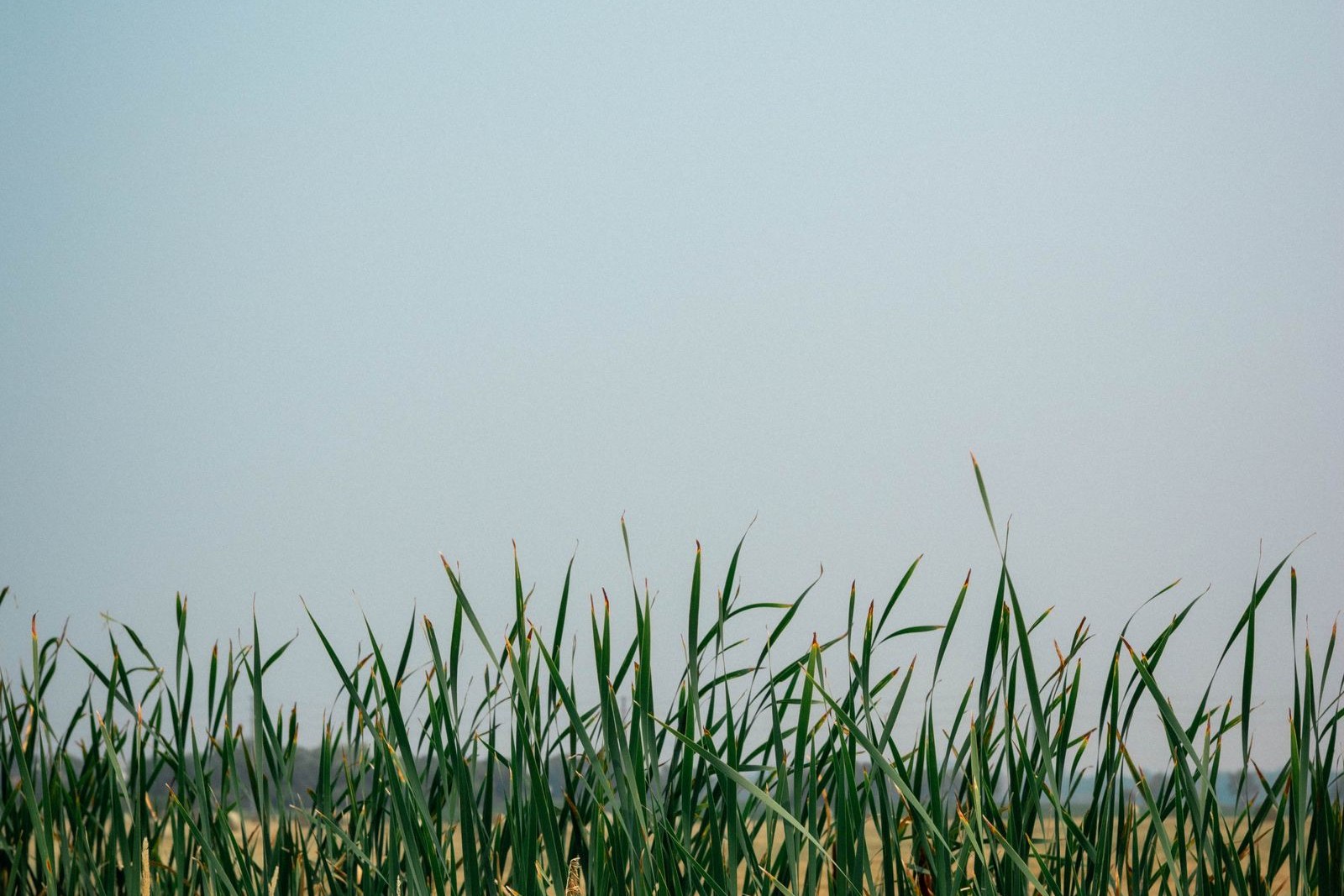
The reeds are taller than a person and they move like water themselves. 沅江市 Yuánjiāng Shì lies on the southern shore of 洞庭湖 Dòngtíng Hú, and the margins of South Dongting are one of the great reed beds of China: 芦苇 lúwěi, common reed, growing in dense stands over tens of thousands of hectares of shallow marsh, cut every winter for paper pulp and for the woven mats and blinds that the region sells, and standing over the water in summer as a green wall that goes on for kilometres. A cabin on the marsh edge puts you beside them. From the veranda you look out over a channel or a shallow bay with reeds on the far side and nothing else, and at night the frogs and the wind in the stems are the entire soundscape.
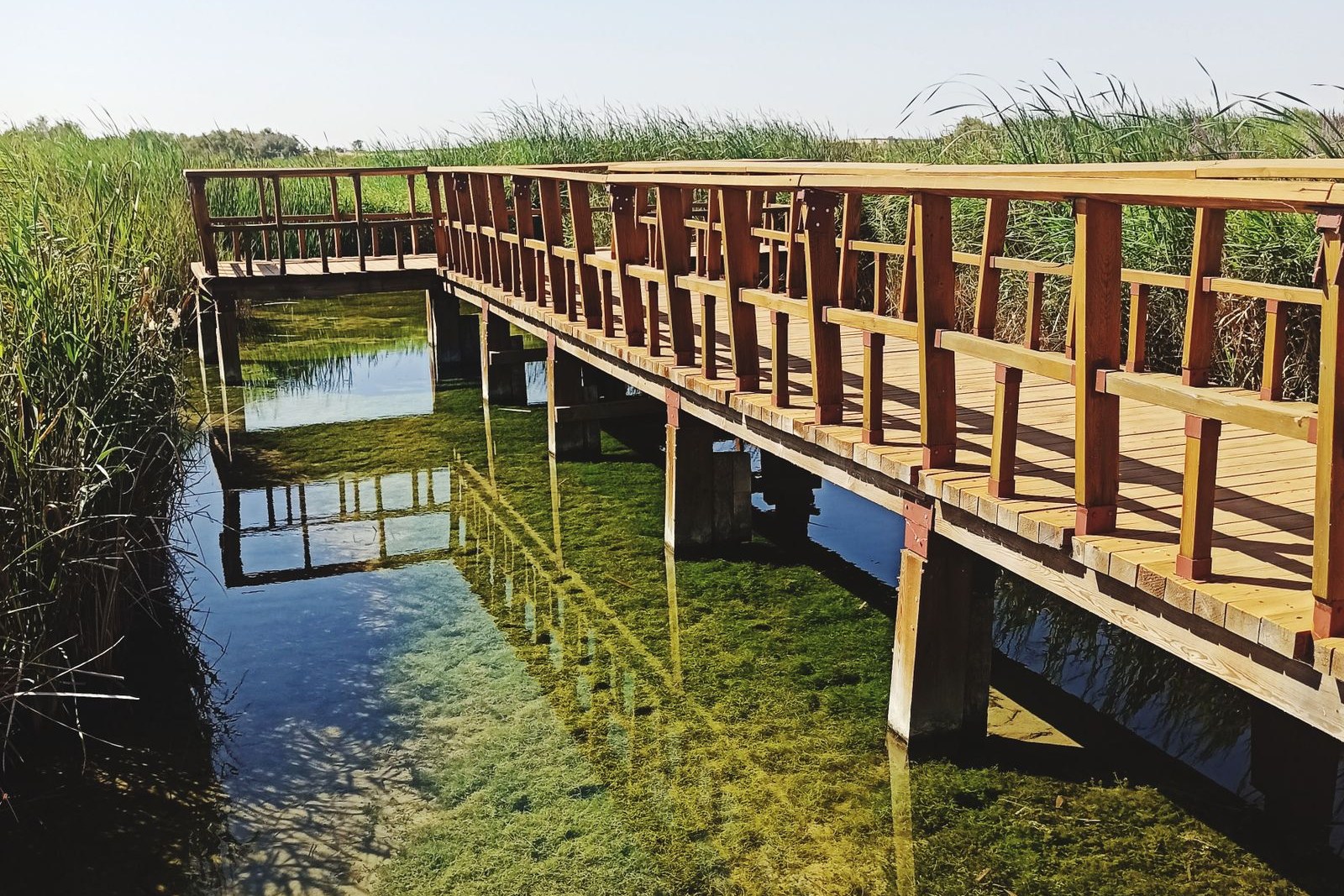
Accommodation here means a handful of timber huts or converted farm buildings put up by a family, a fishing cooperative or a small enterprise that has understood what the wetland is worth. They are basic: a room, a bed, a fan, a bathroom that may be a shared block, and a dining room with a fish tank. Some stand on stilts over the water and some on the bank. What they share is the position, and the position is genuinely unusual — this is a landscape of channels and reed islands that changes shape with the water level, and in the flood season the marsh gains half its area again and the paths you walked in April are under a metre of water by July.
What the Rooms Are Like
Plain, and honestly so. A hard double bed, a quilt that is heavy and a fan that is not enough in July, air conditioning in the newer cabins and none in the older ones, and a socket or two by the bed. Ask about the bathroom, which is the usual dividing line: en suite in the newest huts, a shared wash block in the rest, and hot water often from a solar unit that gives you nothing on a cloudy day. What every cabin has is the view and the quiet, and the birds — the wetland is a major wintering ground and from November the water across the channel fills with geese and ducks.
Practicalities
Price. A double runs roughly ¥120 to ¥300 a night. Rates barely move with the season, because the people who come in winter to watch birds are not the people who come in summer to sit by the water, and the two roughly balance. Meals are usually charged separately and are lake fish, lotus and reed shoots, twenty to sixty yuan a head.
Address. The cabins are on the marsh edge of 沅江市 Yuánjiāng Shì, around the South Dongting channels south and east of the city and within reach of the 南洞庭湖湿地 Nán Dòngtíng Hú Shīdì reserve and 凌云塔 Língyún Tǎ. They are listed by cabin name rather than street, and drivers will need the name and the village.
Rooms. Ask for a cabin on the water rather than the bank, and ask whether it has air conditioning, an en suite bathroom and a boiler rather than a solar unit. Ask which way the window faces and whether it is screened, and ask how far the cabin is from the shared wash block if there is one. In winter, ask whether heating is provided at all, because the marsh is cold and damp and a cabin without it is a cabin you will not sleep in.
Getting there. By road from 益阳市 Yìyáng Shì takes about an hour and a half, and from 长沙 Chángshā around two and a half hours. 沅江 Yuánjiāng is reachable by bus from Yiyang and from 岳阳 Yuèyáng, and the last stretch to the cabins is a local road that needs a car. There is no railway station in the county, and the nearest high-speed rail access is 益阳南站 Yìyáng Nán Zhàn.
flowcloud would say that a night among the reeds is the only way to understand a lake that spends half the year somewhere else, since the water moves the whole landscape up and down and the reeds are the part of it that stays.
Where to stay: in a timber cabin on stilts over the marsh along the 南洞庭湖 Nán Dòngtíng Hú channels of 沅江市 Yuánjiāng Shì, on the water side, with a screened window and a confirmed boiler. Ask about heating if you are coming between November and March, ask whether a boat can be arranged to the reed islands, and go out at dusk when the light comes off the water and the birds come in.