
郁南县 Yù nán xiàn is the county in the south-east of 云浮市 Yún fú shì that sits against 广西 Guǎng xī with the 西江 Xī jiāng bending around it, and the reason it earns a room is a river that is not the one you can see from the hotel. The county is called 广东大西关 Guǎng dōng Dà xī guān, the province’s great western gate, on the strength of that bend in the 西江, and one of its honours is a forest cover figure of 72.48 per cent, which is why the province calls it one of its lungs. But the water that made this place is the 南江 Nán jiāng – the South River, the lower course of what is also called the 罗定江 Luó dìng jiāng – which comes down through 罗定, cuts across 郁南, and carries the whole 南江文化 Nán jiāng wén huà story with it. The town that lives on that river is 连滩镇 Lián tān zhèn, and 连滩 is where an inn here belongs.
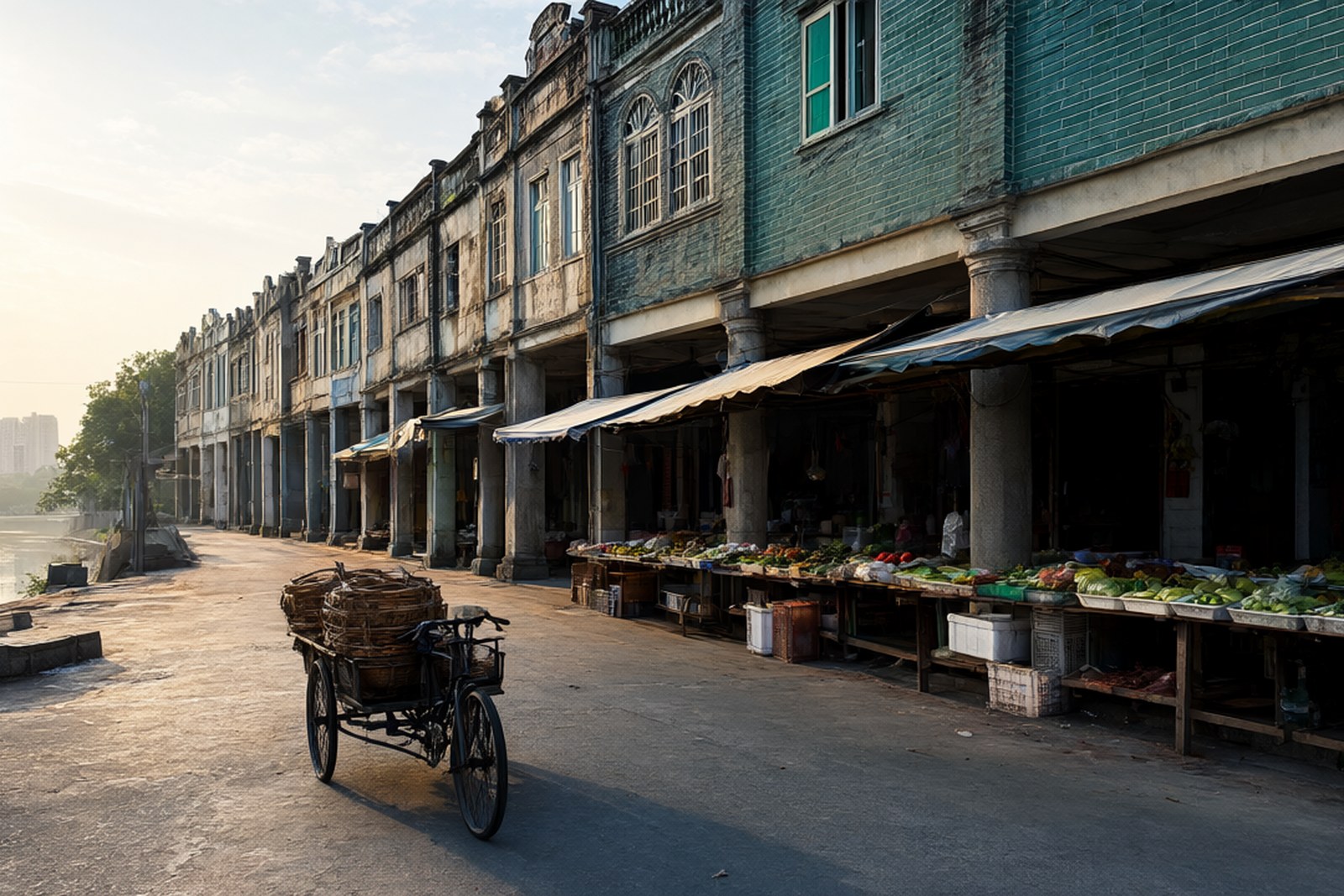
The county’s older name is the second thing worth knowing, because it explains a lot of what is on the signs. 郁南 was 西宁县 Xī níng xiàn for most of its history – in the Qing it and 东安, which is today’s 云浮, were both under the 罗定直隶州 and the three were known together as 三罗 Sān luó. That administrative habit is why the whole western side of this prefecture shares one culture and one river rather than three: the 南江 ran the trade, 罗定 ran the government, and 郁南 sat at the bottom of the water with the gate to 广西 on its other side. The report behind this article also flags that the county has neither an international-brand hotel nor much mid-range stock, and that the county town is not where a visitor should look for either – the inns are in 连滩, and that is the practical form of the argument. 连滩 is a four-hundred-year-old trading town and it looks the part, because the trade that built it built in a style that has survived better than most. The 骑楼街 qí lóu jiē, the arcade street, keeps its late Qing and early Republic frontage: blue brick under grey tile, with arches and shopfront openings that are a mix of Chinese and Western detail, which is what a river port buys when its merchants have seen 广州 Guǎng zhōu and 香港 Xiāng gǎng. Behind the arcades the town is a market town and behaves like one – 连滩市场 Lián tān shì chǎng and the commercial street are five or six minutes’ walk from the inn belt, the bus station is three hundred metres from 连滩宾馆 Lián tān bīn guǎn, and there is a large car park in front and behind it that takes seventy cars. The town is a 商贸重镇 shāng mào zhòng zhèn, a trade town for the south-eastern part of the county, and the 广昆 Guǎng kūn expressway’s 连滩/东坝 interchange is ten minutes away, which makes it a junction rather than a backwater.
What the sources will actually tell a guest about a bed here is unusually precise for a county town, and it is worth setting down because this is one of the few places in the prefecture where the middle of the market is well documented. 郁南连滩宾馆 Yù nán Lián tān bīn guǎn is at 连滩镇连滩大道 67 号, a two-star or economy address that opened in 2020 with seventy-two rooms, from about ¥101 to ¥109 a night, with the bus station three hundred metres away and the market and commercial street five to six minutes on foot; the 五指山森林公园 Wǔ zhǐ shān sēn lín gōng yuán is behind it. Its listed distances to the sights are the most useful thing in this article: 张公庙 Zhāng gōng miào 1.3 kilometres, 光二祖屋 Guāng èr zǔ wū 3.7 kilometres, 兰寨 Lán zhài 4.7 kilometres and 磨刀山遗址 Mó dāo shān yí zhǐ 8 kilometres. Beside it, 怡家便捷公寓 Yí jiā biàn jié gōng yù on 河堤四路 Hé dī sì lù runs from about ¥105 to ¥108, and further out near 兰寨 there are 印象汇酒店 from about ¥168 and 郁南福盈门 from about ¥100. The report is explicit that it found no reliable source for an international-brand hotel list in the county town and that there is little mid-to-high-end stock in 郁南 at all, so the honest position is that this is a county of economy inns and guesthouses and the choice is about position, not grade. Treat every figure as a band and check the live rate. The county’s history is one of the best arguments in the prefecture for sleeping in it, and the inn at 连滩 puts a guest inside it rather than visiting it. 磨刀山遗址 Mó dāo shān yí zhǐ at 河口镇和都村 Hé kǒu zhèn Hé dū cūn was found in January 2013; the excavation of the first locality in 2014 opened two hundred square metres of the fourth terrace of the 南江 and lifted nearly four hundred stone artefacts out of the red clay, including hand-axes, picks, choppers and scrapers, dated to roughly 600,000 to 800,000 years ago. That makes it the earliest cultural site found in 广东, and it moved the province’s human history back from the 马坝人 Mǎ bà rén of about 130,000 years to the age of 北京人 Běi jīng rén – a county of river traffic that turned out to be sitting on the province’s oldest known human presence. It was in the national top ten archaeological discoveries of 2014, went onto the eighth batch of national protected sites in 2019, and was named among the province’s ten most important discoveries of the decade 2012 to 2022; the display hall runs to 1,500 square metres of site with about 3,000 square metres of building and a selection of over two hundred photographs and more than sixty objects, laid out in five sections of which the first is the Palaeolithic and the original ecology of the 南江. It was made a provincial science education base in early 2022.
The park around it is planned at six thousand 亩 and about a billion yuan, with a protected zone, a cultural and amusement area, an agricultural and leisure belt and a wellness resort. Eight kilometres from the inn, that is a morning. The rest of what a 连滩 bed gives a guest is the 南江 culture belt read as a walk rather than a drive. 张公庙 Zhāng gōng miào, an old building of the Ming on the town’s own list and the shrine of the river’s water deity, with stone carvings that carry the local flood stories, is 1.3 kilometres away; a guest should know that the report could not find a reliable founding date for it, only “Ming-dynasty building”, so it is best treated as an old shrine rather than a dated one. 光二大屋 Guāng èr dà wū, the 光二祖屋 on the same local sign, is a Qing Hakka defensive compound on ten 亩 with five halls and five wings, seventy-two rooms arranged in a 回 huí square, walls a metre thick, firing slits and lookouts, and a clever courtyard drainage system, 3.7 kilometres out. 兰寨 Lán zhài, about 4.7 kilometres away, is the Qing village the local materials call a 状元村 zhuàng yuán cūn, with the 林氏宗祠 Lín shì zōng cí, the 十德门 and a 九狮图 jiǔ shī tú carving in the main hall that gets called a living fossil of 岭南 Lǐng nán woodcarving, and a viewpoint behind the village over the terraces of the 南江 valley – mirrored water at the May planting, gold at the October harvest. The village keeps its own customs, including a dragon made of straw with burning incense sticks carried in front of the ancestral hall, which is the local form of the 禾楼舞 hé lóu wǔ family of dances. All of that has an entry in the travel column and none of it is described here. What an inn adds is that it can be done at the hour when the river is the only thing moving. The county town is a different town and worth a paragraph for the guest who arrives by bus rather than by car. 都城 Dū chéng is the county seat on the 西江 Xī jiāng and holds 大王山国家森林公园 Dà wáng shān guó jiā sēn lín gōng yuán, a national AAA forest park with forest cover at 96.6 per cent and separate gardens of cherry, peach, plum, camellia, redbud, bougainvillea, maple and jacaranda, plus the 仙湖塔影 Xiān hú tǎ yǐng view that was laid out from 2000 with the 文德塔 Wén dé tǎ, 同心塔 Tóng xīn tǎ and 西宁湖 Xī níng hú. Beside it is 大河国家湿地公园 Dà hé guó jiā shī dì gōng yuán, which records 749 species of vascular plant across 152 families and seven rare or endangered protected plants. 郁南 also carries the 无核黄皮 wú hé huáng pí, the seedless wampee grown from two mother trees planted in 1934, which is a food-column subject rather than a hotel one, and the county is worth a night instead of a day at the right time of year for it.
What the Rooms Are Like
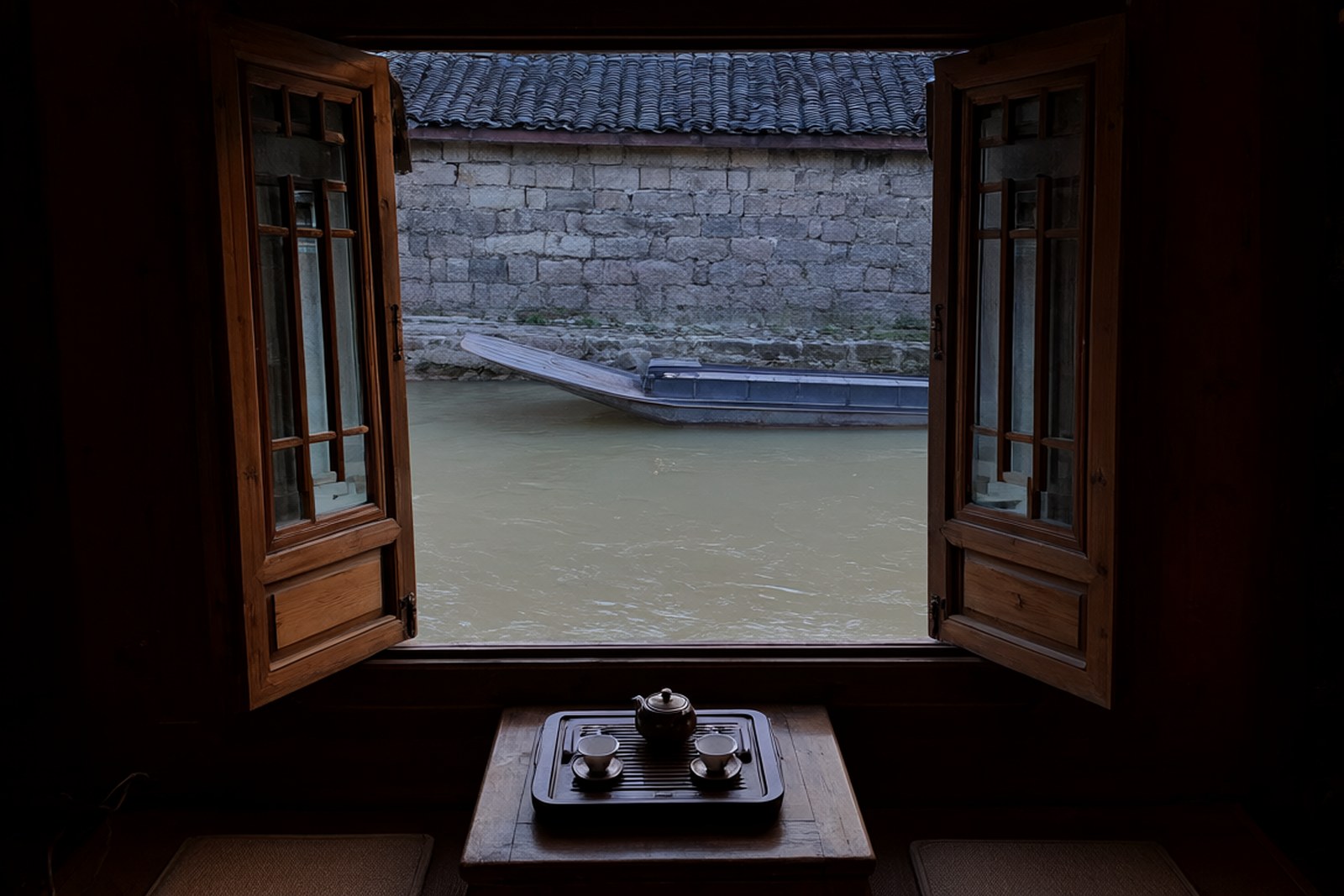
A 连滩 inn is a county-town building and it is honest about it. The documented example gives the pattern: seventy-two rooms in a building that opened in 2020, which in this market means a tiled floor, a firm bed or two singles, split air conditioning, an electric kettle, a small desk, a shower with a wall-mounted boiler, a television and a window looking at the street or at the 五指山 Wǔ zhǐ shān behind the building. Rooms in the newer buildings are bright and dry and the wifi works; rooms in the older ones are smaller and can smell of damp after a wet month, which in this county is most months. What the price band does not buy is a view of the river, because the inn belt here faces the market and the park rather than the water, and a guest who wants water in the window is looking for the few small guesthouses further along the embankment or should be prepared to walk to it instead. Two things are worth asking about before booking. Hot water in this market is a wall boiler or a roof tank, and in a full house the evening supply is the one that runs out; and heating, not cooling, is the question between November and March, because a river town in the west of the province is damp and cold in a way the 珠三角 Zhū sān jiǎo is not. Breakfast is a street matter rather than a hotel one – rice noodles, a rice roll or congee from a shop in the arcades five minutes away – and a guest who eats it standing up on the market street has understood the town better by eight in the morning than one who waited for a buffet.
Practicalities
Price. A room in 郁南县 Yù nán xiàn runs about ¥100 to ¥170 a night, which is the whole documented range in the 连滩 market – 郁南连滩宾馆 from about ¥101 to ¥109, 怡家便捷公寓 from about ¥105 to ¥108, 郁南福盈门 from about ¥100 and 印象汇酒店 near 兰寨 from about ¥168 – with the county town running the same and the mid-to-high-end being largely absent from the county. The 春节 Chūn jié week and the days of the 连滩 folk festivals are the times the town fills. Treat every figure as a range rather than a quotation and check the live rate, because these are small houses that reprice by the week and by the channel.
Address. The inns are in 连滩镇 Lián tān zhèn in 郁南县 Yù nán xiàn, on and around 连滩大道 Lián tān dà dào and 河堤四路 Hé dī sì lù, with 郁南连滩宾馆 at 连滩大道 67 号 three hundred metres from the bus station, the market and the commercial street within a few minutes on foot and 五指山森林公园 Wǔ zhǐ shān sēn lín gōng yuán behind the town; the county town of 都城 Dū chéng is on the 西江 Xī jiāng to the north, and the 广昆 Guǎng kūn expressway’s 连滩/东坝 interchange is about ten minutes by car.
Rooms. Ask for a room on an upper floor and away from the 连滩大道 frontage, because the highway and the market start early and the town is small enough that everything is heard. Ask whether the room is heated rather than only air-conditioned if you are here between November and March, ask whether hot water is a roof tank so you know to shower early, and ask whether the building has a lift if you are carrying anything heavy, which the cheapest addresses here do not. Ask the desk for a car and a driver for the day, since 磨刀山, 张公庙, 光二大屋 and 兰寨 sit in four directions at 1.3, 3.7, 4.7 and 8 kilometres, and none of them is a walk; and ask for the name of the town written in Chinese for the driver, because 连滩, 兰寨 and 大湾 are three different parts of the same county and the words sound alike in a street.
Getting there. The 广昆 Guǎng kūn expressway runs through the county with the 连滩/东坝 exit about ten minutes from the inn belt, and 连滩车站 Lián tān chē zhàn sends several services a day towards the 珠三角 Zhū sān jiǎo, with the bus station three hundred metres from 郁南连滩宾馆. 郁南县 Yù nán xiàn is about an hour and a half by road from 云浮市 Yún fú shì and roughly three hours from 广州 Guǎng zhōu, and it borders 广西 Guǎng xī on the 西江 side, which is why it has been a gate rather than a destination for most of its history. There is no high-speed station in the county; the fast rail arrival is 云浮东站 Yún fú dōng zhàn on the 南广 Nán guǎng line, after which the last leg is a car or a county bus.
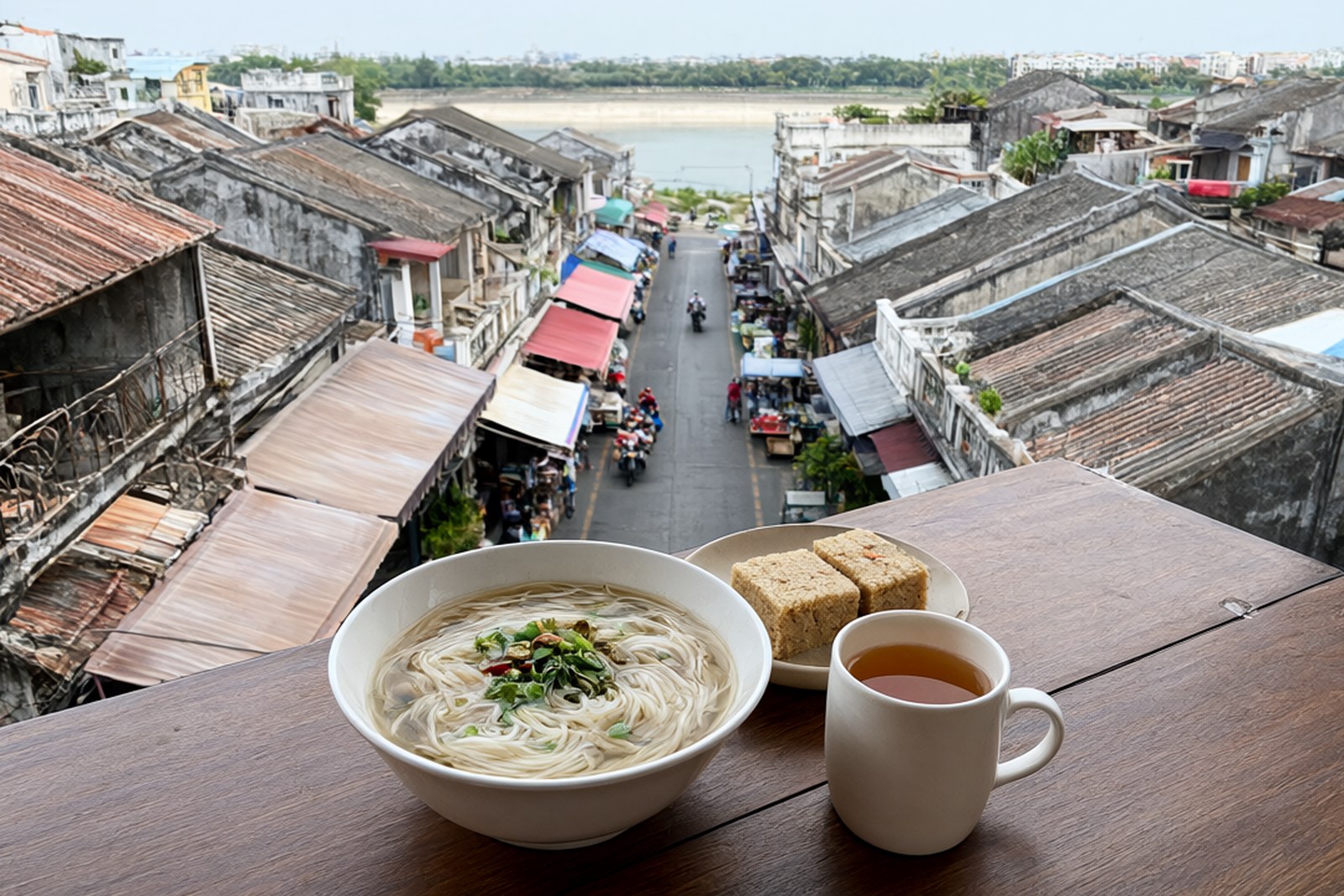
Where to stay: an upper-floor room at one of the small inns in 连滩镇 Lián tān zhèn, the river town in 郁南县 Yù nán xiàn where the arcade street, the market and the bus station are all on foot and the sights of the 南江 culture belt are ten minutes’ drive in four directions. Take the room for the position rather than the fittings, eat breakfast in the arcades, and hire a car for a day to put 磨刀山, 张公庙, 光二大屋 and 兰寨 into one loop rather than four separate outings.
flowcloud would say that a county which turned out to have been standing on the province’s oldest human site – six hundred thousand years of it, under a river terrace nobody had looked at – has a better claim to be visited than most places with a famous mountain, and that the right way to see it is from a cheap room above a market street, at seven in the morning, with the river doing all the work it has ever done.