
Yunju Temple Area Stays: Stone-Sutra Valleys, Courtyard Kitchens and Pilgrim Quiet of Fangshan District, Beijing
石经千载藏幽谷,山院灯前客梦禅。Shíjīng qiānzǎi cáng yōugǔ, shān yuàn dēng qián kè mèng chán – A thousand years of stone sutras hide in the quiet valley; in the mountain courtyard’s lamplight the guest dreams of Chan.
The stay around 云居寺 Yúnjū Sì Yunju Temple – the shrine called “Beijing’s Dunhuang” at the foot of 石经山 Shíjīng Shān Stone Sutra Mountain in 大石窝镇 Dàshíwō Zhèn Dashiwo town, southwestern 房山区 Fángshān Qū Fangshan District, 北京 Běijīng Beijing, where monks began carving Buddhist scripture into stone slabs in the Sui dynasty and some fourteen thousand of the slabs survive, while the town’s white-marble quarries have dressed the capital’s temples for centuries – is the 山村小院 shāncūn xiǎoyuàn mountain-village courtyard market: 农家院 nóngjiāyuàn farmhouse yards and stone-walled inns scattered through the villages below the temple, where rooms open onto walnut and persimmon shade below and the sutra mountain’s ridge above. The first band hugs the temple approach at 水头村 Shuǐtóu Cūn Shuitou village, where yard inns sell the shortest walk to the gate and a kitchen that feeds pilgrims; the second clusters over at 三岔村 Sānchà Cūn Sancha village, where a newer set of converted courtyards adds terraces, tea rooms and whole-house formats for families (worth confirming which houses open midweek – village yards keep weekend hours); the third spreads through 下庄村 Xiàzhuāng Cūn Xiazhuang village and the lanes between, garden houses with straight views across at the sutra caves. The honest product is the stone-and-scripture hush: the temple’s sutra halls below, the cave climb’s hundred-odd steps above and evenings that smell of harvest and hearth smoke – not resort lawns, spas or nightlife.
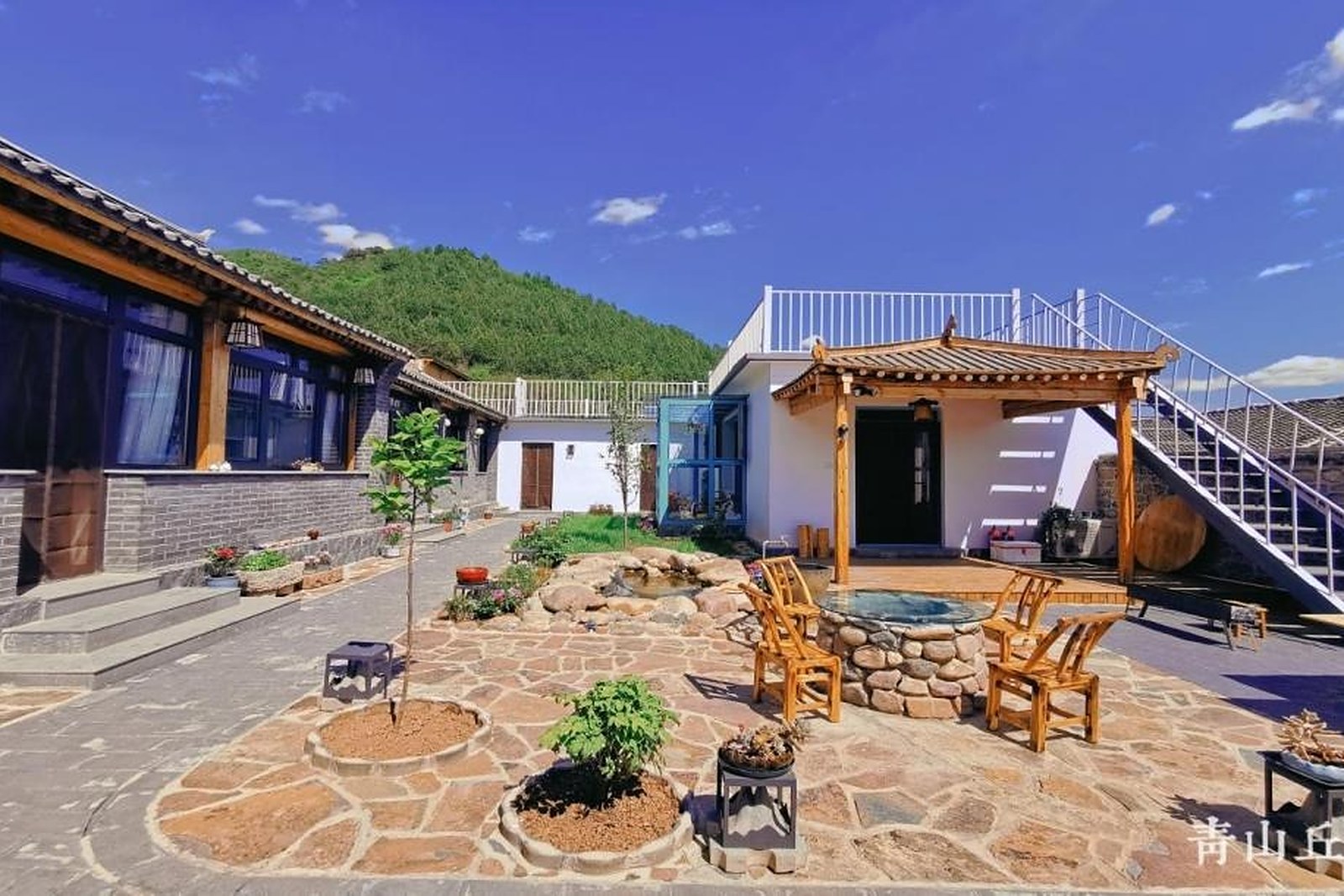
The October 2026 snapshot runs three bands, all worth confirming the details: gate-side yards, the Sancha courtyard cluster and the Xiazhuang garden scatter. The gate band buys the pilgrim morning: first through the temple gate, the sutra halls before the coach parties, the north pagoda’s silhouette before the wind rises; the Sancha band buys the modern conversion – bigger rooms, terraces, a host who roasts and brews – at a short drive from the gate; the Xiazhuang band buys gardens and views at village prices (worth confirming winter heating – mountain yards run cold from the first hard frost). What no band buys is evening infrastructure: the villages roll up with the light, dinner is what the yard kitchen cooks, and the nearest bright street is a drive back toward the towns (worth confirming dinner bookings – some kitchens cook only for guests who reserve a day ahead). What every band does buy, uniquely, is the scripture theme worn lightly: hosts point you up the cave trail on 石经山 Shíjīng Shān, out to the old marble quarry pit the locals call the jade-green lake, and back to the temple’s own sutra halls, so the stay reads like an annotated edition of the sight (worth confirming the cave trail’s seasonal opening). Who it suits: culture pilgrims, calligraphy and history travellers, slow couples; who it does not suit: amenity-stack seekers – the stone sutras are the spa here, and the early dark is a non-refundable part of the rate.
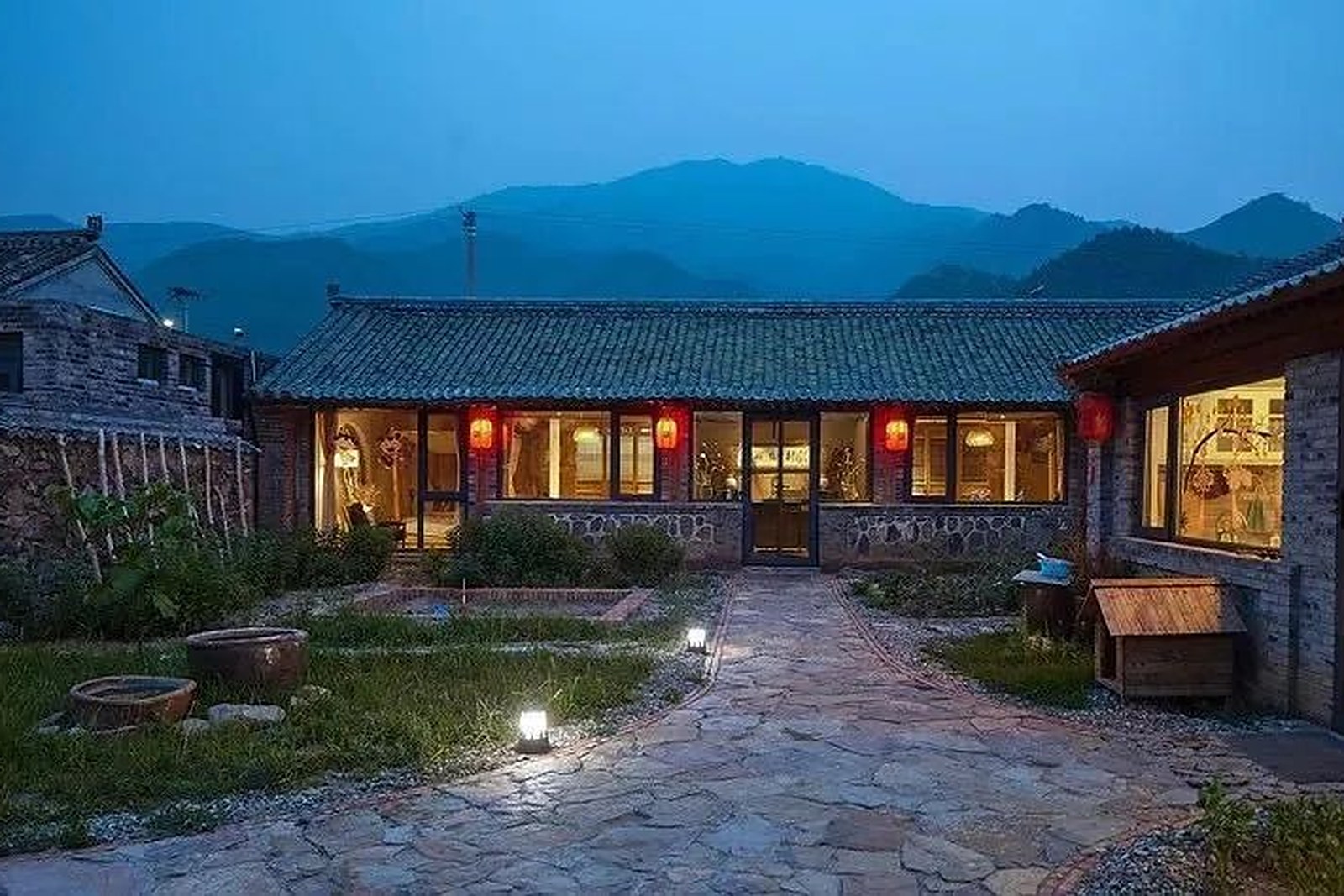
Practical shape: a Yunju night is a one- or two-night move keyed to the temple calendar – arrive mid-afternoon, walk the courts at dusk, climb the sutra caves at opening. Transit is the first question: the expressway hands drivers to country roads that narrow fast in the last villages (worth confirming the current exit and roadworks), buses run out from the district’s metro stations toward the temple (worth confirming connections, which thin at midday), and drivers should note parking sits at the temple lots, not the yards (worth confirming per house). The mountain, however, is the catch: the valley holds its chill, autumn nights bite and stone-walled rooms warm slowly, so book a heated, south-facing room unless the austerity is the mission (worth confirming heating per yard). Check the three things village rooms get wrong: 隔音 géyīn across thin courtyard walls when a family takes the next wing, whether the “mountain view” actually clears the persimmon and walnut trees (worth confirming view rooms individually), and whether the local dumpling feast needs pre-ordering (worth confirming per kitchen). Bring a flashlight for the lane and little else – and the wry truth: you came to read fourteen thousand slabs of carved scripture, then spent the evening reading your host grandmother’s face as she folded dumplings, and learned more (self-assessment from a writer who came for the sutras and left planning a rafting balcony at Shidu, a fire-bed near Zhoukoudian, and one business night in Liangxiang to file the story).
The Stays
- 水头村寺前农家院 Shuǐtóu Cūn sì qián nóngjiāyuàn farmhouse yards before the temple at Shuitou village: worth confirming the details, the shortest walk to the gate and kitchens that feed pilgrims. Who it suits: temple-goers and early starters; who it does not suit: lift loyalists.
- 三岔村改造院落民宿 Sānchà Cūn gǎizào yuànluò mínsù converted-courtyard inns at Sancha village: worth confirming the details, terraces, tea rooms and family formats under the ridge. Who it suits: families and design-minded couples; who it does not suit: walk-everywhere purists.
- 下庄村花园院民宿 Xiàzhuāng Cūn huāyuán yuàn mínsù garden-courtyard houses at Xiazhuang village: worth confirming the details, tree-shaded yards with straight views of the sutra mountain. Who it suits: slow-morning couples and writers; who it does not suit: car-free travellers (worth confirming the transport details).
- 镇区经济宾馆 zhènqū jīngjì bīnguǎn budget guesthouses in the town center: worth confirming the details, plain beds within a short drive of the temple gate. Who it suits: value hunters and late arrivals; who it does not suit: anyone after the courtyard mood.
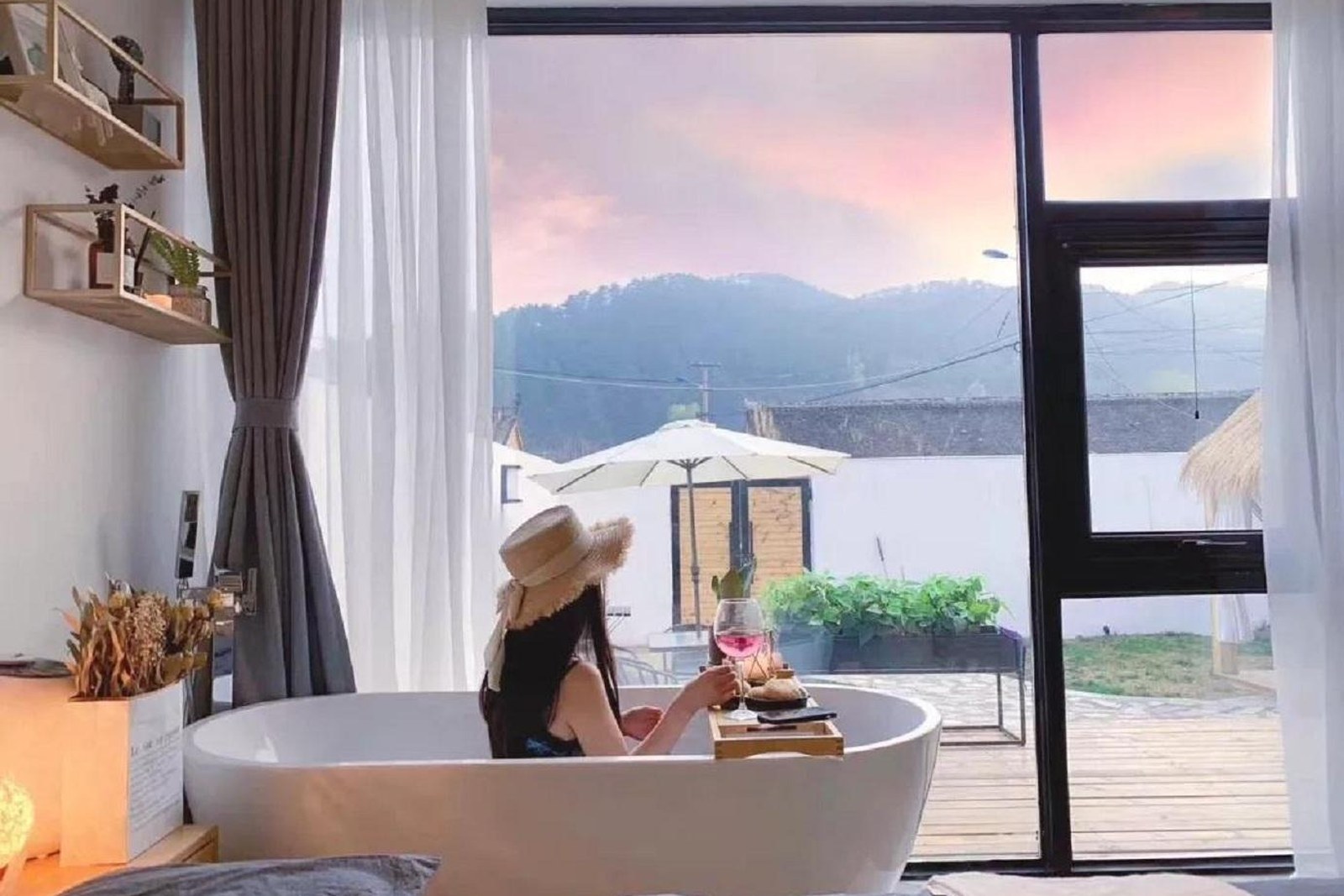
flowcloud would say that the Yunju stay is a night bought for the slabs – gate-side yard to converted courtyard in the October 2026 snapshot, all worth confirming the details – and that the honest move is to sleep at the temple’s altitude, book dinner before dark and let the cave trail set the schedule, because the scripture hush is the amenity and the early dark is the price – the stone keeps the only library. All checked October 2026.
Where to stay: Book the Shuitou village gate-side yards for the shortest walk to the temple gate and kitchens that feed pilgrims, or the Sancha converted courtyards for bigger rooms, terraces and family formats a short drive out. All checked October 2026.