
云雾山 Yúnwù Shān, the Yunwu Mountains on 璧山区 Bìshān Qū, Bishan District’s northern edge, carry the mature end of the district’s farmstay trade: a forest resort villa that seats four hundred in its dining halls and beds a hundred upstairs, cottage properties like 云溪谷 Yúngxī Gǔ Yunxigu running the quiet family trade, and the farm-restaurant street at 八塘镇 Bātáng Zhèn Batang below the cherry valley filling in the day traffic. The standard package is two days – up in the morning, farm lunch, fishing or the lake in the afternoon, bonfire and fire-pot chicken at night, the cloud line at breakfast – and the rows exist because Chongqing keeps buying it. This page is written on the rows as a system, because no single house owns the mountain’s lodging name.
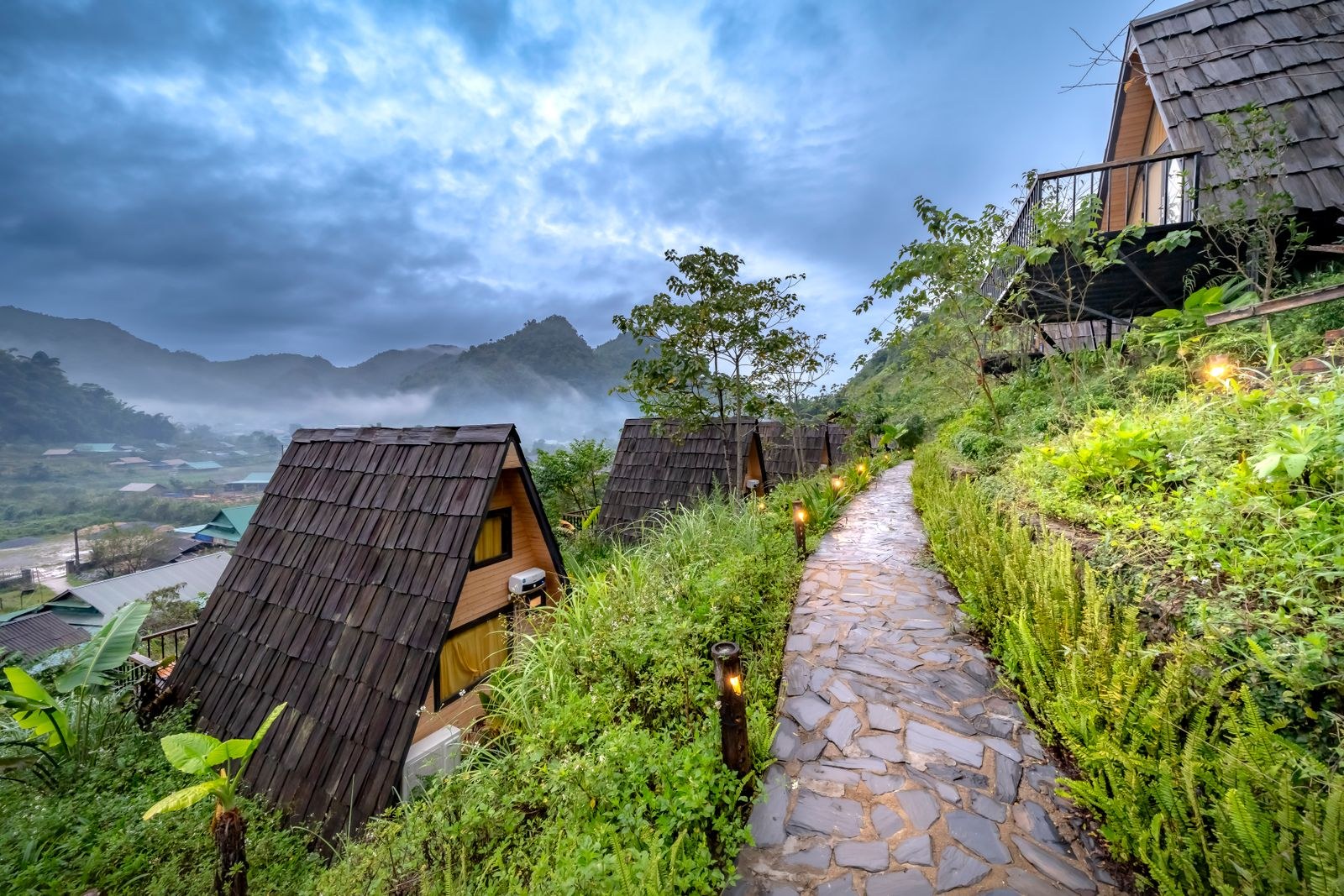
The scale is the first fact. The big house on the mountain – the forest resort villa the district’s own weekend articles name – is built for the coach trade: dining halls that seat four hundred across a lunch service, lodge floors that bed a hundred, a games room with the free billiards table the reviews mention, barbecue courts and the bonfire square out front for the evening. That is industrial agritainment, and it works because the Chongqing team-building and reunion trade books it by the coach-load: company outing, class reunion, clan dinner – the formats that need a hundred beds and a kitchen that never misses a sitting. The cottages run the other end: 云溪谷 and its neighbours take families and drive-in couples, trade on the quiet, run the same kitchen at table scale, and fill the midweeks the coaches do not want.
The kitchen is the mountain’s real product, and the rows’ menus prove it. The farm table at Yunwu runs the Chongqing hill repertoire at full strength – 柴火鸡 cháihuǒ jī the firewood-wok chicken cooked at the table over a real wood fire, 老鸭汤 the old-duck soup, the whole roasted lamb that a booked group orders ahead, the smoked and cured pork of the range, the spring-water vegetables off the terraces, and the fishing pond’s catch cooked to order. The batang street below the cherry valley runs the same kitchen in day-trip format through the blossom and pick weeks. The page names the repertoire as a class because the rows cook the season and no posted canonical menu exists; the honest facts are the formats – wood-fire at table, ahead-ordered lamb, pond-to-wok fish – and those are stable.
What the record supports is the rows, the scale figures the weekend articles report, the named formats of the kitchen and the two-day package; what it does not support is any per-night posted price, any ranking among the houses, or any founding dates, and none is invented here. The rows price by the package and the season – the coach trade books by the head, the family trade by the room, and the cherry and autumn weeks reprice everything – which is why the page quotes no rate: the posted number does not exist for a trade that books by WeChat and phone. A reader books the big house through the group channels and the cottages through the platforms where listed, and the honest page says the channels rather than inventing a tariff.
The rows also give the district’s northern argument its overnight half. The lake’s canteen-hotels hold the water trade, the cherry valley holds the April month, and the farmstay rows hold everything else: the bonfire economy, the coach weekends, the family midweeks – a lodging market running at rural-industrial scale on a mountain with no town on it. It is the Chongqing peri-urban farm trade at its most developed, and the district’s own weekend literature treats it as the default answer to where to stay in the north. All checked October 2026.
Words and Names
云雾山 Yúnwù Shān, the Yunwu Mountains, 璧山区 Bìshān Qū, Bishan District’s northern farmstay rows: the forest resort villa seating four hundred and bedding a hundred with its free billiards room, barbecue courts and bonfire square; 云溪谷 Yúnxī Gǔ Yunxigu and the cottage row running the family trade; and the 八塘镇 Bātáng Zhèn Batang farm-restaurant street below the cherry valley. The kitchen repertoire runs 柴火鸡 cháihuǒ jī firewood-wok chicken, 老鸭汤 old-duck soup, ahead-ordered roasted lamb, cured pork and pond fish; the package is two days with the bonfire night. No posted per-night rate, house ranking or founding date is on the public record consulted, and none is invented here.
What the Locals Know
The local knowledge is about which house for which crowd. The big house is for the coach: book by the head, expect the banquet rhythm, and put the bonfire on the first night because the second morning starts early; the cottages are for the quiet, and a family that books one gets the same kitchen at a table’s scale. The lamb and the fire-pot chicken are ahead-orders, not menu items – a group that calls a day early eats the mountain’s real cooking, and a group that does not eats the standard set. Midweek is the mist trade: the ridge clears in the morning, the ponds are empty, and the houses price the quiet accordingly through the WeChat channels the page cannot quote. What the record does not carry is any tariff or ranking, and the page declines both – the scale figures and the formats are the facts, and the phone call is the rest.
Practicalities
Price. No posted per-night rate is on the record consulted, and that is the format rather than a gap: the coach trade books by the head and the family trade by the room, through phone and WeChat channels, with the cherry and autumn weeks repricing everything. The lamb and the fire-pot chicken are ahead-orders, not menu items – a group that calls a day early eats the mountain’s real cooking at a quoted package price, and a group that does not eats the standard set.
Address. The rows run along the Yunwu Mountain roads of northern 璧山区 Bìshān Qū, Bishan District – the forest resort villa and the cottage row on the ridge roads, 云溪谷 Yunxigu among them, and the 八塘镇 Batang farm-restaurant street below the cherry valley. The district’s own weekend literature treats the mountain as the default answer to where to stay in the north, and the addresses resolve through the booking channels rather than through street numbers.
Rooms. Plain twins to the villa’s en-suite floors: the big house beds a hundred upstairs for the coach trade, the cottages take families and drive-in couples at table scale, and the standard is the clean rural room rather than the resort suite. The two-day package is the unit – farm lunch, afternoon water, bonfire night, cloud-line breakfast – and the rooms are priced as part of it, not apart from it.
Getting there. The mountain is about an hour’s drive from the Chongqing side, up the ridge roads the rows sit along; the Batang street below the cherry valley is the day-trip front door. Book by phone and WeChat as the trade actually does, put the bonfire on the first night because the second morning starts early, and wear real shoes for the paths between the houses.
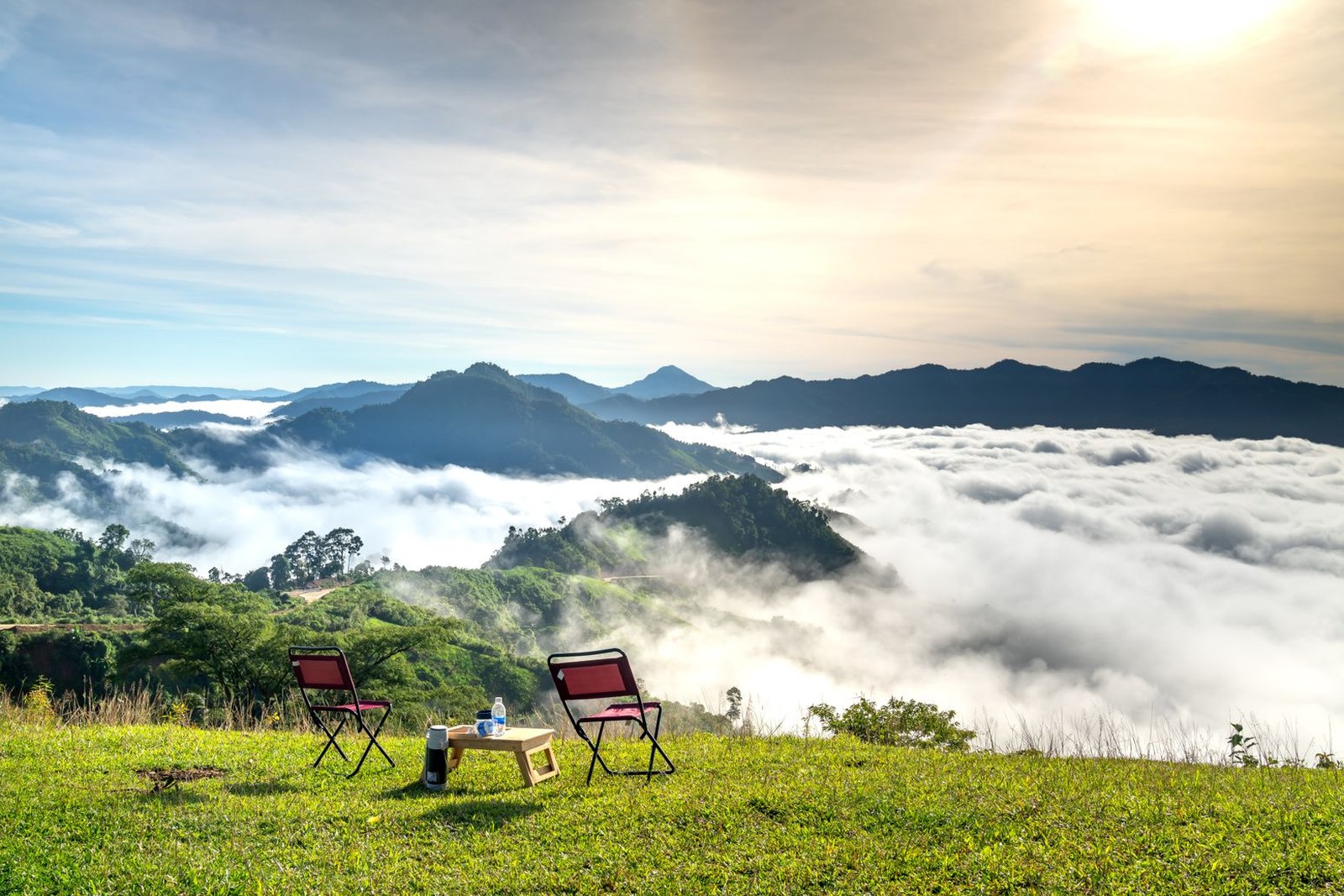
flowcloud would say that the Yunwu farmstay rows are industrial agritainment done honestly – a resort villa seating four hundred and bedding a hundred for the coach trade, cottages like 云溪谷 Yunxigu for the families, and a kitchen repertoire of firewood-wok chicken, old-duck soup and ahead-ordered lamb – and that the correct way to book the mountain in 璧山区 Bishan District is the package by phone and WeChat, because no posted tariff or ranking survives in the record consulted and none is invented. All checked October 2026.
Where to stay: the rows run along the Yunwu Mountain roads of northern 璧山区 Bìshān Qū, Bishan District – the big house and the cottages on the ridge roads, the Batang street below the cherry valley – reached from the Chongqing side in about an hour; per-night tariffs, house booking lines and founding dates are not on the record consulted and none is invented here. Pair this page with the cherry-valley page for the April month and the Qinglong Lake pages for the water half of the northern loop.