
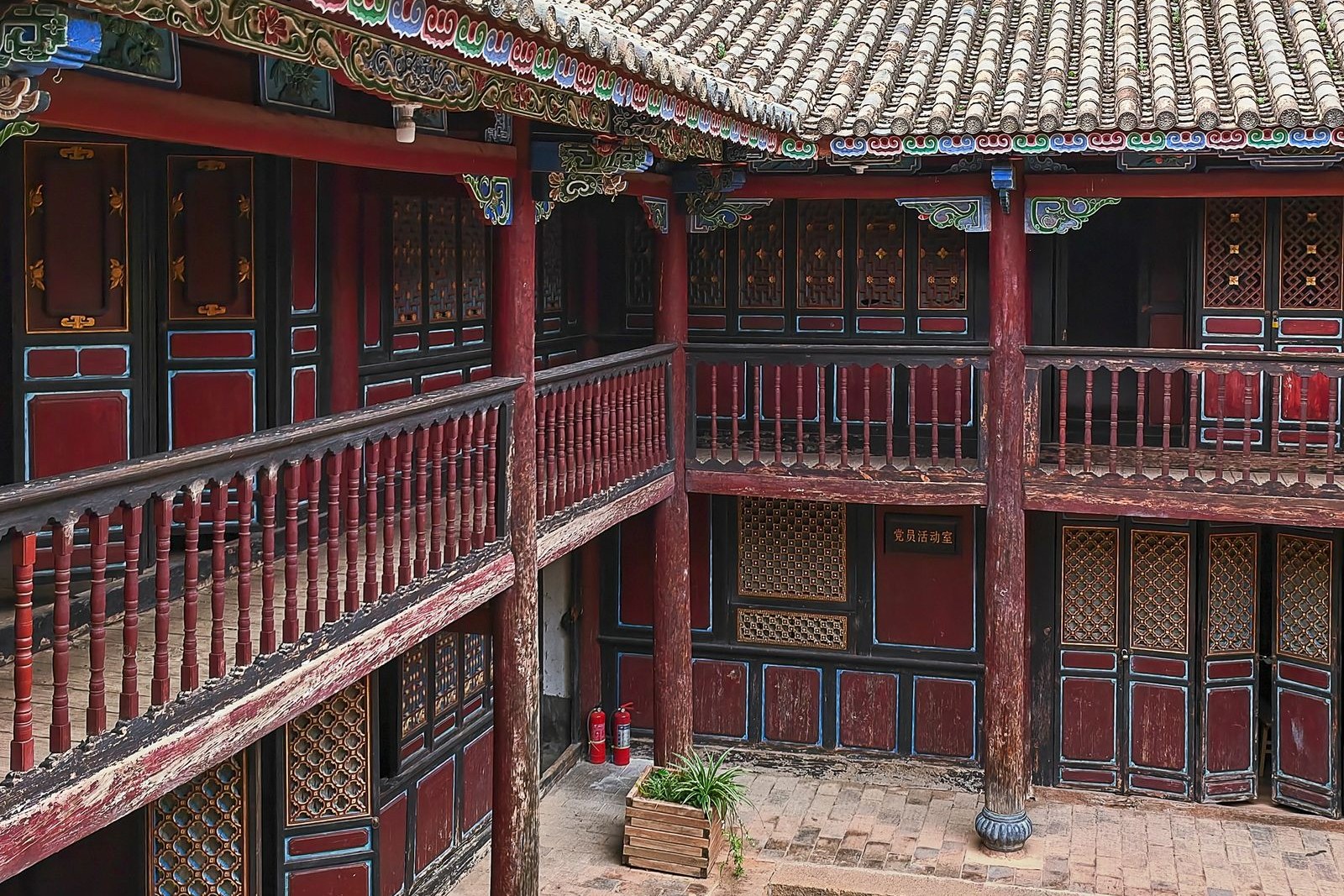
The inn is a courtyard house on the lower slope, built around a square of paving with a tree in it, and the tea comes from the hill behind the kitchen. 云阳山 Yúnyáng Shān rises directly above 茶陵县城 Chálíng, in the south-east of 株洲市 Zhūzhōushì, and it is the kind of mountain that a county town keeps for itself: a Taoist site for more than a thousand years, heavily wooded, with temples and pavilions along a stone path up the ridge, and a view from the top that on a clear day takes in the 洣水 Mǐshuǐ and the whole flat basin of the county. Rooms in the courtyard inns around the foot and lower slopes are ¥150–320, and the food is the county’s own — 糊啦 húla, cured pork, mountain vegetables.
云阳山’s religious history is genuinely long. It has been a Taoist mountain since at least the Tang, with the usual pantheon of halls and shrines built and rebuilt up the slope, and the local tradition links it to 炎帝 Yándì, the Yan Emperor, whose tomb lies in the next county east — the mountain is said to be where he took his rest, and the place is treated as part of the same sacred landscape. The ascent is a stairway rather than a climb: several hours up and back at an easy pace, past a series of temples and viewpoints, with tea houses at intervals where somebody will pour you a cup of the local green. In spring the lower slopes are covered in blossom and the county comes up in family groups; in winter it is empty and the stone is cold and the whole thing is much better.
茶陵 Chálíng itself is worth the walk before or after. It is an old county town with a walled core, a 南宋 Southern Song city wall fragment, and an unusually dense collection of red-tourism sites from the 1920s and 30s; the county was the base of one of the earliest Soviet areas, and the 工农兵政府 Gōngnóngbīng Zhèngfǔ — the workers’, peasants’ and soldiers’ government — set up here in 1927 is commemorated in a small museum. The county is also the home of 谭延闿 Tán Yánkǎi, whose name is on one origin story for the local 糊啦 húla soup.
What You Are Paying For
Price. ¥150–320 for a courtyard inn room, usually with breakfast and often with dinner. The upper end is a new building with private bathrooms; the lower end is a farmhouse in the villages below the gate.
Address. 云阳山 Yúnyáng Shān, 茶陵县 Chálíng Xiàn, 株洲市 (Zhūzhōushì), 湖南 (Húnán), within a few kilometres of the county town centre.
Rooms. Four to fifteen. Ask for a room facing the mountain rather than the road, and confirm heating in winter, which is not universal in the cheaper houses.
Getting there. 茶陵 Chálíng has a station on the high-speed line, 茶陵南站 Chálíng Nán Zhàn, about 20 minutes and ¥30–50 by taxi from the mountain. From 株洲 Zhūzhōu city it is roughly two hours by road; from 长沙 Chángshā about three.
What the Locals Know
Climb in the morning and eat 糊啦 húla afterwards. The soup is the county’s winter dish and a bowl after a cold descent is the correct sequence.
Go in spring for the blossom or in winter for the emptiness. Summer here is hot and the mountain gets busy with school groups.
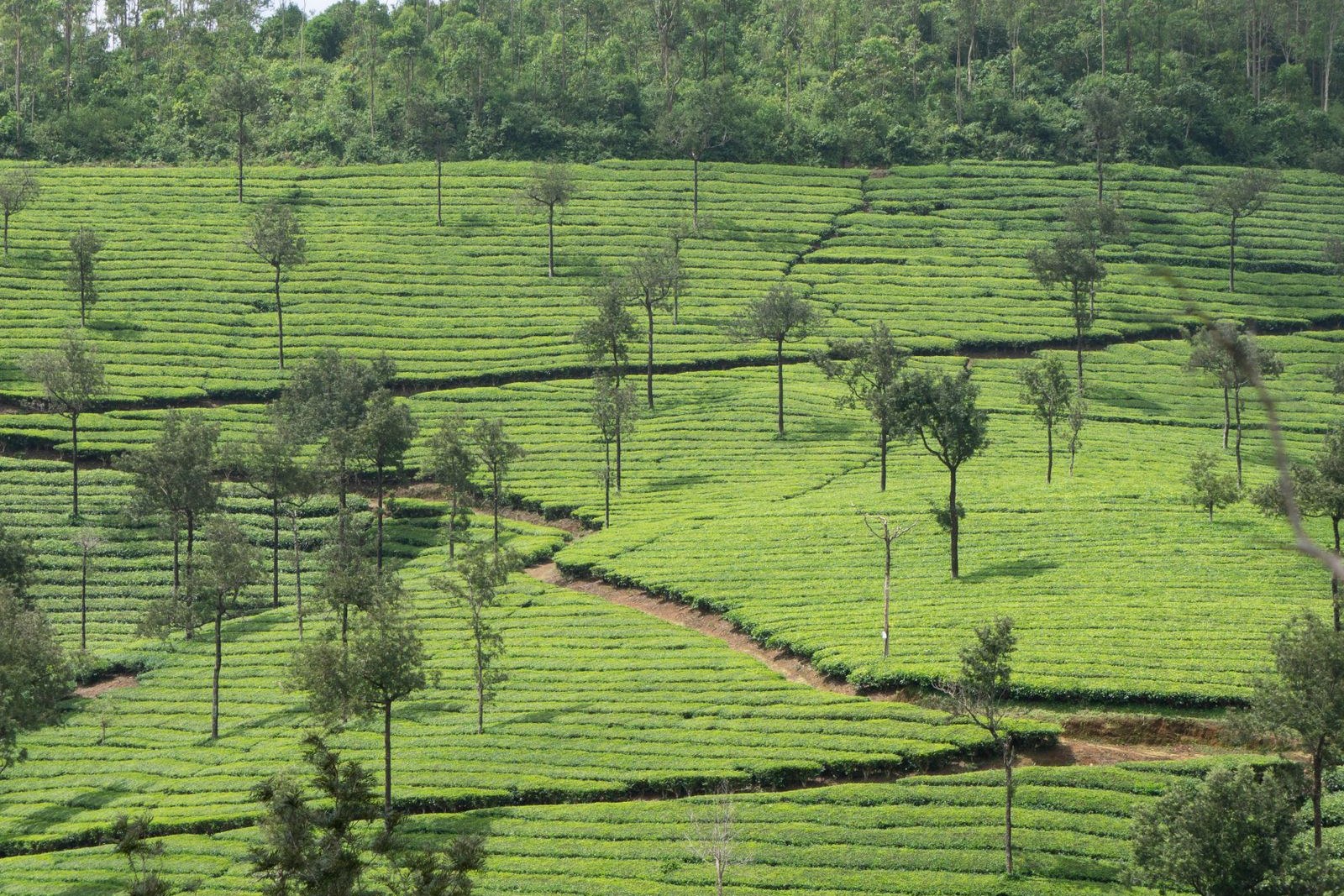
Drink the local tea. 茶陵 Chálíng means “tea tomb” and the county has grown tea on these slopes since the legend of the Yan Emperor’s grave; 茶陵红茶 Chálíng hóngchá, Chaling black tea, is a protected product.
Visit the old town while you are at it. The walled core and the 1927 government museum are ten minutes from the foot of the mountain and almost nobody who comes for the hike sees them.
Where to Stay
At the foot of the mountain if you want to walk up early. In the county town centre if you want restaurants and shops within walking distance — the two are close enough that this is a small decision, and the town hotels are ¥120–220.
flowcloud would say that a mountain which has been a Taoist retreat, a pilgrimage route, a source of tea and now a place for county families to spend a Sunday has had a long and entirely unbroken career, and that the stone stairway up it was worn by far more believers than tourists, which is the better way round.
Where to stay: 云阳山 (Yúnyáng Shān), 茶陵县 (Chálíng Xiàn), 株洲市 (Zhūzhōushì), 湖南 (Húnán). Courtyard inns ¥150–320 with breakfast; county town hotels ¥120–220. About 20 minutes and ¥30–50 by taxi from 茶陵南站 (Chálíng Nán Zhàn). Walk up in the morning, eat 糊啦 (húla) afterwards, and see the old town and the 1927 museum on the way back.