
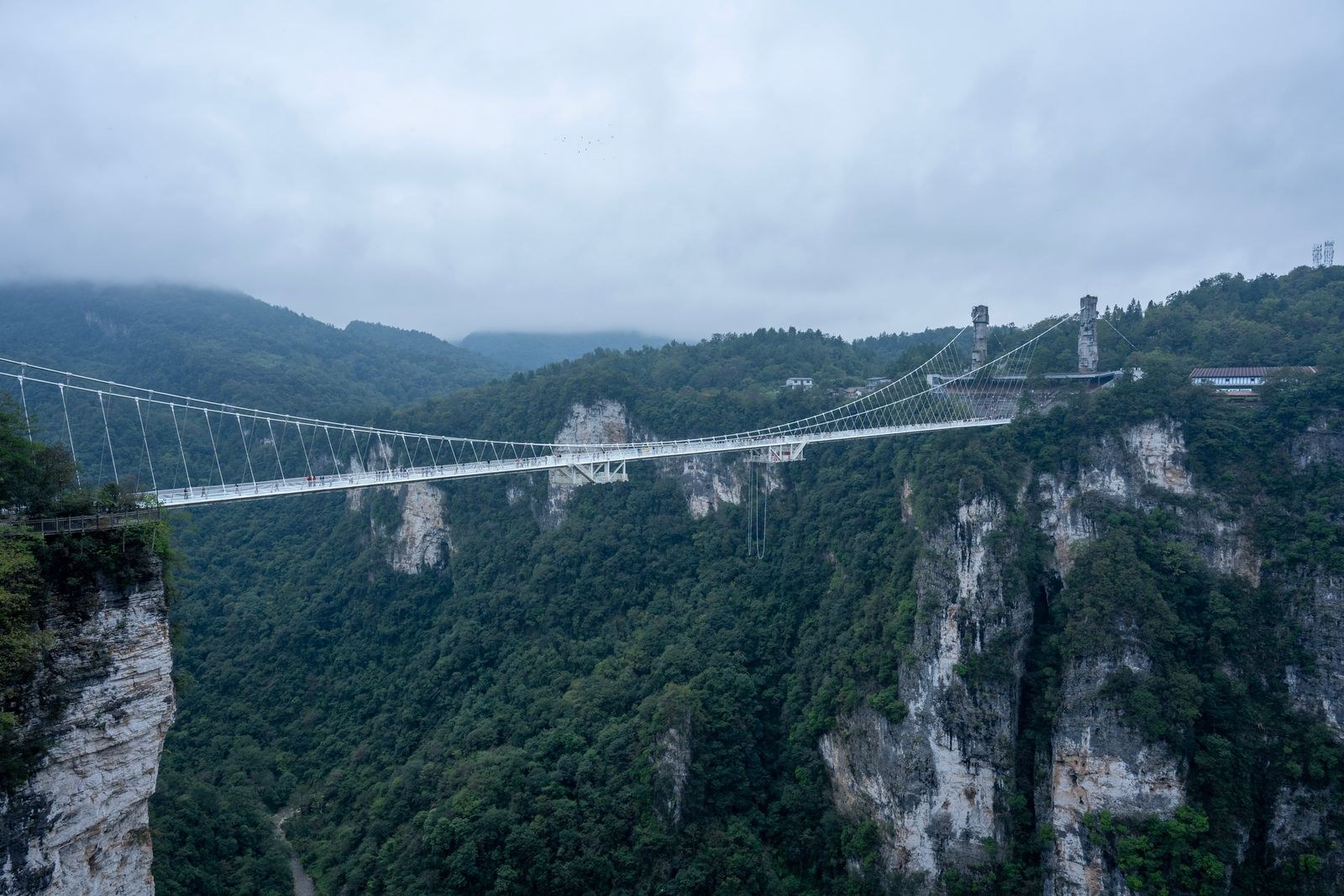
From the guesthouse gate you can see the bridge, and the bridge is a strange thing to be able to see from a village. It is a glass deck strung between two cliffs, so thin from a distance that it reads as a scratch on the air, and there are tiny figures on it, and the gorge below it drops away for three hundred metres to a stream you cannot see from here. The people standing on it hold the handrail and walk in the slow, careful way of people concentrating very hard on not looking down. 张家界大峡谷 Zhāngjiājiè Dàxiágǔ is in 慈利县 Cílí Xiàn, the county to the east of 张家界 Zhāngjiājiè city, and the villages on the rim above it have quietly become the most convenient place in the region to sleep.
The Bridge and the Canyon
The 玻璃桥 bōli qiáo, the glass bridge, opened in 2016 and immediately became one of the most photographed structures in China. It spans about 430 metres across the canyon, with a deck width of six metres, hung some 300 metres above the floor, and it was designed so that the deck is a continuous sheet of glass — you walk out over the void and the void is under your feet, with the frame and the cables doing the work and nothing much else in between. It was, when it opened, the longest and highest glass-bottomed bridge in the world, and it still holds its own against the several that have been built since.
But the bridge is only the entrance. The canyon underneath it is a proper day out in its own right: a narrow gorge with a stream running along the bottom, steep forested walls, a series of staircases and boardwalks cut into the rock, several caves and dripping overhangs, and a short boat trip at the end along the quietest stretch of the water. The full circuit takes three to four hours at an unhurried pace, and the crowds thin dramatically once you are past the bridge and into the gorge — most people ride the bridge, take the photographs and leave.
The best reason to stay the night here rather than commute from the city is that the bridge is a morning or late-afternoon attraction and an unbearable one in the middle of the day. First entry, or the last two hours before closing, and the deck is almost empty and the canyon has some light in it.
The Lodging
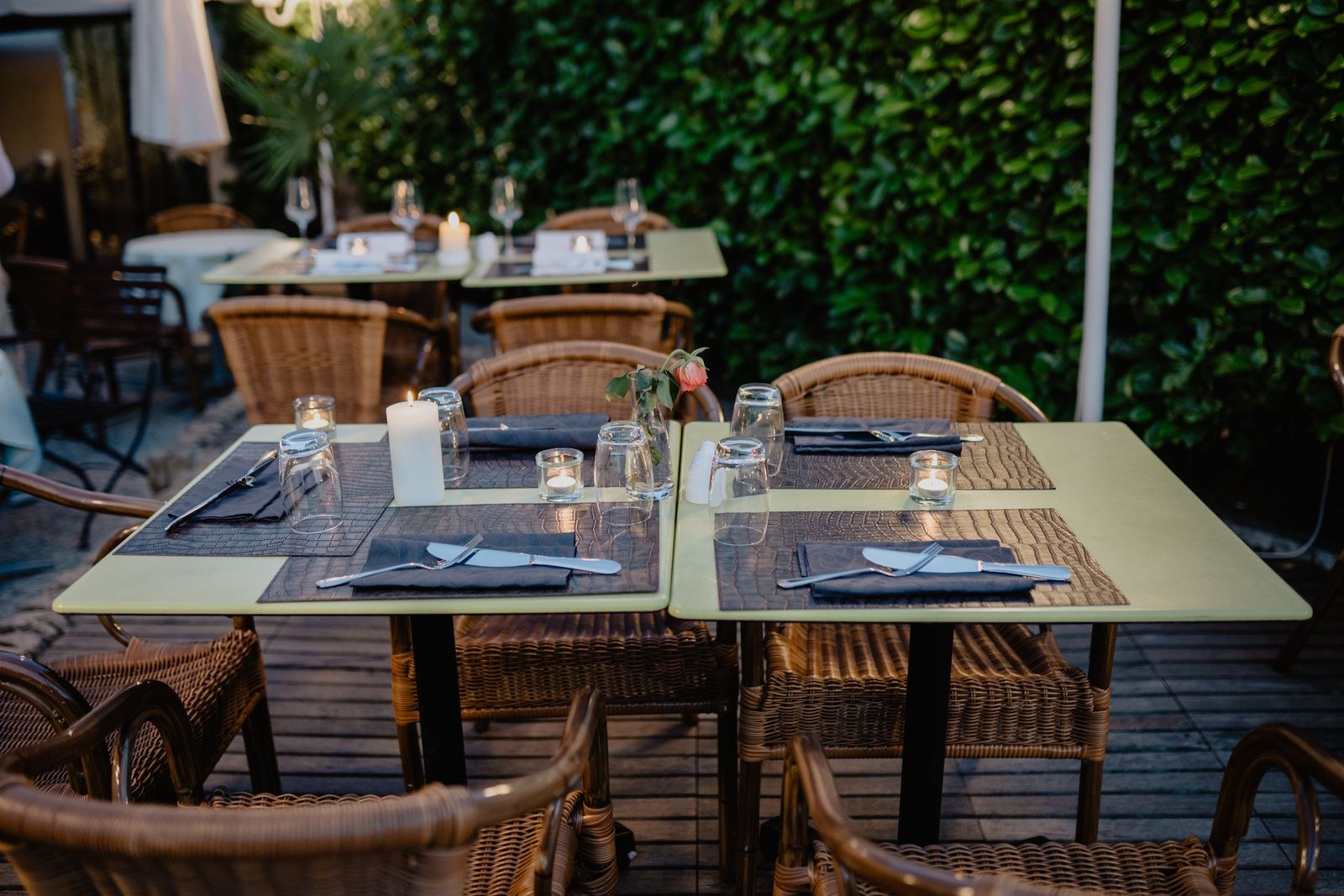
There is no resort development at 张家界大峡谷 Zhāngjiājiè Dàxiágǔ. What there is, on the roads approaching the scenic area entrances, is a strip of small family guesthouses and 农家乐 nóngjiālè, farmhouse restaurants with rooms, which is a very Chinese institution and a good one: a family home with four or six guest rooms, a courtyard, a kitchen that cooks what the family is eating, and a price that has not been set by an international hotel chain.
The better ones have been doing this for a decade now and have the details right — decent mattresses, working hot water, air conditioning, a terrace, and often a mulberry tree or a bamboo grove in the yard. Rooms are generally clean and plain: a double bed, a bathroom, sometimes a small sitting area. Views vary from a hillside to, if you get lucky, a corner of the bridge.
The food is the other reason to be here rather than in a hotel. Dinner at a 农家乐 nóngjiālè is a set of home dishes cooked to order — 土家三下锅 tǔjiā sānxiàguō, cured pork with garlic shoots, a chicken stewed with 岩耳 yán’ěr if you gave them notice, wild greens, a bowl of 葛根粉 gěgēnfěn — and eating it at a table in a yard with the locals, for perhaps ¥60–100 a head, is a better evening than the city offers.
Practicalities
Price. Family guesthouses and 农家乐 (nóngjiālè) around the canyon entrances run about ¥150–350 a night, with the newer and better-appointed ones reaching ¥400–500 in the peak weeks. Rates roughly double over the October holiday and 春节. Dinner ¥60–100 per person; breakfast usually ¥15–25.
Address. The 张家界大峡谷 (Zhāngjiājiè Dàxiágǔ) scenic area, 慈利县 (Cílí Xiàn), 张家界 (Zhāngjiājiè), north-western 湖南 (Húnán), on the eastern side of the municipality, roughly 60 km and about an hour and a half by road from 张家界 (Zhāngjiājiè) city and from 武陵源 (Wǔlíngyuán).
Rooms. Small family-run guesthouses with doubles, twins and a few family rooms; plain but comfortable, with air conditioning and hot water, usually a courtyard and a dining room. Ask for a room away from the road and, if it exists, with a view towards the bridge, and ask whether the family cooks dinner and at what price.
Getting there. 张家界 (Zhāngjiājiè) is served by high-speed rail and by an airport, and the canyon is about an hour and a half from either by road, on the eastern side of the municipality in 慈利县 (Cílí Xiàn). The most comfortable arrangement is to be driven — a car and driver for the day is easy to arrange in the city — or to come by coach from 张家界 (Zhāngjiājiè) to 慈利 (Cílí) and take a local taxi for the last stretch. Self-driving is straightforward apart from the parking. Buy the canyon ticket in advance in the high season, since the bridge is capped daily.
flowcloud would say that the most impressive engineering is the kind that lets you be frightened by a view you would otherwise never see, and that the correct way to sleep near a glass bridge is in a farmhouse with a courtyard and somebody’s grandmother cooking.
Where to stay: Grand Canyon guesthouses and 农家乐 (nóngjiālè), 张家界大峡谷 (Zhāngjiājiè Dàxiágǔ), 慈利县 (Cílí Xiàn), 张家界 (Zhāngjiājiè), north-western Hunan. Rooms from about ¥150 a night, better places ¥400–500 in peak weeks, roughly double over the October holiday and 春节; dinner ¥60–100 per person. About an hour and a half by road from 张家界 (Zhāngjiājiè) city, its rail station or its airport. Buy the canyon and bridge ticket ahead in high season, walk the bridge at opening time or in the last two hours of the day, and ask the family to cook at least one meal with a day’s notice.