
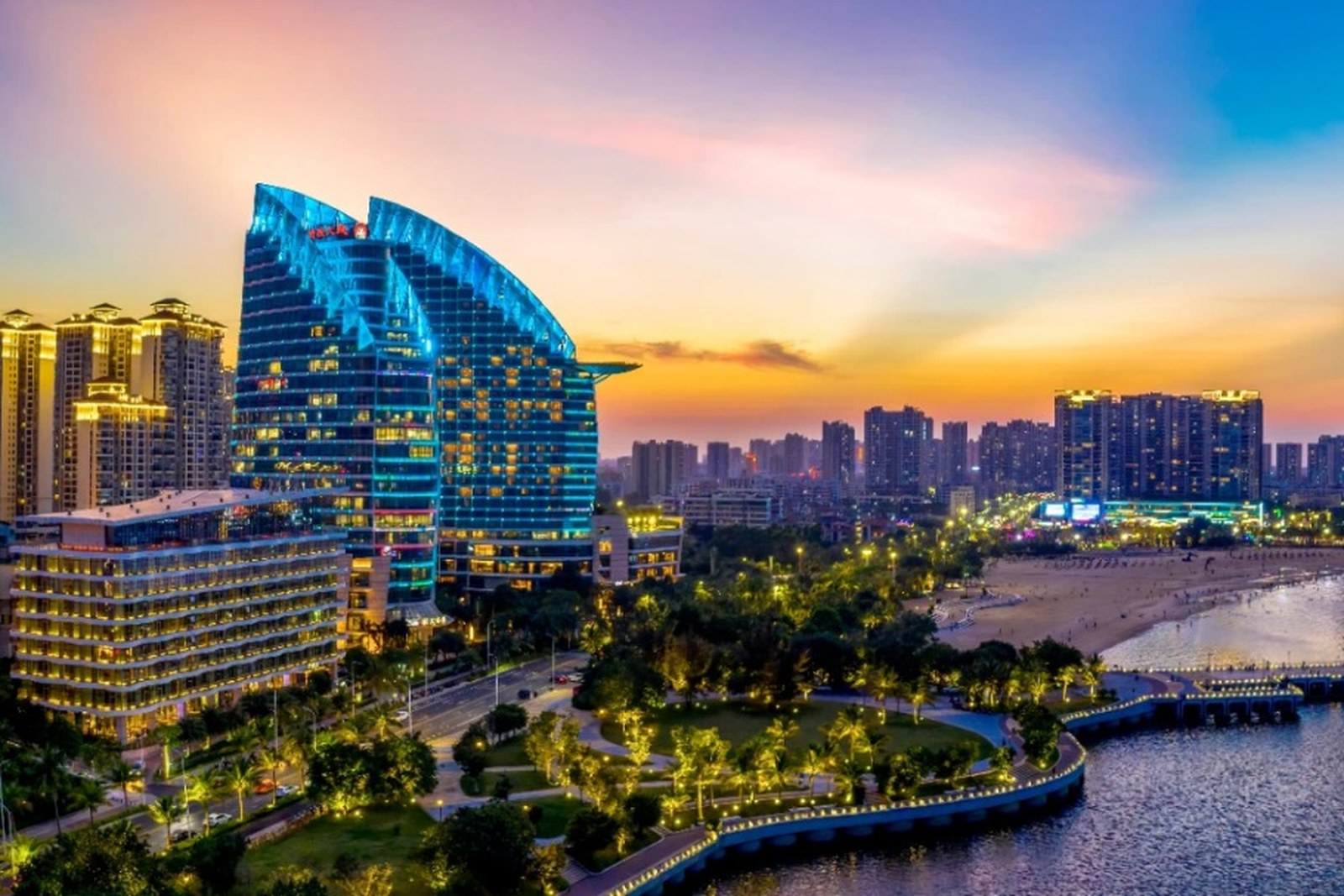
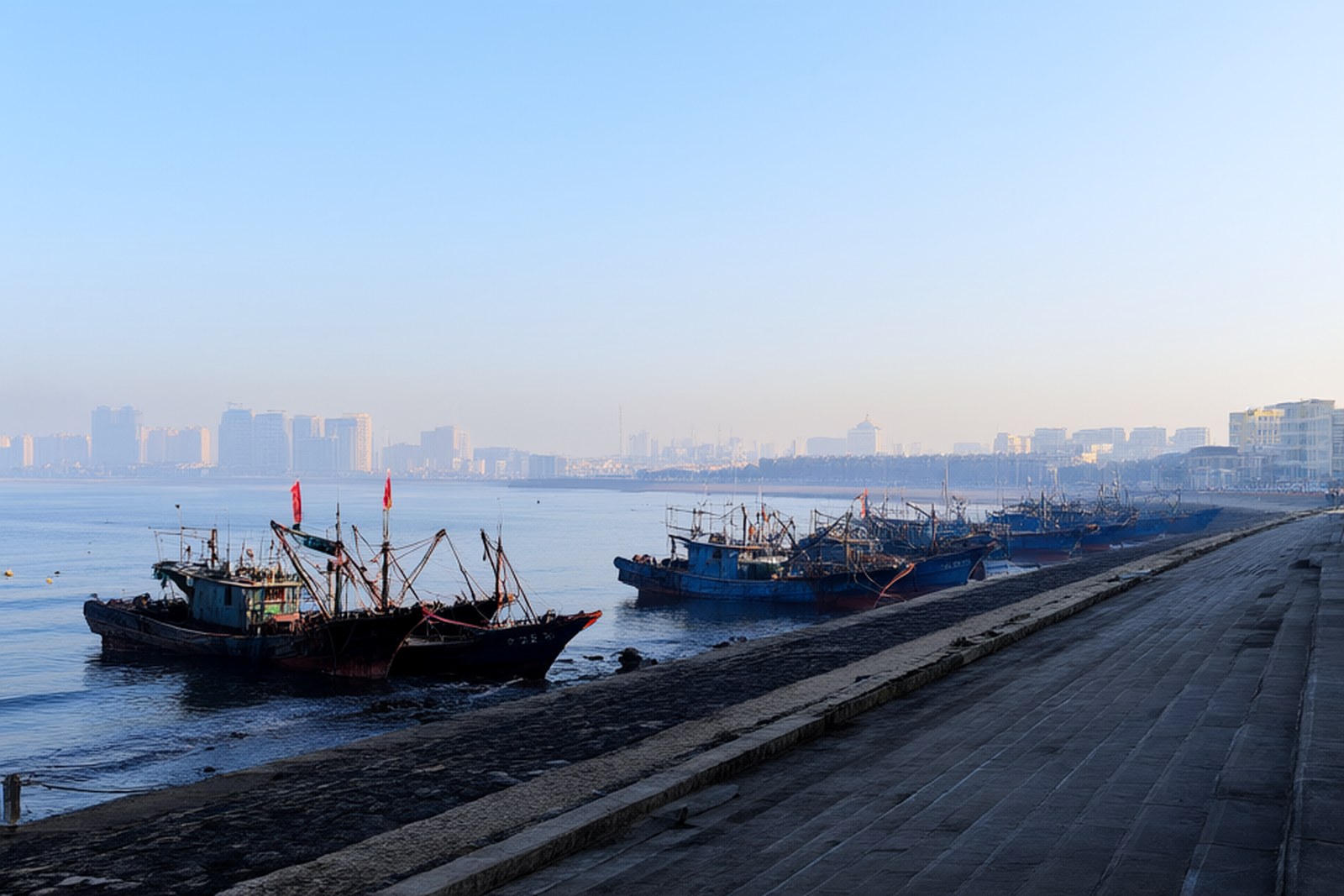
湛江市 Zhànjiāng shì is built around the head of a long drowned valley that the map calls 湛江湾 Zhàn jiāng wān, and the two halves of the city sit on opposite shores of it. 霞山 Xiá shān, on the east side, was the administration of the French leased territory of 广州湾 Guǎngzhōu wān and still carries a grid of colonial buildings; 赤坎 Chì kǎn, on the north-west, is the older Chinese merchant town of arcaded streets and godowns. A city hotel here is a tall waterfront block of twenty or thirty floors on 海滨大道 Hǎi bīn dà dào or along 观海长廊 Guān hǎi cháng láng, the promenade that runs the 霞山 shore, with the bay below the window, the shipping and the fishing boats moving on it, and the oyster streets a few minutes inland.
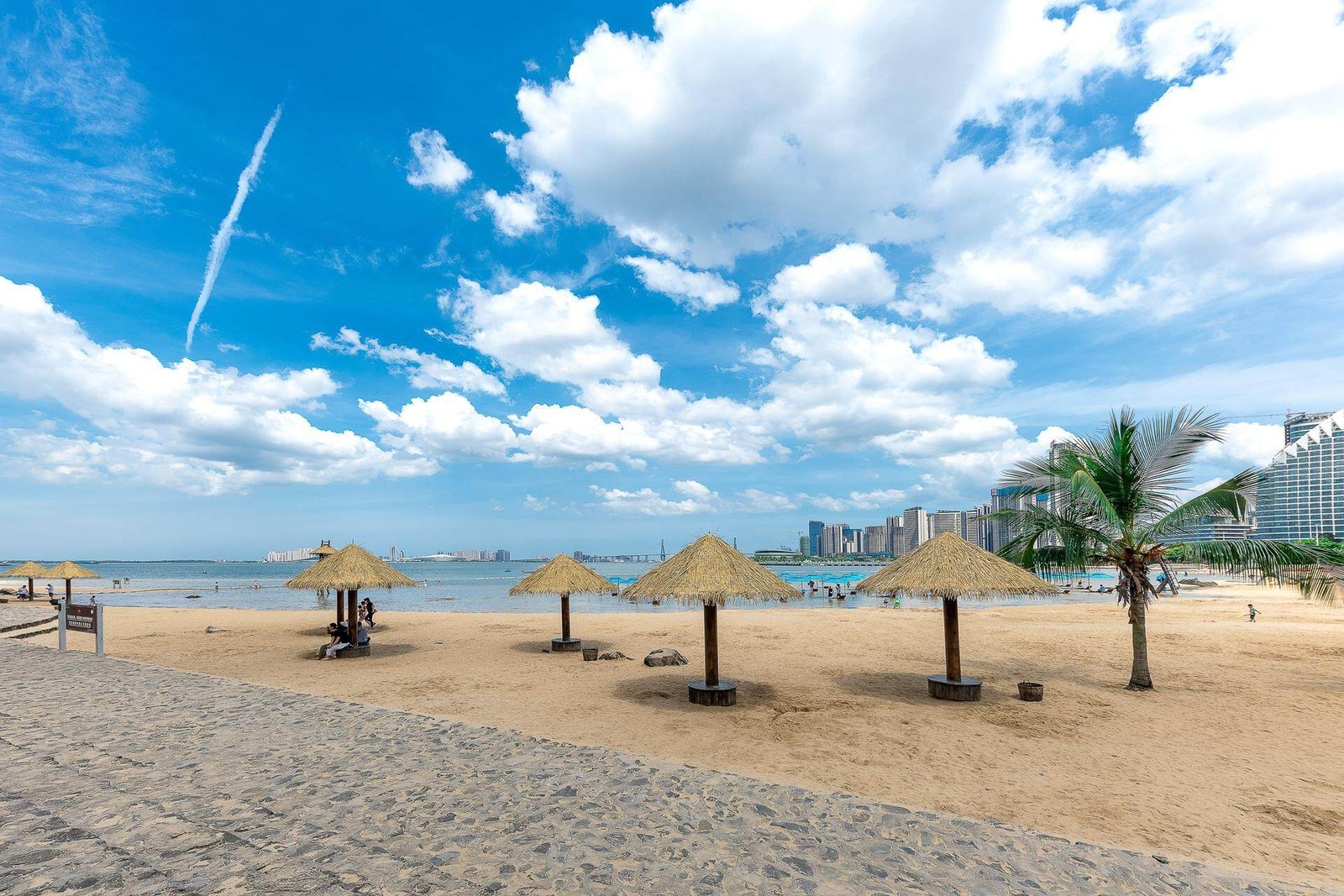
The bay is the reason the city exists and it is worth knowing what it is. It is a ria, a river valley drowned by the sea, which is why it is deep, narrow, long and bent back on itself, and why 湛江 has one of the finest natural harbours of the south coast: sheltered, defensible, and deep enough for ocean shipping. That is what brought the French, who took a ninety-nine-year lease on 广州湾 in 1899 and held it until 1945, and what built 霞山. The 广州湾法国公使署旧址 Guǎngzhōu wān Fǎguó gōngshǐ shǔ jiùzhǐ, the commissioner’s residence, still stands on 海滨大道; the 维多尔天主教堂 Wéiduō’ěr tiānzhǔ jiàotáng is a few streets back from it; and the rise behind them is a grid of tree-lined streets with colonial shopfronts that has been quietly colonised by coffee shops. Inland, 赤坎 is the more interesting half: a few hundred metres of 骑楼 qí lóu arcades along 民主路 and 中山路, the 广州湾商会会馆, the old chamber of commerce, the 许爱周故居, and the 老街 which every Cantonese television drama of the last decade seems to have used as a set.
The modern city is a working port with a naval base, and the parts of it a visitor sees are the water and the food. 观海长廊 runs for a couple of kilometres along the 霞山 shore with the bay on one side and the trees on the other, and it is where 湛江 walks in the evening and where the oyster stalls set up after dark; 金沙湾 Jīn shā wān is the beach end of the same promenade. The food is why a good many people come. 生蚝 grilled over charcoal on the promenade and under the 赤坎 arcades; 白切鸡 and 鸡饭; 沙虫 from 遂溪; 吴川’s 烂镬炒粉; 廉江’s 安铺鸡饭; and the morning trade in 牛腩粉 niú nǎn fěn, beef brisket over rice noodle, which is what the city eats before work. 湛江 is a fruit town as well: 廉江红橙, 徐闻菠萝, 覃斗芒果 and the 北运菜, the winter vegetables that leave the peninsula by the truckload for the northern cities.
The trips out are short, which is the other reason to use the city as a base. 湖光岩 Hú guāng yán is seventeen kilometres south-west, a volcanic crater lake in a forest park; 东海岛 Dōng hǎi dǎo, the fifth largest island in the country, is joined to the mainland by a causeway and has 龙海天 Lóng hǎi tiān, a beach that runs for twenty-eight kilometres; 硇洲岛 Náo zhōu dǎo, beyond it, is a volcanic island with a French lighthouse of 1899 and a working fishing harbour. 遂溪, 吴川, 廉江 and 徐闻 are all two hours or less by road, and the whole of the peninsula south of the city is the 雷琼世界地质公园 Léiqióng shì jiè dì zhì gōngyuán: 雷州’s old prefecture town with its Tang temple and Ming pagoda, 徐闻’s 灯楼角 at the southernmost point of the mainland, and the coral coast between them. Two nights is not enough here and a week is easy.
What the Rooms Are Like
Expect a room of twenty-five to thirty-five square metres with a firm bed, strong air conditioning, a clean bathroom with a shower and a desk, and a window over the bay or over the street. The finish is plain and well kept rather than designed. Bay-facing rooms on a high floor are worth the premium, the inland side is the quieter one, and the higher floors are worth asking for simply for the view across the water. Confirm that the hotel registers foreign guests, which the larger ones on 海滨大道 generally do, and ask whether breakfast is in the rate, because the better breakfast is a bowl of 牛腩粉 at a shop around the corner.
Practicalities
Price. A double in a 湛江 waterfront hotel runs ¥200 to ¥500 a night in the shoulder season, and more over the October week, the Spring Festival and the summer holiday, when the beaches fill. Bay-facing rooms and high floors cost a little more and breakfast is often included.
Address. The hotel is on 海滨大道 Hǎi bīn dà dào or along 观海长廊 Guān hǎi cháng láng in 霞山区 Xiá shān qū, 湛江市, Guangdong, with 赤坎区 Chì kǎn qū and its old streets about twenty minutes inland. 湛江西站 Zhànjiāng xī zhàn, on the 深湛 high-speed line, is about twenty-five kilometres north-west of the waterfront, and 湛江吴川机场 Zhànjiāng Wúchuān jī chǎng, the airport, is about forty kilometres north-east in 吴川市.
Rooms. Ask for a high floor facing the bay, and for a room away from 海滨大道 itself if you sleep lightly, because the promenade is busy until late. Ask the desk for a written Chinese address to hand to a driver and for the nearest 牛腩粉 shop, and check the registration position on foreign passports before you book.
Getting there. From 湛江西站 a taxi to the 霞山 waterfront takes about thirty minutes, and the airport is about fifty minutes by road. 湛江 is the western end of the 深湛 high-speed line and the eastern end of the 黎湛 line, so it is reached from 广州南 and 深圳北 in three to four hours; by car it is about four hundred kilometres from 广州 on the 沈海 expressway. The centre is walkable along the water, and a car or a taxi is needed for 湖光岩, the islands and the peninsula.
Where to stay: the waterfront hotels on 海滨大道 and 观海长廊 in 霞山区, 湛江市, within walking distance of the promenade, the old 广州湾 buildings, the arcades of 赤坎 and the oyster stalls. Take a high floor facing the bay, eat breakfast at a 牛腩粉 shop rather than in the hotel, and run the island and peninsula trips from here.
flowcloud would say that a city which was leased by one empire for its harbour, handed back, and then built its evening around a promenade of oyster grills and a bowl of beef brisket noodle, has quietly made the point that a working coast is worth more than a strategic one.