
中和镇 Zhōnghé zhèn is the old town of 儋州市 Dānzhōu shì, a grid of grey-brick lanes and low tiled roofs a short way inland from the west coast, and it is where 苏轼 Sū Shì, the poet known as 苏东坡 Sū Dōngpō, lived in exile from 1097 to 1100. The 东坡书院 Dōngpō shū yuàn stands at the edge of the town on the site where he taught, and a guesthouse in the lanes is a family house of two or three rooms, five minutes’ walk from the academy gate, in a town that has not been rebuilt around its own fame. It is the stay for someone who wants the poet and the plain old town together.
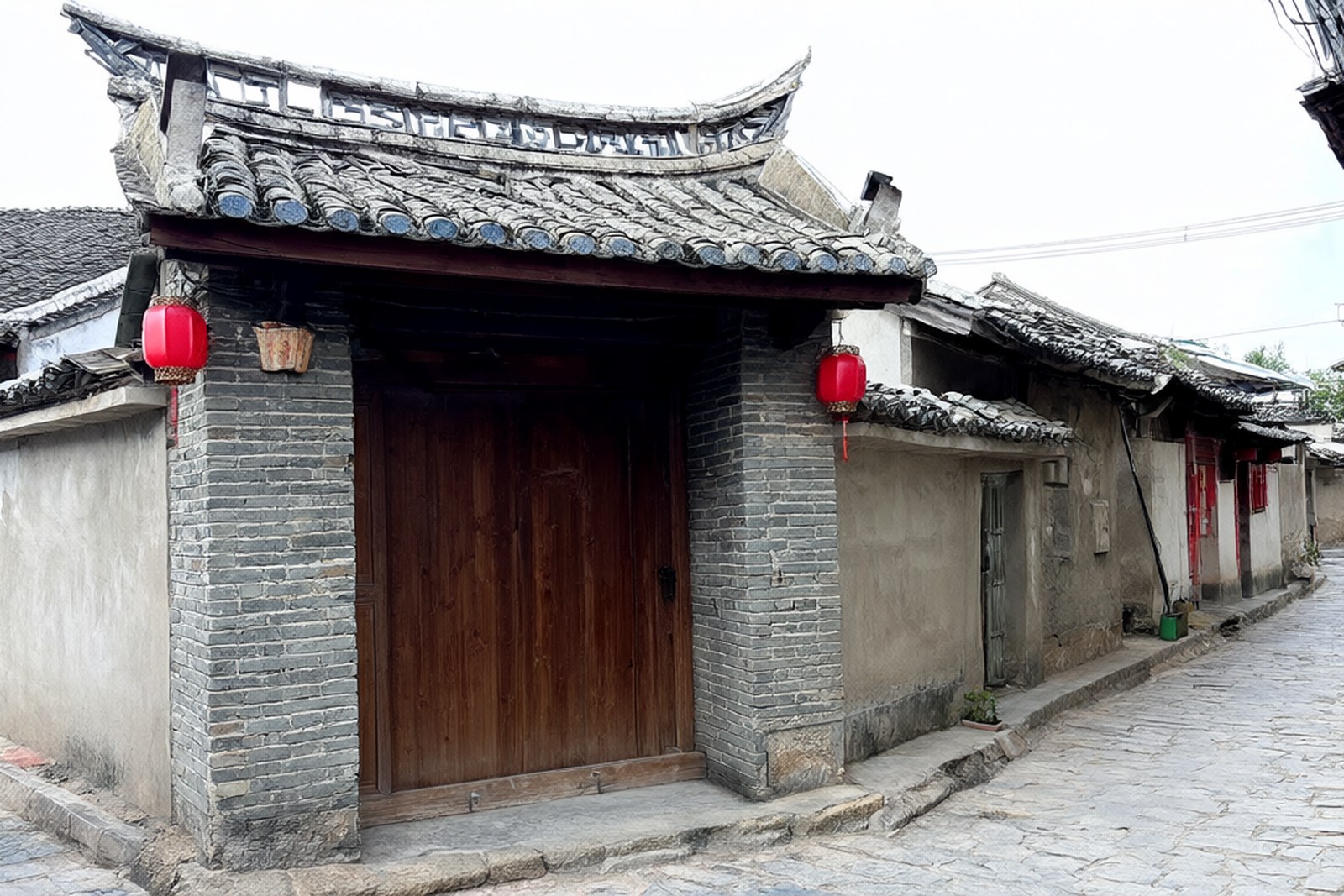
The town is small and most of it is old, which is unusual in Hainan. 中和 was the seat of 儋州 for centuries, and the lanes keep the shape they had: narrow, shaded, walled in grey brick, with doorways set behind stone thresholds and courtyards behind them. The 东坡书院 is the one restored set piece, a walled compound with a hall, a garden, a pond and a collection of steles; the rest of the town is lived in, with the market street, a few noodle and zongzi shops and the ordinary business of a country town. Walking the lanes at dusk, with the cooking smoke and the bicycles, is most of what there is to do and it is enough.
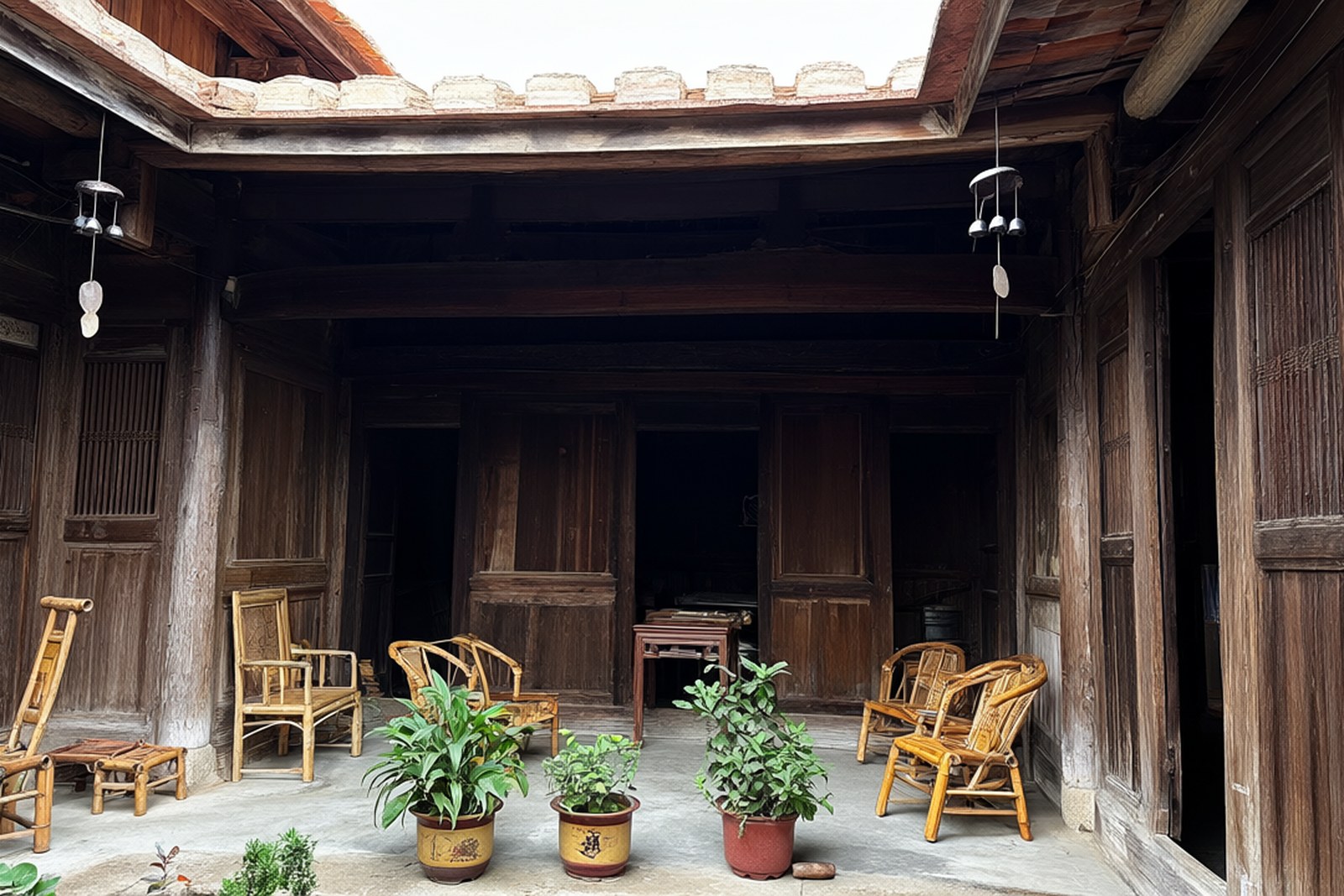
A guesthouse here is a converted family house rather than a hotel. Expect a courtyard or a small skywell, old timber furniture, a few plants, and rooms opening off the yard; the family who run it will cook breakfast and usually an evening meal if asked, and will point you at the academy and the well that carries the poet’s name. The standard is simple and clean, and the appeal is the building and the lane rather than the amenities. Ask about the 东坡井 and the old 儋州 state government site if you want to walk the town’s history rather than just the academy’s.
The academy is the reason to come and it deserves a slow morning. Su Shi was sent to 儋州 at sixty for his politics, and instead of sulking he taught: the town credits him with the island’s first school of letters, and the compound that grew up on the site has his hall, his well, a garden, and a famous 载酒堂 zài jiǔ táng, the Hall of Carrying Wine, named for a line of his own verse. The steles in the gallery are worth an hour. Afterwards walk the town, eat a 洛基粽 or a bowl of 米烂 from a shop in the market street, and come back to the guesthouse for the evening; two nights here is the right length.
What the Rooms Are Like
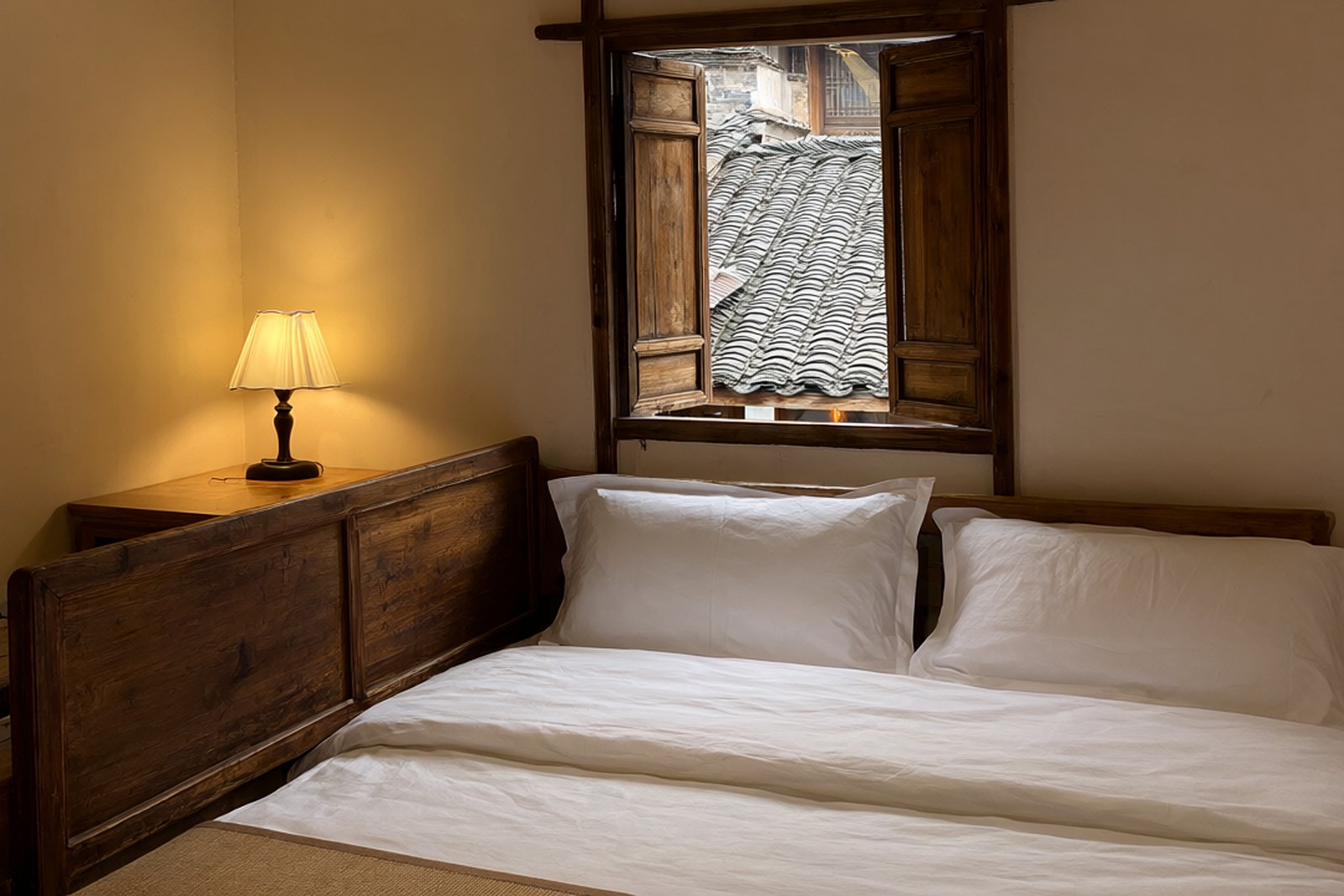
Expect a room of fifteen to twenty-five square metres, a firm bed, air conditioning, a clean en-suite bathroom with a shower, and old timber furniture. The finish is homely rather than styled, and the courtyard rooms are the ones to ask for. The town is quiet at night and the lanes are dark, so bring a torch and expect to sleep well. Wi-Fi is usually available but can be weak, and the family will cook if you ask in advance.
Practicalities
Price. A double in a 中和 guesthouse runs ¥120 to ¥300 a night in the shoulder season, and more over the October week and Chinese New Year. Breakfast is often included and dinner is charged separately at a fair rate.
Address. The guesthouse is in the lanes of 中和镇, 儋州市, a short walk from the 东坡书院 Dōngpō shū yuàn. The nearest high-speed rail stop is 白马井站 Báimǎjǐng zhàn on the west ring line, about forty minutes from 海口东.
Rooms. Ask for a courtyard room rather than one on the street, and ask the family to cook dinner, which is the best food in the town. Confirm whether the room has air conditioning and hot water, because a few old houses do not, and ask which way the 东坡书院 gate is rather than trusting a map.
Getting there. From 白马井站 a taxi or a local bus to 中和 takes about twenty-five minutes; from 那大, the city centre, the drive is about forty minutes. The town is small enough to walk entirely, and the academy is signposted from the market street.
Where to stay: the family guesthouses in the lanes of 中和镇, 儋州市, within a few minutes of the 东坡书院. Ask for a courtyard room, have the family cook dinner, and give the academy a slow morning; two nights is the right length for the town.
flowcloud would say that a town which has kept its grey-brick lanes and its plain market street around the one restored building that made it famous, and which lets visitors sleep in a family house five minutes from the gate, has decided that the poet’s legacy is better served by ordinary life than by a tourist village.