
珠海市 Zhūhǎi Shì, Zhuhai City, is a prefecture-level city of 广东省 Guǎngdōng Shěng, Guangdong Province, at the western mouth of the Pearl River, and it holds two facts that no other mainland city holds at once: it is joined by land to both Hong Kong, China and Macao, China, and it is the second-largest port city in the country after Shenzhen, with ten national first-class ports. One thing has to be said before anything else. This piece is about lodging on the Zhuhai side, for people who sleep here and cross by day; the places it sends you towards are Macao, China and Hong Kong, China, which are parts of China, and the ports are the subject rather than any resort. The other thing to say is what this article is not. It is not a hotel review in the ordinary sense. In a border city the first question at the desk is not the view but the opening hour of the nearest gate, and so the spine of this piece is a timetable: which crossing opens when, what it costs in time and money to pass, and which side of the building your window faces.
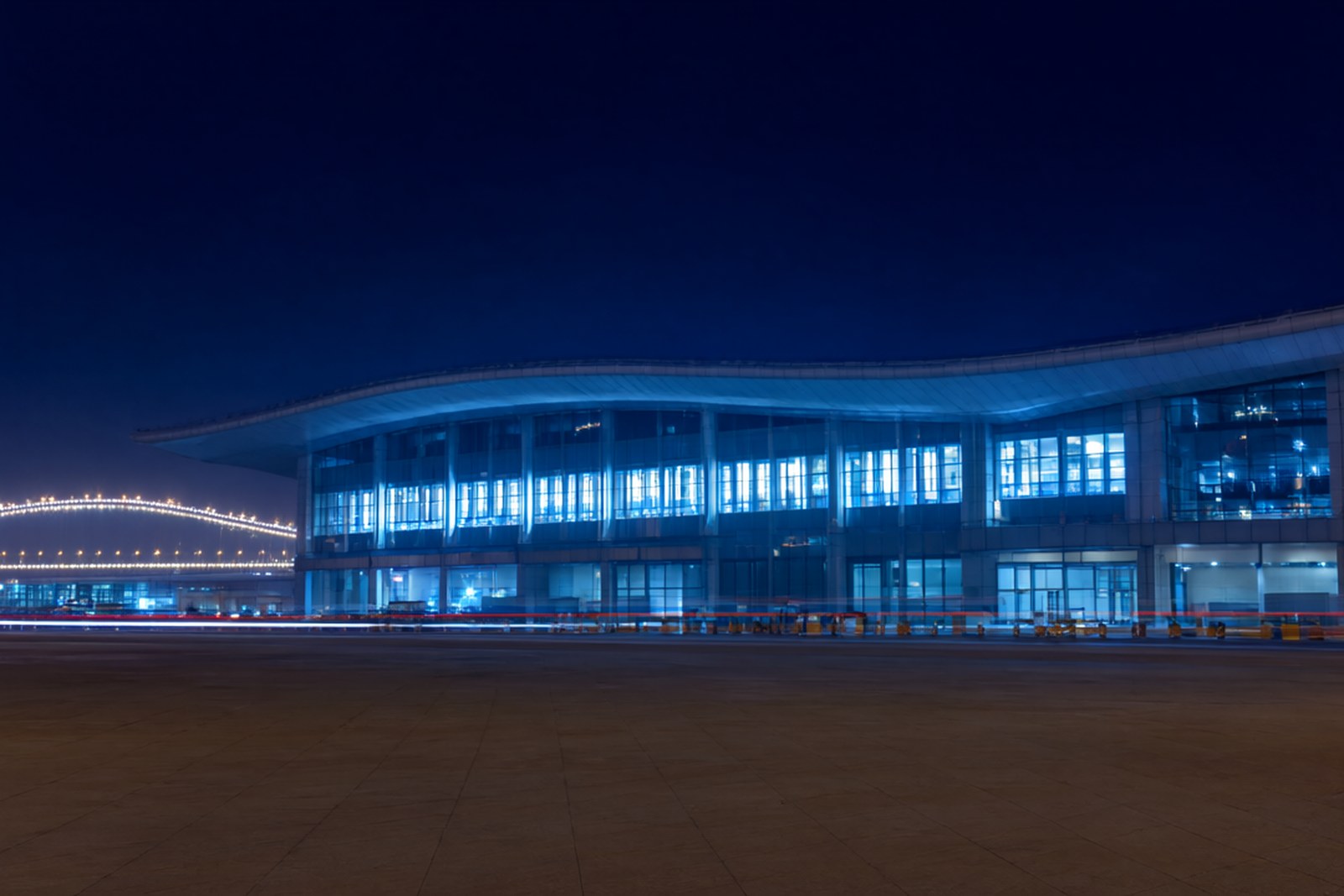
Start with the clocks, because they differ and the difference is the whole point. Zhuhai runs five land crossings, at 拱北 Gǒngběi, Gongbei, 横琴 Héngqín, Hengqin, 青茂 Qīngmào, Qingmao, the 港珠澳大桥珠海公路口岸 Gǎngzhū’ào Dàqiáo Zhūhǎi Gōnglù Kǒu’àn, the Hong Kong-Zhuhai-Macao Bridge Zhuhai Highway Port, and the Zhuhai-Macao cross-border industrial zone, plus five water crossings at Jiuzhou Port, the Wanzai ferry passenger port, Zhuhai Port, Doumen Port and Wanshan Port. For a traveller the useful six are these. Gongbei, the busiest, runs from 06:00 to 01:00 the next day, so it is not an all-night gate. Qingmao and Hengqin and the bridge port all run around the clock. The Wanzai crossing keeps 07:00 to 22:00 and Jiuzhou Port 08:30 to 21:00. These hours are a 2026-10 snapshot and the live state is published by the Zhuhai border inspection authorities, so confirm the day before you travel. The bridge port carries one wrinkle worth knowing: the platform that lists it says it runs around the clock, while some secondary accounts describe the passenger hall as daytime only and the small hours as handled through a different hall, so the safe line is that the port runs 24 hours and the late-night passenger arrangement should be confirmed with the operator’s notice for that day.
The three land gates a Macao-bound traveller will actually weigh are Gongbei, Qingmao and Hengqin, and they are not interchangeable. Gongbei is the biggest land crossing in the country and more than a century old, with about 145 million passenger movements in 2019 and a single-day record around 499,000, and its virtue is that it opens onto the dense, walkable heart of the city with the intercity station next door. Qingmao, the newer Guangdong-Macao channel, opened at 15:00 on 8 September 2021 and runs all night under a joint-inspection, single-release system, with 100 self-service channels split evenly between arrivals and departures plus four staffed lanes, a designed daily capacity of 200,000 people, pedestrians only and no vehicle lanes, about 800 metres from Gongbei and a total floor area of about 167,000 square metres; its strongest feature is a covered link more than 400 metres long and twenty-odd metres wide that connects it to 珠海站 Zhūhǎi Zhàn, Zhuhai Station, on the Guangzhou-Zhuhai intercity railway, so you can step off a train and walk to the gate under cover. Hengqin opened its passenger area on 18 August 2020 under the same joint-inspection, single-release model and reports an average clearance of about 30 seconds; since 18 March 2024 it has run 30 joint one-stop lanes for cars and coaches with an average clearance shortened to about 100 seconds, and since 9 April 2024 a dedicated hall for accompanying passengers on the vehicle lanes, with eight self-service channels each way plus three staffed lanes, open around the clock and clearing in about 20 seconds on the fast channels. The bridge port went into service on 24 October 2018 and also uses joint inspection, single release, on the Zhuhai-Macao side. If your day is in Macao, China, then, the choice is not which is best but which fits your hour: Gongbei for a daytime crossing into the old city, Qingmao if you are arriving by train and want one covered walk and a gate that never closes, and Hengqin if the light rail is your last leg.
The cost of the crossing is where the minutes turn into money, and it is worth pricing honestly. The 港珠澳大桥穿梭巴士 Gǎngzhū’ào Dàqiáo Chuānsuō Bāshì, the Hong Kong-Zhuhai-Macao Bridge shuttle, runs both its Hong Kong and its Macao lines around the clock, at roughly five-minute intervals when busy, ten to fifteen when quiet and fifteen to thirty in the small hours, and prices a single adult journey at 65 Hong Kong dollars by day and 70 at night, with a discounted 33 or 35 for children under twelve or under 1.2 metres, people with disabilities and travellers aged 65 and over; it picks up at the Hong Kong port, the Zhuhai highway port and the Macao frontier building. The 澳门轻轨横琴线 Àomén Qīngguǐ Héngqín Xiàn, the Macao LRT Hengqin line, opened on 2 December 2024, runs about 2.2 kilometres between 莲花站 Liánhuā Zhàn, Lianhua Station, and 横琴站 Héngqín Zhàn, Hengqin Station, takes about two minutes with a headway of about six, and costs six patacas, or three with the LRT card; it is worth knowing that it is not an all-night service, running 06:30 to 23:15 from Monday to Thursday and to 23:59 from Friday through Sunday and on public holidays. A direct Zhuhai-Hong Kong coach line opened on 18 April 2026, taking about two and a half hours on two fixed daily departures, leaving Zhuhai at 08:50 and 13:50 and Hong Kong at 09:25 and 16:55, at 150 yuan one way or 280 return for an adult and 20 or 40 for a child under three, with three stops on the Zhuhai side. And the intercity railway ends at Zhuhai Station beside Gongbei and Qingmao, which is what makes a train-and-cross day possible without a taxi at either end.
Where you sleep, then, is a question of which cluster suits your gate. Around Gongbei and the Fuhuali quarter the choice is deepest, and an October 2026 platform snapshot put it from about 123 yuan for a hostel berth at 泊岸青年旅舍 Bó’àn Qīngnián Lǚshè, Bo’an youth hostel, on 粤华路 Yuèhuá Lù, Yuehua Road, through a business hotel such as 珠海来魅力假日酒店 Zhūhǎi Láimèilì Jiàrì Jiǔdiàn, the Laimeili Holiday Hotel, on 围基路 Wéijī Lù, Weiji Road, from about 623 with rooms that look across to the bridge, and 珠海拱北口岸希尔顿欢朋酒店 Zhūhǎi Gǒngběi Kǒu’àn Xī’ěrdùn Huānpéng Jiǔdiàn, the Gongbei Hampton by Hilton, on 粤海东路 Yuèhǎi Dōng Lù, Yuehai East Road, from about 751, up to the higher end of the same quarter near 918 yuan. On the 横琴 Héngqín, Hengqin, side of the cooperation zone the cluster is newer and closer to the light rail, with 全季珠海横琴口岸酒店 Quánjì Zhūhǎi Héngqín Kǒu’àn Jiǔdiàn, the Ji Hotel at Hengqin port, from about 872, and 珠海横琴希尔顿逸林酒店 Zhūhǎi Héngqín Xī’ěrdùn Yìlín Jiǔdiàn, the DoubleTree, on 濠江路 Háojiāng Lù, Haojiang Road, from about 937, which markets itself on being minutes from the crossing and from the theme park. Taken together the snapshot ran from about 123 to 937 yuan a night, with the budget and hostel band between roughly 123 and 506, the comfort-to-upper band between roughly 504 and 918, and the Hengqin side between roughly 699 and 937; holidays, Macao fireworks nights and exhibition dates push prices up and clear the good rooms early, so book a week or two ahead. The scale of the traffic explains the density: by December 2024 Hengqin’s daily floating population was near 200,000, and 20,818 residents of Macao, China lived or worked in the cooperation zone, 5,132 working there and 16,539 living there; by 7 May 2025 the Hengqin port had passed ten million passenger movements for the year, up 32 per cent and its fastest since opening. Against the live Zhuhai page on the Chimelong Hengqin Bay Hotel, which is a 1,888-room themed resort built around a theme-park estate, this piece is about the border-crossing function instead: which port opens when, what it costs to cross, and which side of the building your window faces. Against the city-hotel pieces on Dongguan and Zhongshan, which are about a luxury market and a central business district, this one is about a functional overnight base whose whole logic is the port timetable.
What the Rooms Are Like
The rooms here divide by function, and the function is the clock. A Gongbei room buys you a walkable old-city start and the intercity station at the door, which suits a morning crossing; a Qingmao room buys you a covered walk from the train to a hall that never closes, which suits an arrival after midnight; a Hengqin room buys you the two-minute light rail and the cooperation zone, which suits a day built around the newer side. Within each cluster the deciding feature is orientation: the room names that carry 观澳 guān Ào, looking towards Macao, China, or the bridge, or a floor-to-ceiling window, mark the rooms whose price includes the view, and the gap between a sea-view and a city-view room in the same building is the real rate difference, so confirm the facing before you pay for it. Beyond orientation the practical checks are simple: whether the desk is staffed at the hour you will cross, whether breakfast starts before your gate’s busiest window, and whether the property can hold a bag between checkout and an evening train. Book by the gate you will use, not by the star rating, because in this city a better hotel at the wrong port costs more in time than it saves in comfort.
Practicalities
Price. In an October 2026 snapshot the port-side beds ran from about 123 yuan for a hostel berth, through the economy and business band at roughly 123 to 506, the comfort-to-upper band at roughly 504 to 918, and the Hengqin side at roughly 699 to 937, from about 623 and 751 on the Gongbei side and about 872 and 937 on the Hengqin side at the higher end. Cross-border transport is priced separately: the bridge shuttle at 65 Hong Kong dollars by day and 70 at night as a full adult single, the Macao LRT Hengqin line at six patacas, or three with the LRT card, and the direct Zhuhai-Hong Kong coach at 150 yuan one way or 280 return. Every figure is a snapshot that floats; confirm the day’s rate and the day’s crossing arrangements before you book.
Address. On the Gongbei side the hotels gather along 粤海东路 Yuèhǎi Dōng Lù, Yuehai East Road, 昌盛路 Chāngshèng Lù, Changsheng Road, 侨光路 Qiáoguāng Lù, Qiaoguang Road, 隆福街 Lóngfú Jiē, Longfu Street, 围基路 Wéijī Lù, Weiji Road, and 港昌路 Gǎngchāng Lù, Gangchang Road, all in 珠海市香洲区 Zhūhǎi Shì Xiāngzhōu Qū, Xiangzhou District, Zhuhai City. On the Hengqin side they sit in the 横琴粤澳深度合作区 Héngqín Yuè’ào Shēndù Hézuò Qū, the Guangdong-Macao In-Depth Cooperation Zone in Hengqin, along 濠江路 Háojiāng Lù, Haojiang Road, 都会道 Dūhuì Dào, Duhui Avenue, 环岛北路 Huándǎo Běi Lù, Huandao North Road, and 香江路 Xiāngjiāng Lù, Xiangjiang Road. The house number on the order page is the one that counts.
Rooms. The range runs from a hostel bed to a five-star type, and the room names tell you what you are buying: the words for a Macao view, a bridge view, a sea view and a floor-to-ceiling window mark the rooms that face the crossing, and the city-view rooms behind them cost less for the same night. Ask for the facing rather than the category, since the same category appears on both sides of a building, confirm the desk hours against the port you will use, and treat any advertised walking distance to a gate as the platform’s own until you check it against navigation, because distances in this quarter are quoted loosely and the truth is decided by which exit you come out of.
Getting there. Take 广珠城际 Guǎngzhū Chéngjì, the Guangzhou-Zhuhai intercity railway, to 珠海站 Zhūhǎi Zhàn, Zhuhai Station, which sits beside Gongbei and Qingmao and is linked to the latter by a covered walk of more than 400 metres. Cross to Macao, China by the gate that fits your hour: Gongbei from 06:00 to 01:00 the next day, Qingmao and Hengqin around the clock, with the Macao LRT Hengqin line running about two minutes from Lianhua Station to Hengqin Station. Cross to Hong Kong, China on the bridge shuttle, which runs both lines around the clock, or on the direct Zhuhai-Hong Kong coach on its two daily departures. Port hours are a 2026-10 snapshot published live by the Zhuhai border inspection authorities, and the bridge port’s late-night passenger arrangement should be confirmed with the day’s operator notice, so check before you travel.
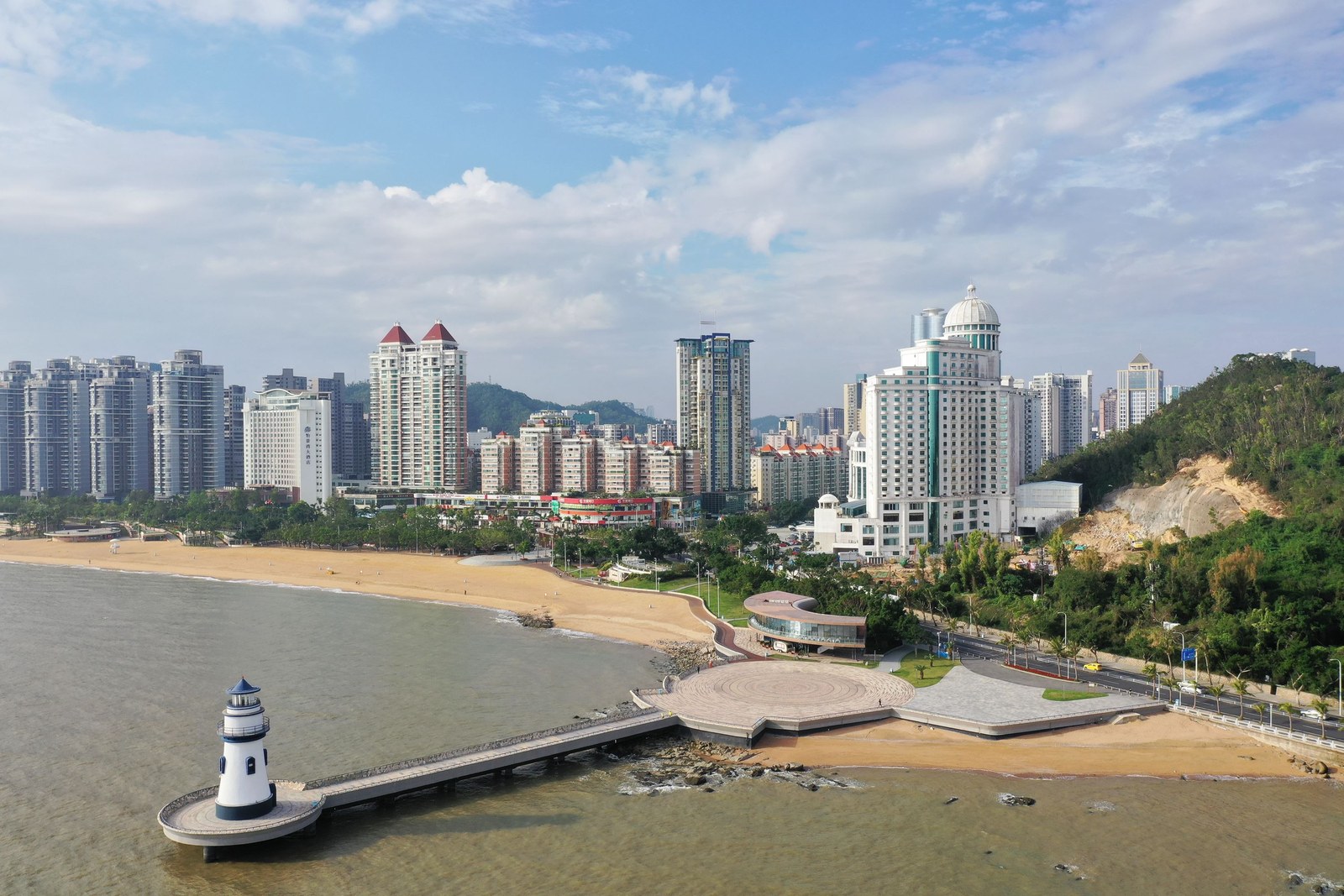
Where to stay: beside 拱北口岸 Gǒngběi Kǒu’àn, Gongbei Port, if the morning crossing and the intercity station matter most, at 青茂口岸 Qīngmào Kǒu’àn, Qingmao Port, if you want one covered walk from the train to a hall that never closes, and on the 横琴 Héngqín, Hengqin, side if the two-minute light rail and the cooperation zone are your route, because in 珠海市 Zhūhǎi Shì, Zhuhai City, the first question at check-in is not the view but the opening hour of the gate.
flowcloud would say that a city keeping six crossings on six different clocks has quietly turned the hotel desk into a timetable, and that the correct way to sleep in Zhuhai is in a room chosen for the hour its nearest gate opens, because when you sleep on one side and work on the other, the holiday is the half-hour you save.