
水车镇 shuǐ chē zhèn is a hill town in the west of 新化县 Xīn huà xiàn that would be nothing much if the slope above it were not covered in rice fields, and the lodges here exist because of that slope. The terraces of 紫鹊界 zǐ què jiè run across a dozen hillsides between roughly five hundred and a thousand metres, cut into the granite by 苗 and 瑶 ancestors over a couple of thousand years, and the guesthouses stand inside them rather than beside them: a family’s house on a terrace shoulder, a few rooms let out, a table in the courtyard and a valley under the balcony. What the room buys is the hour before the sun, when the water standing in the paddy takes the light and the whole slope is in front of you before anybody who drove up for the day has arrived.
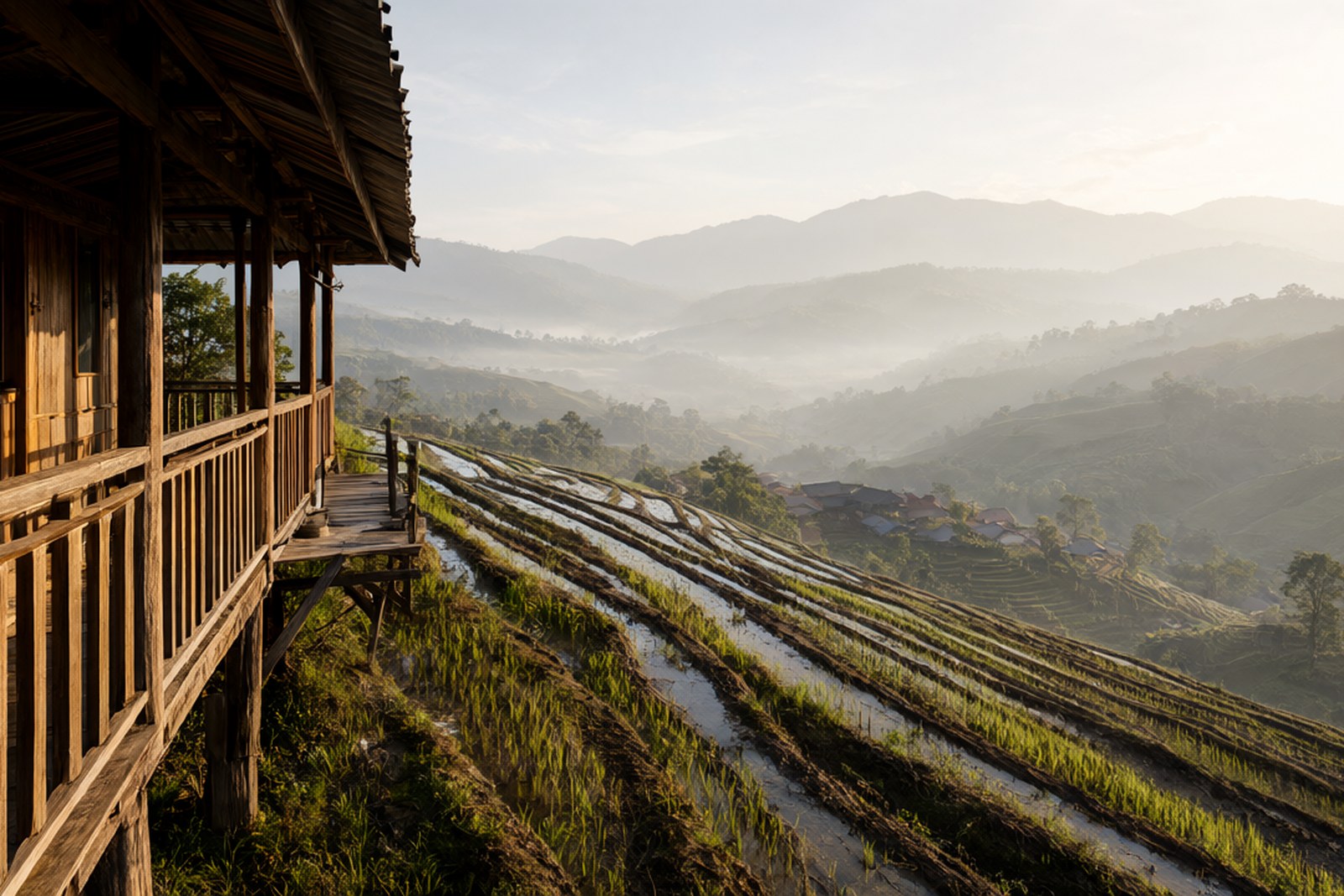
The families that run these places farm as well as host, and the two are the same business. The rice comes off the terraces below the house – 紫鹊米 zǐ què mǐ, the local grain, is a name in the county and it grows in small fields, so the rice on your plate at dinner was cut on a slope you can see from the table – and the vegetables and the poultry come out of the yard behind it. The water that feeds the whole hillside arrives out of fissures in the granite above the top terrace, cold and steady and undiminished after two thousand years of this arrangement. There is no reservoir anywhere on 紫鹊界 and no canal worth the name: the system works because the rock holds water the way a sponge does and lets it go all year, which is why engineers come to look at it and why the county is able to say the fields have never gone dry.
Staying up here changes the arithmetic of a visit. The viewing platforms are strung along a ridge road and they are far apart, because the slopes are steep enough that nobody walks between them in an afternoon, so the day visitors do them from a car on a schedule. A guest in the terraces does it the other way round: the balcony at first light, a walk down a terrace path before breakfast, the platform road in the afternoon when the light has gone flat, and then the slope again from the dining table at dusk with the frogs starting up in the water below. In the weeks when the fields are flooded, from the middle of April into May, the whole system is a mirror and the hour after sunrise is worth the journey on its own; in late September and October it is rice turning yellow all at once. In between it is simply the coolest and greenest place to sleep in the prefecture.
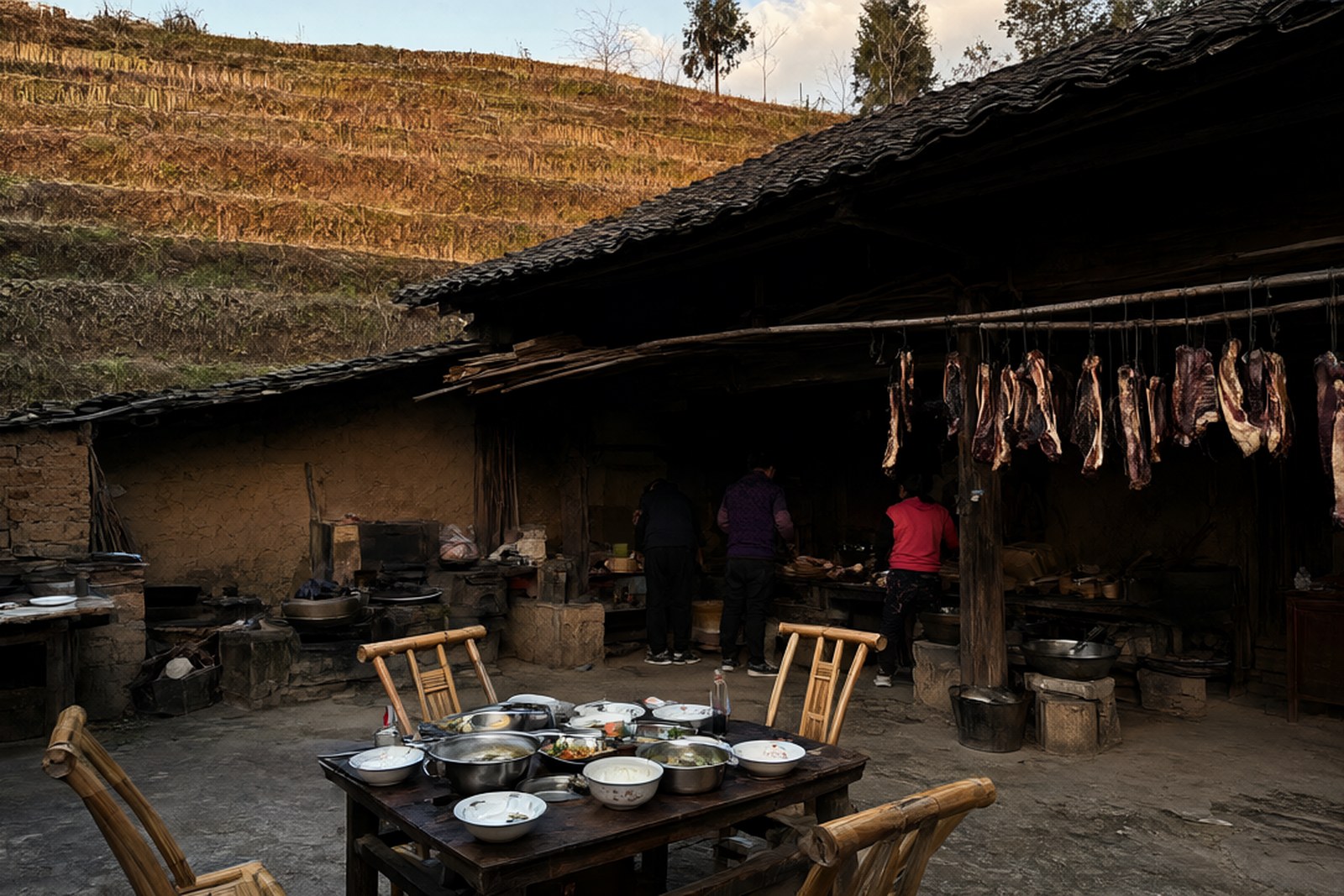
The practical case for a terrace lodge is that it takes the drive out of the trip. 水车镇 is about fifty kilometres from the county town, up a road that climbs the whole way, and the fields go on spreading above the town for several kilometres more; the ring road through them is narrow and bends hard, and doing it twice in a day, up in the morning and back down after dark, is the worst part of seeing 紫鹊界 at all. Sleeping among the terraces means the road is driven once. It also means the town’s shops, clinic and bus station are ten minutes below you, and that the rest of 新化县 – the cave under the hills at 油溪镇, the forest park up on 大熊山 in the north of the county – is reachable on county roads rather than by going back through the city first.
What the Rooms Are Like
A terrace lodge is a country house that takes guests rather than a hotel, and the honest description is a few rooms off a shared landing: a firm bed with a thick quilt, a tile or board floor, a shower with hot water that sometimes depends on the sun, a kettle, and either a balcony or a wall of glass facing the valley. The newer houses, put up for the sunrise trade, have the big windows and the private bathrooms; the older ones are timber 吊脚楼 on stone footings with a shared verandah and a good deal more character. Nobody has air conditioning worth the name up here because nobody needs it – the altitude and the water in the fields keep the nights cool through the summer. Meals are arranged in the morning for the evening, and the kitchen is the family’s own.
Practicalities
Price. A room in a lodge above 水车镇 runs about ¥100 to ¥200 a night, usually with breakfast and with dinner arranged on top for a little more; the newer rooms with the valley windows sit at the top of that range, and the two weeks when the fields are flooded are the one time to book ahead rather than turn up.
Address. The lodges are along the terrace road above 水车镇 shuǐ chē zhèn in 新化县, several of them within a few hundred metres of one of the viewing platforms; the town itself, with its bus station and its shops, is ten minutes down the hill, and the county town of 新化 is about fifty kilometres east.
Rooms. Ask for a room on the valley side and up a floor, and ask which way the balcony faces, because the sunrise is the whole reason for the room and the wrong side of the house gets the sunset instead. Ask what time dinner is and say yes to the local rice; ask about hot water if the house heats it on the roof, and about a plug or a net, since standing water and green slopes make mosquitoes in the warm months.
Getting there. 新化南站 Xīn huà nán zhàn, the high-speed station on the 沪昆 line, is out at 洋溪镇 about twenty kilometres from the county town; from the west bus station in 新化 there are services to 水车镇 through the day, roughly an hour on the road, and the last climb from the town up to the terraces is by local car or whatever the lodge sends. Driving is the easier way, because the ring road across the top is what connects the platforms, and the ascent is steep and narrow enough that you want to make it in daylight.
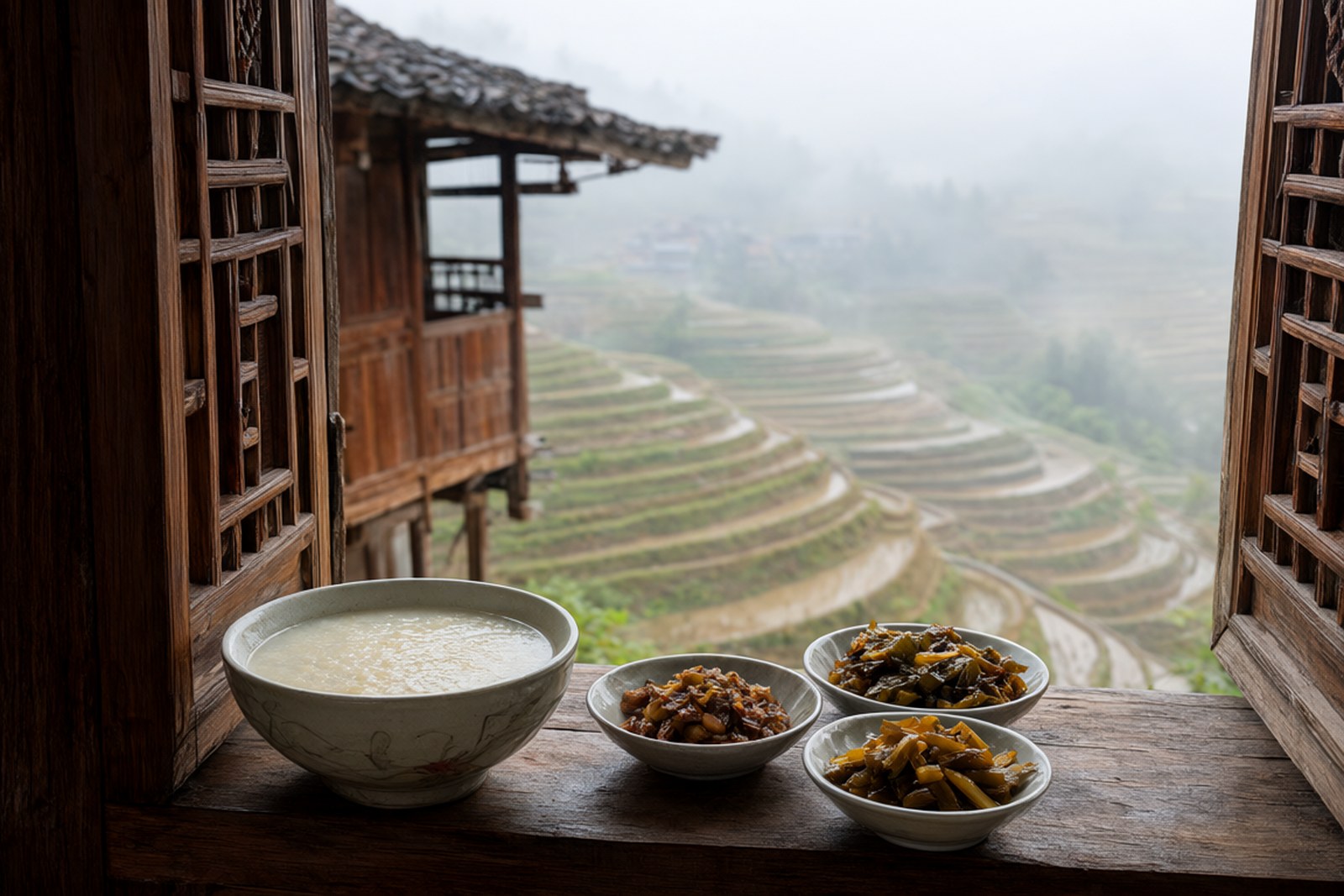
Where to stay: a family lodge on the terrace road above 水车镇 in 新化县. Take the valley-facing room, be on the balcony before the sun is, eat the rice that was cut below the house, and drive the ridge road from a bed that is already up among the fields.
flowcloud would say that the cleverest piece of engineering in the prefecture is a hillside that needs no reservoir, no canal and no pump, and that the only thing a visitor has to add to it is a night in a wooden room at the top of the slope.