
798 Art Zone: The Decommissioned East-German Factory and Bauhaus Gallery District of Chaoyang District, Beijing
旧厂锯齿藏星火,一壁涂鸦动四方。Jiù chǎng jùchǐ cáng xīnghuǒ, yī bì túyā dòng sìfāng – The old plant’s sawtooth roofs hide a spark; one wall of graffiti moves all quarters.
798艺术区 798 Yìshù Qū 798 Art Zone is not a museum with a gift shop — it is, to be exact, a decommissioned military-electronics factory reborn as Beijing’s largest gallery district, a grid of 1950s workshops in the 大山子 Dàshānzǐ Dashanzi quarter of 朝阳区 Cháoyáng Qū Chaoyang District, Beijing, north-east of the embassy belt. The complex began as 718厂 718 Chǎng Plant 718, built in the early 1950s with East-German design and equipment — the 东德 Dōngdé East German engineers laid out the workshops with north-lit 锯齿形 jùchǐ xíng sawtooth roofs, the Bauhaus signature you still see marching across the skyline. It was a Cold-War instrument plant, producing everything from radio parts to the components of early Chinese electronics, and it carried the 798 code as one of its internal workshops before the whole 718 group was reorganised and renamed. By the 1990s the plant had outlived its purpose; the army handed it over, the machinery went quiet, and in the vacuum came the artists — cheap concrete halls with soaring windows, perfect for studios — who moved in around 2000 and turned a rusting 工厂 gōngchǎng factory into the capital’s art address almost by accident.
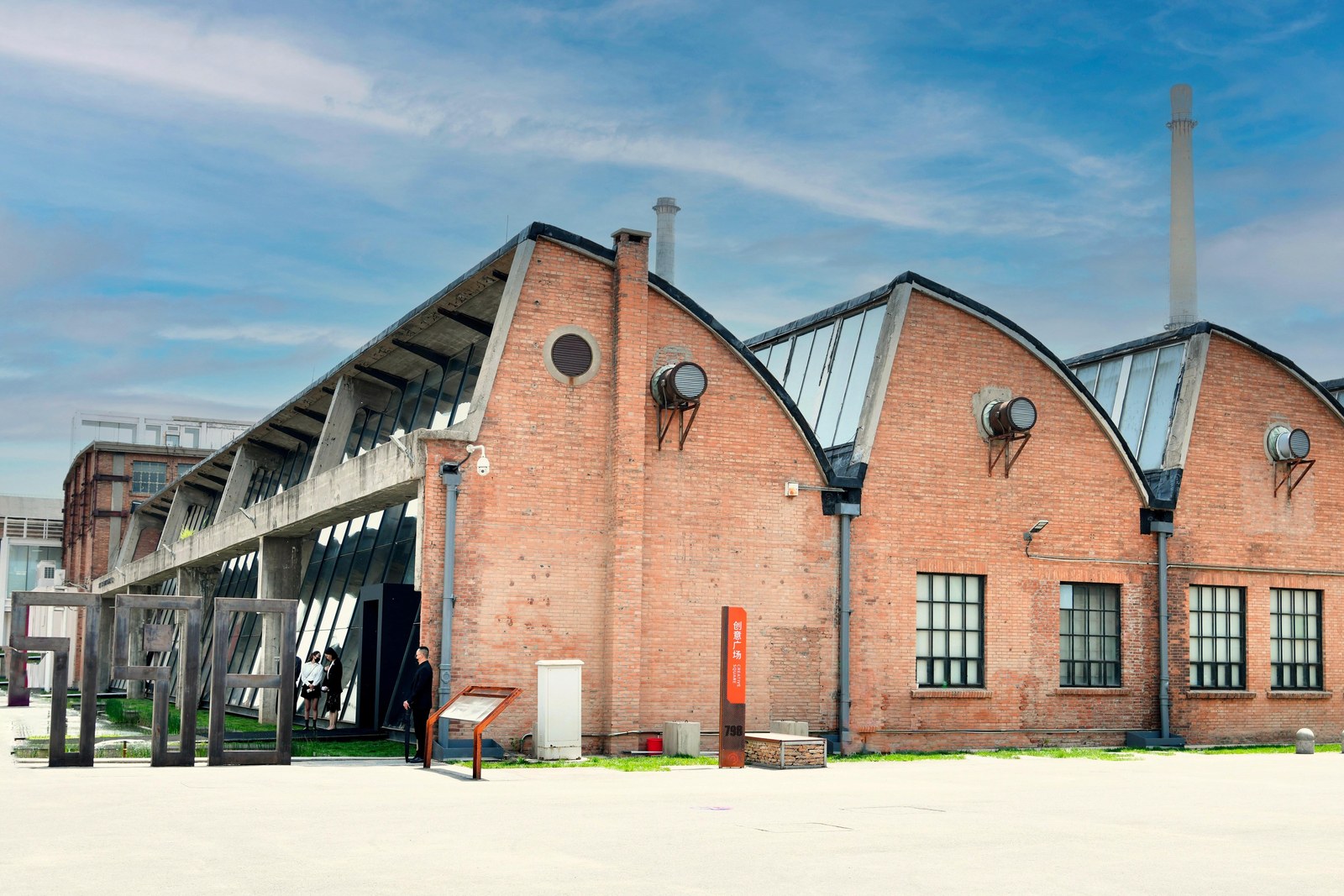
Call it honestly: an industrial site that is free to enter and easy to mis-read as a single museum. There is no gate and no general ticket (worth confirming the details only for the individual galleries, the 尤伦斯 Yōulúnsī UCCA centre and any paid exhibition, whose rates shift by show), but the place is a warren, and the mistake is to arrive without a plan and drift lost among identical hangars. The 798厂 798 Chǎng buildings are numbered, not signed, and the better map sits at the main entrances (worth confirming the details for the current gallery list and any halls closed for renovation). The commercial creep is real — cafés, design shops and the odd over-priced “concept” store have filled the gaps the artists left — so budget for a coffee, not a collection, unless you came to buy in earnest. The honest arrival is by the 798东街 798 Dōngjiē East Street gate or the 4号门 4 Hào Mén Gate 4 entrance, and the move is to pair the open sculpture yard with two or three named galleries rather than all dozen at once, because the fatigue of too many white cubes is real.
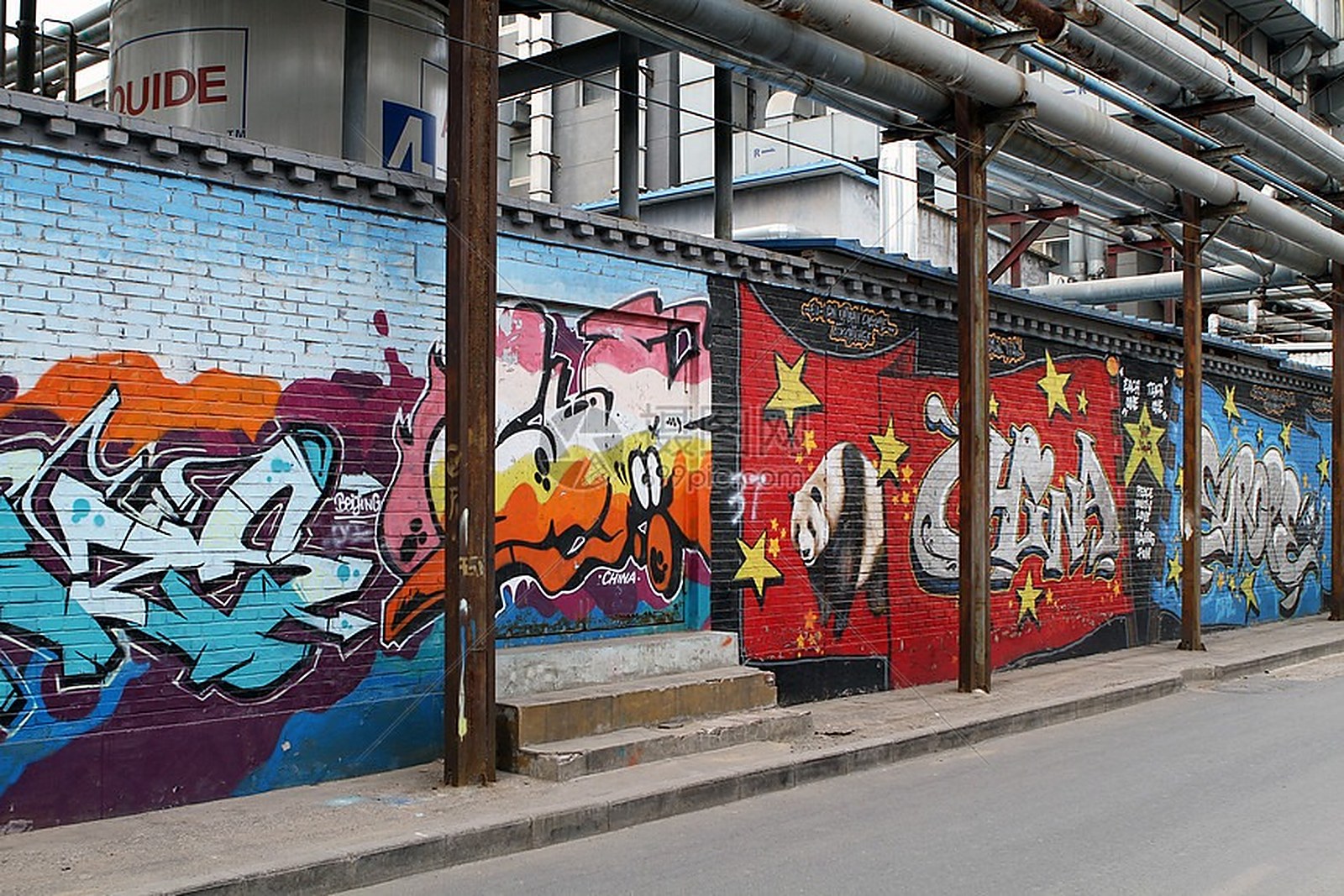
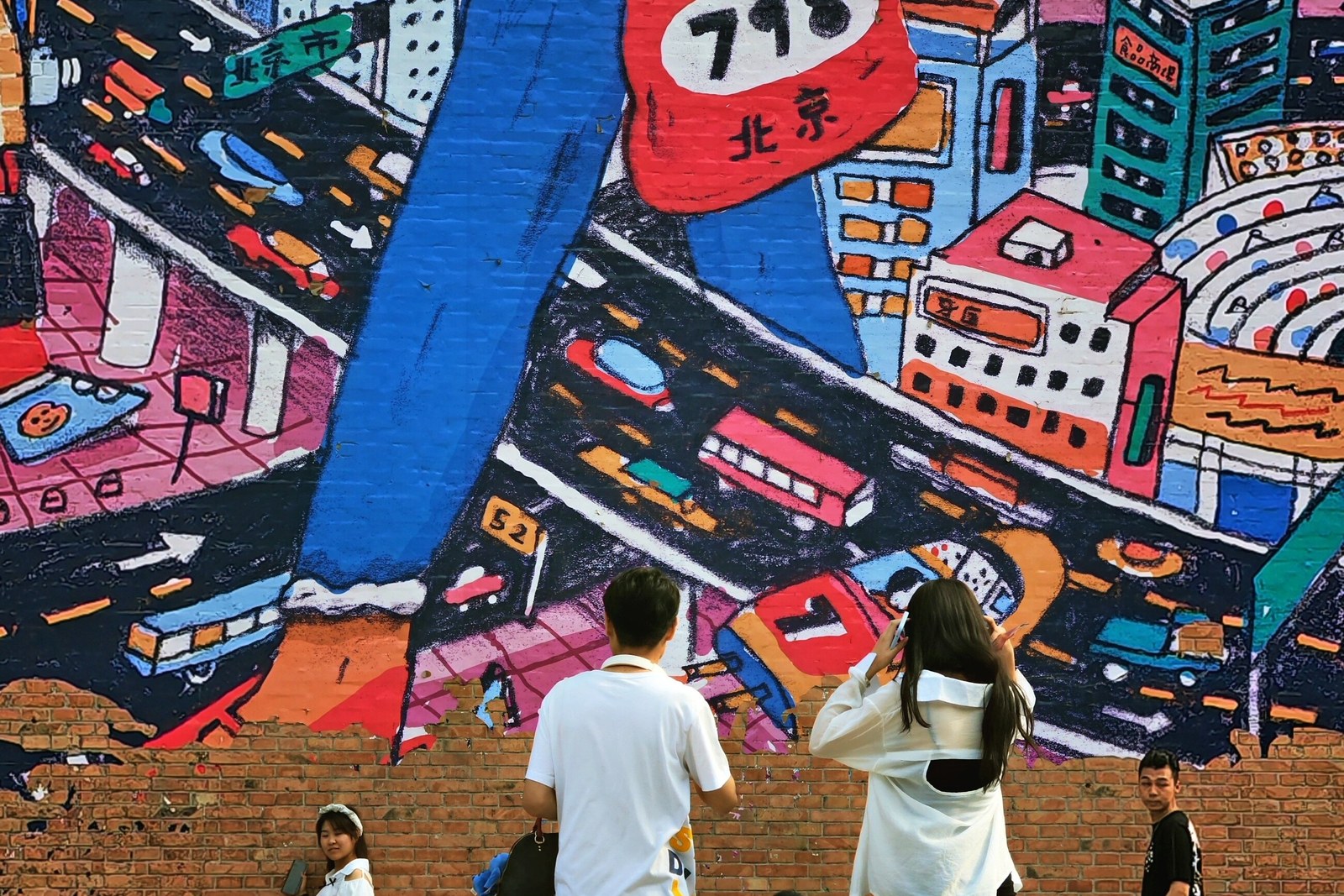
The honest star is the architecture, not the gift shop. A walk down the central 七星东街 Qīxīng Dōngjiē Qixing East Street takes you under the sawtooth 厂房 chǎngfáng workshop roofs — those tilted, glass-north-lit sheds the East Germans engineered for even light — past the great 蒸汽管道 zhēngqì guǎndào steam pipes still strapped to the brick, and the rusting 起重机 qǐzhòngjī crane rails set into the floor. What gets oversold is the retail strip, a tidy row of boutiques that the postcards sell as “the art”; what repays the effort is the public 雕塑 diāosù sculpture scattered through the yards — the welded figures, the tank treads, the political-pop murals on the gable ends — and the 涂鸦 túyā graffiti that crawls the fire walls. 尤伦斯当代艺术中心 Yōulúnsī Dāngdài Yìshù Zhōngxīn UCCA, the best-funded space, is worth a timed visit when a major show is on; the smaller 画廊 huàláng galleries off the side lanes are where the genuine work hides. Come for the geometry of the place: factory, then light, then wall — the whole composition a Cold-War plant the artists refused to let die.
The self-aware postscript: I came expecting white cubes and left reading concrete — stood under a sawtooth roof while a gallery cat walked the old crane rail, and realised the building was the exhibit and the paintings merely tenants. That is the visit in miniature. 798艺术区 798 Yìshù Qū suits whoever treats it as a factory first and a gallery second — arrive before the tour buses, walk the sheds early, read the walls late — and exhausts whoever sprints the retail strip for one selfie. Everything else on this Chaoyang list lies within a short ride: the embassy glow of 三里屯 Sānlǐtún to the south-west, the lake of 朝阳公园 Cháoyáng Gōngyuán to the east, the towers of 国贸 Guómào to the south, all in the same 朝阳区 Cháoyáng Qū Chaoyang District where the East Germans once laid their rails.
Practicalities
- Rating: ★★★★☆ — a genuine Cold-War factory turned gallery quarter whose sawtooth architecture and public sculpture outrank the retail strip; arrive before the buses and the sheds stay quiet.
- Tickets: Free to enter the zone (worth confirming the details only for UCCA and the paid galleries, whose exhibition rates shift by show); the cafés and design shops are the main thing worth budgeting for.
- Address: 798艺术区 798 Yìshù Qū 798 Art Zone, 朝阳区 Cháoyáng Qū Chaoyang District, Beijing — the Dashanzi factory quarter, north-east of the embassy belt off 酒仙桥路 Jiǔxiānqiáo Lù Jiuxianqiao Road.
- Time needed: Three to four hours for the sheds, the sculpture yards and two or three named galleries; a half day if a major UCCA show is on.
Words and Names
798艺术区 798 Yìshù Qū 798 Art Zone · the decommissioned East-German electronics plant turned gallery district in Dashanzi 718厂 718 Chǎng Plant 718 · the original 1950s military-electronics complex of which 798 was a workshop 锯齿形 jùchǐ xíng sawtooth · the Bauhaus north-lit workshop roof that defines the skyline 大山子 Dàshānzǐ Dashanzi · the quarter that gives the art zone its local name 尤伦斯 Yōulúnsī UCCA · the best-funded contemporary-art centre in the zone 画廊 huàláng gallery · the smaller spaces off the side lanes where the real work hides 涂鸦 túyā graffiti · the murals that crawl the factory’s fire walls
flowcloud would say that 798艺术区 798 Yìshù Qū is Chaoyang’s decommissioned plant — the old 718厂 718 Chǎng built by 东德 Dōngdé engineers with 锯齿形 jùchǐ xíng sawtooth roofs, reborn as galleries around 七星东街 Qīxīng Dōngjiē, with 尤伦斯 Yōulúnsī UCCA and the 画廊 huàláng spaces off the lanes — and that the honest move is a plan-led walk from the 798东街 798 Dōngjiē gate, because the zone is free but the paid-show rates shift by exhibition (worth confirming the details), the retail strip is the over-sold half, and the place repays whoever reads the concrete first and the canvases second while losing whoever sprints the boutiques for one photo. All checked October 2026.
Getting there: Metro Line 14 to 望京南 Wàngjīng Nán Wangjing South then a ten-minute walk east, or Line 15 to 将台 Jiāngtái Jiangtai then north; the art zone sits in north-east Chaoyang beside 酒仙桥 Jiǔxiānqiáo and the old factory belt (worth confirming the details for the current gallery opening days). All checked October 2026.