
The Eagle Hunters of Aheqi: China’s Living Falconry on the Kyrgyz Steppe
苍鹰振翅处,牧马踏云还 Cāngyīng zhènchì chù, mùmǎ tà yún hái – Where the grey eagle spreads its wings; the herds come home treading cloud
正文:阿合奇猎鹰 Āhéqí Lièyīng Aheqi falconry lives in the high valleys north of Atush, where 克孜勒苏柯尔克孜自治州 Kèzīlèsū Kē’ěrkèzī Zìzhìzhōu Kizilsu Kirghiz Autonomous Prefecture climbs toward the Tianshan’s western wall – a county of grassland basins and stone-cornered villages where Kyrgyz herders still hunt from horseback with golden eagles they have raised from the nest. The tradition here is not a reenactment staged for cameras; it is a working practice, older than the county’s paperwork, in which a bird and a rider hunt foxes and hares across the winter slopes the way their grandmothers’ grandmothers did.
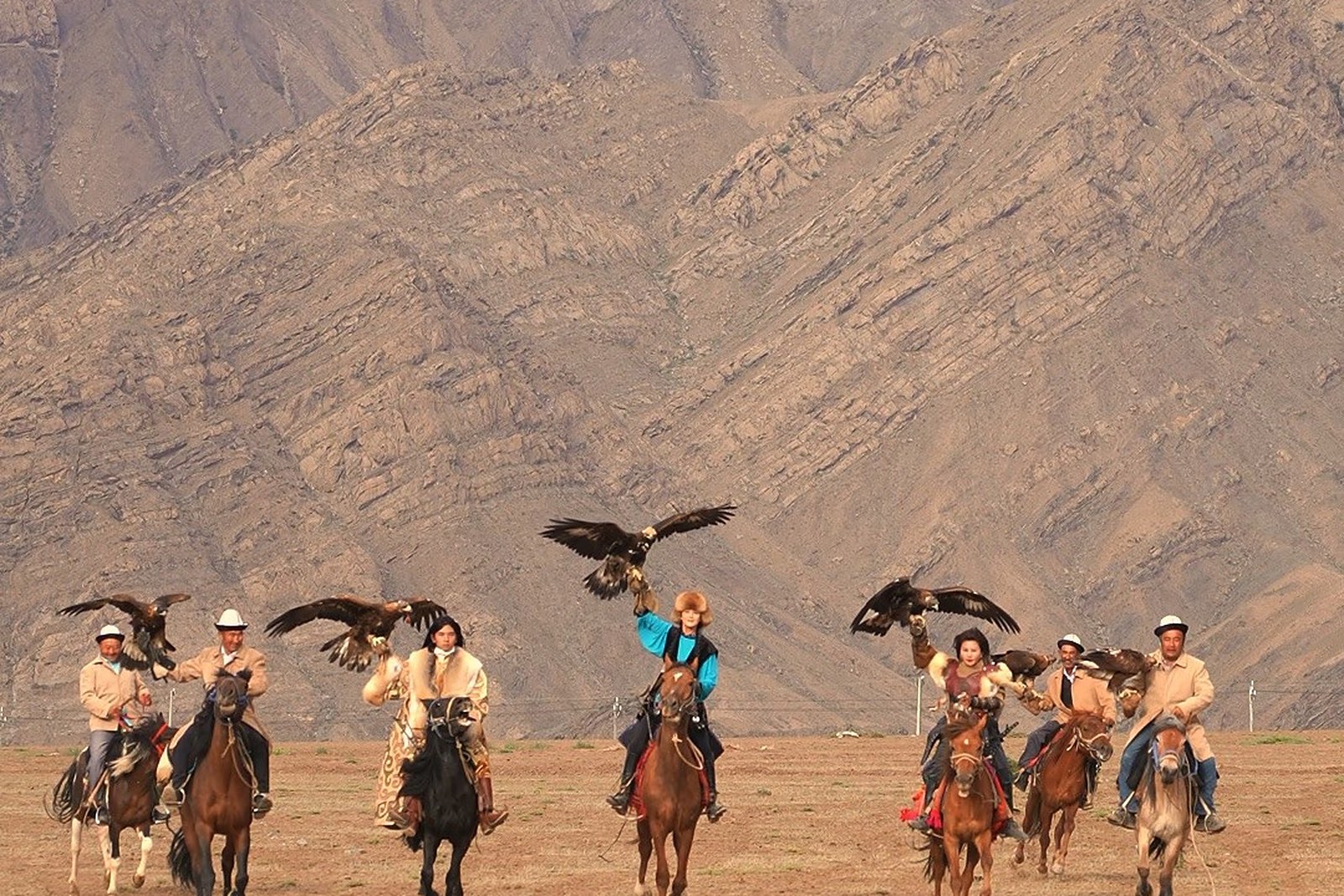
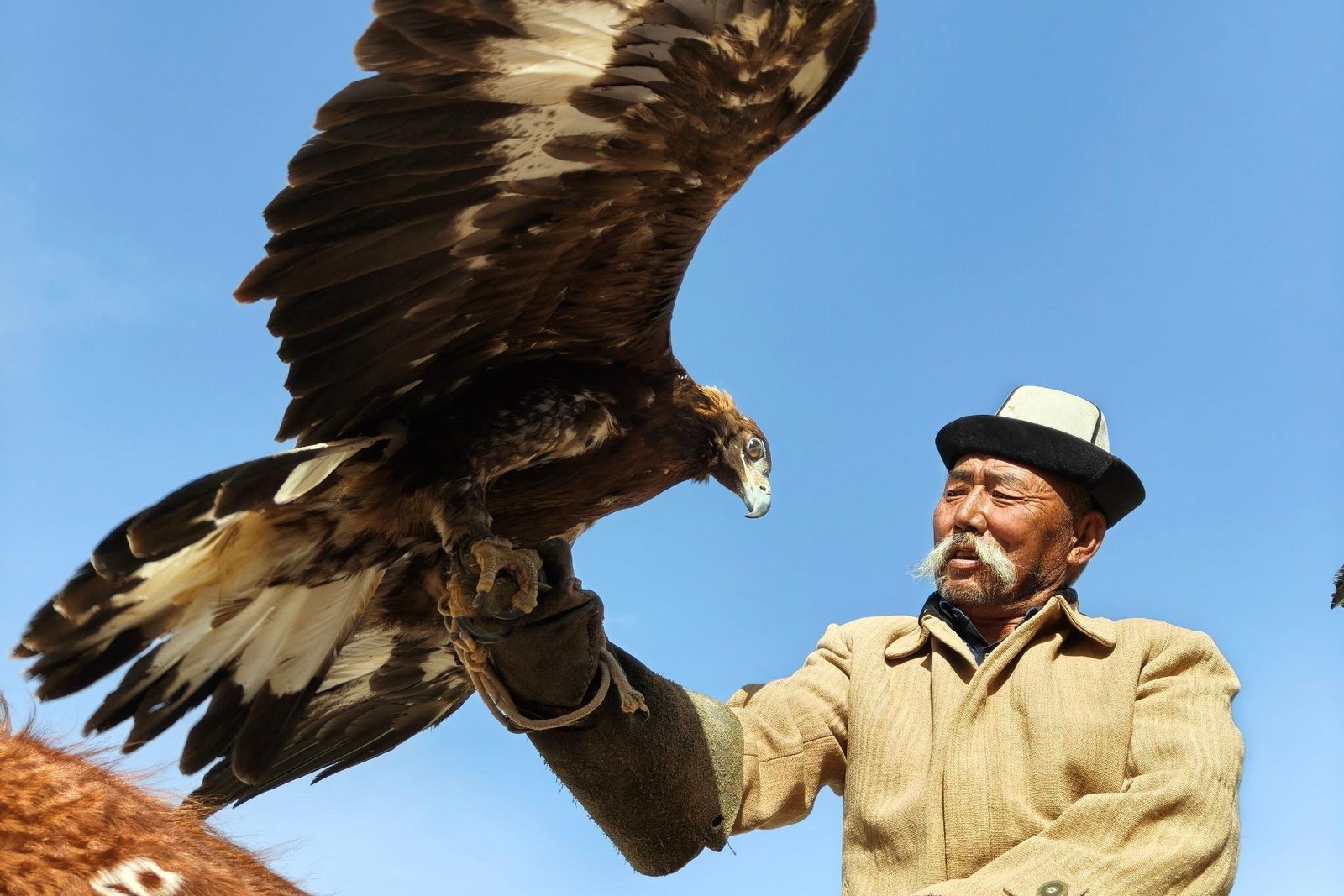
Meeting a hunter starts with the bird. A golden eagle taken from the nest as a chick spends years on the family’s terms – fed, flown, and schooled on the arm until it returns to a leather gauntlet weighing more than the household’s best saddle. Mature hunters read their birds the way sailors read weather: the angle of the head, the tightening of feathers, the moment the eyes fix on a slope and the whole horse-and-rider system goes quiet. When the eagle lifts off, the horses gallop below it, and the hunt that follows across scree and snowdrift is over in minutes – a partnership, not a performance.
Autumn is the season that gathers them. The county’s falcon festival brings dozens of hunters into one valley – birds on arms, horses stamping steam into the cold, competitions for the fastest strike and the proudest stoop. Visitors walk the line of hunters the way one walks a gallery: every bird banded and hooded, every gauntlet embroidered, every face weathered into a topographic map of the pasture years. Between runs the talk is of quotas and game, of nest sites on the red cliffs, of birds that lived twenty years and were then, by custom, returned to the wild to breed – the unwritten conservation clause that has kept the tradition lawful as well as living.
The winter hunt itself happens on the high flats between villages, and a respectful visit is arranged, not gatecrashed: local guides call ahead, guests ride out at dawn with a hunter, and the morning is spent at the pace of horses – glassing slopes, reading wind, watching for the white flick of a hare against grey stone. Nobody charges fees for the privilege among neighbours, but arranged visits carry an honest cost for the day’s horses and hospitality, and travellers who come for photographs alone usually leave as students instead, humbled by how much skill sits under those fur hats.
Practicalities first. Aheqi town lies about ninety kilometres north of Atush, a straight mountain road of under two hours; the falcon valleys spread along side roads best driven with a local car and driver. The festival dates move with the herding calendar – confirm with the county’s culture bureau or your hotel in Atush rather than trusting last year’s poster. Dress for real cold from October onward, carry cash for the village visits, and ask before every photograph: the hunters are generous, but the birds come first, always.
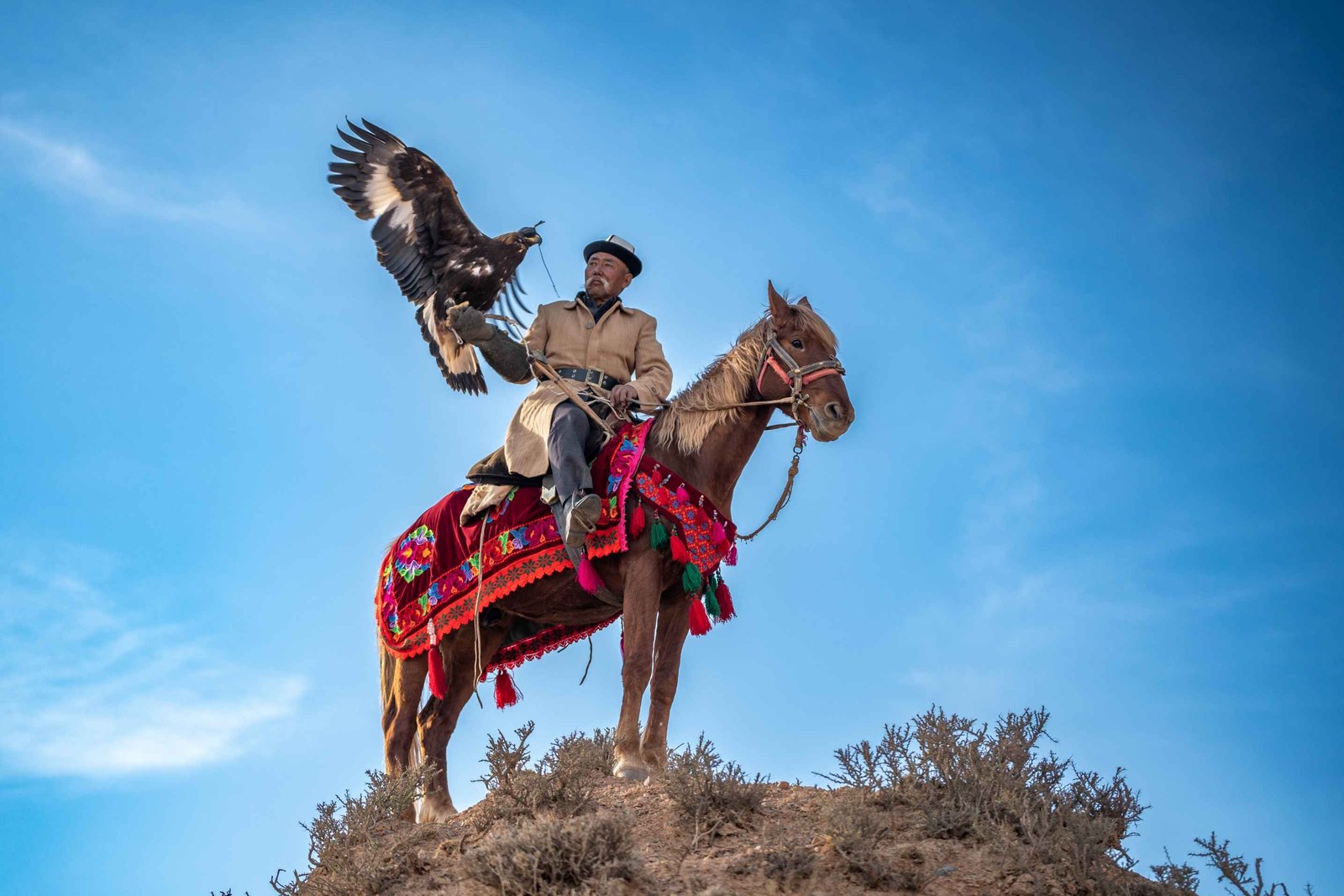
Ethics matter here in ways visitors should own in advance. The tradition is licensed and quota-managed; captive breeding and the release of older birds are part of the modern settlement between herders and wildlife officers. Travellers should decline any offer that smells like a staged kill for cameras and accept instead what the culture actually offers – a morning ride, a poured bowl of kumis, a bird’s-eye view of a partnership that predates the borders on every map in your pocket.
Pair the visit with the wider county and the day fills easily: hot-spring villages in the side valleys, petroglyph fields on the dark rock, and the high pastures where summer milking still sets the region’s rhythm. Aheqi is the quietest corner of Kizilsu and the one most likely to change what a traveller thinks a mountain culture is – not scenery with props, but a craft, a bird, and a relationship measured in decades.
Practicalities
North of the pastures, the same 克孜勒苏柯尔克孜自治州 Kèzīlèsū Kē’ěrkèzī Zìzhìzhōu Kizilsu Kirghiz Autonomous Prefecture keeps more places worth the detour: 阿图什天门 Ātúshí Tiānmén Atush Tianmen for the giant arch, 奥依塔克冰川公园 Àoyītǎkè Bīngchuān Gōngyuán Oytagh Glacier Park for the icefall forest, 白沙湖 Báishā Hú White Sand Lake for the dune mirror, or 西陲第一哨 Xīchuí Dìyī Shào the West Frontier First Outpost for the border story – four more doors into the same 克孜勒苏柯尔克孜自治州 Kèzīlèsū Kē’ěrkèzī Zìzhìzhōu Kizilsu Kirghiz Autonomous Prefecture. Once the eagles are seen, our Kizilsu food map fills the day.
Practicalities
Words and Names
flowcloud would say Aheqi keeps one of the last working falconries on earth: eagles that hunt for families rather than for film crews, returned to the cliffs when their service ends – a tradition that polices itself better than any signboard could. All checked November 2026.
Getting there: Aheqi county town is about ninety kilometres north of Atush city on the S307, a straight drive of under two hours through the mountains. The falcon festival grounds and hunting valleys spread along the side roads east of town – hire a local car in Aheqi, since buses run thin outside school hours. All checked November 2026.