
Alashankou: The West’s First Wind Gap, Stories of a Border Town Under the National Gate and the Boundary Marker
大风起处国门开 Dà fēng qǐ chù guómén kāi – Where the great wind rises, the gate stands open
Alashankou is the China-Kazakhstan border crossing at the northern tip of 博尔塔拉蒙古自治州 Bó’ěrtǎlā Měnggǔ Zìzhìzhōu Bortala Mongol Autonomous Prefecture, and the western bridgehead where the New Eurasian Land Bridge enters China. Half its fame is wind – gale-force days above force eight exceed 160 a year, making this the West’s celebrated wind gap, memorialized in the local saying 「one wind a year, blowing from spring through winter」. The other half is the gate itself: the towering National Gate building stands on the border line, the characters 「中国 China」 and the national emblem unmoved in the wind, while visitors climb the viewing platform to look across at Kazakh outposts and open steppe.
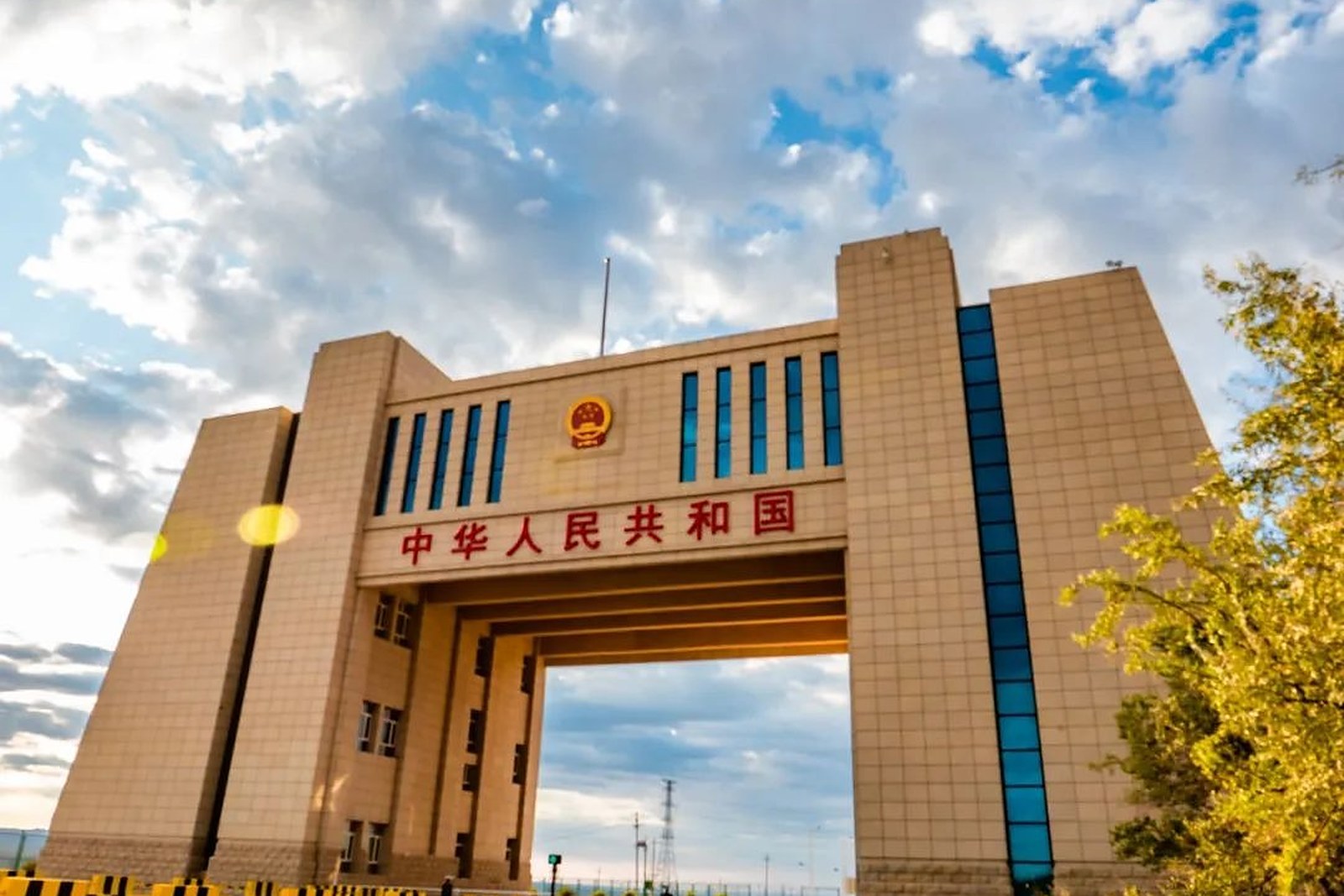
The name descends from Mongolian 「Ala Shan」, 「the mountain with rowan trees」 – hard to picture now in a place of flying sand, but geographically this is the natural breach between the Alatau and Mayili ranges, where the funneling ranges accelerate the airflow into one of China’s few steady great-wind zones. The weather station’s record includes gusts of forty metres per second – enough to lift an empty shipping container off the ground.
The boundary marker is the required stop: the red 「China 365 (1)」 marker stands by the wire, facing its Kazakh counterpart across the line, the border made physical. Just below, the rails of the Lanxin railway and the highway run side by side through the port, and China-Europe freight trains howl past one after another – Alashankou’s tonnage perennially ranks near the top of China’s rail ports. Counting containers from the platform is this town’s own spectacle.
The port’s history rewards a slow read: after the railway connected in the 1990s, a gobi outpost grew into a port city and one of the country’s first land-port logistics hubs. The town is small but carries international weight beyond its size – trucks from every province’s plates on the streets, Russian and Kazakh audible in the border market, the bustle of freight against the stillness of the gobi in odd, beautiful counterpoint.
The scale surprises most visitors: broad-gauge and standard-gauge rails lie side by side, gantry cranes rise and fall in the transshipment sheds, and trains from the Kazakh side change wheels and cargo here before heading inland – two gauges bridged by one craft. From the platform the whole workface is visible: steel, containers, and wind-sand composing a moving industrial canvas.
Wind is Alashankou’s character and its resource: ranks of turbines on the slopes convert gales into electricity, and the wind-gap town has earned the nickname 「capital of wind」. After the National Gate, the border market and a Russian-style bakery are worth the detour – a faint foreign scent carried on the wind.
For travelers the sights compress to 「one gate, one marker, one line」: the gate building, marker 365, and the Land Bridge rails – best seen in the soft light of early morning and late evening. If a China-Europe convoy release is underway, a dozen trains pass nose to tail, wind and whistles mixed – the city’s exclusive symphony.
The town’s food carries mixed-border DNA: the market’s Russian bakery turns out great loaves, pickles and red sausage on open display, while noodle shops and Sichuan kitchens sit side by side. Drivers overnight here and fan out at dawn – some toward Urumqi, some toward Sayram Lake; the wind town is a hinge of journeys, never the destination.
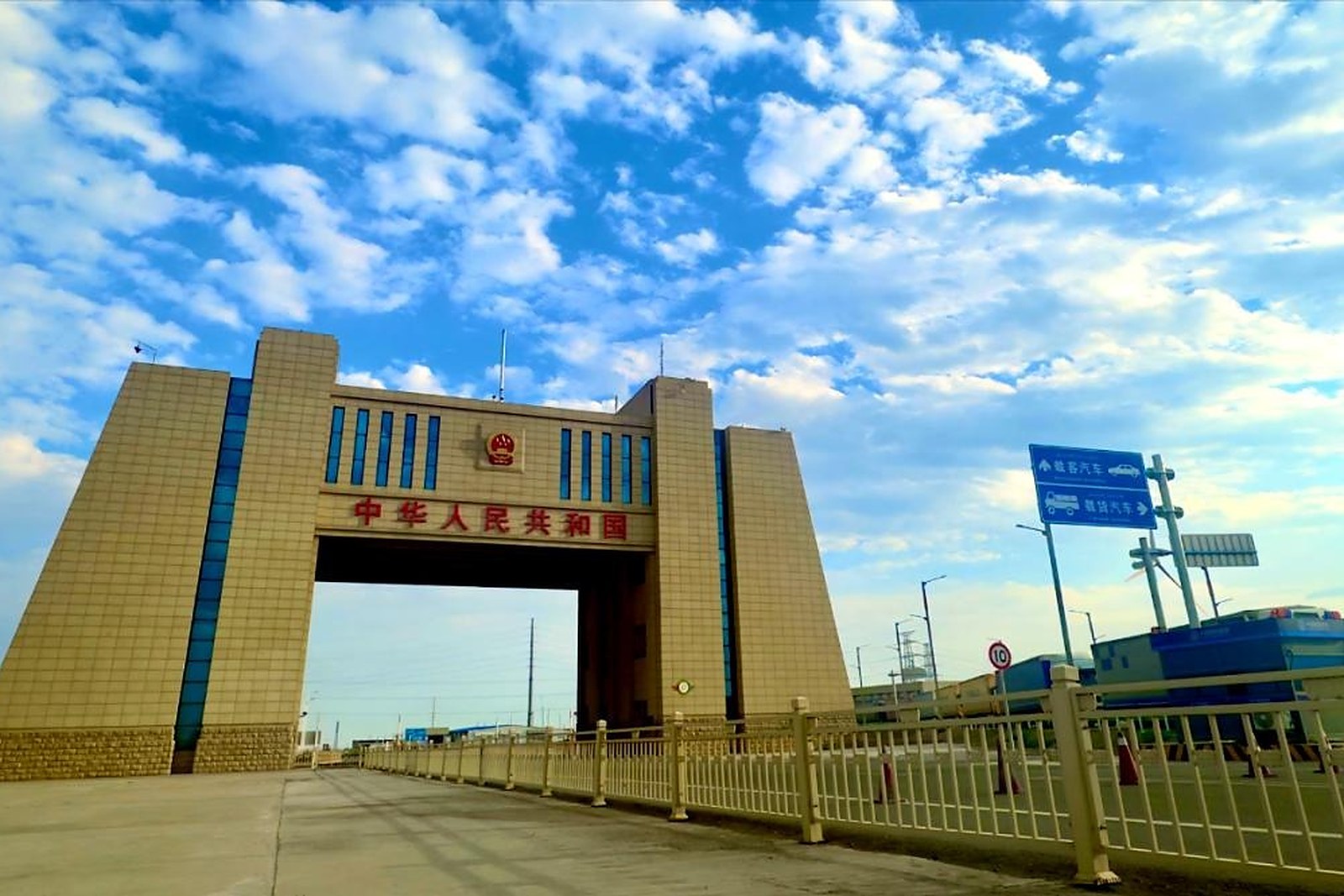
The gate photographs best at the day’s edges: at sunrise a solemn backlit silhouette, at sunset gold light striking the word 「China」. In gales secure your hat – gusts here flip parasols in a heartbeat. Outside town the turbine rows march across the gobi like white piano keys, worth a pause on the way past.
Railfans rank Alashankou a mandatory Xinjiang stop: two gauges and three locomotive liveries in one frame, and with luck a full trainset of new automobiles departing through the gate. The port-history hall’s black-and-white photos of the first international train in the 1990s cut hard against today’s traffic. In the eastern suburb a railway-themed park displays a retired steam locomotive and old freight cars – climb into the cab for photos, the children’s favorite. By evening the wind drops, skewer stalls open through the residential blocks, cumin and coal smoke filling the street – a border town’s honest fireworks.
Wind has shaped the townsfolk too: every street tree is planted on the leeward side and leans uniformly southeast – newcomers assume it is pruning. Locals joke that their big trees are 「the greet-guest pine’s country cousins」, humor carrying a bow to nature. The city’s history is short, but the museum lays out thirty years cleanly – first tent to first railway, sand-blasted courtyard to international freight yard – and the docent’s summary stands: every inch of this city’s growth was negotiated with the wind.
Practicalities
Beyond the gate, the same 博尔塔拉蒙古自治州 Bó’ěrtǎlā Měnggǔ Zìzhìzhōu Bortala Mongol Autonomous Prefecture holds other sights: 赛里木湖 Sàilǐmù Hú Sailimu Lake, 怪石峪 Guàishíyù Guaishiyu, 哈日图热格 Hārìtùrègé Hazireteg, and 圣泉景区 Shèngquán jǐngqū the Sacred Spring scenic area – four more doors into the same 博尔塔拉蒙古自治州 Bó’ěrtǎlā Měnggǔ Zìzhìzhōu Bortala Mongol Autonomous Prefecture. With the border line walked, our Bortala food map fills the eating hours.
Practicalities
Words and Names
flowcloud would say Alashankou is a place for listening: the wind arrives with train whistles mixed in, a soundtrack no other border gate can offer.All checked November 2026.
Getting there: Alashankou town sits about seventy-three kilometres north-west of Bole on the S205, served by intercity trains and buses; the gate scenic area lies inside the port control zone, so visitors register at the tourist centre with ID and enter by shuttle – check registration times with your hotel the evening before. All checked November 2026.