
安居古城 Ānjū Gǔchéng, the Anju Ancient Town of Tongliang, is one of Chongqing’s best-kept old river towns, a Ming-Qing settlement laid out on a grid of stone lanes where the 涪江 Fú Jiāng Fu River bends through the district. It was a thriving river port, and the layout still reads like a working town rather than a stage set: merchants’ courtyards, guild halls and a Confucian temple sit shoulder to shoulder along lanes paved with quarried stone worn smooth by centuries of foot traffic. The town sits on a low tongue of land between the river and a still lake, so a wall walk at the water’s edge gives you both the broad river and the quiet backwater in a single slow circuit. Visitors who know Chongqing’s busier old quarters come here precisely because Anju has kept its scale — small enough to walk end to end in an afternoon, old enough to feel continuous with the people who still live in it.
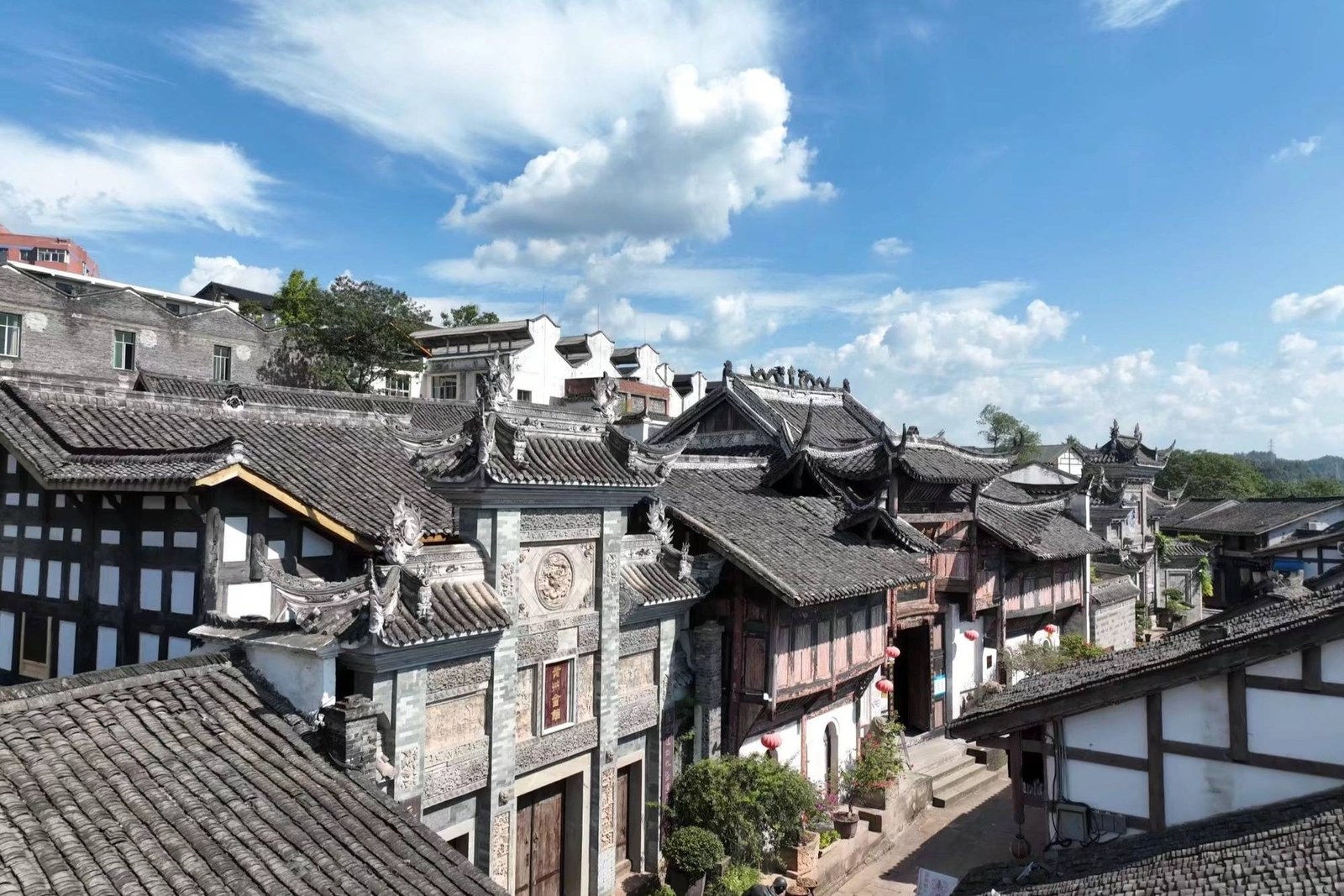
The Confucian temple, 文庙 Wénmiào, anchors the town’s cultural memory, a calm walled compound of timber halls and a quiet courtyard that once set the rhythm of study and examination for the district. Around it the lanes open into small squares where older residents play cards and hang washing, and where the river trade’s old architecture — high thresholds, carved stone doorways, timber bracketwork — survives in everyday use rather than behind ropes. The lake-side wall is the town’s gentlest walk: a low rampart of stone looking out over still water and fishing boats, best in the early morning when the light is flat and the town has not yet filled with day-trippers. It is the kind of place that rewards a second loop, because the first is spent simply reading the lanes and the second lets the town’s quiet settle in.
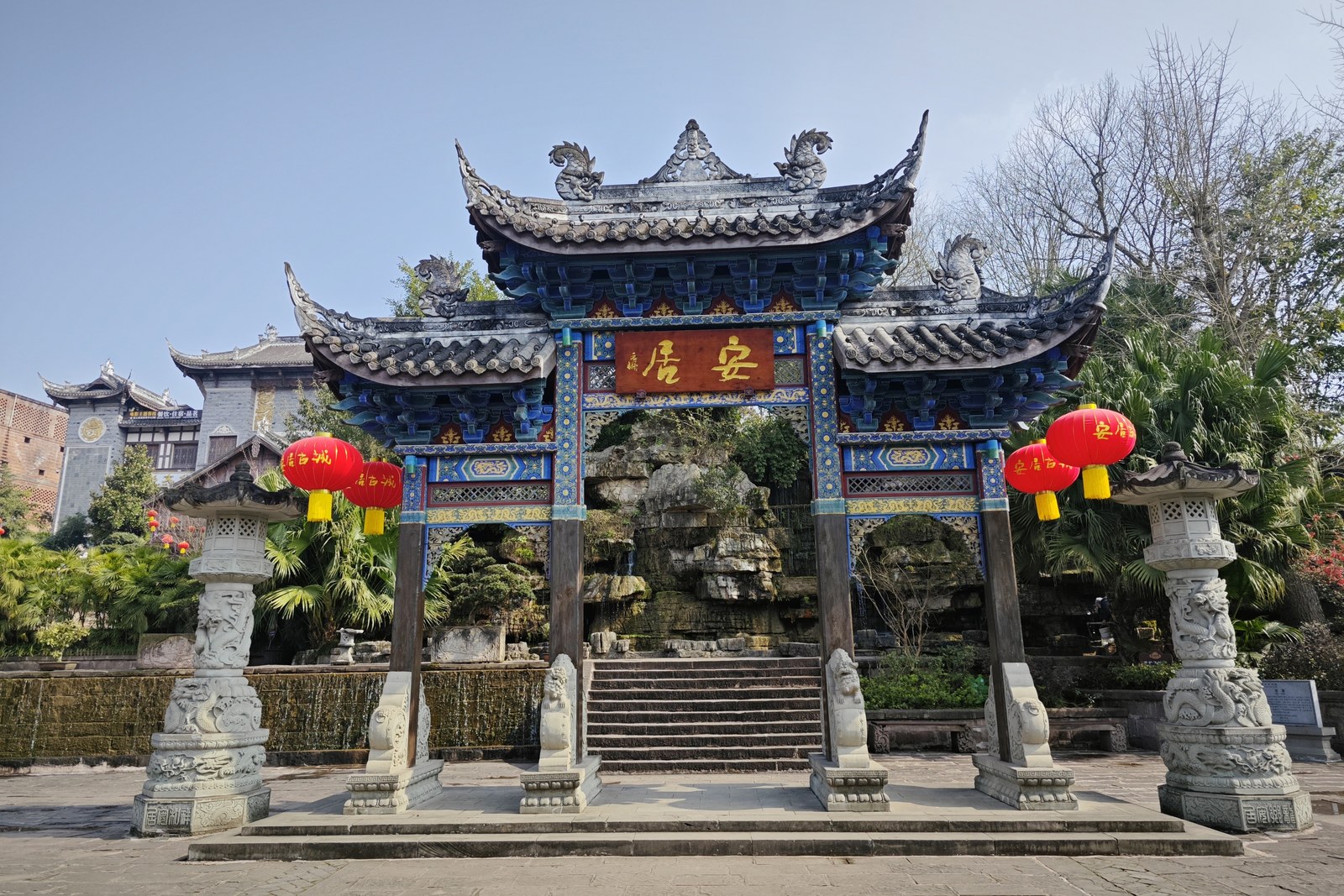
What keeps Anju honest is that it is still lived in. The temples and guild halls are the headline sights, but the real draw is the unremarkable texture of a river town that never emptied out — the smell of woodsmoke, the sound of the river against stone, the temples that double as neighbourhood anchors. Tongliang (铜梁区) preserves the town as a piece of its own history rather than a reconstruction, and that restraint is visible in the absence of themed shops crowding the lanes. A visit is less about ticking a monument than about walking a grid that has changed its clothes but not its bones, and then sitting by the water long enough to understand why a river town would choose to stay.
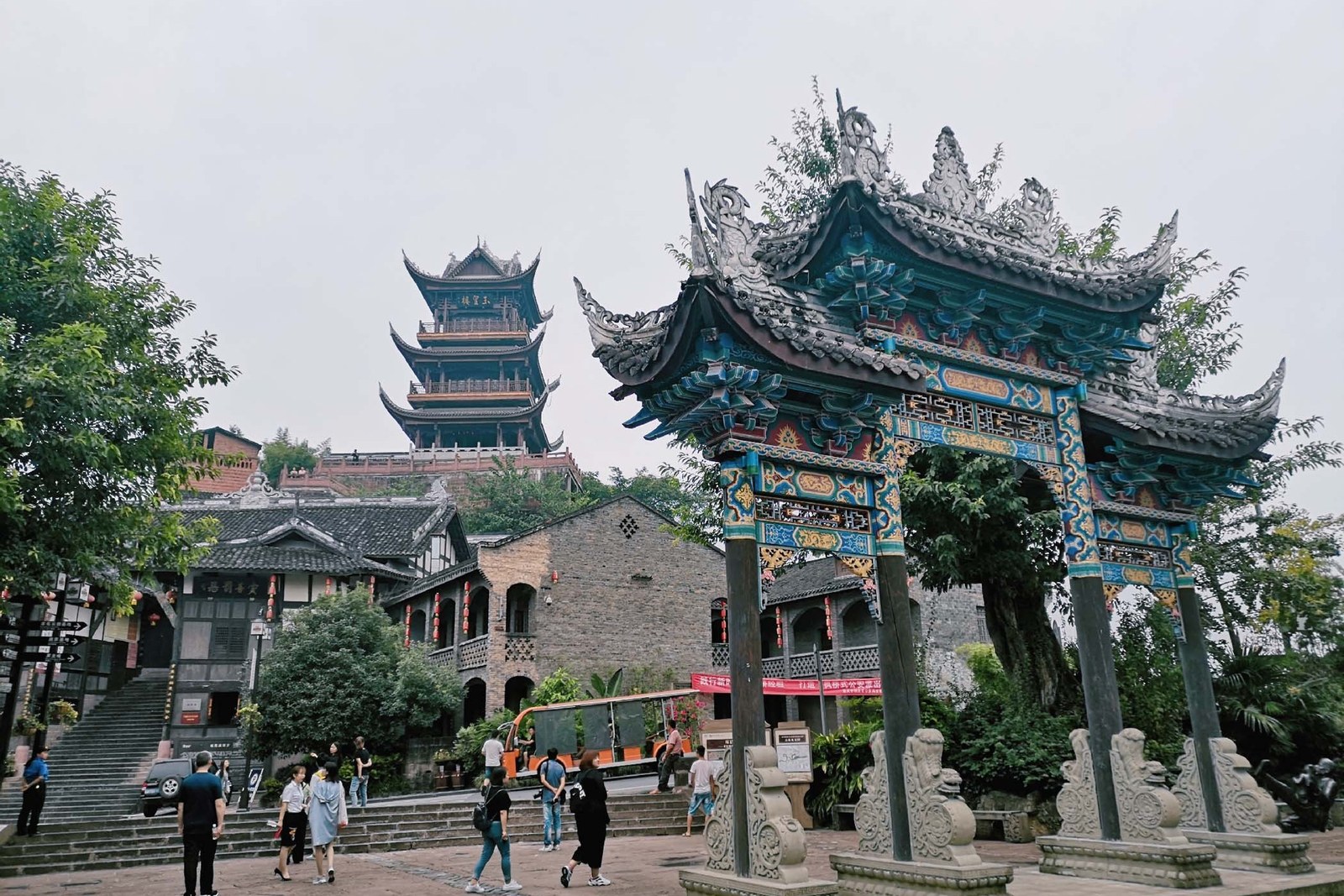
Walk the lanes slowly and the town will hand you its logic: the river for trade, the temple for learning, the wall for defence and the lake for calm, all within a few hundred metres. The best hours are early morning and late afternoon, when the stone is cool and the light is long, and the lanes belong to residents rather than to cameras.
Words and Names
安居古城 Ānjū Gǔchéng is the Anju Ancient Town, a Ming-Qing river settlement on the 涪江 Fú Jiāng Fu River in 铜梁区 Tóngliáng Qū Tongliang District, Chongqing. 文庙 Wénmiào is the Confucian temple at the heart of the old town, a walled compound of timber halls and a quiet study courtyard. 涪江 Fú Jiāng is the Fu River, the waterway that made Anju a port and still bounds the town’s eastern edge. 铜梁区 Tóngliáng Qū is Tongliang District, the Chongqing municipality that preserves Anju as a living old town. 重庆 Chóngqìng is Chongqing, the municipality of which Tongliang is a part.
What the Locals Know
The town is small and walkable, so the best strategy is to arrive early or late in the day, when the lanes are quiet and the lake wall is lit by low sun rather than midday glare. Midday and holiday weekends draw the most day-trippers from Chongqing city, and the stone lanes narrow quickly when a tour group passes. There is no single “best” gate to enter; the grid is compact, so wandering in from the river side and looping back along the lake gives the fullest sense of the place. One honest caveat: the temples and halls keep variable opening patterns tied to local staffing and events, so treat them as glimpsed rather than guaranteed, and dress modestly for the active Confucian temple. No specific hotel, restaurant, ticket price or vendor is stated here.
flowcloud would say that Anju Ancient Town is one of Chongqing’s best-kept Ming-Qing river towns, a lived-in grid of carved-stone lanes, a working Confucian temple and a lakeside wall walk on the Fu River in Tongliang District. All checked October 2026.
Where to find it: the town sits in 铜梁区 Tóngliáng Qū Tongliang District, Chongqing, on the 涪江 Fú Jiāng Fu River, reached as a day trip or overnight stay from Chongqing city and walked on foot through its stone lanes, the 文庙 Wénmiào Confucian temple and the lake-side wall. No specific shop, address or price is invented here; Anju is a preserved district old town rather than a single ticketed attraction. All checked October 2026.