
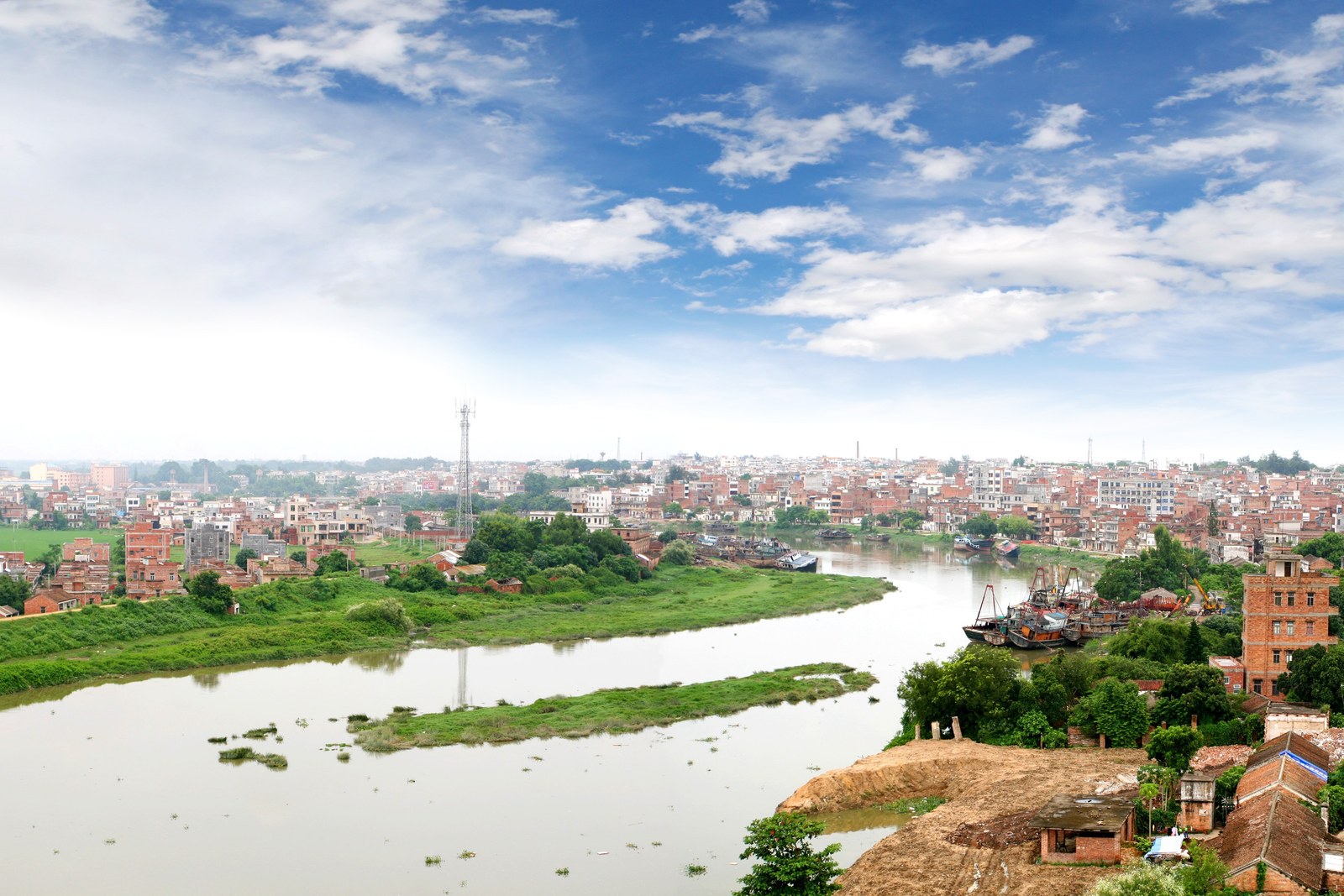
安铺镇 Ānpù zhèn is the old port town at the mouth of the 九洲江 Jiǔzhōu jiāng in 廉江市 Liánjiāng shì, and it is counted among the four great old towns of Guangdong. The river comes down out of Guangxi, and the town grew where the last navigable stretch of it meets the 北部湾 Běibù Wān, which made it the trading port for the whole of the 廉江 and 遂溪 interior: goods came down the water, were landed at 安铺, and went out again along the coast or up to the larger ports. It is about thirty kilometres south-west of the 廉江 county town and about an hour from 湛江市, and a few hundred metres of 骑楼 qí lóu arcades still run along the streets that led down to the wharves.
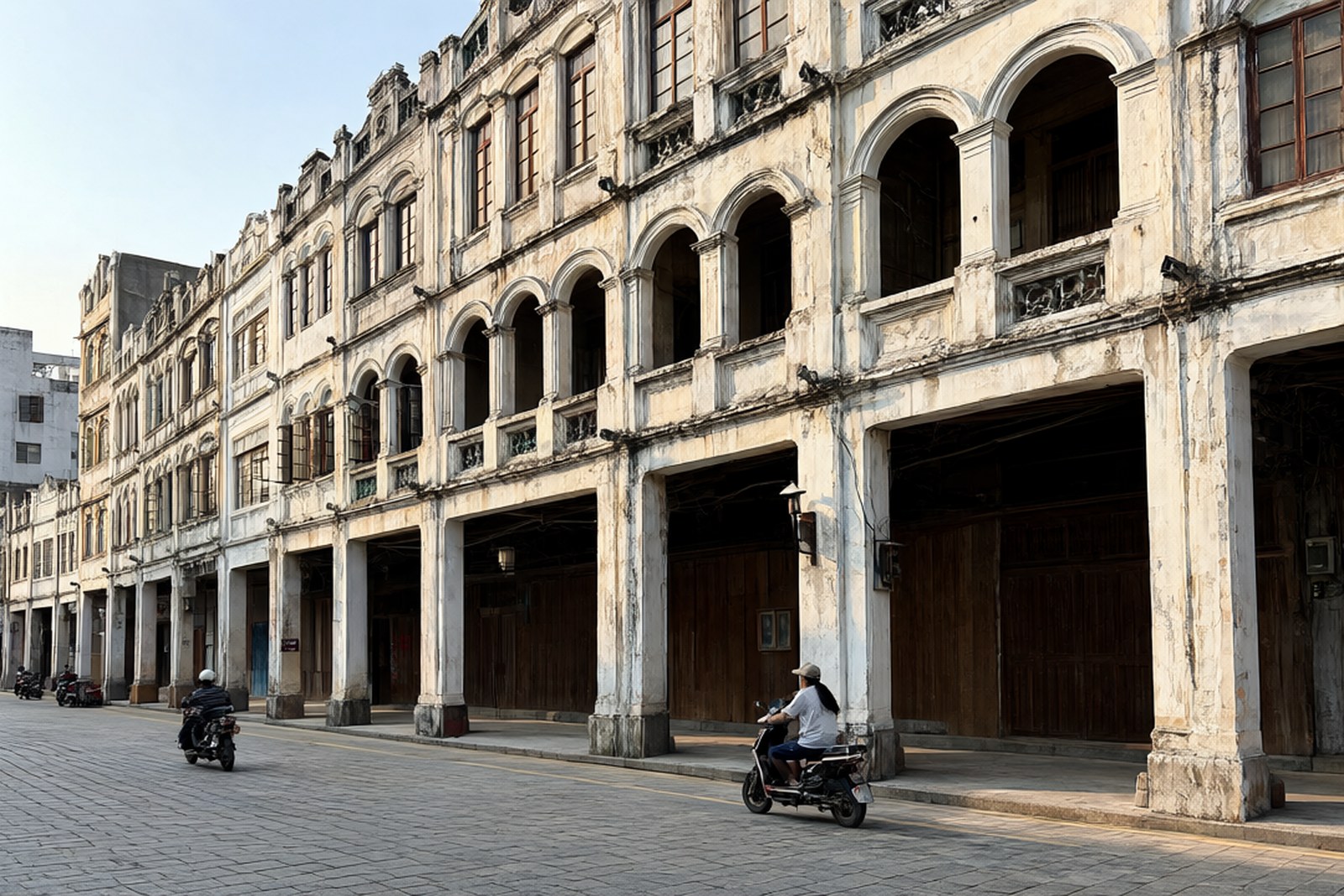
What survives is a river town of the late Qing and the Republic, and it has not been rebuilt into a scenic area. The 骑楼 run along 中山路 and the streets behind it, two and three storeys of brick and concrete with colonnades at ground level, some of them still carrying their original shophouse shutters and ironwork; the 文阁 Wén gé, the scholar’s tower, stands above the river; and there are temples and guild halls at the ends of the streets, where the merchants who ran the trade were organised by native place. The town has been a market for centuries and the market is still the point of it: the fish, the 安铺粉 Ānpù fěn, the leaf-wrapped 年糕 nián gāo kept for the New Year, and the chicken the town is known for, sold out of the same arcades they were sold from a hundred years ago. It is a working town and not a set, which is both its charm and the reason it takes an hour to see rather than a day.
安铺 is famous in the province for one thing above all, and that is the 安铺鸡饭 Ānpù jī fàn, written up elsewhere on this site: a 湛江 three-yellow chicken poached in nothing but water with ginger, chilled, carved, and served with rice cooked in the broth it came out of and a dip of pounded 沙姜. The town eats it from the morning, which is the mark of a place whose money has been in its market rather than in its visitors. 廉江 behind it is orchard country: the 红橙 hóng chéng, the red-fleshed orange, is the county’s signature fruit, and 杨桃, 荔枝 and 龙眼 come out of the same red ground. Upstream of the town the 鹤地水库 Hè dì shuǐ kù, one of the largest reservoirs in the province and built entirely by hand in 1958 and 1959, holds the water that makes the whole peninsula green, and it is about an hour north and worth the detour on the same day.
Downstream of the town is the coast proper and the reason to give it the afternoon. The 高桥 Gāo qiáo mangroves, at the western edge of the county near the Guangxi border, are part of the 湛江红树林国家级自然保护区 Zhànjiāng hóng shù lín guó jiā jí zì rán bǎo hù qū, the largest mangrove protected area in the country, and the stand at 高桥 is one of the great continuous forests of it, with a boardwalk and a viewing tower over the mudflats. The old town itself is a half day at most: walk the arcades, look at the river from the 文阁, eat at the market, and drive the twenty minutes down to the mangroves. Two or three hours is enough for the streets and the day is better if it ends on the water.
Practicalities
Tickets. The 骑楼 streets, the 文阁, the temples and the market are free. The 高桥 mangrove reserve charges about ¥20 to ¥30 for the boardwalk and the tower, and the 鹤地水库 and its dam are free to walk.
Opening hours. The streets, the market and the river front are open all day, and the market is at its best from about six in the morning and again in the late afternoon. The mangrove boardwalk keeps roughly 08:30 to 17:30 and closes earlier in winter. Half a day covers the town and the coast together, and a full day covers them with the reservoir.
Getting there. 安铺 has no station of its own; the nearest are 廉江站 Liánjiāng zhàn on the 深湛 high-speed line, about forty minutes north-east, and 遂溪站 Suìxī zhàn. By road 湛江市 is about an hour south-east on the expressway, the 廉江 county town about thirty minutes north, and the 高桥 mangroves about twenty minutes west along the coast road. The old town is small enough to walk and a car or a taxi is needed for the mangroves and the reservoir.
Closing day. There is no closing day. The streets, the market and the temples are open every day of the year, and the 高桥 boardwalk is open every day with occasional closures after heavy weather. The town’s own festival days fall in the first lunar month, when the parades come out and the arcades fill.
flowcloud would say that a town which was built by a river mouth to move other people’s goods, which ate chicken rice for breakfast because its market had money in it, and which has kept its arcades and its market rather than converting them into a street of souvenirs, has stayed what it always was, and that is rarer than being restored.
Getting there: 安铺镇 in 廉江市 is about an hour south-east of 湛江市 by road and about forty minutes from 廉江站 on the 深湛 high-speed line; the 骑楼 streets and the market are walkable, and the 高桥 mangroves are twenty minutes further west along the coast road near the Guangxi border.