
The Green Dome of Kashgar: Tombs, Tiles and the Legend of the Fragrant Concubine
绿琉璃穹顶,梨花伴忠魂 Lǜ liúlí qióngdǐng, líhuā bàn zhōnghún – Green glazed domes above; pear blossoms keep faith with the loyal dead
正文:香妃园 Xiāngfēi Yuán the Fragrant Concubine Garden stands about five kilometres northeast of central 喀什地区 Kāshí Dìqū Kashgar Prefecture, wrapping the great tomb of the Apak Khoja dynasty in orchards, poplars and a modern garden complex built around one of the Silk Road’s favourite legends. The mausoleum itself – raised in 1640 for Muhammad Yusuf and expanded by his son Apak Khoja – is the finest tiled monument in southern Xinjiang: a domed hall faced in green and blue glazed brick, four corner towers, and a courtyard gate that has framed processions for nearly four hundred years.
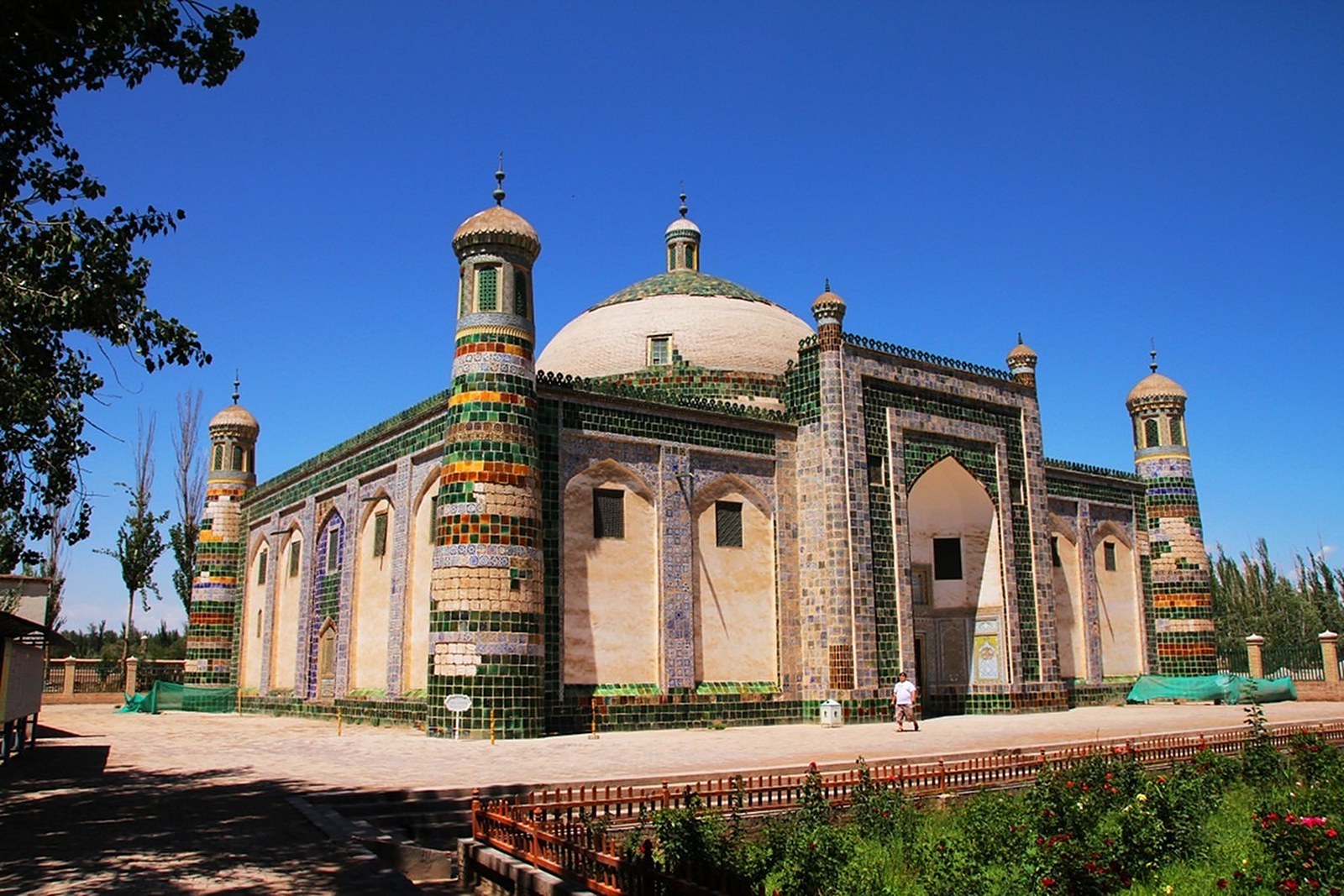
The “Fragrant Concubine” of the garden’s Chinese name is Iparhan, a descendant of the Khoja family carried to Beijing as consort to the Qianlong emperor. Historians debate the details – historians always do – but Kashgar keeps the story simple and certain: the emperor’s consort, homesick for her desert garden, and finally returned home in state to lie among her ancestors. Whether the actual tomb holds her or (as the family chronicles suggest) her outer coffin rests elsewhere, the legend has done what legends do – it gave the green dome a second life in song, opera and every tour guide’s script.
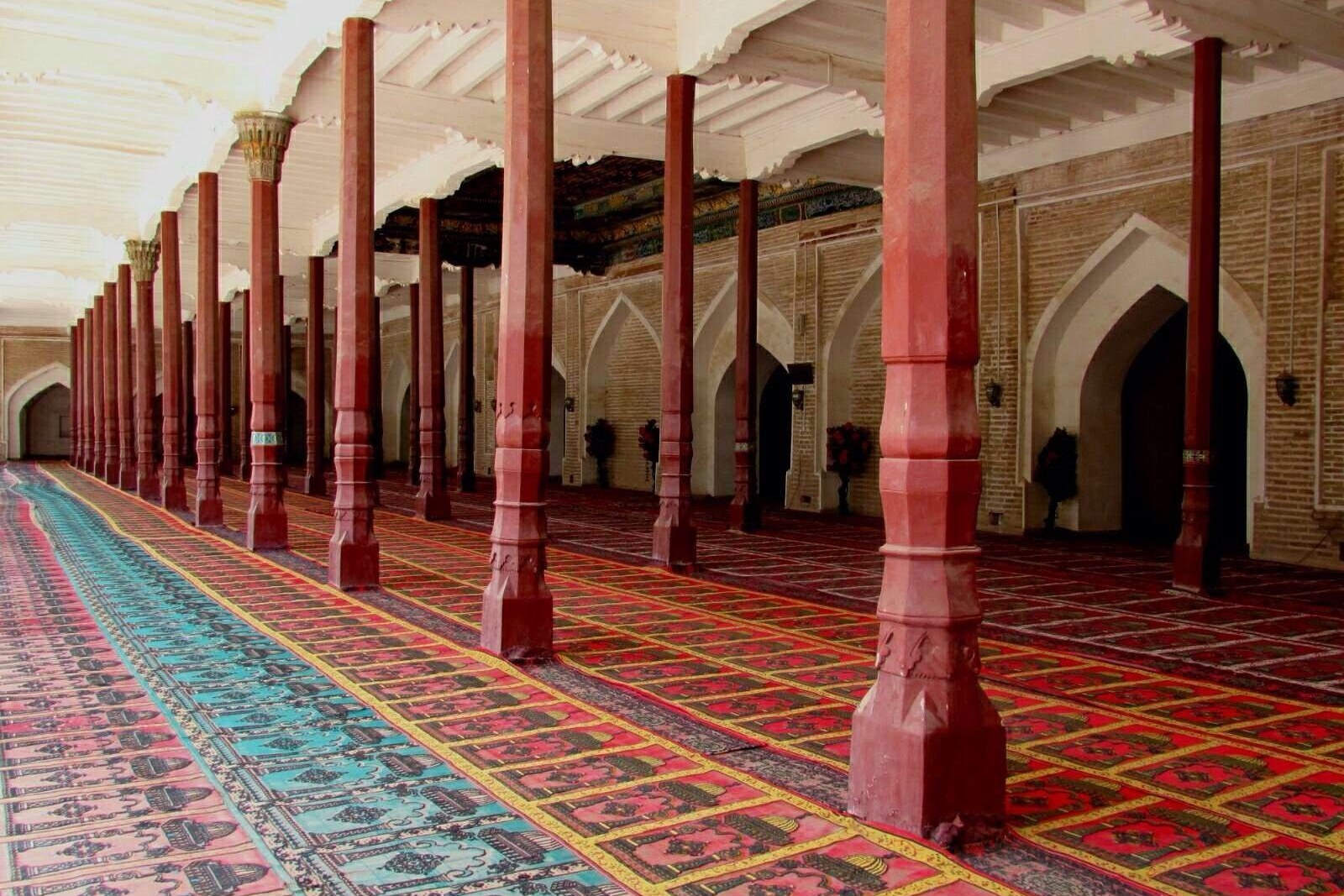
The building rewards close attention more than photographs suggest. The dome rises twenty-six metres on a drum of glazed brick whose colour shifts from jade to deep teal as the light moves; the corner towers carry miniature domes of their own; and the entrance iwan frames a carved wooden door older than most European capitals. Inside, the sarcophagi of the Khoja family – five generations, seventy-two tombs, men and women arranged on brick platforms under silk cloths – make the hall feel less like a museum than like a family’s private country, open by courtesy.
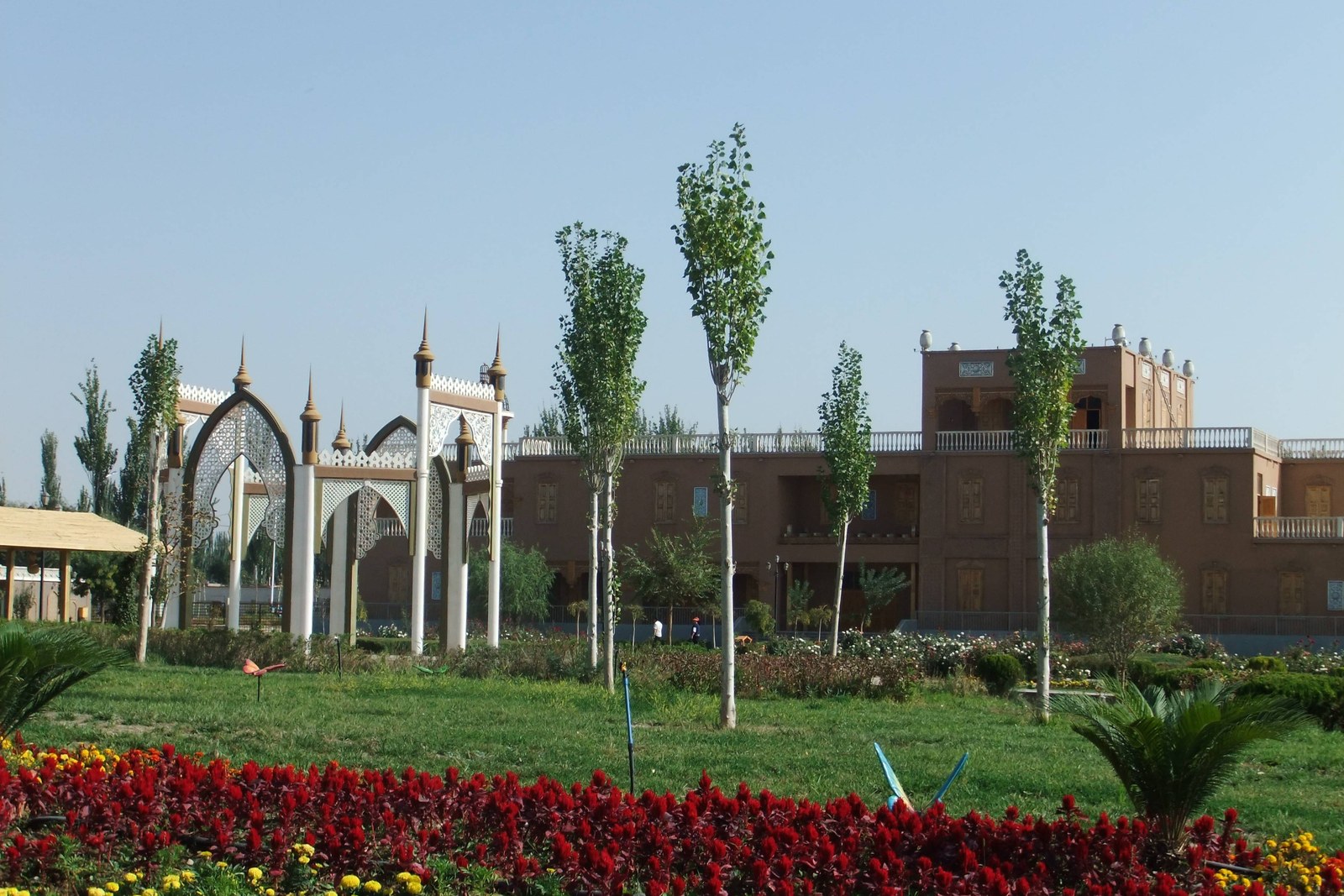
The wider garden park has grown into a full day’s excursion. Paved walks circle the tomb through pear and pomegranate orchards; a modern exhibition hall retells the Iparhan legend with mannequins and murals; and in season the park stages Uyghur music and dance in an open theatre whose backdrop is the dome itself. Families from the city arrive with picnic baskets; wedding parties pose at the gate; and the pilgrim stalls by the wall sell the little glazed-brick souvenirs that have become the park’s signature.
The adjacent handicraft bazaar completes the visit. On the tomb’s south side, rows of workshops and stalls sell the district’s signature products – copper ewers, silk, dried fruit, and the small glazed ceramics that echo the dome’s tilework. The Friday market beside the garden is older than the park and considerably less polished: knife-sharpeners, felt-makers and the tea stall where the tomb’s caretakers have drunk their afternoons for generations.
Practicalities first. The garden charges a combined ticket for tomb and exhibition halls, opens through the day with a break around noon prayers, and is reachable by city bus 20 from the old town or a cheap taxi ride. Late afternoon turns the dome luminous; mornings are quieter. Dress modestly inside the tomb hall – it remains an active shrine – and give the sarcophagus hall the silence its family still expects.
Combine the visit with the old town’s northeast lanes and the riverside road back into the centre, and the half-day rounds out comfortably. The garden sits close enough to the city that rain, wind or a slow morning are no obstacle – it is Kashgar’s most weatherproof excursion.
Leave the garden at dusk, when the tour buses are gone and the dome keeps the last light to itself, and the legend feels almost incidental: the real marvel is a family’s tomb that became a city’s treasure, four hundred years of glazed brick still holding their colour like the day they were fired.
Practicalities
Beyond the garden, the same 喀什地区 Kāshí Dìqū Kashgar Prefecture keeps more places worth the detour: 艾提尕尔清真寺 Ātígǎ’ěr Qīngzhēnsì the Id Kah Mosque in the centre, 喀什古城 Kāshí Gǔchéng Kashgar Old Town for the carved doors, 喀拉库勒湖 Kālākùlè Hú Karakul Lake under Muztagh Ata, or 牛羊大巴扎 Niúyáng Dàbāzhā the Livestock Bazaar for Sunday trade – four more doors into the same 喀什地区 Kāshí Dìqū Kashgar Prefecture. Once the dome is seen, our Kashgar food map fills the day.
Practicalities
Words and Names
flowcloud would say the Fragrant Concubine Garden is where Kashgar keeps its favourite story: a green dome that holds both a dynasty and a legend, orchards for walking, and the best glazed-brick light in southern Xinjiang at five in the afternoon. All checked November 2026.
Getting there: The tomb complex lies about five kilometres northeast of the old town; city bus 20 runs close to the gate, and a taxi costs little more than a coffee. Allow half a day combined with the adjacent handicraft bazaar, and go late afternoon when the glazed dome catches the sun. All checked November 2026.