
The Tallest Natural Arch on Earth: Atush Tianmen and the Ochre Amphitheatre of Kizilsu
神工凿石门,一拱破天关 Shéngōng záoshí mén, yī gǒng pò tiānguān – Divine hands carved the stone gate; one arch breaks through heaven’s pass
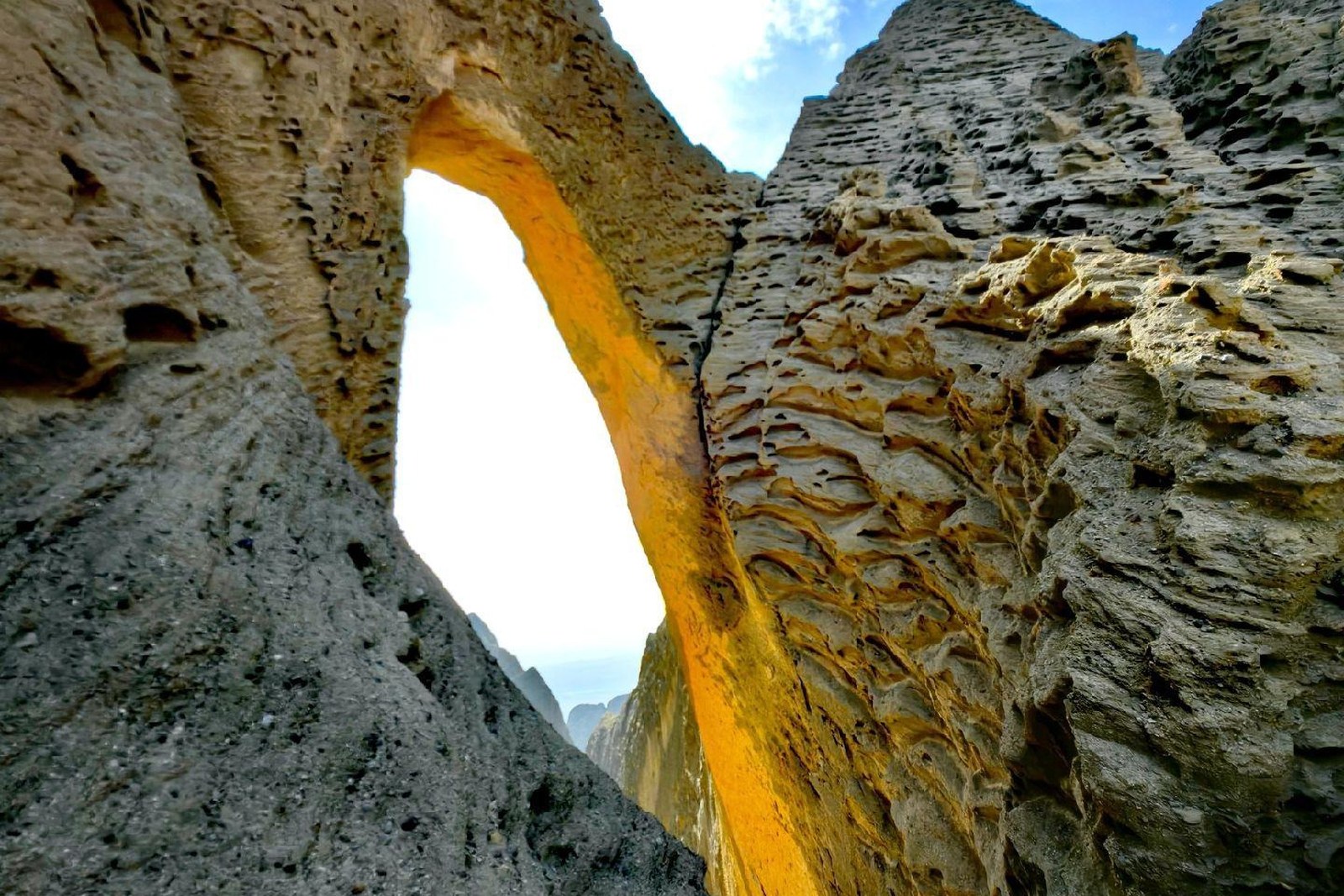
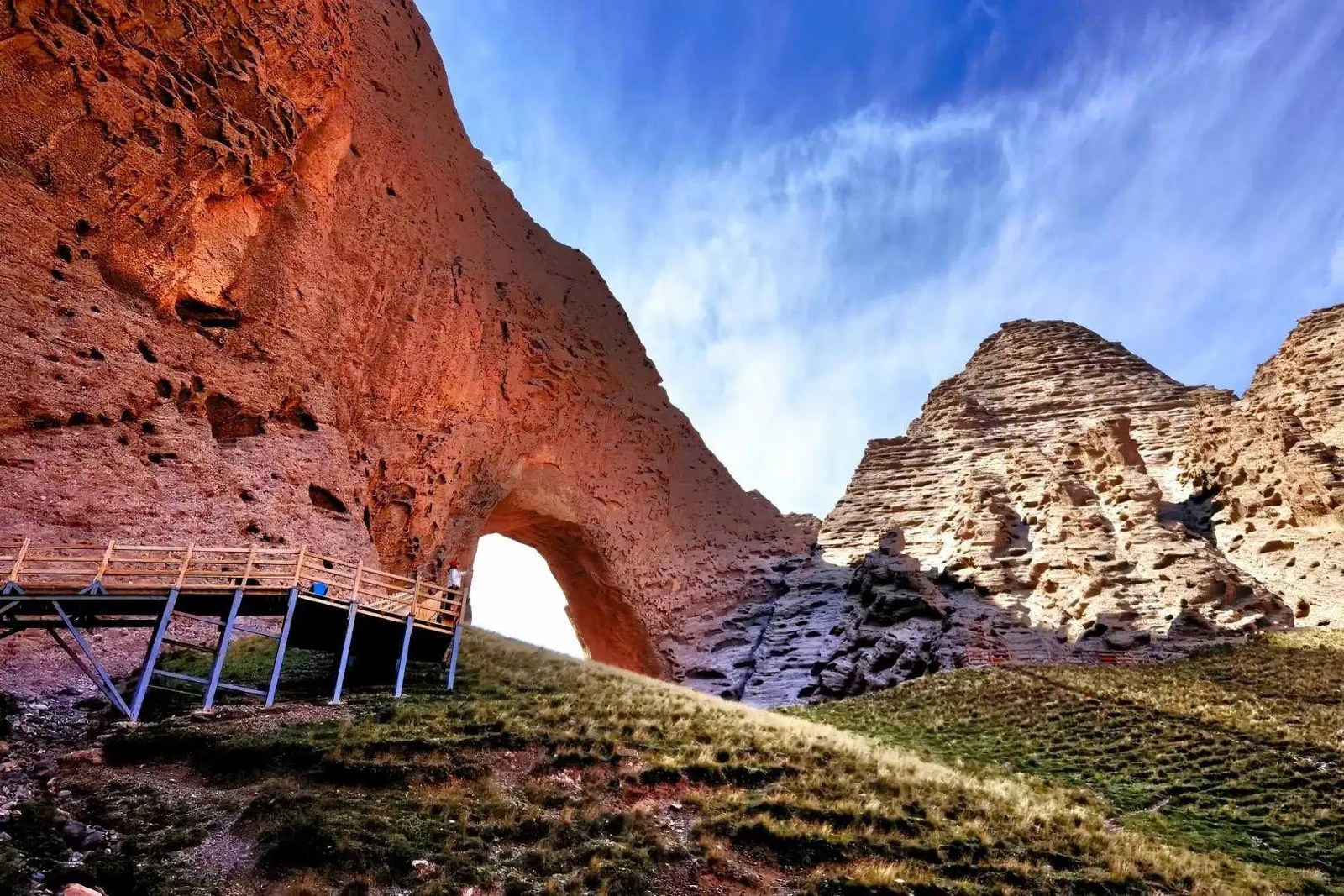
正文:阿图什天门 Ātúshí Tiānmén Atush Tianmen opens in the rough hills west of Atush city, in the west of 克孜勒苏柯尔克孜自治州 Kèzīlèsū Kē’ěrkèzī Zìzhìzhōu Kizilsu Kirghiz Autonomous Prefecture – a freestanding natural stone arch measured at close to five hundred metres in height, which would make it the tallest of its kind on earth. The arch is not a doorway carved by anyone; it is what remained after wind, water and gravity spent millions of years hollowing a fin of Miocene sandstone. Stand under it and the wall rises out of sight, the opening frames a rectangle of sky, and the gravel floor below is scattered with fallen blocks the size of buses – every one of them a reminder that the arch is still working on itself.
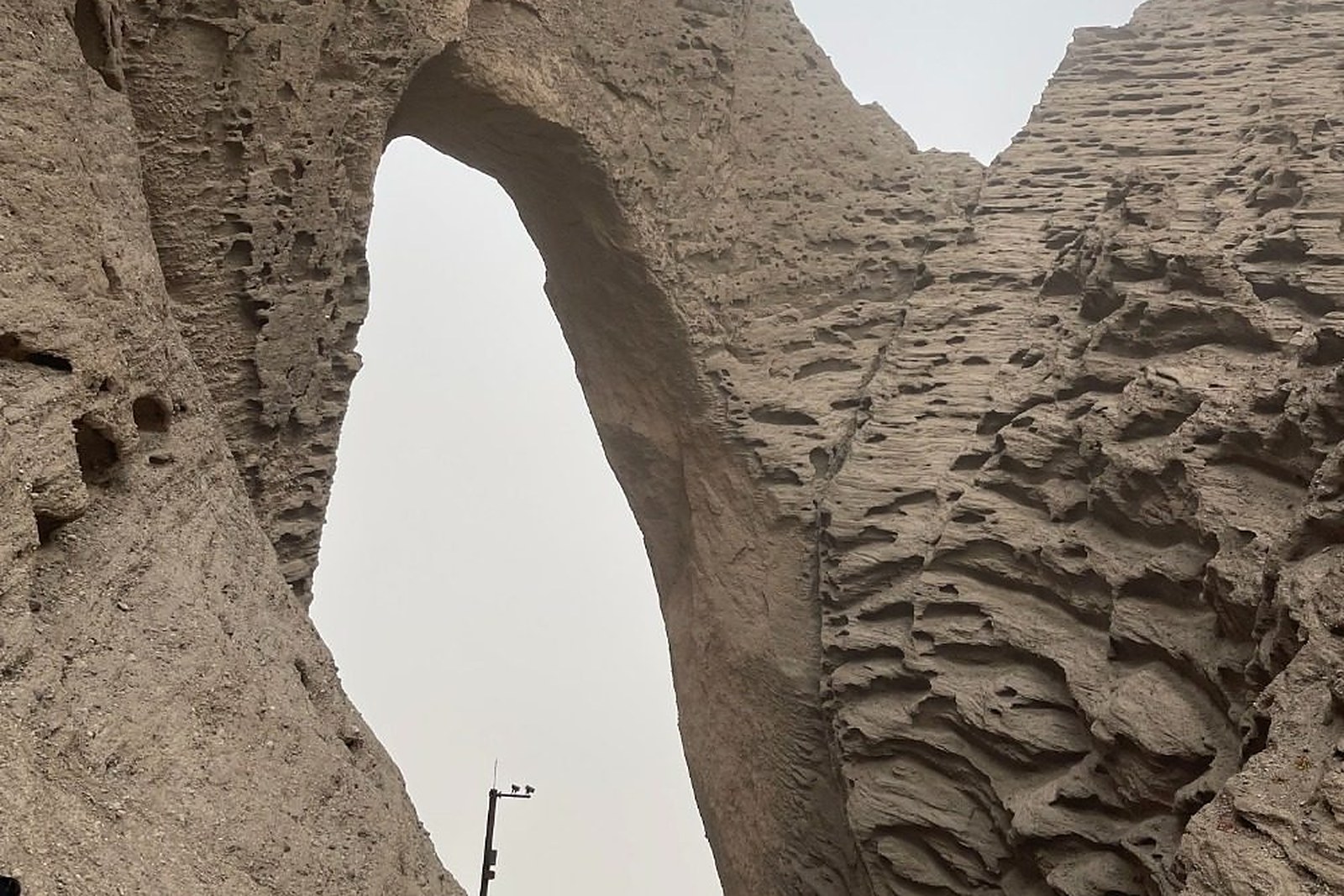
The geology reads like a textbook left open. The sandstone here was laid down in layers, then tilted and faulted as the Pamir pushed north; water found the joints, and the jointing is why the arch is standing at all – the same weakness that carved it will eventually unmake it. Rangers point out fresh rockfall below the span and keep the under-arch path closed when the slopes are wet. For visitors the practical translation is simple: look up as much as you like, keep off the scree, and treat the whole cirque as a sculpture still being carved.
Local herders graze sheep along the valley mouth, and their knowledge shapes the visit more than any signpost. The best light arrives in mid-morning, when the sun clears the eastern rim and throws the arch’s inner face into warm relief; by late afternoon the whole wall goes amber and the wind usually rises. Photographers who time it well describe the place as a natural stadium – an auditorium of rock with a single stage entrance – and the comparisons visitors reach for run from Utah’s canyon country to the gates of desert fortresses, with one difference: here, most days, you share it with nobody.
Widen the frame and the arch belongs to a larger story of the west Kizilsu hills. The same uplift that raised the arch also folded the valley walls into fins and mushrooms, and the dry climate preserves every edge as sharply as the day it parted. Geologists treat the site as an open-air archive of the Pamir’s collision with the Tianshan; travellers mostly just stand still for a while. Either way the verdict lands the same: of all the stone arches on earth, this is the one whose statistics still outrank its photographs.
Practicalities first. Entry tickets run a few tens of yuan, the site is a day trip from Atush city by chartered car, and the gorge road is closed or unpleasant after rain – check weather before committing. Bring water, a hat and sturdy shoes; the walk is short but the ground is loose gravel. There is no restaurant at the gate, so eat in Atush or pack in. The site clears visitors by late afternoon, and there is no lighting inside the gorge, so plan the return before dusk.
Combine the arch with the other day trips out of Atush and the region makes sense as a two- or three-day loop: the fig orchards and the bazaar in town, the glacier valley of Oytagh to the east, the White Sand Lake on the Karakoram highway to the south. Kizilsu rewards travellers who treat distances seriously and mornings as currency – the light, the passes and the checkpoints all favour early starts.
For all its superlatives, the arch’s real magic is quieter: it is a place where the planet’s scale becomes suddenly, physically legible. The wall you are craning at took millions of years to open by a few metres a century. You feel the number rather than read it – and that feeling, more than any photograph, is what people carry back down the gravel road to Atush.
Practicalities
Beyond the arch, the same 克孜勒苏柯尔克孜自治州 Kèzīlèsū Kē’ěrkèzī Zìzhìzhōu Kizilsu Kirghiz Autonomous Prefecture keeps more places worth the detour: 奥依塔克冰川公园 Àoyītǎkè Bīngchuān Gōngyuán Oytagh Glacier Park for the icefall forests, 白沙湖 Báishā Hú White Sand Lake for the dunes in water, 阿合奇猎鹰 Āhéqí Lièyīng Aheqi Falconry for the eagle hunters, or 西陲第一哨 Xīchuí Dìyī Shào the West Frontier First Outpost for the border light – four more doors into the same 克孜勒苏柯尔克孜自治州 Kèzīlèsū Kē’ěrkèzī Zìzhìzhōu Kizilsu Kirghiz Autonomous Prefecture. Once the arch is seen, our Kizilsu food map fills the day.
Practicalities
Words and Names
flowcloud would say Atush Tianmen is where the Pamir shows off its masonry: a gate five hundred metres tall that no one built, framing nothing but sky, best understood by standing under it until your neck gives up. All checked November 2026.
Getting there: The arch sits roughly forty kilometres southwest of Atush city; the drive takes about an hour, the last stretch a gravel road through the gorge that most visitors ride in a hired car or a shared minivan from the Atush bus station. From the road end a walk of forty minutes climbs into the amphitheatre – go in the morning, before the west-facing wall loses its light. All checked November 2026.