
Badachu Park: Eight Ancient Temples, the Buddha Tooth Relic Pagoda and Red Autumn Leaves of Shijingshan District, Beijing
三山怀抱藏八刹,一塔凌云护佛牙。Sān shān huáibào cáng bā chà, yī tǎ língyún hù fó yá – Three mountains in their embrace hide eight ancient temples; one pagoda rises into the clouds to guard the tooth of the Buddha.
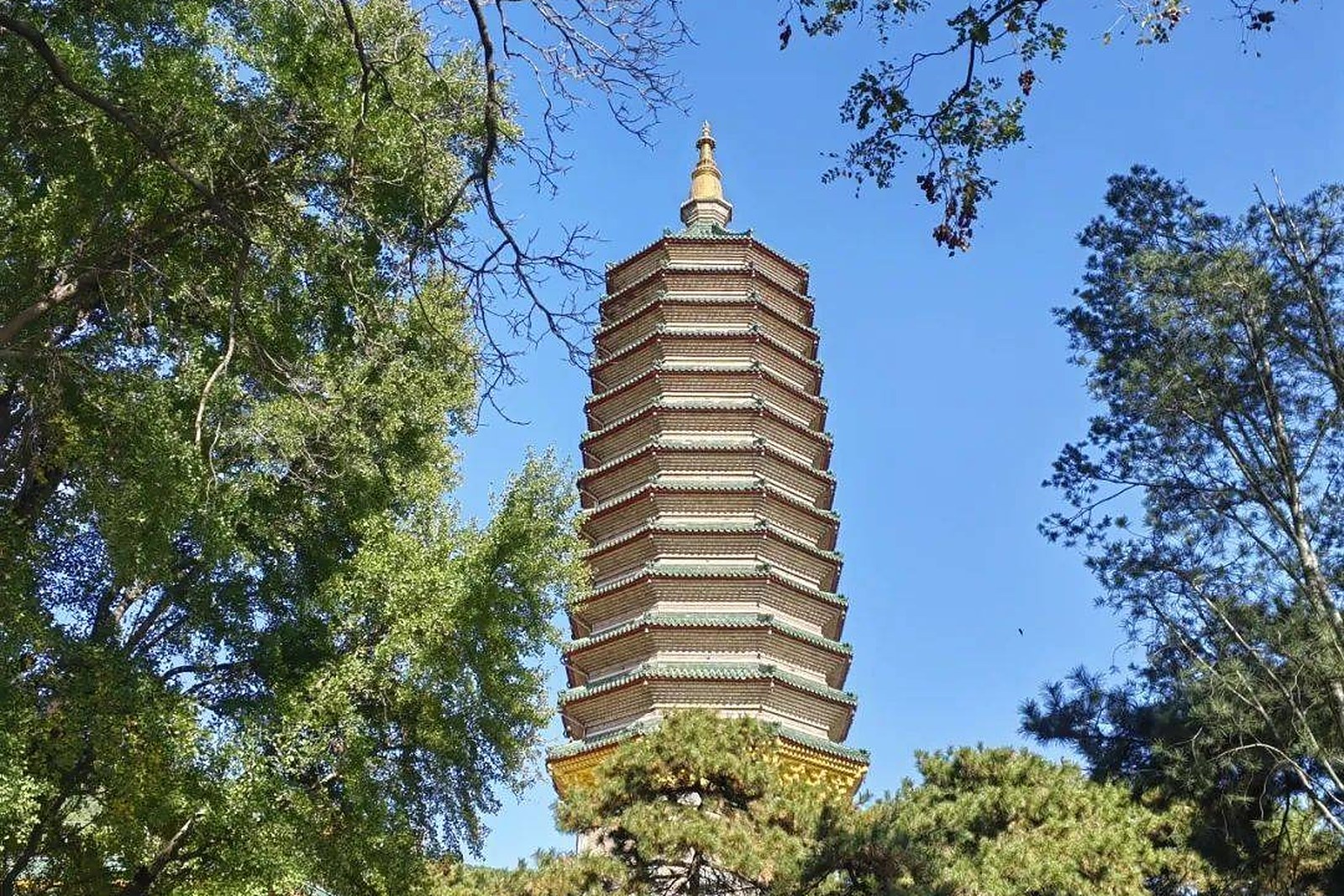
八大处公园 Bādàchù Gōngyuán Badachu Park, the “Park of the Eight Great Places”, is not a hill with a temple on top — it is, plainly put, a folded corner of the 西山 Xī Shān Western Hills turned into one long chain of incense, eight Buddhist establishments strung ridge by ridge between 翠微山 Cuìwēi Shān Cuiwei Mountain, 平坡山 Píngpō Shān Pingpo Mountain and 卢师山 Lúshī Shān Lushi Mountain, at the western edge of 石景山区 Shíjǐngshān Qū Shijingshan District, Beijing. The eight — 八刹 bāchà, the eight temples — run from 长安寺 Cháng’ān Sì Chang’an Temple near the foot, up through 灵光寺 Língguāng Sì Lingguang Temple, 三山庵 Sānshān Ān Sanshan Nunnery, 大悲寺 Dàbēi Sì Dabei Temple, 龙泉庵 Lóngquán Ān Longquan Nunnery with its cold spring water, 香界寺 Xiāngjiè Sì Xiangjie Temple — the largest, halfway up the middle ridge — and 宝珠洞 Bǎozhū Dòng Baozhu Cave near the heights, to 证果寺 Zhèngguǒ Sì Zhengguo Temple apart on the far side of the valley (worth confirming the details for which gates are open in any given season). The name that carries across the Buddhist world is 灵光寺’s 佛牙舍利塔 Fóyá Shèlì Tǎ Buddha Tooth Relic Pagoda, the golden-roofed tower that enshrines a relic honoured as a tooth of the Buddha himself, raised after the earlier temple was wrecked at the turn of the twentieth century (worth confirming the details for its dates). What you actually visit is a climb — an hour or so of steps and forest paths from foot to summit, temple after temple — with the 红叶 hóngyè red leaves of late October spilling over every flight and the 香火 xiānghuǒ incense of west Beijing’s best-known devotional hill drifting through all of it.
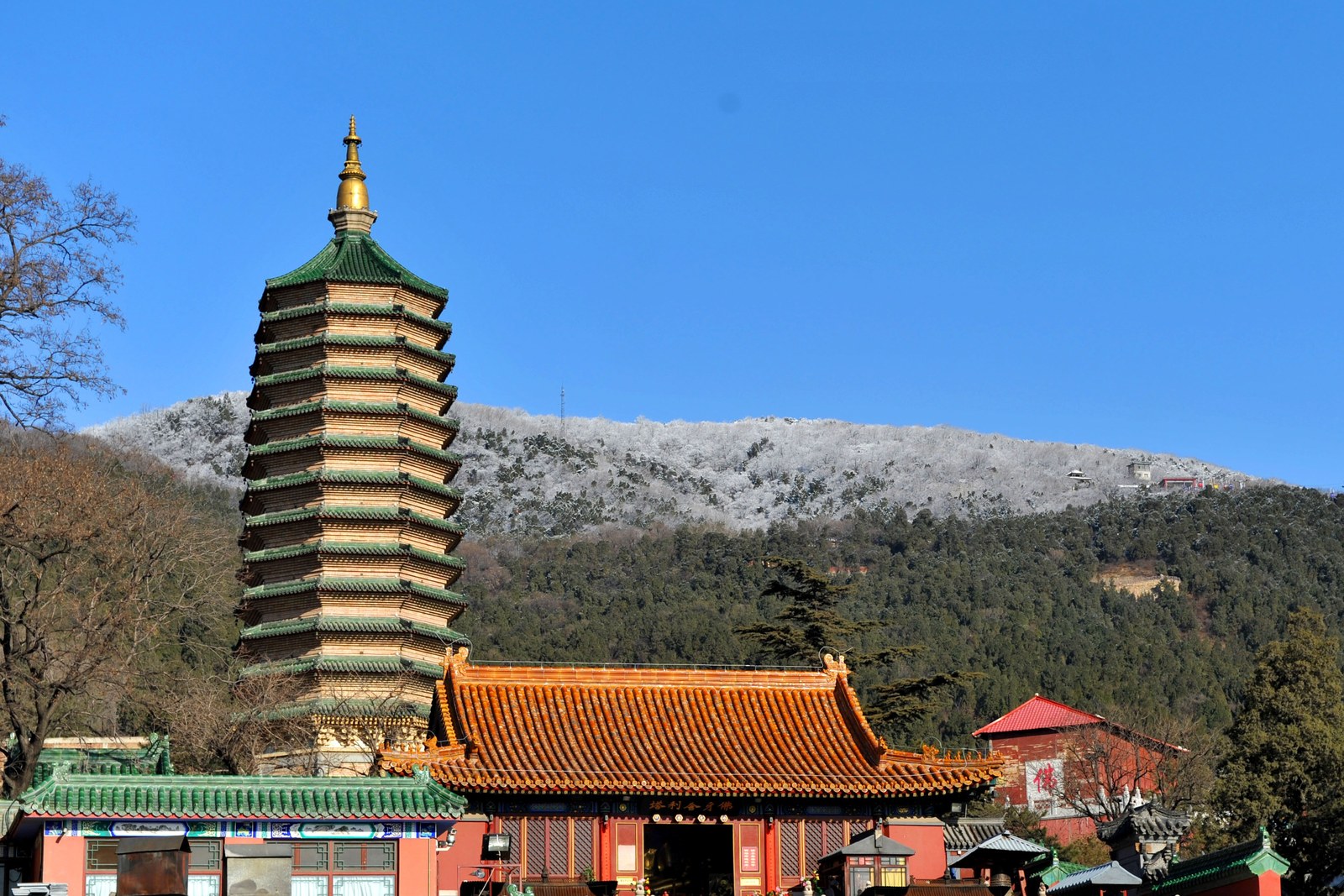
Call it honestly: a ticketed hill that earns its fee in autumn. Entry is ticketed and the current rate is worth confirming the details before you go (worth confirming the details); the spring temple fair that fills the paths with fairground noise comes and goes with the lunar calendar (worth confirming the details); a chairlift up and a toboggan slide down the hillside run in season for extra charges (worth confirming the details); and hours shift with daylight and the devotional calendar (worth confirming the details). The first weeks of autumn colour — late October into early November — crowd the steps on fine weekends, and the honest moves are a weekday morning or the first hour of the day, when mist still sits on 翠微山 Cuìwēi Shān and the courtyards belong to keepers and cats. Wear real shoes, carry water, and accept that the “eight places” are a day’s project rather than a checklist: two or three temples done slowly beat all eight done panting.
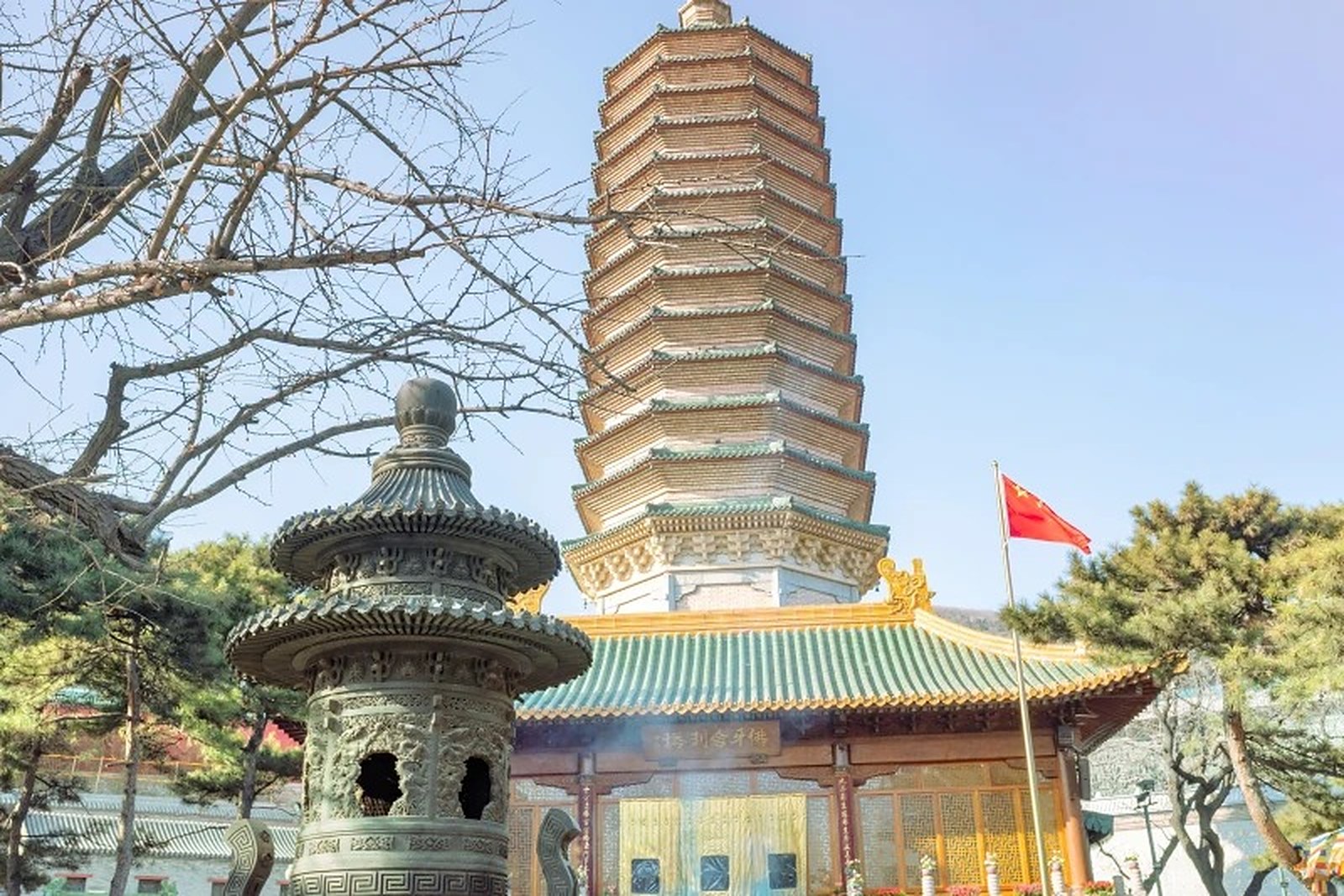
The honest star is 灵光寺 Língguāng Sì and its pagoda at first light, not the summit signpost. Pilgrims circle the 佛牙舍利塔 Fóyá Shèlì Tǎ in silence while the gilded tower catches the first sun over the plain of the city below, and the whole hill’s meaning — incense, climb, relic — concentrates in a single courtyard. What gets oversold is the promise of eight grand temples in a row: honestly, a couple of the eight are small and quiet, and their reward is precisely that smallness. What repays the effort is the upper walk — 香界寺 Xiāngjiè Sì Xiangjie Temple’s long court, 宝珠洞 Bǎozhū Dòng near the ridge with the whole 西山 Xī Shān Western Hills unrolled beneath it, and 证果寺 Zhèngguǒ Sì across the valley, where the crowds thin to almost nothing (worth confirming the details for trail openings). In late October the 红叶 hóngyè make even the entrance road handsome; in other seasons come for pines, springs and quiet instead. Come for the layering of the place: mountain, then temple, then incense.
The self-aware postscript: I climbed on a weekday morning in the first cold of the year, and met a keeper sweeping 香界寺’s court who told me the hill keeps its best hour before the first bus arrives. That is the visit in miniature. 八大处公园 Bādàchù Gōngyuán suits whoever treats it as a walking pilgrimage first and a leaf-hunt second — pick your temples, climb slowly, let the pagoda stop you — and exhausts whoever arrives at noon in peak colour to sprint all eight gates. Everything else on this Shijingshan list lies within a short ride: the steel-and-Olympic ground of 首钢园 Shǒugāng Yuán Shougang Park in the valley by the river, the Ming murals of 法海禅寺 Fǎhǎi Chán Sì Fahai Temple below the same hills, the world sculptures of 北京国际雕塑公园 Běijīng Guójì Diāosù Gōngyuán Beijing International Sculpture Park along 玉泉路 Yùquán Lù, and the fairground lights of 石景山游乐园 Shíjǐngshān Yóulèyuán Shijingshan Amusement Park by the metro — all in the same 石景山区 Shíjǐngshān Qū Shijingshan District where the city’s west ends in mountains and incense.
Practicalities
- Rating: ★★★★☆ — the west of the capital folded into eight temples and one climb; the 佛牙舍利塔 Fóyá Shèlì Tǎ at 灵光寺 Língguāng Sì and the late-October 红叶 hóngyè outrank the colour-season crowds; go on a weekday morning and the hill stays yours.
- Tickets: Ticketed entry, with chairlift and slide charged separately and seasonal fair arrangements (worth confirming the details for current rates, rides and hours).
- Address: 八大处公园 Bādàchù Gōngyuán Badachu Park, between 翠微山 Cuìwēi Shān Cuiwei, 平坡山 Píngpō Shān Pingpo and 卢师山 Lúshī Shān Lushi mountains, 石景山区 Shíjǐngshān Qū Shijingshan District, Beijing — at the western edge of the city where the 西山 Xī Shān Western Hills begin.
- Time needed: Three to four hours for the full eight-temple climb; two hours for 灵光寺 Língguāng Sì and the lower slopes alone.
Words and Names
八大处 Bādàchù the Eight Great Places · the name the chain of temples gave the hill 八刹 bāchà the eight temples · the chain from 长安寺 at the foot to 证果寺 across the valley 翠微山 Cuìwēi Shān Cuiwei Mountain · the middle mountain of the three, highest of the fold 灵光寺 Língguāng Sì Lingguang Temple · the temple that keeps the capital’s holiest Buddhist relic 佛牙舍利塔 Fóyá Shèlì Tǎ Buddha Tooth Relic Pagoda · the golden-roofed pagoda of the Buddha’s tooth 香界寺 Xiāngjiè Sì Xiangjie Temple · the largest of the eight, on the middle ridge 证果寺 Zhèngguǒ Sì Zhengguo Temple · the eighth place, quiet apart on 卢师山 Lúshī Shān 红叶 hóngyè red leaves · the late-October season that fills the steps
flowcloud would say that 八大处公园 Bādàchù Gōngyuán is the west of Beijing folded into incense — the 八刹 bāchà eight temples strung between 翠微山 Cuìwēi Shān Cuiwei, 平坡山 Píngpō Shān Pingpo and 卢师山 Lúshī Shān Lushi mountains, 灵光寺 Língguāng Sì’s 佛牙舍利塔 Fóyá Shèlì Tǎ Buddha Tooth Relic Pagoda at the chain’s heart, and the 红叶 hóngyè of late October over every stair — and that the honest move is a weekday morning climb taken slowly, because tickets, the chairlift, the fair calendar and the leaf peak all shift with the season (worth confirming the details), the colour-weekend summit is the crowded half, and the hill repays whoever climbs for two or three temples done properly while losing whoever sprints all eight gates at noon. All checked October 2026.
Getting there: Bus routes west from the central city climb to the park gates at the foot of the hills; metro Line 1 to 八角游乐园 Bājiǎo Yóulèyuán Bajiao Amusement Park or Line 6 to 西黄村 Xīhuángcūn Xihuangcun leaves a short bus or taxi ride north-west to the entrance — the park sits on the western edge of 石景山区 Shíjǐngshān Qū Shijingshan District, Beijing, where the 西山 Xī Shān Western Hills begin (worth confirming the details for the current bus connections, metro stops and autumn-peak opening hours). All checked October 2026.