
Badaling Great Wall: The Most Famous Stretch of Ming Masonry, the Climb to the North Eighth Tower and the Toboggan Back Down, at the Pass North of Beijing in Yanqing District, Beijing
岭脊蜿蜒横塞北,砖痕犹带戍楼风。Lǐngjǐ wānyán héng sàiběi, zhuānhén yóu dài shùlóu fēng – The ridge line winds and stretches across the north of the passes; the brickwork still carries the wind of the garrison towers.
八达岭长城 Bādálǐng Chángchéng Badaling Great Wall is not the wall you have half seen in photographs and can therefore skip — it is, plainly put, the stretch that made the Great Wall famous in the first place: the best-known run of 明代 Míngdài Ming masonry in the country, riding the ridge above the 关沟 Guāngōu Guankou pass in 延庆区 Yánqìng Qū Yanqing District, some seventy kilometres northwest of the city centre. The walkway here is broad enough for three abreast, faced in grey brick with a full parapet, and studded with 敌楼 dílóu watchtowers at generous intervals — the 北八楼 Běibālóu North Eighth Tower crowning the main circuit at the top of the slope everyone calls 好汉坡 Hǎohànpō Hero Slope. Below it, the old 京张铁路 Jīngzhāng tiělù Beijing–Zhangjiakou line still loops through 青龙桥 Qīnglóngqiáo station on its celebrated zigzag, and the 岔道城 Chàdàochéng Chadao fort village sits just off the approach road. What you actually visit is a restored, engineered, relentlessly popular monument — not a wild ruin.
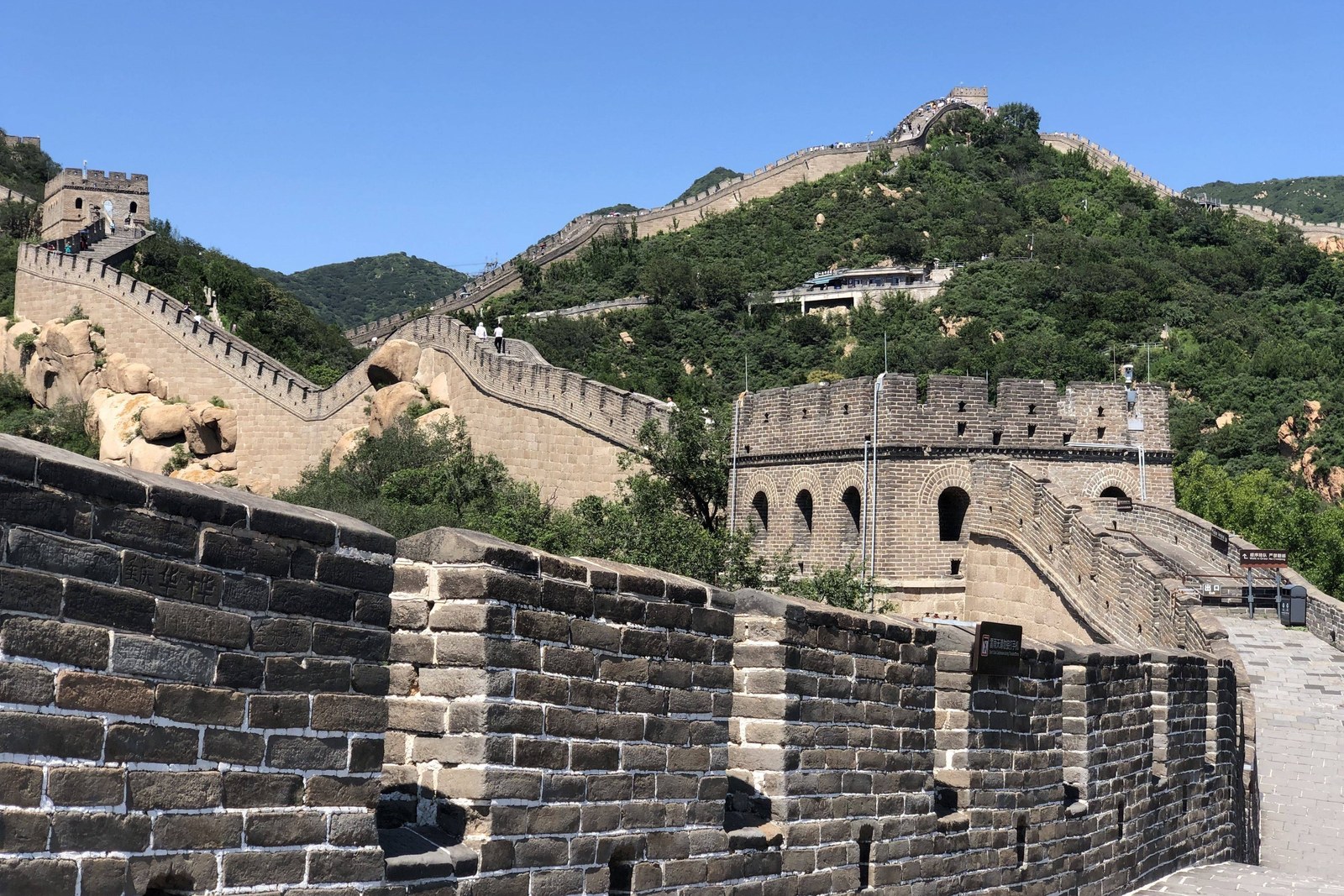
Call it honestly: the wall charges a gate fee, and everything above the gate is priced in steps — the 缆车 lǎnchē cable car up toward the North Eighth Tower level, the 滑车 huáchē toboggan down from the North Fourth, the shuttle from the outer car parks to the ticket hall, all separate, while the 919 bus and the S2 train run on their own fares (worth confirming the details for current admission, cable-car and toboggan prices, and shuttle arrangements). The honest warning is other people, not money. This is the busiest wall section in the country, and by mid-morning the steps above the pass can feel like a queue with a view attached. Come at opening, come on a weekday, or come in the low season after snow, when the same bricks are nearly empty and the ridge turns white. Give it three hours for the main circuit and two or three towers, and keep a little in reserve for the descent.
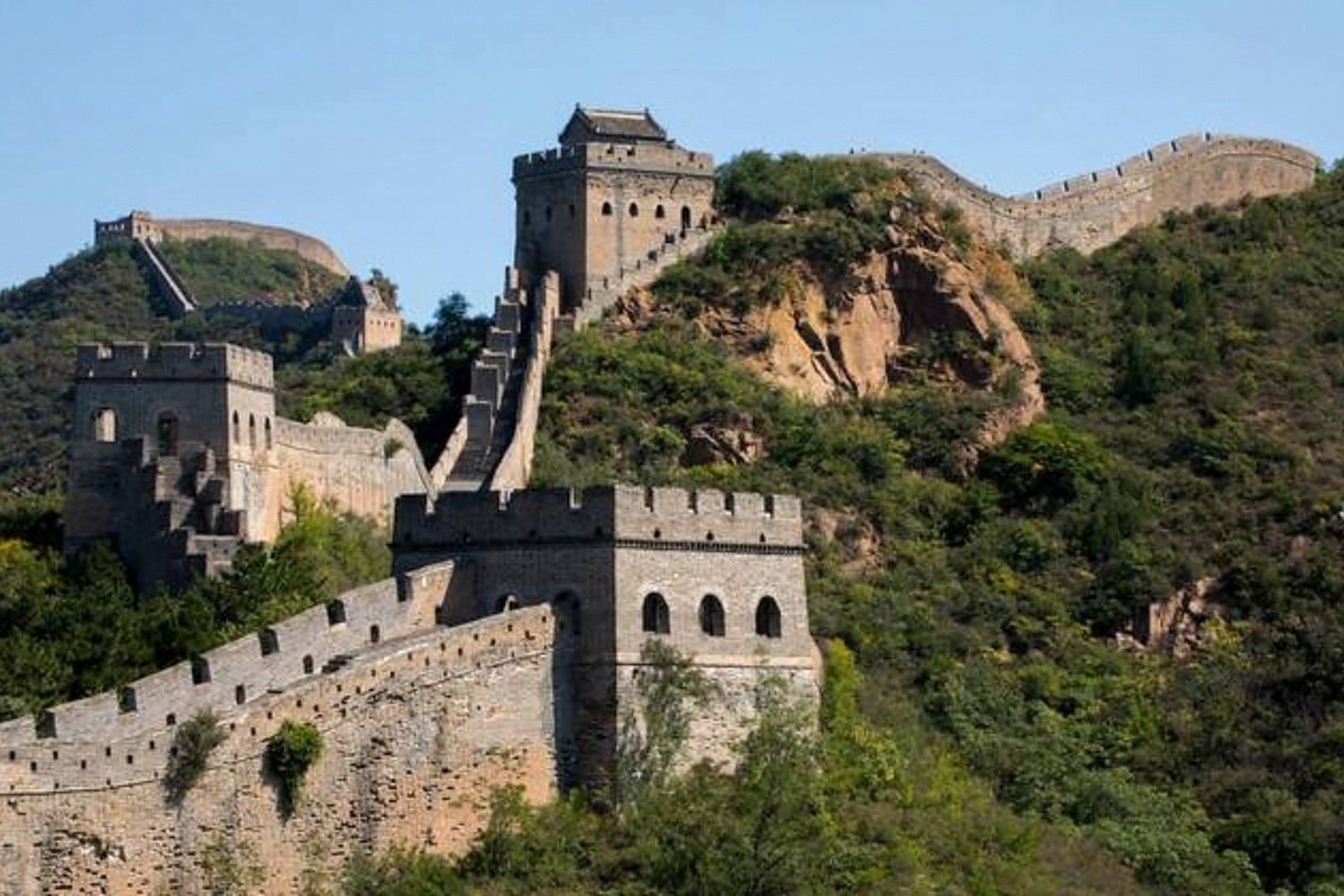
The honest star is the first hundred metres above the pass, where the wall stops being a picture and becomes a piece of engineering you are standing on: the brick courses, the drainage channels cut into the walkway, the arrow slits set at knee height, the way the parapet steps down to follow the ridge instead of fighting it (worth confirming the details for which towers are open on your day, since repair closures are routine). What gets oversold is the wild-wall romance — Badaling is thoroughly restored, and the mortar between the bricks is not fifteenth-century. What repays the effort is the sightline. From the North Eighth Tower the wall runs away in both directions, tower after tower, over ridges that go brown and gold in October and blue-white in January, and the reason the pass was worth a wall becomes visible rather than argued. Come for the layering of the place: step, then tower, then the ridge line running on past the last gate.
The self-aware postscript: on the Hero Slope I fell into step with a man from Inner Mongolia carrying his mother’s thermos and stopping every twenty steps, and when I asked whether the climb was worth it he said, “she has seen this wall in books for sixty years — today she is standing on it, so ask her, not me”; she said nothing at all, only held the parapet and looked north. That is the visit in miniature. 八达岭长城 Bādálǐng Chángchéng suits whoever treats it as the original, crowded, magnificent article first and a quiet wilderness second, and exhausts anyone hoping for solitude at eleven in the morning. Everything else on this Yanqing list lies within the same district: the cliff-cut rooms of 古崖居 Gǔyájū Guyaju Caves to the northwest, the boat through the limestone walls of 龙庆峡 Lóngqìng Xiá Longqing Gorge, the forest streams and meadows of 玉渡山 Yùdù Shān Yudu Mountain above it, and the long river road of 百里山水画廊 Bǎilǐ Shānshuǐ Huàláng Baili Gallery in the far northeast — all in the same 延庆区 Yánqìng Qū that keeps the Wall’s most photographed mile.
Practicalities
- Rating: ★★★★☆ — the most famous stretch of Ming wall anywhere, with real towers and a genuine ridge; the engineering and the sightlines outrank the cable car; a star off for the crowds that never leave.
- Tickets: Gate fee plus separate cable-car, toboggan and shuttle charges, with the 919 bus and S2 train ticketed independently (worth confirming the details for current admission, cable-car and toboggan prices, and shuttle arrangements).
- Address: 八达岭长城 Bādálǐng Chángchéng, 八达岭镇 Bādálǐng Zhèn Badaling town, 延庆区 Yánqìng Qū, Beijing — above the 关沟 Guāngōu pass on the district’s southern edge, with the 青龙桥 Qīnglóngqiáo railway station on the approach.
- Time needed: Three hours for the main circuit to the North Eighth Tower and back; half a day adding the toboggan, the 岔道城 Chàdàochéng village and a slow look at the old railway.
Words and Names
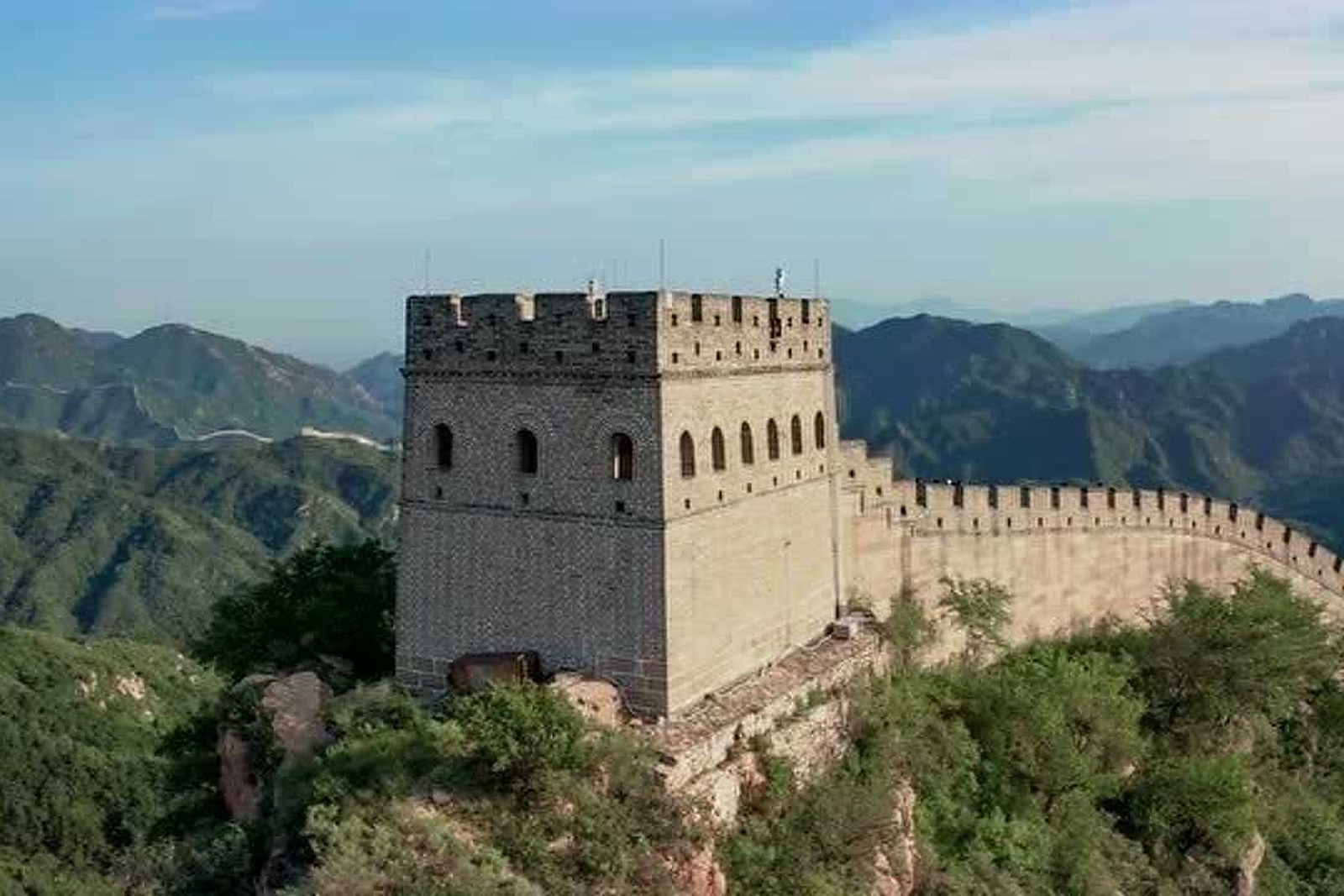
八达岭长城 Bādálǐng Chángchéng Badaling Great Wall · the most famous run of Ming masonry 明代 Míngdài Ming dynasty · the era whose bricks built this ridge 敌楼 dílóu watchtower · the garrison towers spaced along the walkway 北八楼 Běibālóu North Eighth Tower · the high point of the main circuit 好汉坡 Hǎohànpō Hero Slope · the steep pitch below it, named for those who finish it 关沟 Guāngōu Guankou · the pass cut the wall was built to command 缆车 lǎnchē cable car · the lift that skips the first climb
flowcloud would say that 八达岭长城 Bādálǐng Chángchéng is the wall that got famous and then had to survive its own fame — the best-known 明代 Míngdài stretch, broad enough for three abreast, running over the 关沟 Guāngōu pass in 延庆区 Yánqìng Qū to the 北八楼 Běibālóu North Eighth Tower by way of 好汉坡 Hǎohànpō — and that the honest move is to arrive at opening on a weekday, or in the snow season when the ridge empties, because admission, 缆车 lǎnchē fares, 滑车 huáchē toboggan tickets and shuttle arrangements all shift (worth confirming the details), the postcard is the poster half and the drainage channels and arrow slits under your boots are the real half, and the wall repays whoever climbs it before the coaches do. All checked October 2026.
Getting there: The 919 Express from 德胜门 Déshèngmén Deshengmen runs to the wall’s car parks in about ninety minutes, and the S2 suburban railway stops at 八达岭 Bādálǐng station a short shuttle ride below the gate (worth confirming the details for current S2 timetables, which have changed more than once); self-drive leaves the city on the 京藏高速 Jīngcáng gāosù G6 and exits at 八达岭 Bādálǐng, or takes the newer 京礼高速 Jīnglǐ gāosù and follows the signed approach to the outer lots. All checked October 2026.