
白查村 Báichá Cūn, Baicha village, stands in 江边乡 Jiāngbiān Xiāng, Jiangbian township, in 东方 Dōngfāng, Dongfang, about sixty kilometres from the city, at the foot of 玉龙山 Yùlóng Shān, Yulong Mountain. It is a 黎族 Lízú, Li, settlement, and what makes it exceptional is a single building type: the thatched house whose roof sweeps down to the ground and whose walls and eaves are one, shaped like an upturned boat, and therefore called the boat-shaped house or boat house. The village name itself comes from the local Li speech, where the two syllables mean a muddy paddy field and a thick-barked tree respectively. There are many Li villages on Hainan; Baicha is unusual in being preserved as architecture rather than as a lived-in settlement.
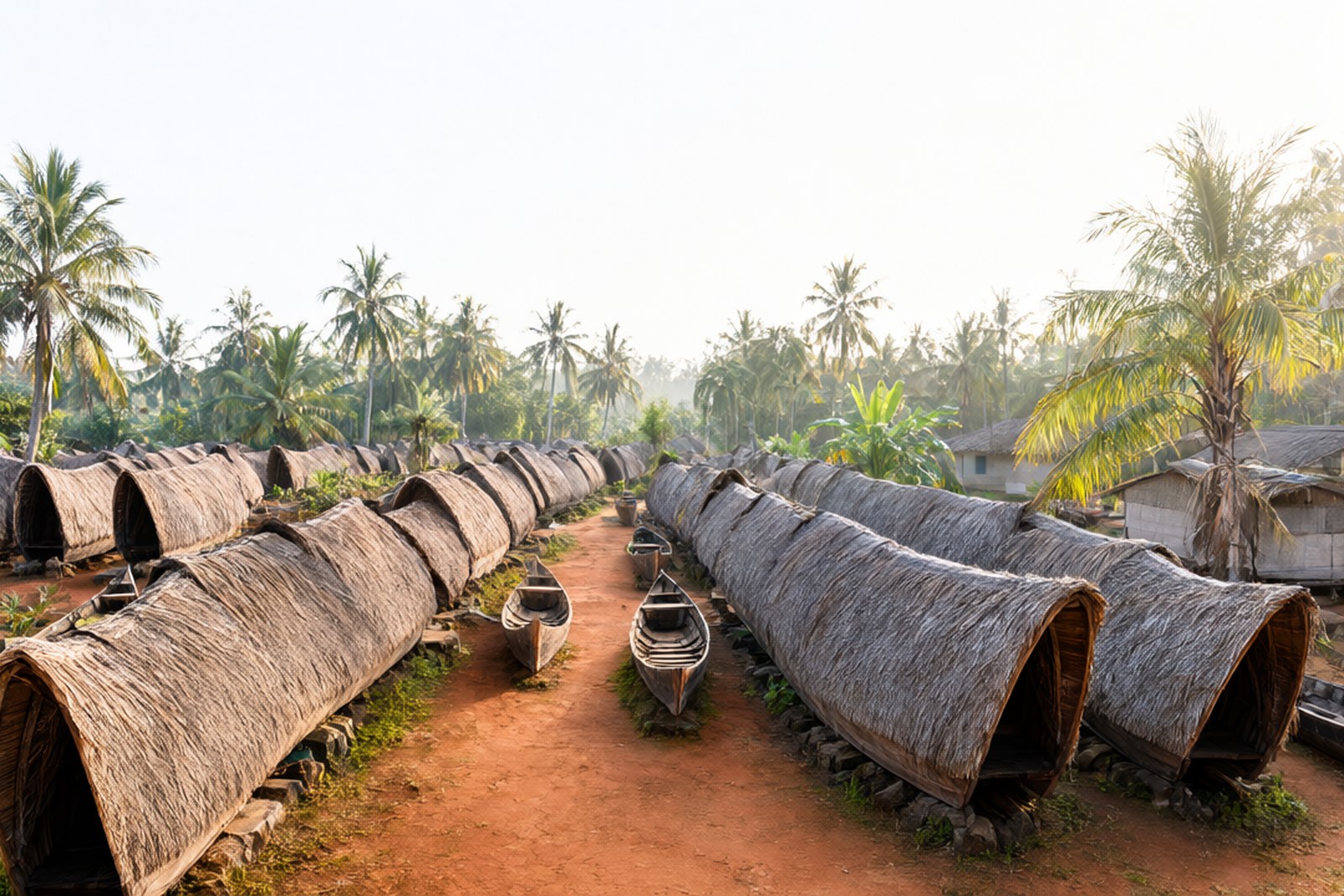
The construction deserves a slow look, because the whole technique is the heritage. The frame is timber and bamboo, dressed in thatch, and the structure is deliberately simple and strong: three tall posts divide the interior into a front and a back section, and together with six shorter posts along the two long sides they carry the roof. The arching roof is built from white rattan woven into a curved framework and then covered, in order, with thatch or palm leaves; the walls are raised from a slurry of red earth and grass roots, and each house at a family scale takes roughly a hundred and eighty pieces of thatch, of which one person can weave at most about ten in a day. Inside, a three-stone hearth is the heart of the home, and the smoke that seeps through the thatch keeps the interior warm and dry and discourages insects from the timber. The result is a building that looks improvised and is in fact precisely calibrated to a hot, wet, insect-heavy climate.
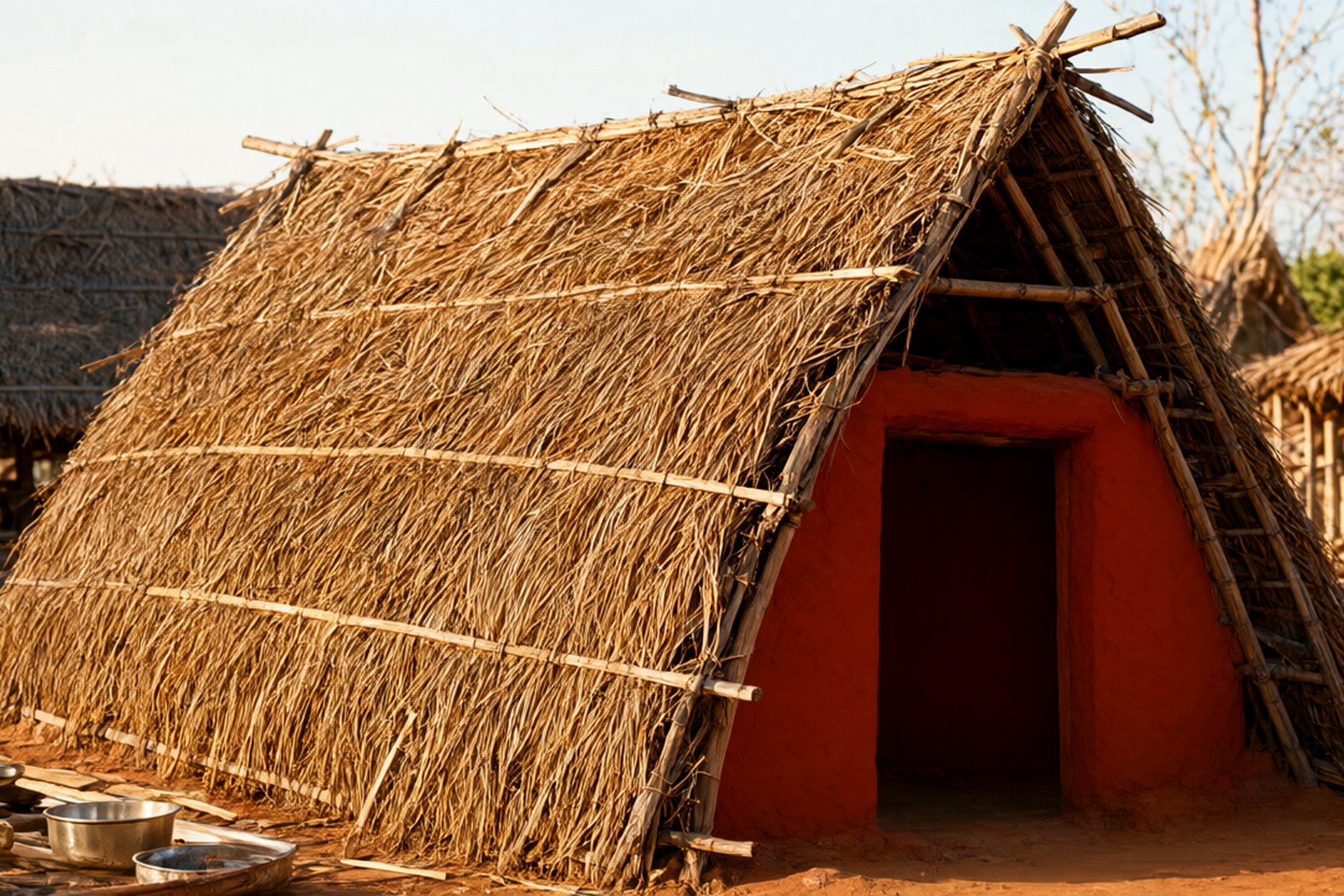
The honours on the village come in layers, and they should be stated with care. In 2008 the 黎族船型屋营造技艺, the Li boat-house building technique, was inscribed on China’s national intangible cultural heritage list, the first architecture-related national intangible heritage project Hainan had successfully nominated. In 2012 Baicha was named among the first batch of China’s traditional villages. It is also a provincial-level cultural relic protection unit, listed in the mid-2010s – the exact batch is given differently by different sources, so the safe statement is the mid-2010s rather than one number. Two further claims circulate, that the village was a nomination site for the Hainan rainforest and Li traditional-settlement world heritage bid in March 2021, and that the township was rated a provincial three-coconut rural-tourism point in December 2023; both come from a single platform citing officialdom and should be verified before they are repeated as fact. What is not in doubt is the count that matters: somewhere between about eighty and ninety boat houses survive, the largest such settlement kept anywhere locally, whether the figure is put at eighty-odd, eighty-seven or eighty-one depending on the source.
The village’s most striking fact is that it has been emptied on purpose. A boat house that is lived in needs major repair only about every eight years, but left empty and unattended it lasts two or three years at most; that is the arithmetic behind the protection model here. In 2009 or 2010 – the sources split on the year – the residents moved out together and into brick houses a little way off, and since then the boat houses have been repaired roughly every two years, keeping the original form intact. The name for the method is people left, houses remain, and it has turned what could have been a decayed ruin into a standing archive of Li building culture. Come as a visitor to architecture, not as a guest of a household: the residents live in the new village, and the old one is looked after rather than inhabited. That is why the etiquette matters so much here – no open flame and no smoking anywhere, because these are timber and thatch buildings and they burn; photograph people only after asking, do not wander into private rooms, and do not handle the older objects. Wear flat, grippy shoes for the earth-and-gravel paths, carry water and food because there are no shops or restaurants in the village, and bring mosquito repellent and sun protection for the open, humid country.
What gives the place its future is the living craft. The transmission team has grown to twenty-three people, one at national level and twenty-two at municipal level, with more than two hundred young Li people in the surrounding townships now learning the technique. One of the best-known practitioners is 符打因 Fú Dǎyīn, born in 1992, among the last generation to have lived in a boat house, who began learning to raise them at fourteen and became a municipal-level representative inheritor in 2019; in recent years he has led teams to design and build boat-house-shaped guest rooms elsewhere on the island, which is the technique finding a new use rather than staying behind glass. That is also the honest line on a visit: the houses are a protected asset and a study base, not a hotel, and the rooms offered next to the heritage site are a separate matter for the accommodation trade. If you are touring the west line, Baicha pairs naturally with the Daguangba reservoir and 娥仙岭 Éxiānlǐng, Exianling, to the north-west; and one more claim from the township’s own study material, that the cave country in the mountains nearby is the largest cave group in Hainan, is a superlative that belongs to its source rather than to this page. For the rest, the village asks only that you look slowly and leave it as you found it.
Practicalities
Tickets. There is no admission fee. A shuttle runs from the car park to the old village at about 15 yuan per person return in a 2026 snapshot, and it is also possible to walk – roughly two hundred metres to the new village and about 1.7 kilometres on to the old boat houses. As of October 2026, subject to change.
Opening hours. Open through the day, with the sensible visiting window from about 08:30 to 17:00; after that the mountain roads darken and become harder to drive.
Closing day. No closing day – the village is an open traditional settlement rather than a ticketed site. The best window is the dry season from November into April.
Getting there. Self-drive is the better choice: navigate to the Baicha boat-house village, where there is a free open-air car park at the entrance, about forty minutes from Dongfang city by the shorter measure and roughly sixty kilometres by another; the west line can be strung with Yulinzhou and the Daguangba reservoir on the same run. By public transport, take a rural coach from the Dongfang bus station to Jiangbian township and then a taxi or motorbike taxi into the village, but services are few and pure public travel is not recommended.
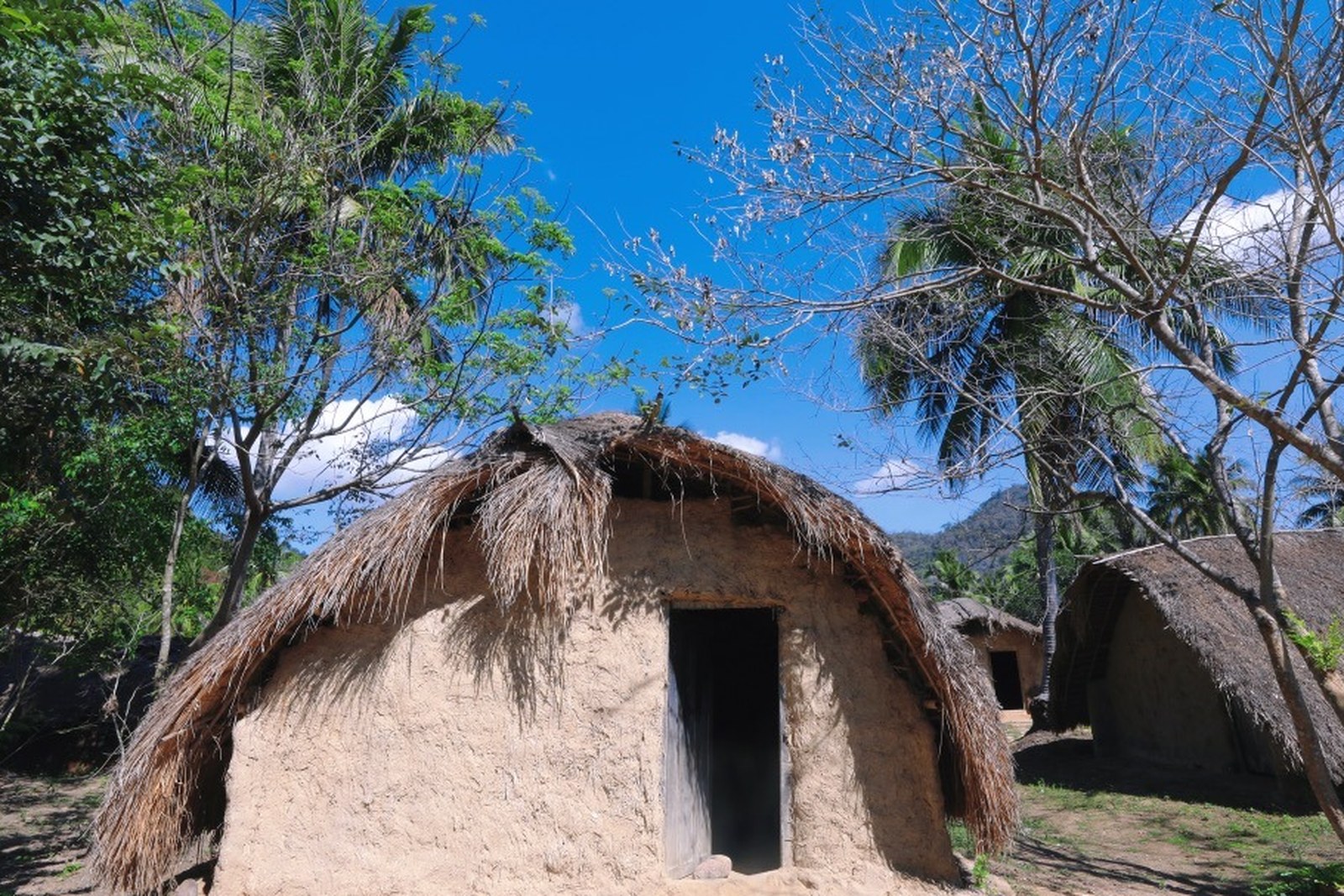
flowcloud would say that Baicha is the rarest kind of heritage, a village that moved out to keep its houses standing – two years of repairs against two years of decay, one careful rethatching at a time – and that the most moving thing there is not a building but the fact that people still come back to mend it.
Getting there: Baicha village is a Li boat-house settlement at Jiangbian township, Dongfang, Hainan, about forty minutes to an hour by road from the city centre, with a free car park at the entrance and a shuttle to the old village for about 15 yuan return in a 2026 snapshot (walking is roughly 1.7 kilometres); entry is free, the village is open through the day with no closing day and is best visited between about 08:30 and 17:00, and self-drive is the practical access, with rural coaches to Jiangbian not recommended on their own (checked October 2026, subject to change).