
The North-West First Village: Border Forests and Log Fences in Baihaba, Altay
界碑西望山重重,牛栏木栅炊烟浓 Jièbēi xīwàng shān chóngchóng, niúlán mùzhà chuīyān nóng – Westward past the border marker the ridges pile on ridges; among log cattle pens, the chimney smoke hangs thick.
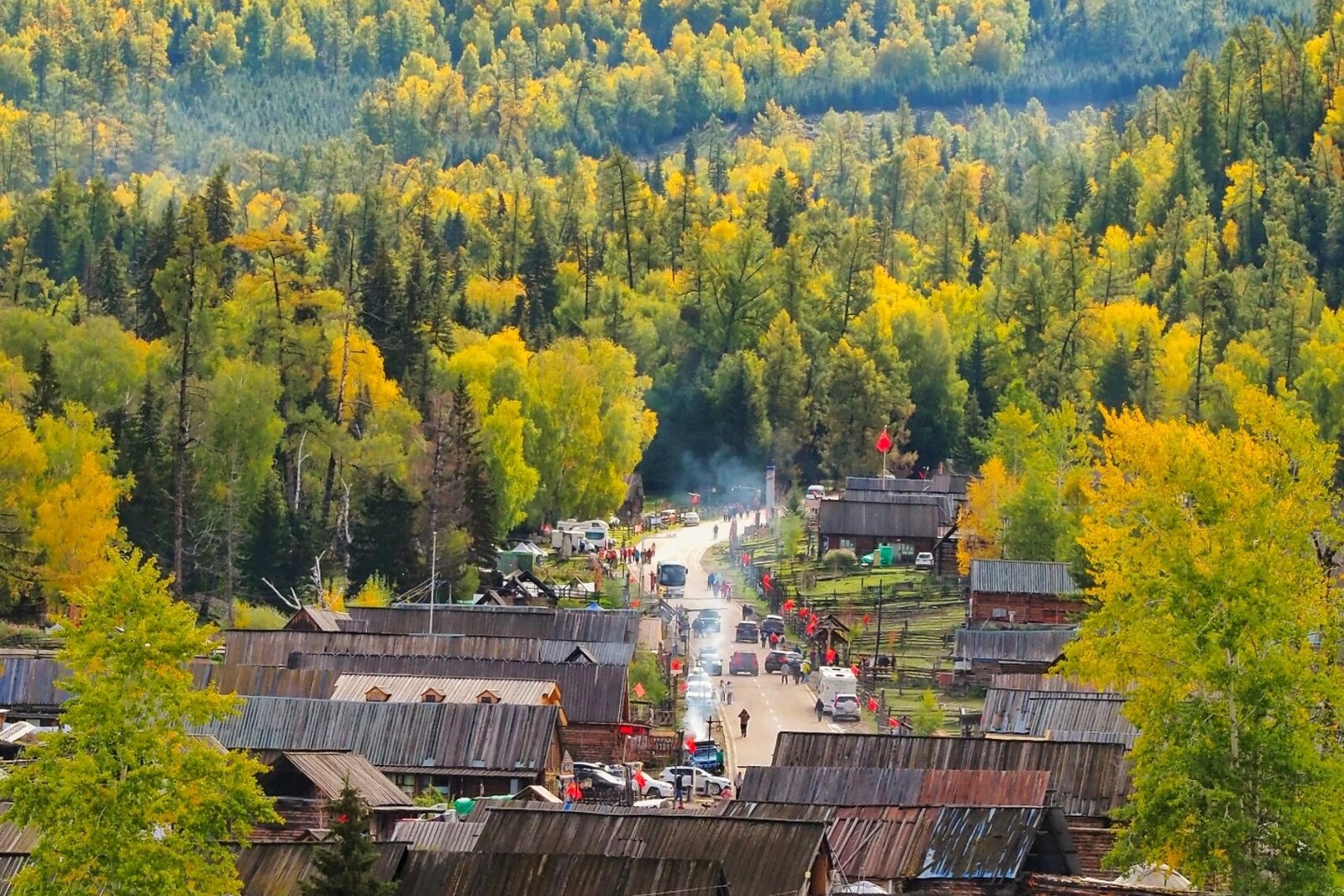
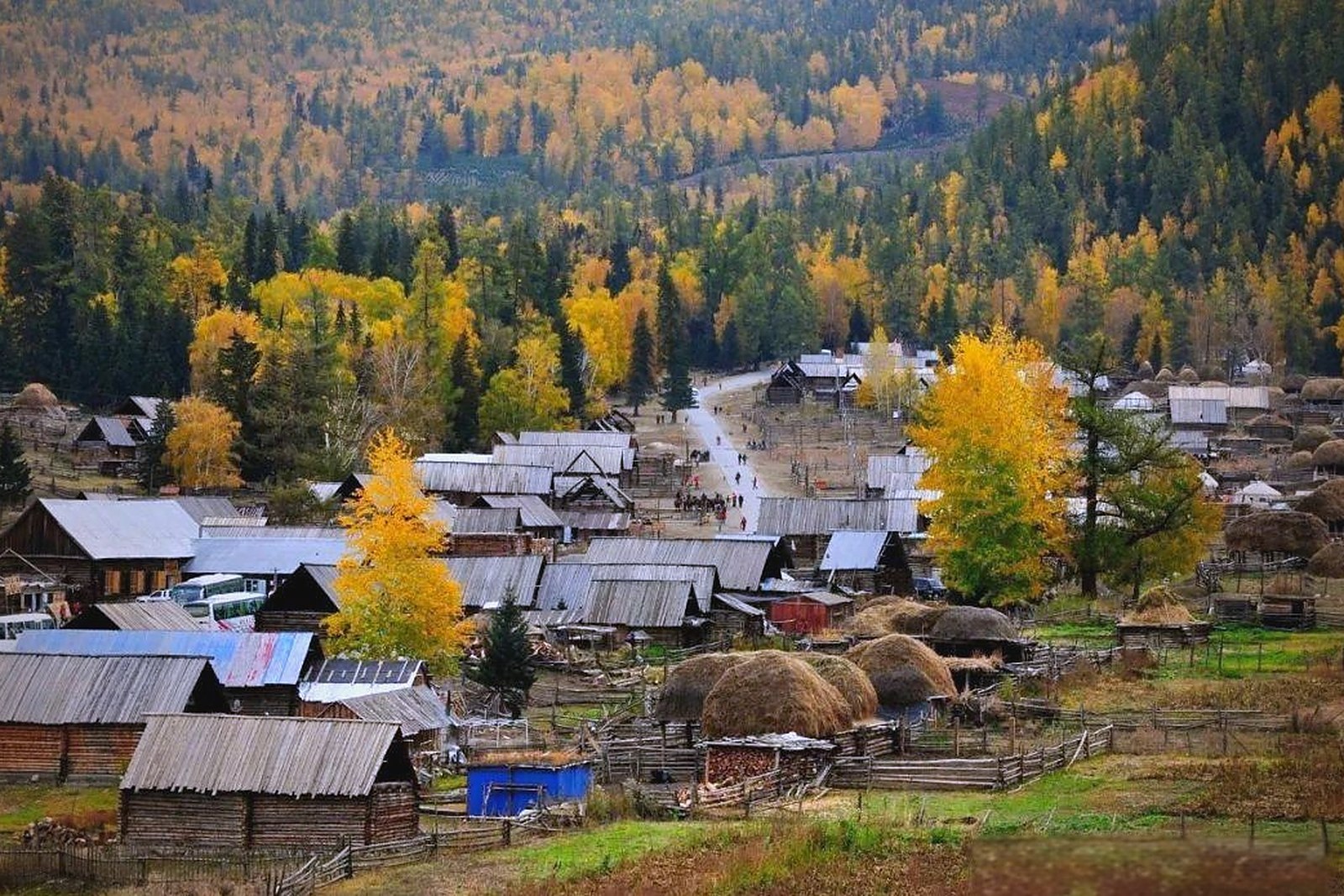
白哈巴 Báihābā Baihaba calls itself the north-west first village – the last settled valley before the Kazakhstan line, a Tuva and Kazakh community of log cabins, snake fences and hay stacks under forested ridges (worth confirming the details for the border permit, since the village sits inside a frontier management zone and the pass is checked on the road in). The valley runs quieter than Kanas: the forest is older, the fences are all hand-hewn, and the border marker – five number five, visitors say – stands a short ride above the village with the neighbours’ pastures visible across the line. Cattle own the lanes until late morning, and the village’s two rows of cabins catch the evening light the way the postcards promise.
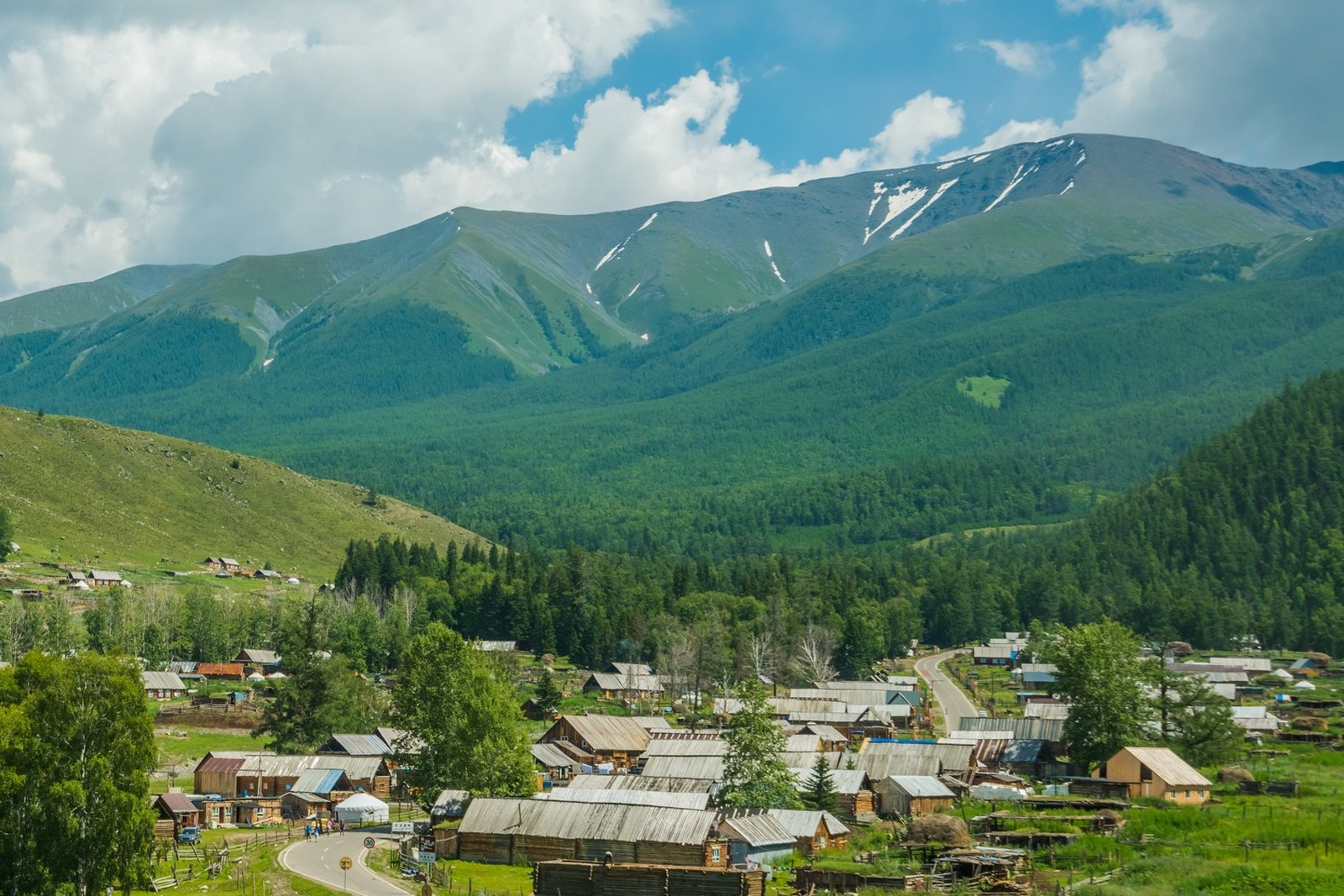
Two plans fit the valley. The first is the day loop from Kanas – the park bus links the two villages along a high forest road, and the return ride alone is worth the ticket. The second is the overnight version: sleep in a village guesthouse, walk the birch and larch tracks in the gold weeks of late September, and hear how quiet a border valley actually is once the day bus leaves. The stock answer in kind: carry the frontier pass on your body, not in the luggage, walk to the border marker before the tour buses arrive, and spend the evening where the fences glow – the village lights a handful of lamps and lets the stars do the rest.
Call it honestly: Baihaba’s simplicity is the point, and the plumbing tells the truth – guesthouses here are warm and genuine rather than polished (worth confirming the details for the winter season, when the village empties to a ski-touring outpost). What survives the comparison with its famous neighbour is the mood: fewer shops, narrower lanes, and a forest road that ends at a line on the map. Come in the last days of September for the birch gold, treat the border formalities as part of the trip’s texture, and let an evening walk to the hay meadows be the whole programme.
Practicalities
Nearly everything else on this Altay list trades a different mood on the same prefecture: choose 喀纳斯湖 Kānàsī hú the Kanas lake for the deep green water, 禾木村 Hémù cūn the Hemu village for the fog sunrise, 五彩滩 Wǔcǎitān the Wucaitan banks for the sunset rocks, or 可可托海 Kěkětuǒhǎi Koktokay for the gorge hike – four more doors into the same 阿勒泰地区 Ālètài Dìqū Altay Prefecture. Once the day is planned, our Altay food map fills the eating hours.
Practicalities
Words and Names
flowcloud would say Baihaba is the prefecture’s quietest sentence: a valley, a fence, a marker post, and the sense that the map here still means something. All checked November 2026.
Getting there: The village lies west of the Kanas lake area along the park’s forest road; season shuttles link it with the Kanas transfer centre, and every visitor needs the frontier management pass issued in Burqin or Habahe county – day trips and overnights follow the same rule. All checked November 2026.