
The River’s Underwater Ledger
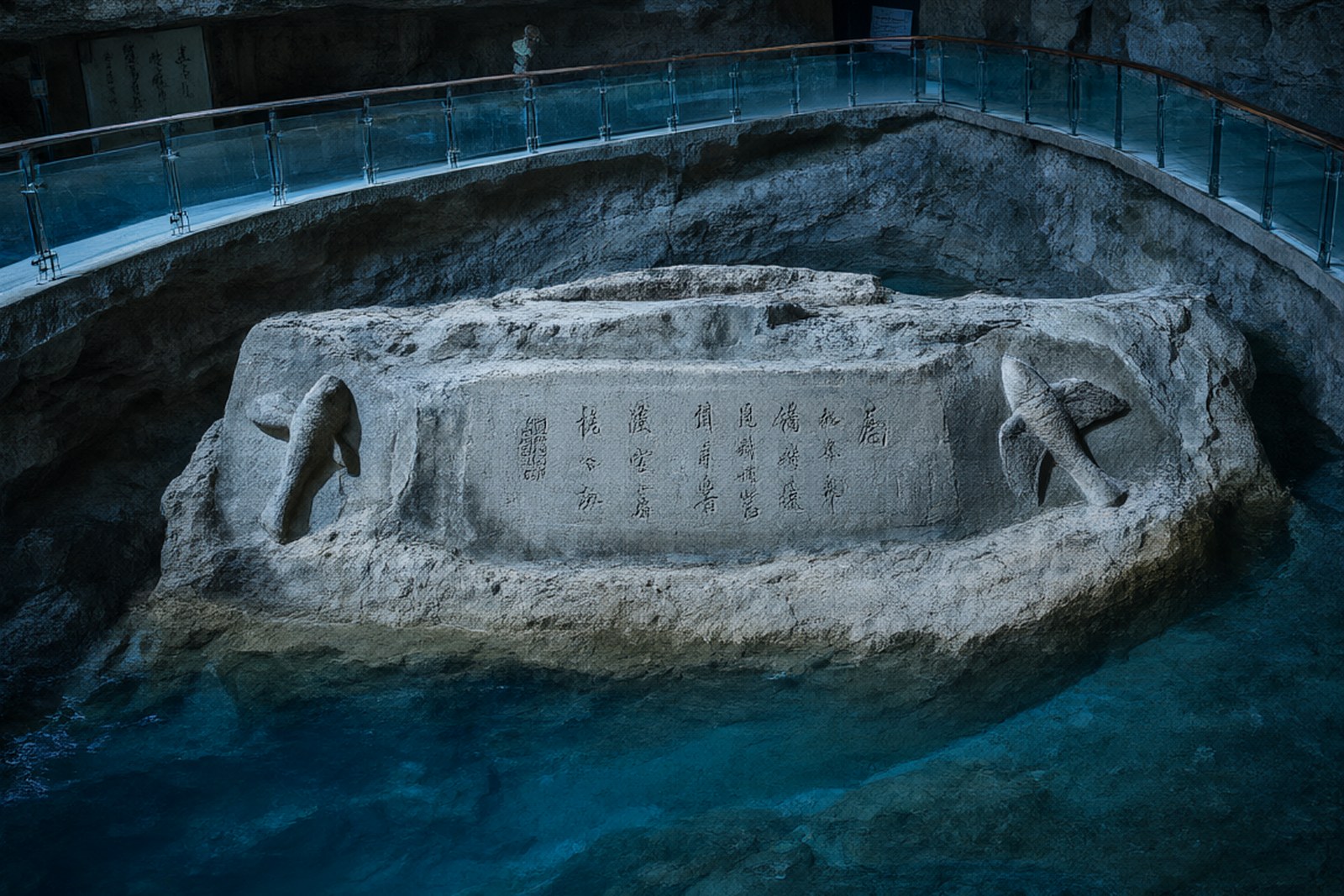
Every river keeps accounts, and for twelve centuries the stretch of the 长江 Chángjiāng at 涪陵区 Fúlíng Qū, Fuling District, kept its own in stone. The ridge called 白鹤梁 Báihèliáng, White Crane Reef, lay bare each low-water winter – a long spine of sandstone surfacing from the current when the river fell, exactly the seasons when boats could not run and the town had time to watch the water. What the generations did with that waiting was carve: fish, eyes, and dated inscriptions recording how low the river had come, winter after winter, reign after reign. The reef was not decoration. It was the river’s own ledger, kept by the people who read it for a living.
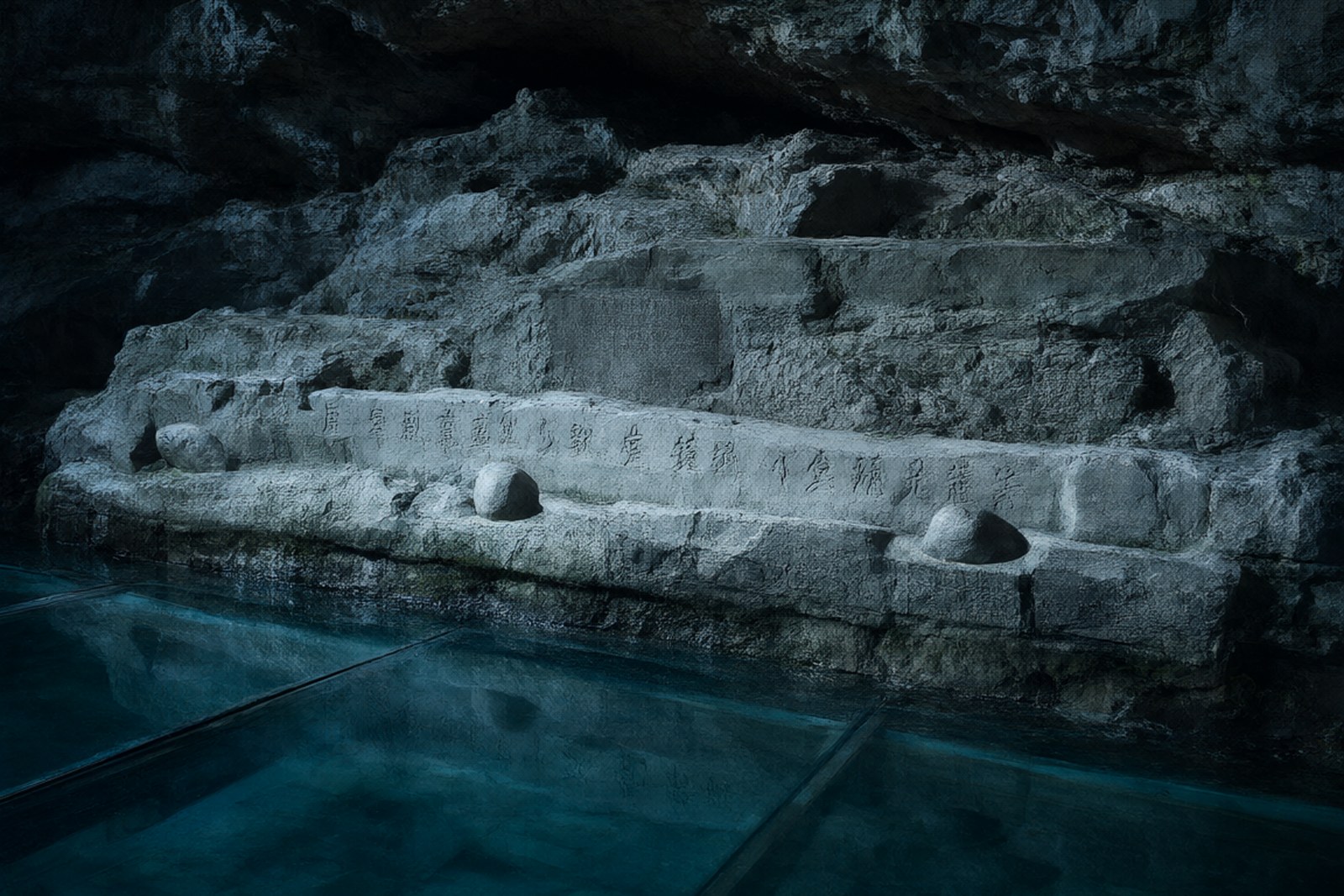
The ledger worked because the carvings were honest. The stone fish and their eyes were set as fixed marks against which each winter’s low water could be measured, and the dated inscriptions around them turned the reef into a continuous record of the Yangtze’s dry years – a working hydrological archive assembled by hands that thought they were only marking a season. Modern hydrologists still cite the ridge: the sequence of low-water years it preserves reaches back across twelve centuries in a way no other instrument on the river can match. To walk its length when it surfaced was to read the river’s memory in dated lines, and the townspeople of Fuling treated the winter emergence of the fish as its own small festival of the water’s return.
The Three Gorges reservoir ended the winters. When the impounded river rose for good, the ridge that had surfaced every dry season went under and stayed under, and the ledger was threatened with becoming unreadable in the dark. The engineers’ answer was to seal the ridge inside an arched chamber on the riverbed itself – preserving the stone where it lay, in the water that had covered it – and to build around it the world’s first museum visitors reach without diving. That claim is not publicity. Nowhere else on the river, and nowhere else on record, had a whole carved landscape been kept in place below the surface and opened to dry-shod visitors above it.
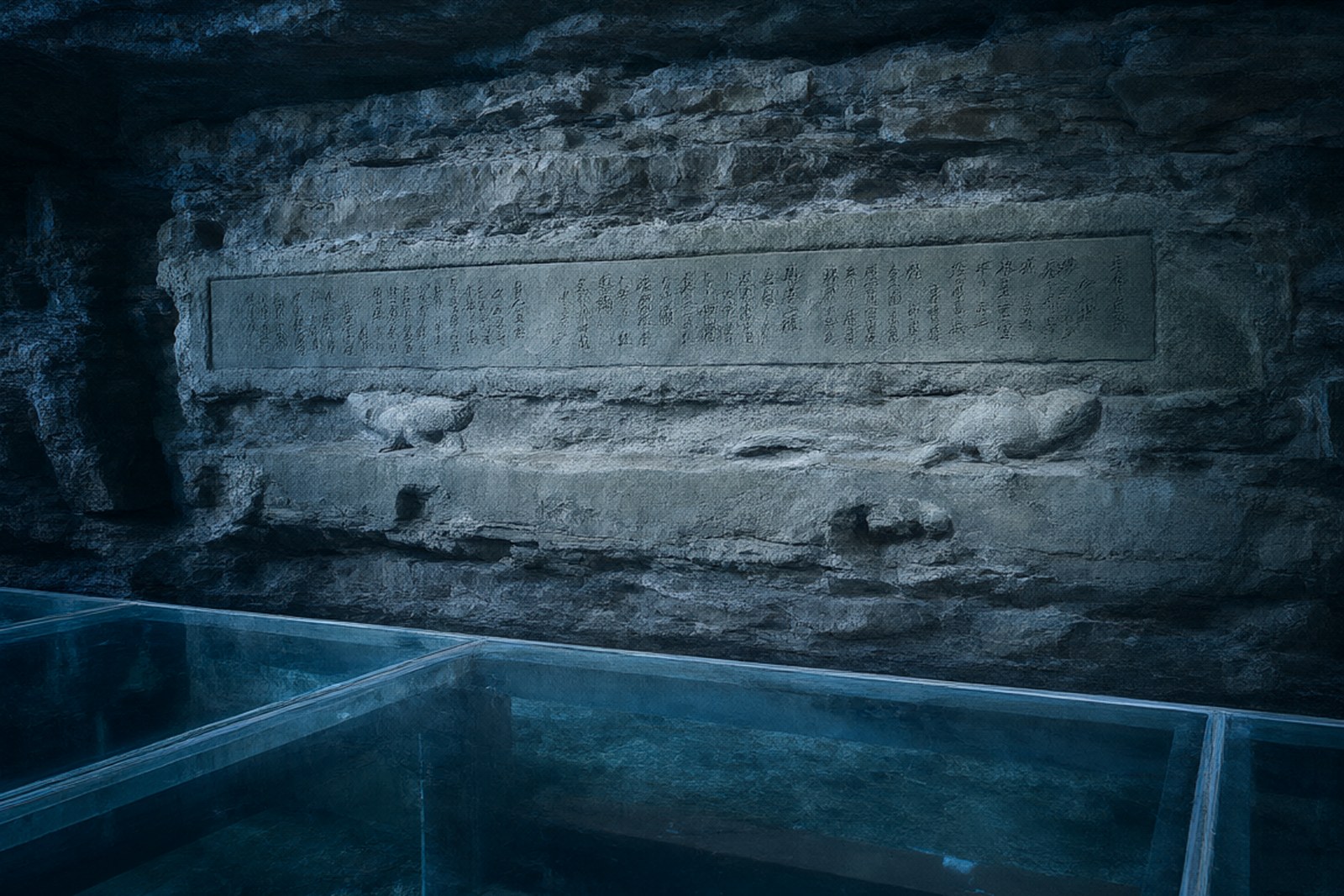
The visit is structured as a descent. Long escalators carry you down through the shaft to the flooded viewing gallery, where the tone is that of an aquarium rather than a conventional museum – hushed, dim, the light coming through water instead of lamps. The portholes look out onto the inscriptions in the green: carved fish, dated lines of characters, the worn field of a thousand winters, all exactly where the river left them. You move along the gallery as along a ship’s corridor, and the ridge slides past the glass at eye level. It is the strangest and most moving museum-goer’s transaction in the region – reading an eleventh-century inscription through an arm’s length of Yangtze.
The setting completes the day. The museum stands on the same stretch of riverfront as the district seat’s promenade, and the two-river night cruise boards a short walk away, which makes the natural pairing of a Fuling day: the river’s memory by afternoon, the river’s present at night, seen from midstream. Admission is listed at 50 yuan and the doors run 9:00-17:00, so the underwater gallery fits the front half of a day without hurry.
Words and Names
白鹤梁 Báihèliáng, White Crane Reef, the sandstone ridge in the 长江 Chángjiāng at 涪陵区 Fúlíng Qū, Fuling District, that surfaced each low-water winter for twelve centuries while the generations carved 石鱼 shíyú, stone fish, and dated inscriptions recording the river’s dry years – a ledger modern hydrologists still cite. The 三峡 Sānxiá, Three Gorges, reservoir drowned the ridge for good, and engineers sealed it inside an arched chamber on the riverbed, making the world’s first museum reached without diving: escalators down through the shaft to a flooded viewing gallery with portholes onto the inscriptions. Admission is listed at 50 yuan, hours 9:00-17:00.
What the Locals Know
The local knowledge is the order of the day, not the tide – there is no low-water winter to wait for any more, and that is precisely what the museum is for. Go early in the opening window, when the escalator shafts are quiet and the gallery has the aquarium stillness it deserves; by mid-morning the portholes gather school parties, and the glass between you and the inscriptions fills with reflections. Locals put the museum in the morning and the riverfront in the evening, and they know the walk between the two is short enough to take at a stroll. The gallery is cool all year after the descent – the temperature of the water on the far side of the glass – so a light layer is the one piece of local wisdom worth packing.
Practicalities
Tickets: Admission is listed at 50 yuan. That is the figure the record consulted carries; nothing is added to it, and no concession or combination rates are quoted here because none are on that record. Opening hours: 9:00-17:00, per the same record. The descent, the gallery and the return up the shaft fit comfortably inside an opening day, and an early hour buys the gallery at its quietest. Closing day: No published weekly rest day is on the record consulted, so the page declines to guess one; the practical check is the museum’s own notice at the riverside entrance, which is the only authority worth trusting on the day.
flowcloud would say that Baiheliang is the rarest kind of museum – one that never moved its collection – a twelve-century ledger of stone fish and dated inscriptions sealed in the riverbed and read through portholes from a flooded gallery, the river keeping its own records behind the glass; the visit is a descent, and the earlier in the day you make it, the more of the ledger is yours. All checked October 2026.
Getting there: the museum stands on the Yangtze riverfront of the 涪陵区 Fúlíng Qū district seat, on the same shore stretch as the promenade and within a short walk of the pier where the two-river night cruise boards, so it is reached on foot from the riverside hotels or by a short ride from anywhere in town; the district is on the Yangtze rail-and-road corridor downstream of the Chongqing core. Pair this page with the wujiang-two-rivers-cruise page for the evening half of the same riverside day. All checked October 2026.