
Baili Gallery: The Baihe Gorge Road, the Petrified Wood Beds at Qianjiadian and a Hundred Li of Autumn Colour in Yanqing District, Beijing
百里山光随路转,白河一线绕秋林。Bǎilǐ shānguāng suí lù zhuǎn, Báihé yīxiàn rào qiūlín – A hundred li of mountain light turns with the road; a single line of the Bai River loops through the autumn woods.
百里山水画廊 Bǎilǐ Shānshuǐ Huàláng Baili Gallery is not a scenic area with a gate and a ticket hall — it is, plainly put, a road: roughly fifty kilometres of valley highway along the 白河 Báihé Bai River through 千家店镇 Qiānjiādiàn Zhèn Qianjiadian town, in the far northeast of 延庆区 Yánqìng Qū Yanqing District, with the river on one side, a cliff or a terraced slope on the other, and the road turning with both. The name is a piece of 1990s tourism arithmetic — a hundred li of landscape hung like a scroll — and it has stuck because it is roughly true. What makes the corridor worth the drive is what sits along it: the 硅化木 guīhuàmù petrified wood beds of the national geopark, where fossilised trunks lie in the hillside where the forest fell; the 乌龙峡谷 Wūlóng Xiágǔ Wulong gorge, a slot of black rock and green water; 滴水壶 Dīshuǐhú Dishuihu, a cave behind a curtain of falling water; and at the western end the flat blue of 燕山天池 Yānshān Tiānchí Yanshan Tianchi, the reservoir at 白河堡 Báihébǎo. What you actually visit is a drive with stops, not a destination.
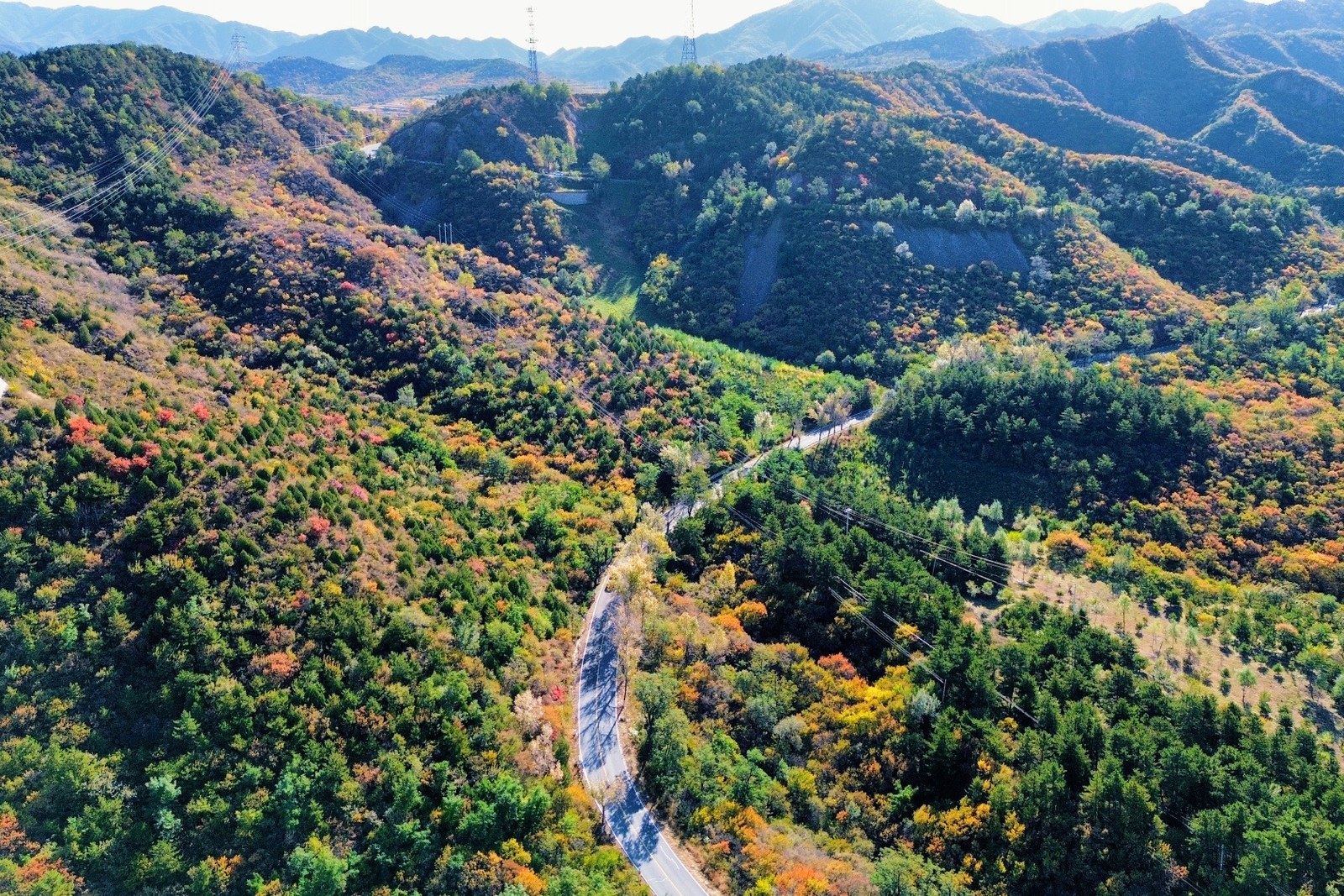
Call it honestly: the corridor itself is public road and free, with the individual sites along it — the geopark museum, the gorge, the cave, a few farm gates — charging small separate fees or nothing at all (worth confirming the details for current opening of each site, since several close in winter and the gorge shuts after heavy rain). The honest warning is length and logistics, not money. Fifty kilometres of mountain road at forty an hour is a full day with stops, fuel and food are scarce between villages, toilets are where you find them, the rural bus runs a few times a day at best, and driving it in a hurry is the one way to waste it. Autumn is the reason most people come: poplars and larches going gold along the water, the cliffs behind them going rust. Give it a full day by car, and start early enough to be at the far end by mid-afternoon.
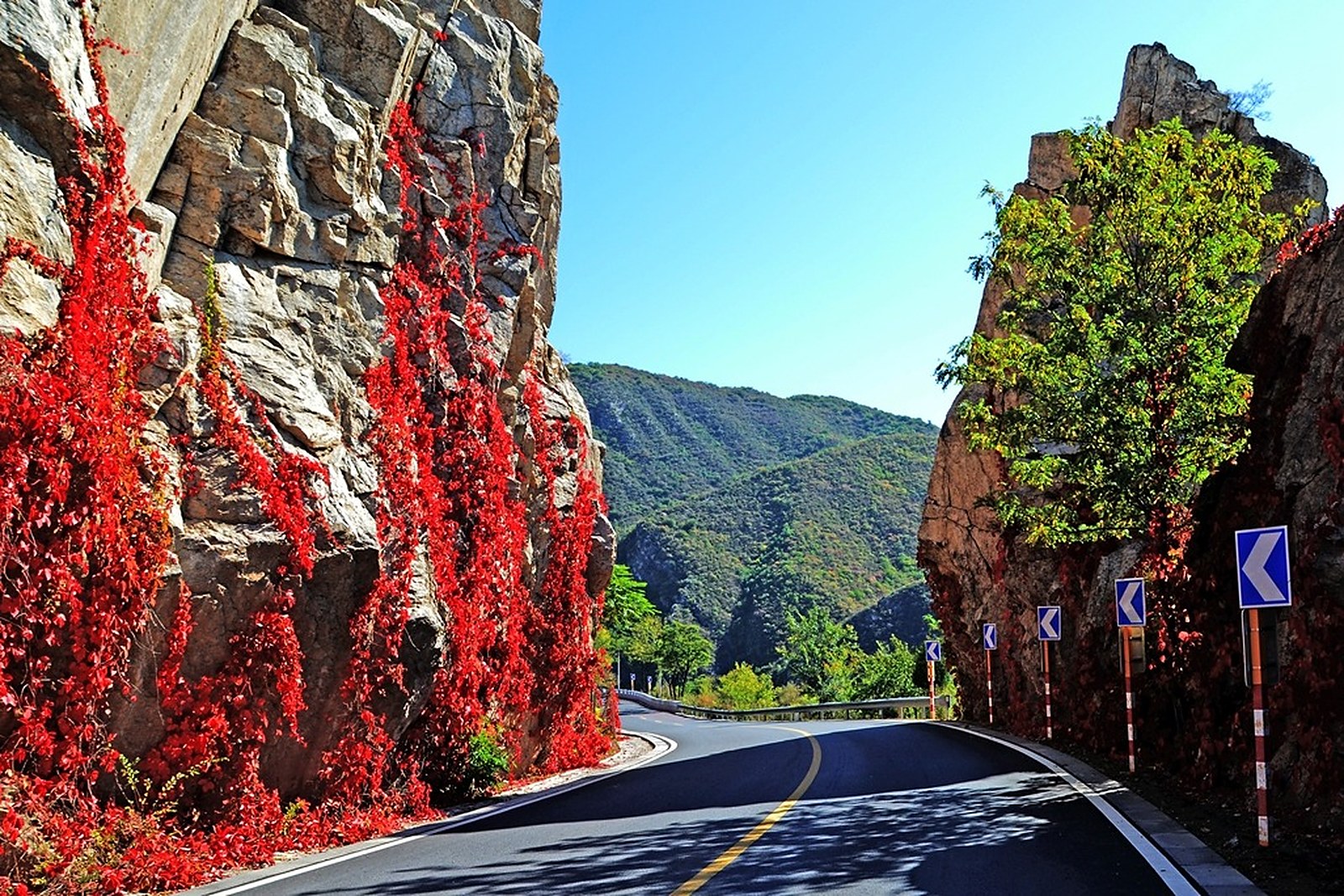
The honest star is the middle stretch, where the river runs close to the road and the gorge walls lean over the water and the whole thing looks less like a scenic area than like a place where people happen to live — corn drying on the road edge, a tractor parked in a gateway, walnuts spread on a sheet in a yard (worth confirming the details for which pull-offs are safe to stop at, since the road carries local traffic and harvest lorries). What gets oversold is the word “gallery”, which implies curation and viewpoints and a route designed for looking, when in fact it is a working valley road that happens to be beautiful. What repays the effort is the accumulation: hour three is better than hour one, and by hour four the cliffs, the water and the light have arranged themselves into the thing the name promised. Come for the layering of the place: bend, then river, then another bend.
The self-aware postscript: I stopped for walnuts at a farm gate near 千家店 Qiānjiādiàn and the woman selling them asked where I was going, and when I said “to the end of the gallery” she laughed and said, “the gallery is not at the end, it is the driving — you have already seen it, you just did not stop looking”. That is the visit in miniature. 百里山水画廊 Bǎilǐ Shānshuǐ Huàláng suits whoever treats it as a slow day of driving with small stops first and a list of attractions second, and exhausts anyone wanting one gate, one ticket and one photo. Everything else on this Yanqing list lies within the same district: the Ming brick of 八达岭长城 Bādálǐng Chángchéng Badaling Great Wall in the southwest, the boat between the cliffs of 龙庆峡 Lóngqìng Xiá Longqing Gorge, the carved cliff rooms of 古崖居 Gǔyájū Guyaju Caves and the meadow valley of 玉渡山 Yùdù Shān Yudu Mountain out west — all in the same 延庆区 Yánqìng Qū that strung a hundred li of river road through its quietest corner.
Practicalities
- Rating: ★★★★☆ — the best driving day in the district, with petrified wood, a black-rock gorge and a hundred li of river; the road itself outranks every individual stop; a star off for the fuel-and-toilet arithmetic.
- Tickets: The corridor is free public road, with the geopark, the gorge, the cave and farm gates charging small separate fees or nothing (worth confirming the details for current opening of each site, as several close in winter).
- Address: 百里山水画廊 Bǎilǐ Shānshuǐ Huàláng, 千家店镇 Qiānjiādiàn Zhèn Qianjiadian town, 延庆区 Yánqìng Qū, Beijing — the 白河 Báihé valley road in the district’s northeast, running from 白河堡 Báihébǎo east through 千家店 Qiānjiādiàn.
- Time needed: A full day by car with stops at the geopark, the gorge and the reservoir; two days if you want the side valleys and an overnight in a village inn.
Words and Names
百里山水画廊 Bǎilǐ Shānshuǐ Huàláng Baili Gallery · a hundred li of river valley strung as a scroll 白河 Báihé Bai River · the water the whole road follows 千家店 Qiānjiādiàn Qianjiadian · the town at the middle of the corridor 硅化木 guīhuàmù petrified wood · the fossil trunks lying where the forest fell 乌龙峡谷 Wūlóng Xiágǔ Wulong Gorge · the slot of black rock and green water 燕山天池 Yānshān Tiānchí Yanshan Tianchi · the reservoir at the western end, 白河堡 Báihébǎo
flowcloud would say that 百里山水画廊 Bǎilǐ Shānshuǐ Huàláng is a name given to a road and quietly earned by it — fifty kilometres of the 白河 Báihé valley through 千家店镇 Qiānjiādiàn Zhèn in 延庆区 Yánqìng Qū, past 硅化木 guīhuàmù fossil beds, the 乌龙峡谷 Wūlóng Xiágǔ gorge and the flat water of 燕山天池 Yānshān Tiānchí — and that the honest move is a full early autumn day with a full tank and no schedule, because each site’s opening and the state of the gorge road shift with season and weather (worth confirming the details), the gallery-as-attraction idea is the poster half and a working valley road with corn drying on the verge is the real half, and the corridor repays whoever drives it slowly enough to stop. All checked October 2026.
Getting there: The 919 Express from 德胜门 Déshèngmén Deshengmen to 延庆城区 Yánqìng chéngqū Yanqing town, then a 925-series rural bus toward 千家店 Qiānjiādiàn — a few runs a day at best (worth confirming the details for current timetables and whether the service continues past 白河堡 Báihébǎo); self-drive follows the 京藏高速 Jīngcáng gāosù G6 to the 延庆 Yánqìng exits, then the 昌赤路 Chāngchì lù north past 白河堡 Báihébǎo and east along the river road through 千家店 Qiānjiādiàn, or comes in from the 怀柔 Huáiróu side via 汤河口 Tānghékǒu on the mountain road. All checked October 2026.