
白沙古镇 Báishā Gǔzhèn, Baisha Ancient Town, sits on the 长江 Chángjiāng Yangtze upstream of the district seat of 江津区 Jiāngjīn Qū, Jiangjin District, and it is the district’s old cultural capital: a river port grown rich on the shipping trade, its long Qing-dynasty streets climbing the black-rock slope above the landing, its lanes and courtyards intact enough that the period-drama industry has never really stopped filming there. The town’s stock runs from the stone stairs at the water up through the arcaded shop streets to the old Academy hall on the hill and the wartime college buildings in the upper lanes. This page is the port, the slope and the cameras, because the cameras are the proof of the townscape.
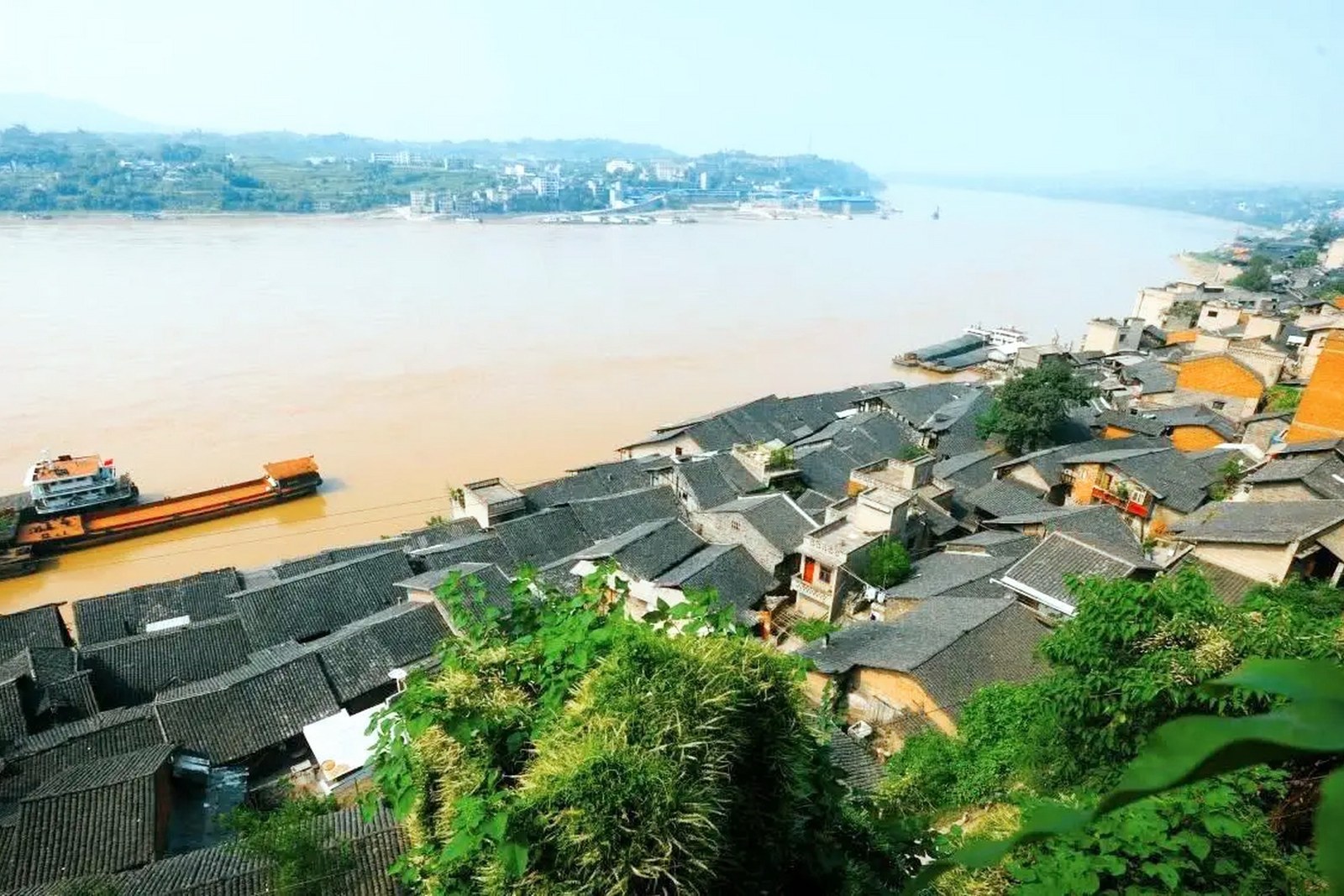
The port is the ground floor of the town’s story. Baisha sat where the shipping trade wanted a landing – the Yangtze’s bank upstream of the district seat – and the money the trade left built the town upward from the water: landing stairs, then the arcaded shop streets, then the slope, then the hill with its Academy and its views back down the river. The Qing streets survive as streets, not as a display street – the arcades are lived in, the counters trade, the lanes run the porters’ lines from landing to slope – and the black rock that shelves beneath the town gives the whole ensemble a setting no flat landing could: the town climbs, and the eye climbs with it.
The schools are the town’s second inheritance. In the 1940s, with the war pushed inland, Baisha took in a run of relocated colleges, and their campuses survive in the upper lanes – the district’s wartime contribution, and the reason a river port of this size carries an intellectual pedigree. The old Academy hall predates them and anchors them; the town’s self-image has run through education ever since, and a visitor reads it in the buildings the schools kept. The film trade is the third layer and the working proof of the townscape: period-drama crews arrive, dress a lane, shoot, and leave, and the street simply resumes being itself – which is the strongest authenticity certificate any old town can hold.
What the record supports is the town, the Yangtze landing, the Qing-dynasty arcaded streets, the black-slope setting, the 1940s relocated colleges and their surviving campuses, the old Academy hall, and the period-drama filming trade; what it does not support is any ticket figure, any count of productions shot there, any claim about which production is filming now, or any opening-hours table, and none is invented here. The town is free to walk, the landing stairs are public ground, and the film crews come and go on their own calendars; the page treats all three as the weather they are.
For the visitor Baisha is the district’s deepest half-day, and its most convenient one. It sits on the Yangtze road between the district seat and the southern mountains, the guesthouse trade under the black slope lets the evening stay slow, and the town pairs naturally with 塘河古镇 Tanghe Ancient Town to the south for a two-old-town day – the port and the film-set town, both of them real, both of them filmed. A visitor runs the landing stairs, the arcades, the Academy hill and the upper lanes in an afternoon, eats in the old streets, and understands why the cameras never leave: the town needs no dressing.
Words and Names
白沙古镇 Báishā Gǔzhèn, Baisha Ancient Town, on the Yangtze upstream of the district seat of 江津区 Jiāngjīn Qū, Jiangjin District: a river port whose long Qing-dynasty arcaded streets climb the black-rock slope above the landing stairs, carrying the old Academy hall on the hill and the surviving campuses of the colleges relocated to the town in the 1940s wartime. The period-drama industry films its lanes for the standing townscape, and the guesthouse trade runs cheap under the slope. No ticket figure, production count or hours table is on the record consulted, and none is invented here; the lanes are free public ground.
What the Locals Know
The local knowledge is the slope and the light. The town walks downhill: start at the Academy hill or the upper lanes and let the street deliver you to the river, because the landing stairs are steep and the porters built them for legs going up with wages, not down with full cameras. Late afternoon is the light the crews wait for – the arcades go gold, the black rock stops glaring – and the locals do their sitting-out on the landing stairs at that hour, which is the town’s free theatre. Film-shoot days close a lane at a time; the town shrugs and uses the next one, and a visitor should too. What the record does not carry is any shoot calendar, and the page declines to invent one.
Practicalities
Tickets: None – the lanes, the landing stairs and the arcades are free public ground, and no gate or street ticket is on the record consulted. The Academy hill and the wartime campuses sit inside the same free fabric on the record consulted; the costs a visitor meets are the ordinary ones of eating and sleeping in the old streets, and the page quotes no figure it does not have.
Opening hours: All day and every day as the working norm – the port stairs and the arcades are the town’s own footpaths, the shops run the daylight trade, and the golden-hour light the crews wait for arrives on the same clock it always has. No posted hours table is on the record consulted; the honest day runs downhill from the hill in the afternoon to the landing at dusk.
Closing day: None – a lived-in river port does not close on a weekday, and no published closing day is on the record consulted. The only closures the town knows are temporary and local: a film-shoot day can close a lane at a time, the town shrugs and uses the next one, and a visitor should too.
Getting there: The town is on the Yangtze upstream of the district seat of 江津区 Jiāngjīn Qū, Jiangjin District – reached by road from the district seat or out of the Chongqing side on the southern run, with district buses working the route; no timetable or fare is on the record consulted, so none is invented here, and the road onward to Tanghe makes the two-town day the natural shape.
flowcloud would say that Baisha Ancient Town is the district’s cultural capital in fact and not just in phrase – a Yangtze river port whose Qing arcades climb the black-rock slope past the old Academy hall and the surviving 1940s college campuses, its lanes intact enough that the period-drama industry never stops filming them – and that the correct visit is a downhill afternoon from the hill to the landing stairs, because the town needs no dressing and the golden-hour light knows it. All checked October 2026.