
Baisha Meteorite Crater, the County’s Original Event
Baisha Li Autonomous County, a mountain county of rainforest and tea in the centre-west of Hainan, keeps its headline sight nine kilometres southeast of the county seat at Yacha, in the fields of the old state Baisha Farm: a near-perfect ring about 3.5 to 3.7 kilometres across, where a space rock struck the island some 700,000 years ago. The circular ridge still runs continuous around the bowl – roughly 7.8 kilometres of it, standing about 300 metres above a crater floor of some eight square kilometres – with a single notch on the southwestern rim where two streams have been cutting their way out ever since. The county’s name, before anything else, has nothing to do with white sand: Baisha is a homophone of Bosha, an old Danzhou place name. The crater, by contrast, is exactly what it looks like – a 700,000-year-old scar now planted wall to wall with tea.
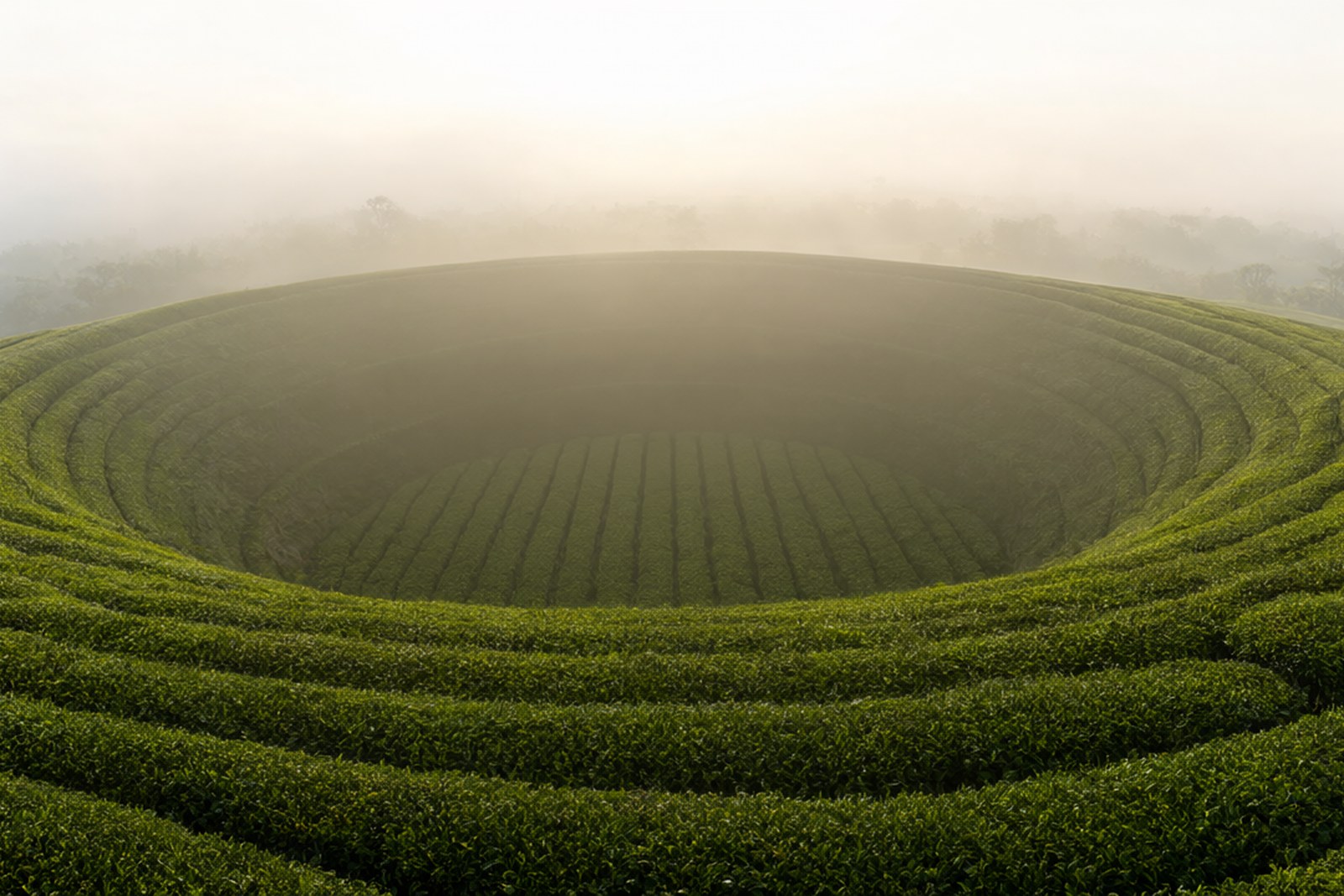
The crater reads as a detective story with a 1992 ending. In that year Wang Daojing, a researcher at the Changsha Institute of Geotectonics under the Chinese Academy of Sciences, was unpicking the island’s metallogenic structures on remote-sensing imagery when a ring-rimmed depression in the Baisha basin caught his eye – a shape far too round for ordinary erosion. He walked the ground, then ran a three-year study with island colleagues, and the decisive evidence came from inside the bowl itself: meteorite fragments, a 3.75-kilogram stone classified as a calcium-rich achondrite with an age of about 4.44 billion years, a type then unrecorded in China’s meteorite catalogue. That finds-in-situ record is the honest way to phrase the crater’s standing: it was the first impact crater identified from within China’s borders, with meteorite fragments recovered at the site – not, as older tourism copy still says, China’s only scientifically confirmed crater, a title the field no longer awards so simply, after Liaoning’s Xiuyan crater became the first crater validated to international standards in 2010. Wang set the findings out in a monograph titled The Baisha Impact Crater on Hainan Island.
The arithmetic of the impact is the guide’s favourite. By one researcher’s estimate the impactor ran about 380 metres across and came in at no less than twelve kilometres a second, an energy release put at roughly 360 Hiroshima bombs; the heat of the event fused the target rock into impact breccia, in which mineralogists have counted 49 newly formed minerals alongside 14 mixed-in and 16 residual ones – while a separate single sample, read by X-ray diffraction, yielded 48 minerals of its own, so the two figures travel separately and should never be merged into one.
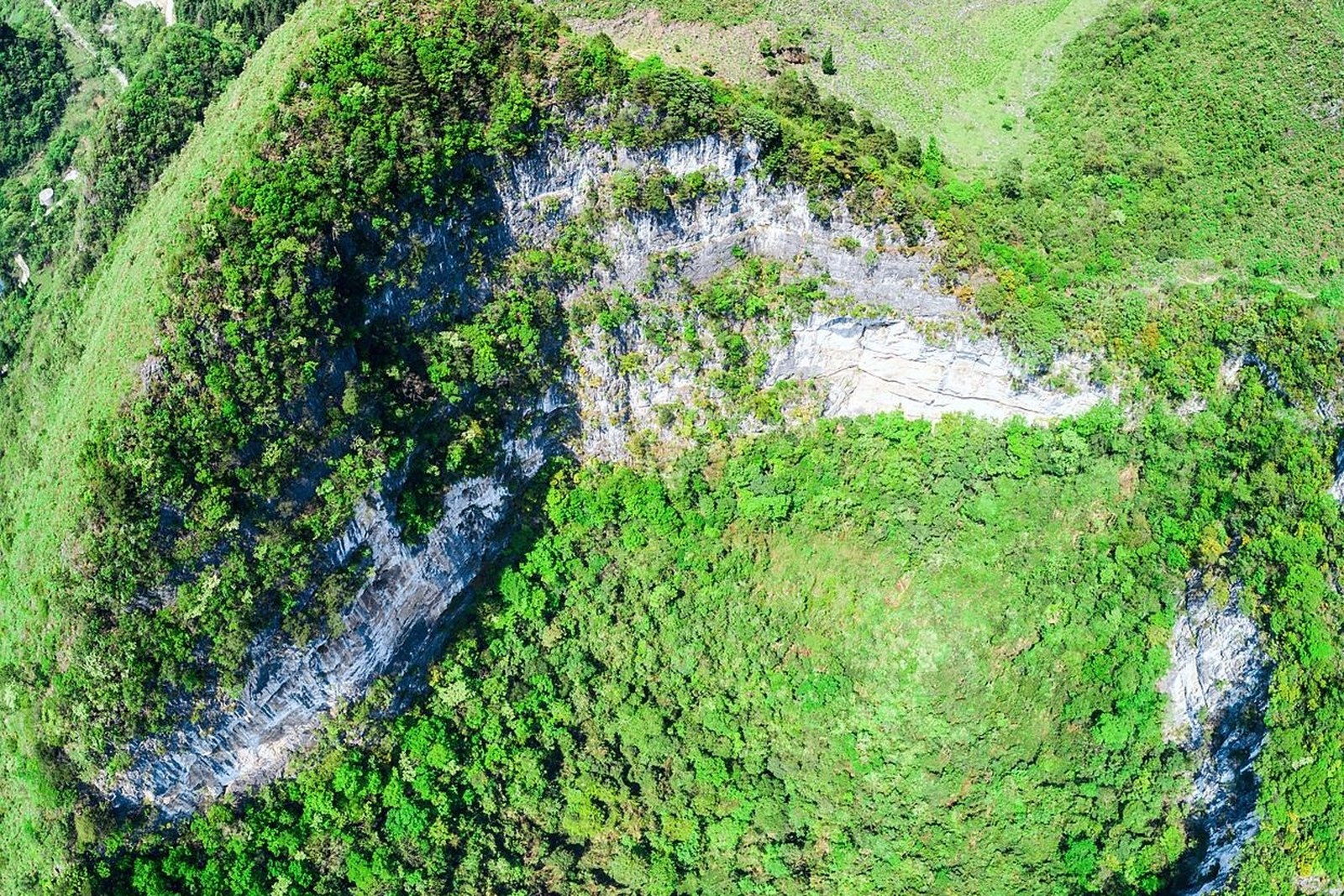
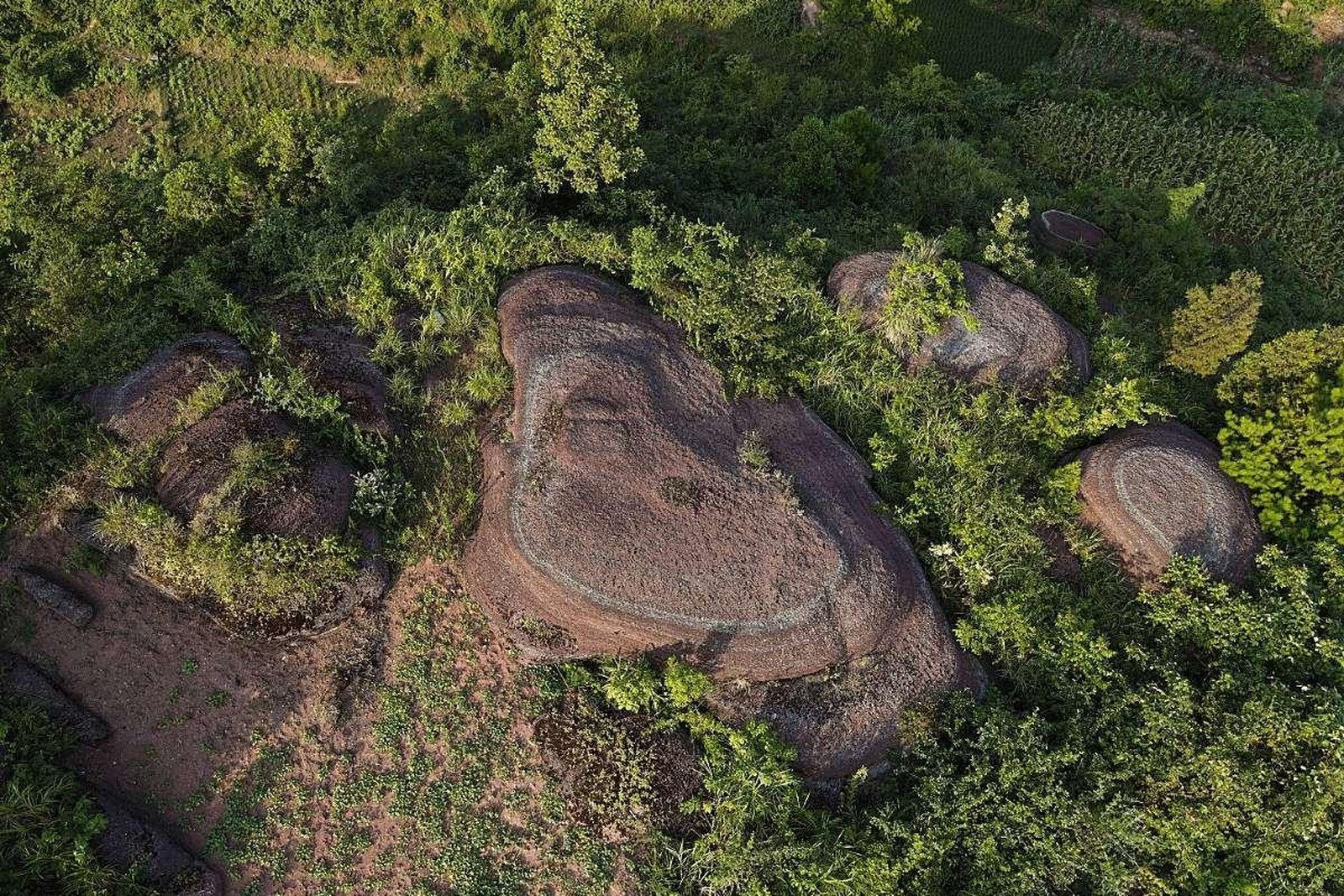
Official recognition arrived in geological time, by bureaucratic standards quickly. The site became a provincial geopark in November 2017, and in 2018 it took national geopark qualification – only Hainan’s second, after the Haikou volcanic cluster – as the Hainan Baisha National Geopark, with a master plan spreading 25.53 square kilometres over six functional zones reaching from the crater science zone to the Songtao reservoir. Within the park stands a second, older oddity: a large field of granite-porphyry columnar jointing formed about 100 million years ago, a formation so restricted in China that Baisha shares the distinction with one county in Guangxi. Development has moved in phases since, and no grand park opening was ever officially confirmed – the honest description is a geopark under phased development – while December 2024 brought a Baisha meteorite international forum to the crater-side meteorite hotel, keeping the site on the scientific calendar.
What a visitor actually walks into is the crater tea resort area, a planned 4.23-square-kilometre patchwork of tea rows, villages and farm stays that the province rated a rural-tourism resort in June 2025, with the crater eco-tea garden at its core – some 300 mu of it – rated a national 2A scenic area in 2026. The ridge walk itself goes through rubber and tea, with the crater floor farmed over some 85 per cent of its area, mostly with the tea and rubber that made the farm’s fortune; and down in the bowl a spring which long-time residents say has never run dry waters the rows through every drought. The best single view comes from the rim heights toward the E’jian ridge, though no formal trail has been built yet and the approach runs down rough village lanes. Visitors’ lore adds a stranger flourish: watches were said to misbehave near the E’jian ridge, with cameras switching themselves off – but no published test ever confirmed it, so file it under legend. Time the visit to the spring-tea season, which runs from December into April, and note that the county’s new Yuanmen airport – central Hainan’s first A1-class general-aviation field – sits inside the resort area and hints at low-altitude sightseeing to come.
Practicalities
Tickets. Free. The crater is open countryside – tea gardens, villages and farm tracks with no walls or gates – and no ticket of any kind is sold; tea-picking and tea-making workshops are charged separately by the farm stays at their own rates. Checked October 2026, subject to change.
Opening hours. The crater itself is open countryside, accessible at all hours; the farm stays, museums and hotel inside the resort area keep their own hours, with no published uniform timetable.
Closing day. No published closing day – open fields do not close, and the practical limit is daylight on the rough lanes.
Getting there. Drive southeast from Yacha along Yacha Road for about nine kilometres, fifteen to twenty minutes from the county centre; the Dan-Bai expressway’s Yacha interchange drops you at the town end, twenty minutes from Danzhou and roughly two to two-and-a-half hours from Haikou or Sanya. The final approach uses narrow village lanes that meet head-on with difficulty, and the rim viewpoint has no formal trail yet – allow for a rough walk.
flowcloud would say that the crater is the county’s original event – everything after it, the tea, the farm, the resort, even the forum, is afterglow – and that a scar in the ground which taught China how to read impact craters is worth nine kilometres of rough lane.
Getting there: The Baisha meteorite crater lies about nine kilometres southeast of Yacha in the old state Baisha Farm, Baisha Li Autonomous County, Hainan; drive Yacha Road southeast from the county town fifteen to twenty minutes after leaving the Dan-Bai expressway at the Yacha interchange (Danzhou twenty minutes, Haikou or Sanya roughly two to two-and-a-half hours); entry is free with no gate, the crater is open countryside at all hours with no published closing day, and the rim approach runs down rough village lanes with no formal trail yet (checked October 2026, subject to change).