
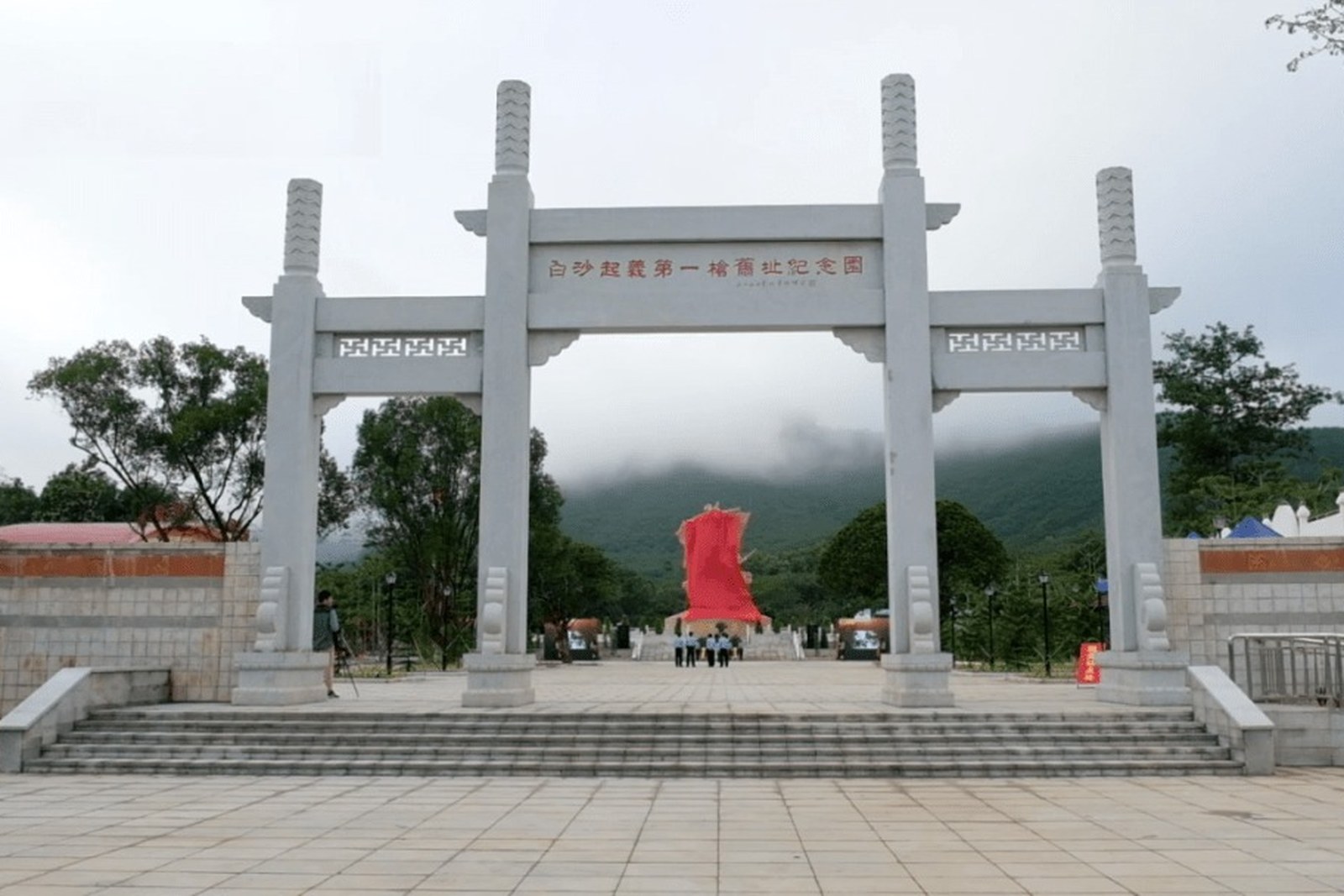
白沙起义纪念园 Báishā qǐyì jìniàn yuán stands on the east side of 番响村 Fānxiǎng cūn in 红毛镇 Hóngmáo zhèn, at the 160-kilometre post of the Haikou-Wuzhishan central highway, 23 kilometres from the county seat – a memorial park to an uprising whose name belongs to another county. The explanation is administrative history: in 1935 the Republican government drew a new Baisha County that included this Hongmao highland, and the rising of August 1943 was organised here as Baisha territory; in 1958 the land passed to Qiongzhong, so the memorial keeps the old name with the note that it commemorates the Baisha Uprising of 1943, named after the then-Baisha County, whose territory included today’s Hongmao Township in Qiongzhong. Locals called it plainer things: the Hongmao revolt, or the July uprising, for its lunar month.
The story the walls tell began in occupation. Japan took Hainan in February 1939, the retreating Nationalist authorities settled into the Five-Finger Mountains, and their exactions on the Li and Miao villages turned lethal through the early 1940s, with the mass killing at 中平 Zhōngpíng in June 1943 lighting the fuse. On 12 August 1943, ahead of the planned date, some 4,000 Li and Miao villagers came down the hills with hunting guns, bows, hook knives and hoes; over the following two weeks tens of thousands rose across Baisha and drove the Nationalist administration and troops out of the county. The reprisal came in force at the end of September, and the leader, 王国兴 Wáng Guóxīng, a headman’s son and the township head of Hongmao, pulled the survivors back into the forests of Yinggeling. In October he sent out five parties in four directions to find the Communist-led forces – three messengers carrying his appeal in a hollow bamboo tube, disguised as salt porters – and the leadership they found answered with the line history kept: while you were searching for the Communists, the Communists were searching for you. An alliance sealed in chicken-blood wine in December 1944 turned the rising into the road to the Five-Finger Mountain base area and, in the end, the liberation of Hainan; Mao Zedong later named Wang a representative figure of an ethnic-minority people who rose of their own will to seek out the Communist Party.
王国兴 Wáng Guóxīng (1894-1975), born 王兴 Wáng Xīng into a line of Li headmen, carried the story the rest of his life: commander of the rising, head of the Baisha-Baoting-Ledong People’s Liberation Corps from 1944, deputy head of the Baisha anti-Japanese democratic government in 1945, and in 1949 a delegate invited to Beijing for the first plenary session of the Chinese People’s Political Consultative Conference and a place at the founding ceremony of the People’s Republic. In 1952 he took office as the first chairman of the Hainan Li and Miao Autonomous Region, the prefecture-level body of its day, and Haikou still carries his name on its main east-west avenue, 国兴大道 Guóxìng dàdào, and on a secondary school.
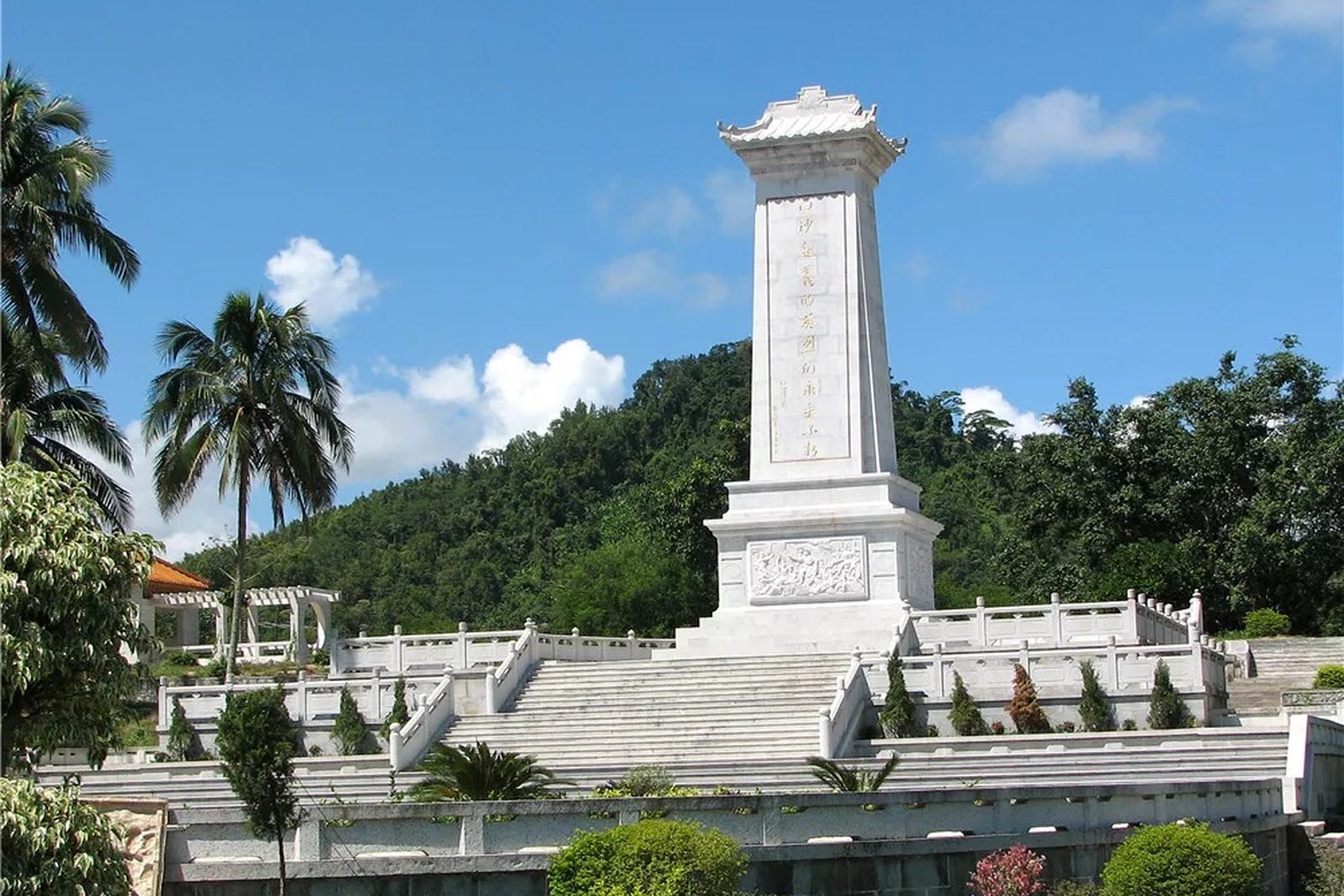
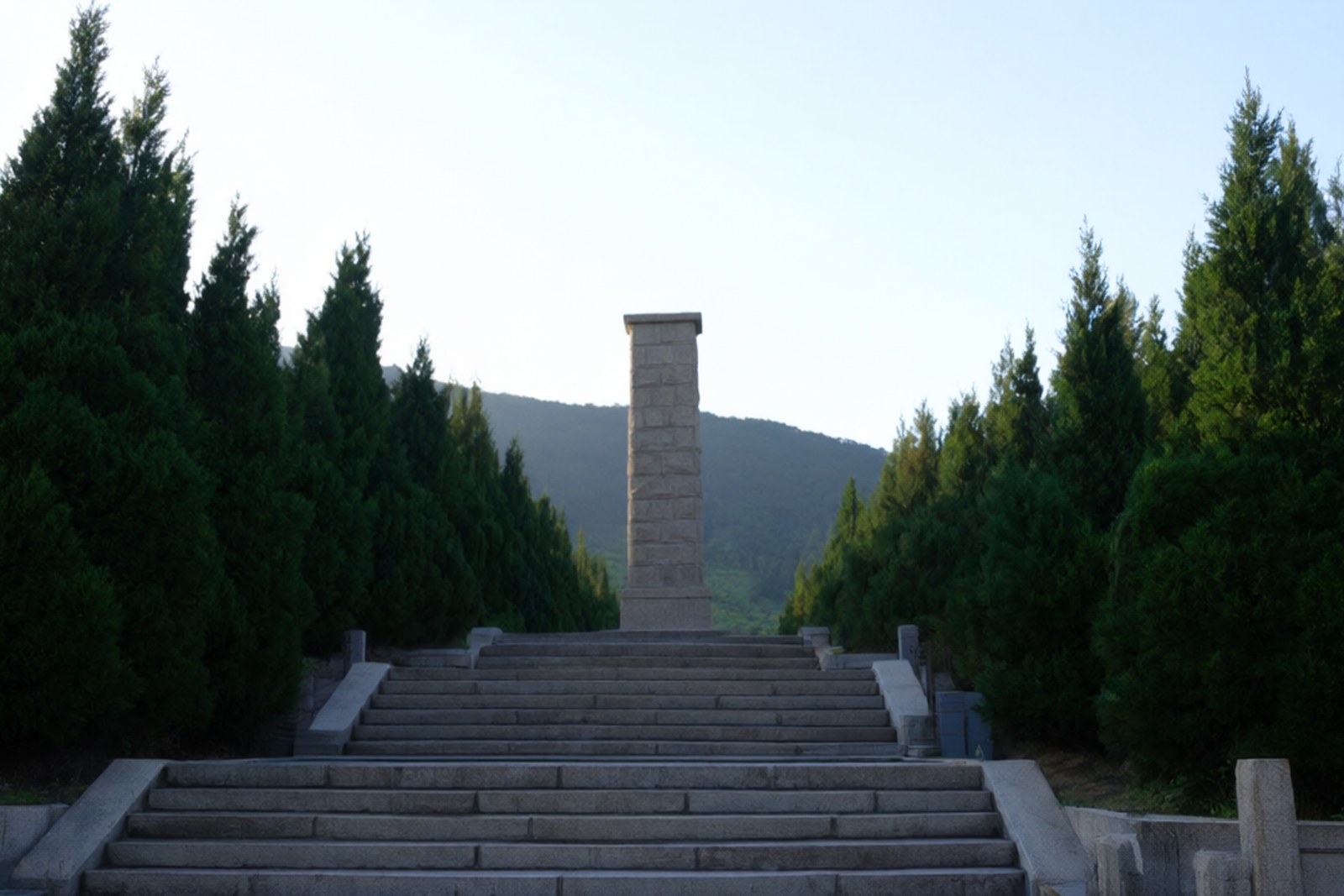
The park itself was paid for by the old autonomous prefecture government and begun in September 1987, completed in November 1988 by the party-history institute’s dating. Its pieces line a slope backed by 德伦山 Délún shān and facing the 黎母岭 Lí mǔ lǐng ridge: a granite monument 17.2 metres tall on a square plan, its face carrying the twelve characters 白沙起义的英烈们永垂不朽 – the martyrs of the Baisha Uprising are immortal – brushed by 江泽民 Jiāng Zémín on 10 May 1991; flanking exhibition halls of about 200 square metres, rehung in 2009 with photographs, documents and the uprising’s own bows, guns, banners and drums; a relief wall of green stone, three metres high and thirty-three long, cut in 2010 to replay the whole campaign; and the leader’s bronze bust, 1.43 metres of it on a three-metre plinth lettered 黎族人民领袖王国兴 – Wang Guoxing, leader of the Li people. The honours list runs from provincial revolutionary-martyrs protection in 1990 through provincial cultural-relic status in 2004 and the first national batch of ethnic-unity education bases in 2006 to a national key martyrs-memorial listing in 2009; the tourism plaque reads national 2A.
Give it half an hour to an hour – the halls are small and the ground is compact – then take the province’s own onward line: 17 kilometres east to 番道村 Fāndào cūn in 什运乡 Shíyùn xiāng for Li brocade and dance, and 4 kilometres beyond it to 便文村 Biànwén cūn, where the 琼崖纵队 Qióngyá zòngduì headquarters site sits under terraced fields, the road climbing with the Five-Finger peaks and the Parrot Beak of Yinggeling stacked on the horizon. The three stops make one red-and-green day, the uprising’s retreat route and the guerrilla headquarters bound together by the highway.
Practicalities
Tickets. Free – every source that lists a price lists none, from the province’s own tourism pages to visitor reports, and no booking requirement appears in any of them.
Opening hours. The grounds are listed as open round the clock on Hainan’s official tourism portal; the exhibition halls keep roughly daylight hours, printed variously as 08:30-17:30 and 09:30-17:00, so aim for a late-morning or early-afternoon visit if the halls matter.
Closing day. No published closing day – the official 24-hour listing runs through weekends and holidays. The halls can close short-term for rehanging or receptions; the monument and the grounds stay accessible.
Getting there. The memorial sits directly on the G224 central highway at the 160-kilometre post, easiest by car or hired car: from the county seat 23 kilometres, thirty to forty minutes, or leave the Hai-San expressway at the Hongmao interchange onto the old highway. From Haikou, express buses to Qiongzhong plus a local car complete the trip; no town bus serves the gate, so pair the visit with the Shiyun village line by hire car.
flowcloud would say that the memorial works because it is small – half an hour of walls and stone at the foot of the hills the fighters fell back to – and that the road east to the villages, climbing past terraces with the Parrot Beak on the skyline, lets the landscape finish the story the exhibits start.
Getting there: 白沙起义纪念园 Báishā qǐyì jìniàn yuán stands at the 160-kilometre post of the G224 in 红毛镇 Hóngmáo zhèn, Qiongzhong, Hainan, 23 kilometres and thirty to forty minutes from the county seat, or leave the Hai-San expressway at the Hongmao interchange; entry is free, the grounds are listed open round the clock with the halls keeping roughly 08:30-17:00 daylight hours (checked September 2026, subject to change), and no closing day is published; the province’s onward line runs 17 kilometres to Fandao village and 4 more to the Bianwen headquarters site.