
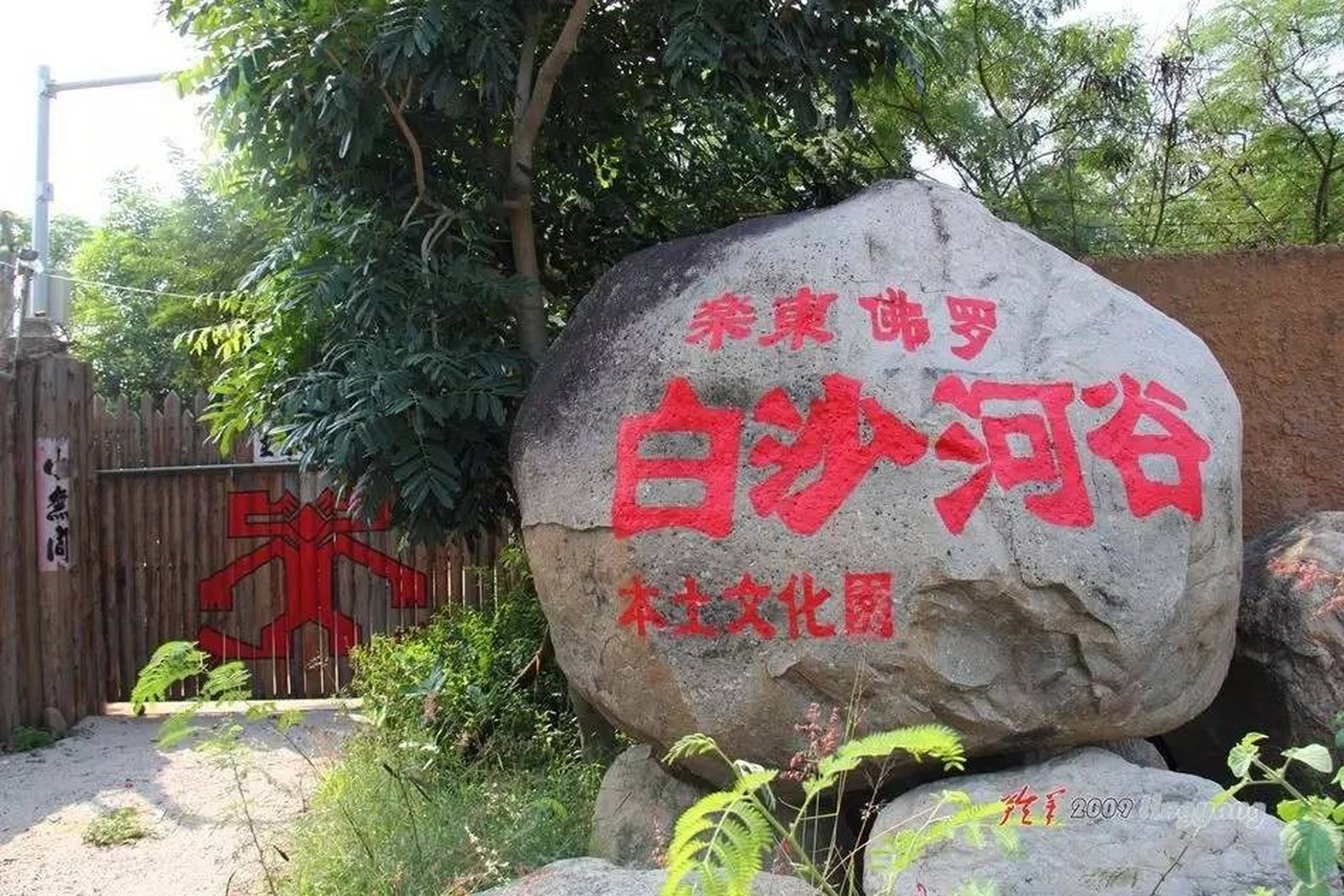
Baishahe Valley Culture Park sits on the north bank of the Baisha river in Foluo town, at the 312-kilometre mark of National Highway 225, in Ledong Li Autonomous County. It is not a state museum and not a theme park but a private collection turned into a garden: two exhibition halls, a scatter of reconstructed buildings and a stretch of riverside planting, assembled by one man over the better part of fifty years. The county promotes it with the line small valley, big culture, and the description is fair; the park is small and almost empty of visitors, and the material inside is the reason to come. Older reports once placed it in neighbouring towns, but the park is in Foluo, and that is the address to use.
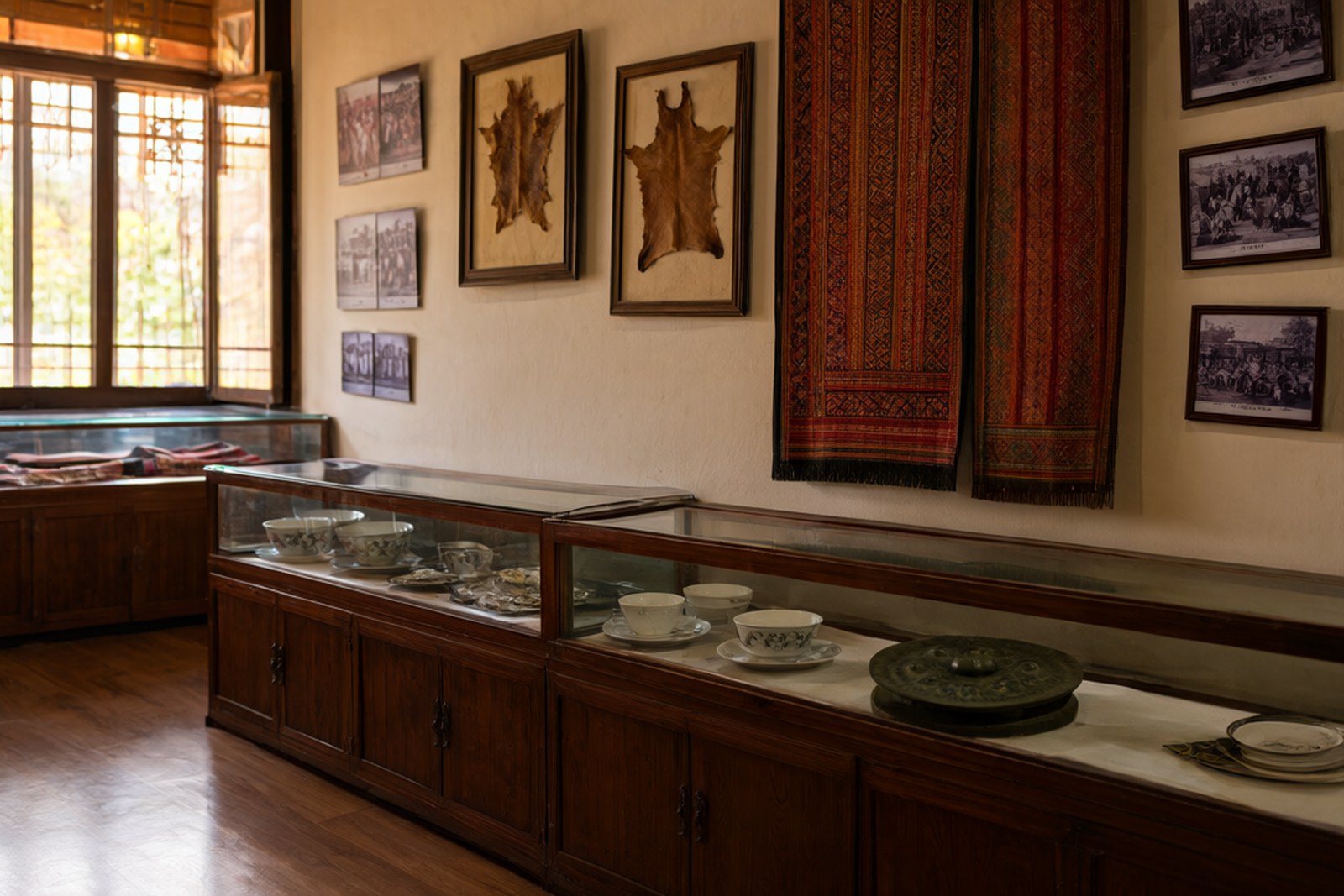
The founder and curator is Yuan Jinhua, a retired postal worker from Foluo who, by the accounts of provincial and national media, began collecting in 1974 and walked the length of Hainan looking for objects of Han, Li and Miao everyday life; he opened the culture park in 1992. His own explanation is plain: he says he began as a hobbyist, then discovered how much of the island’s history was still unrecorded, and decided the collection should outlast him and go to later generations. What he gathered is ethnographic rather than imperial – the clothing, ornaments, writing, pictures, vessels and farm tools of the people of the island – and the park’s best-known pieces include a Li brocade dragon quilt, deerskin paintings, a bronze frog gong, a deerskin drum and a rosewood panel.
The reported sizes of the collection disagree by more than a factor of two, so this article deliberately gives no figure: the counts published over the years, from local publicity to national media, simply do not agree with each other. What is consistent is the kind of thing on show. The collection is described as several thousand ethnographic objects documenting Li, Miao and Han life, including textiles, ornaments, tools, vessels and a substantial body of photographs and documents on Li tattooing and daily life. Read it as material culture rather than treasure: the value is in the ordinariness of the objects and in the fact that one person thought to keep them.
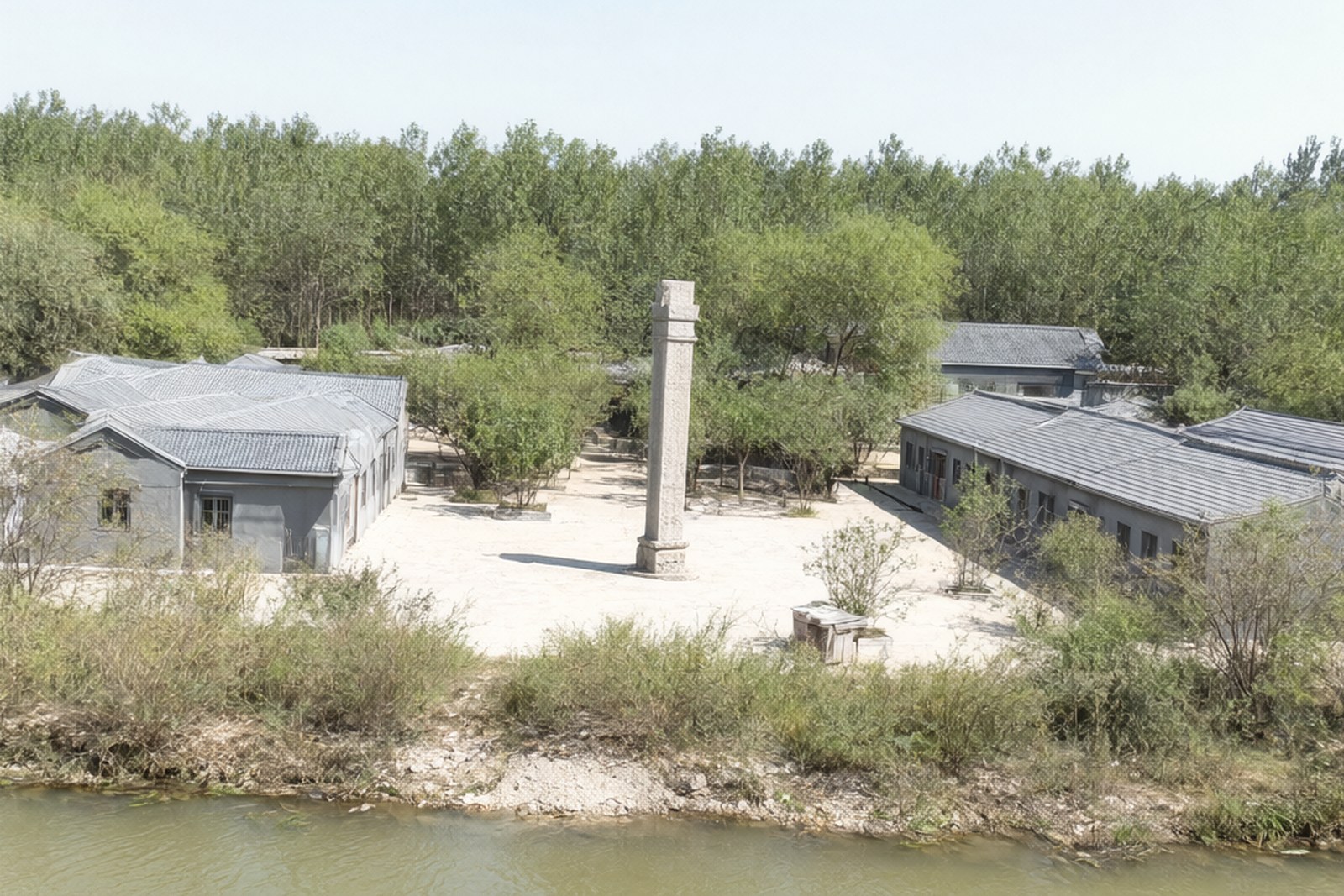
The grounds themselves are part of the exhibit. Two halls divide the material into an ethnic-heritage collection and a history-and-culture collection, and between them the park has raised a tall stone assembly called the South China Sea Needle, roughly eight metres high, built from pieces reportedly found near the Baisha river’s outlet at Tiger Nose Slope on the Beibu Gulf. There are reconstructed Li frog houses, stilted timber dwellings, a waterwheel, totem poles and a cooled pool the park keeps at a constant 28 degrees, alongside the remains of a Sui-Tang-era post station it calls the Ganquan spring stop. The garden is deliberately left wild: the native shrub layer is said to hold more than three hundred kinds of medicinal herb, together with agarwood trees and well over a hundred mature rosewood trees. The whole holding is usually given as about 20 to 25 mu.
Plan this as an hour or two of slow looking rather than a checklist stop. Admission and opening times are not officially published, and the park is an independent operation rather than a listed attraction, so the sensible approach is to confirm before setting out rather than assuming a schedule. It sits on the highway just north of the Baisha river bridge, near Foluo town and close to Jianfeng Station on the West Ring high-speed line, which makes it an easy half-day pairing with the salt field at Yinggehai or the foot of the Jianfengling ridge. For anyone interested in how a single private collector ended up holding a sliver of the island’s everyday past, it is one of the quietest and most unexpected stops in the county.
Practicalities
Tickets. Admission is not officially published – this is a private folk museum rather than a ticketed scenic area, and no authoritative price or booking system is on record. Contact the park or its sponsoring bodies before a visit rather than relying on a listing. Checked October 2026, subject to change.
Opening hours. No hours are published and opening is irregular, so a visit is best arranged in advance. Do not drive out on a fixed schedule expecting to walk in.
Closing day. No closing day is published, because no regular calendar is published at all. The park is best treated as open by arrangement; confirm before you travel.
Getting there. By car, the park stands on National Highway 225 at the 312-kilometre mark, on the north side of the Baisha river bridge in Foluo town; the route from Sanya via the G98 ring road and G225 takes a little over an hour. There is no direct public transport, so a car or a charter is the only practical way. The nearest rail stop is Jianfeng Station in Foluo town on the West Ring line, from which a short taxi ride reaches the bridge.
flowcloud would say that Baishahe Valley is what happens when one retired postman decides the island’s ordinary past is worth keeping – a garden of looms, drums and farm tools that no tour bus has yet found, and the better for it.
Getting there: Baishahe Valley Culture Park stands on the north bank of the Baisha river in Foluo town, Ledong Li Autonomous County, Hainan, on National Highway 225 at the 312-kilometre mark; admission and hours are not officially published so visits should be confirmed in advance, there is no published closing day, and a car or charter is the only practical access, with Jianfeng Station on the West Ring line the nearest rail stop (checked October 2026, subject to change).