
The Lake the Dunes Cradle: Baishahu on the Northwest Frontier
沙山环碧水,白桦守边关 Shāshān huán bìshuǐ, báihuà shǒu biānguān — White dune hills ring the jade water; white birches hold the border pass
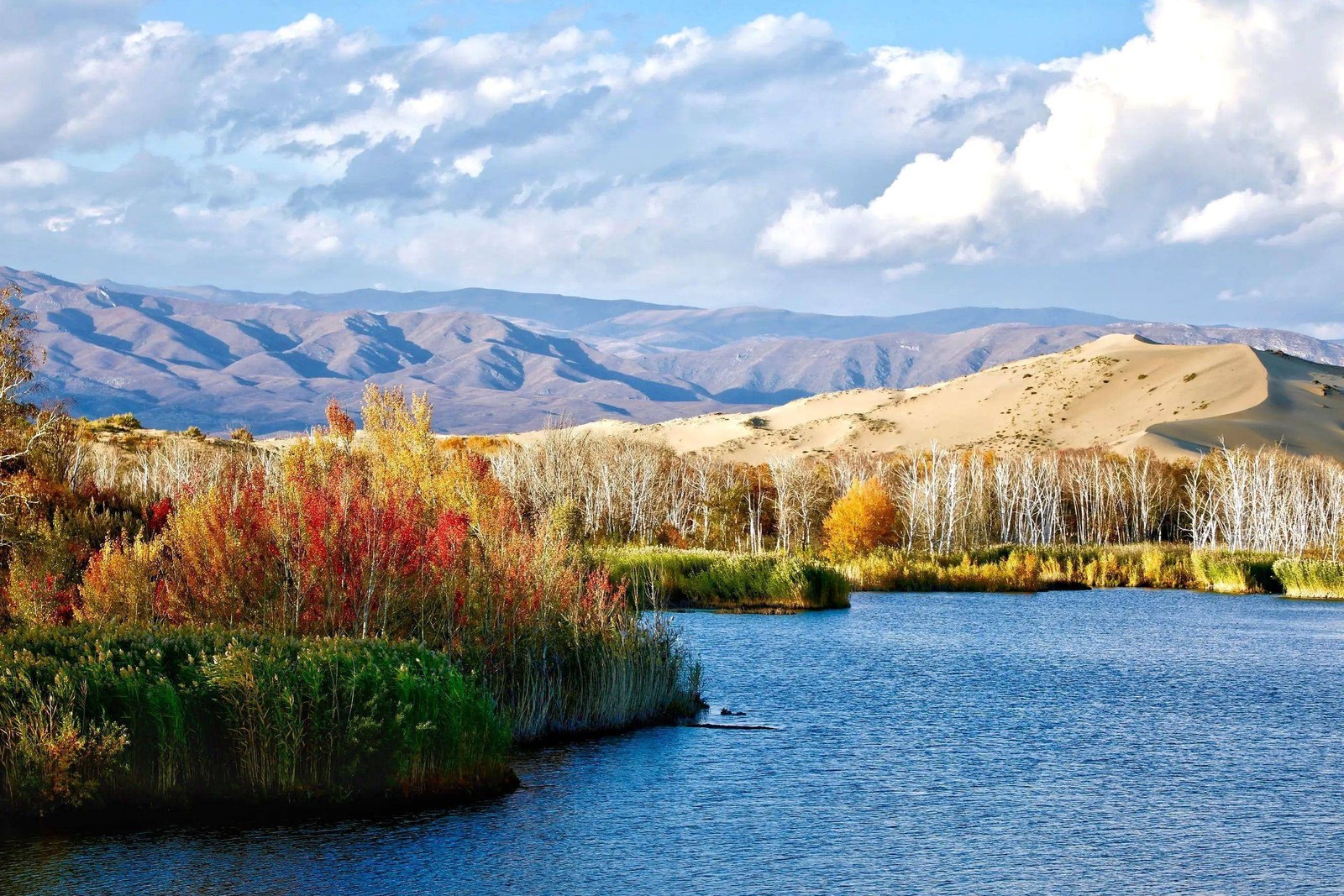
正文:白沙湖 Báishā Hú Baishahu lake is the frontier’s best trick – a bowl of still, teal water sitting in the arms of white sand dunes two hundred kilometres from anywhere, with no river in and no river out, yet never rising nor falling. Lying inside the 185th Regiment’s land on the far northwest edge of 北屯市 Běitún Shì Beitun City, it pairs desert and water so cleanly that first-time visitors check the horizon twice: birch woods and reedbeds on one shore, singing dunes on the other, and the steppe running silver to the mountains beyond.
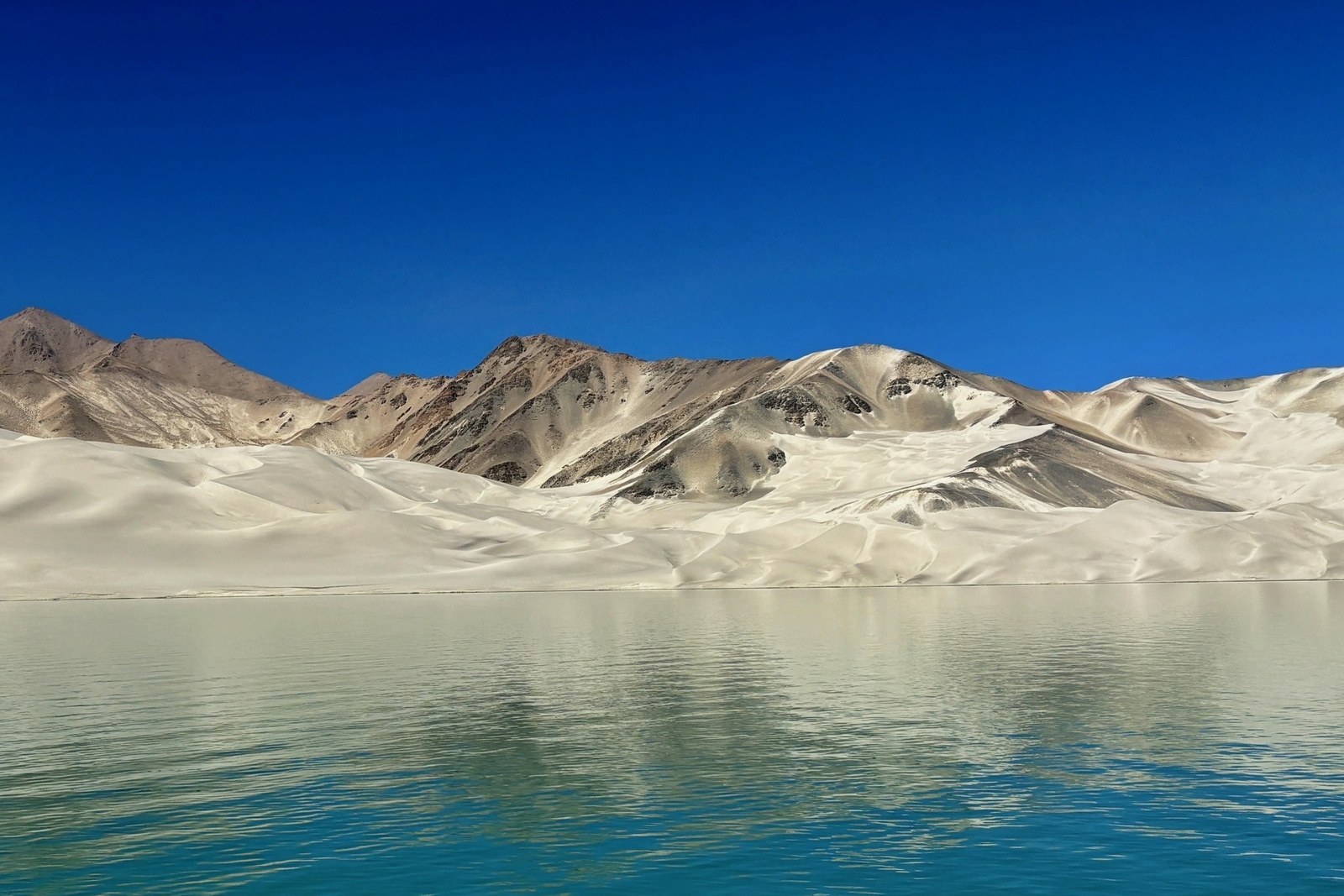
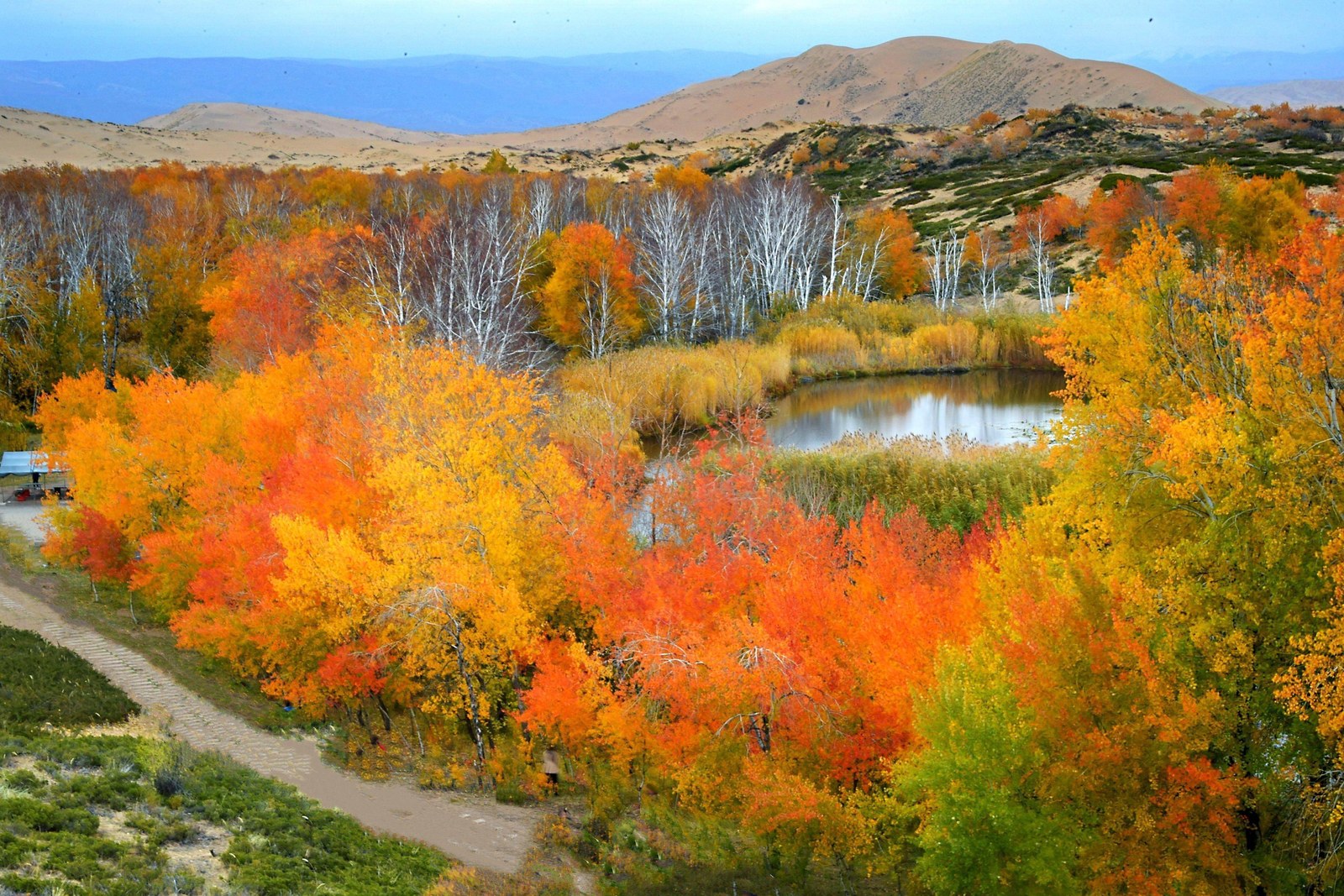
The setting does the heavy lifting, but the details keep it honest. The dunes crest in razor lines and slide steeply into the water, so the shoreline reads like a drawing; the birch and poplar stands turn hard gold through September; and the reedbeds shelter ducks and swans through the warm months. Boardwalks carry you around the lake edge without a footprint of sand in your shoe, and the light – frontier-clear, low-angled – does the rest from about four in the afternoon.
The dune side is where the fun is. Sand slopes run steep enough for the long boards the site rents at the kiosk, and the sliding slope roars faintly under weight – the 鸣沙 míngshā, singing sand, that gives the neighbouring dunes their name. Climb the crest for the full composition: the lake’s bowl below, the birch gold behind it, and the 185th Regiment’s fields striping out toward the border marker on the horizon.
The place is stitched into regiment history. The 185th was among the farthest-north farms ever drawn on the reclamation maps, and its people farmed land they could watch the border from; the famous “first company of the northwest” kept its flags and its record fields a short drive away. Exhibits and photo boards at the site tell that story plainly, and it colors the visit – the lake is beautiful, and the beauty was planted, patrolled and hand-watered for two generations before anyone called it a scenic area.
Practicalities first. The lake lies some two hours’ drive north of central Beitun on good frontier roads; the site runs a ticket with boardwalk access, board rental and small cafes at the entrance compound. Come for the afternoon light, stay for the sunset over the dune crest, and in September bring a real jacket – the frontier autumn is serious business the moment the sun drops.
Practicalities
Beyond the lake, the same 北屯市 Běitún Shì Beitun City keeps more places worth the detour: 额尔齐斯河畔 É’ěrqísī Hé Pàn the Irtysh river banks, 得仁山 Dérén Shān Deliang mountain for the city view, 北屯博物馆 Běitún Bówùguǎn the Beitun museum for the regiment story, or 塘巴湖 Tángbā Hú Tangbahu lake for the reedbeds nearer town – four more doors into the same 北屯市 Běitún Shì Beitun City. Once the lake is seen, our Beitun food map fills the day.
Practicalities
Words and Names
flowcloud would say Baishahu is the frontier’s still-life: dunes that hum, birches that burn gold, and a bowl of blue water that has kept its level through every drought and argument – painted by no one, guarded by everyone, and worth every kilometre of the road out. All checked November 2026.
Getting there: The lake lies deep in the 185th Regiment, a long desert drive north of Beitun; hire a car or join a scenic-area tour, and go morning before the tour buses and the heat. All checked November 2026.