
白水洞 Bái shuǐ dòng is named for water rather than for a hole. The stream comes down the valley so white over the stones that the county called the place the white-water cave, and the name has stuck to a karst gorge in the hills of 新邵县 Xīn shào xiàn, 邵阳市 Shàoyáng shì, twenty kilometres or so north of the city. It is a landscape of three parts: a canyon ten kilometres long with falls and pools all the way down it, a limestone cave system with a river running through the bottom of it, and a lake, a cleft and the ruins of two old monasteries in between. It is the first 4A-graded scenic area in 新邵, it is also a national geological park and a national scenic area, and it reopened on 4 September 2026 after eleven months shut for a complete rebuild of its paths, safety works and interpretation.
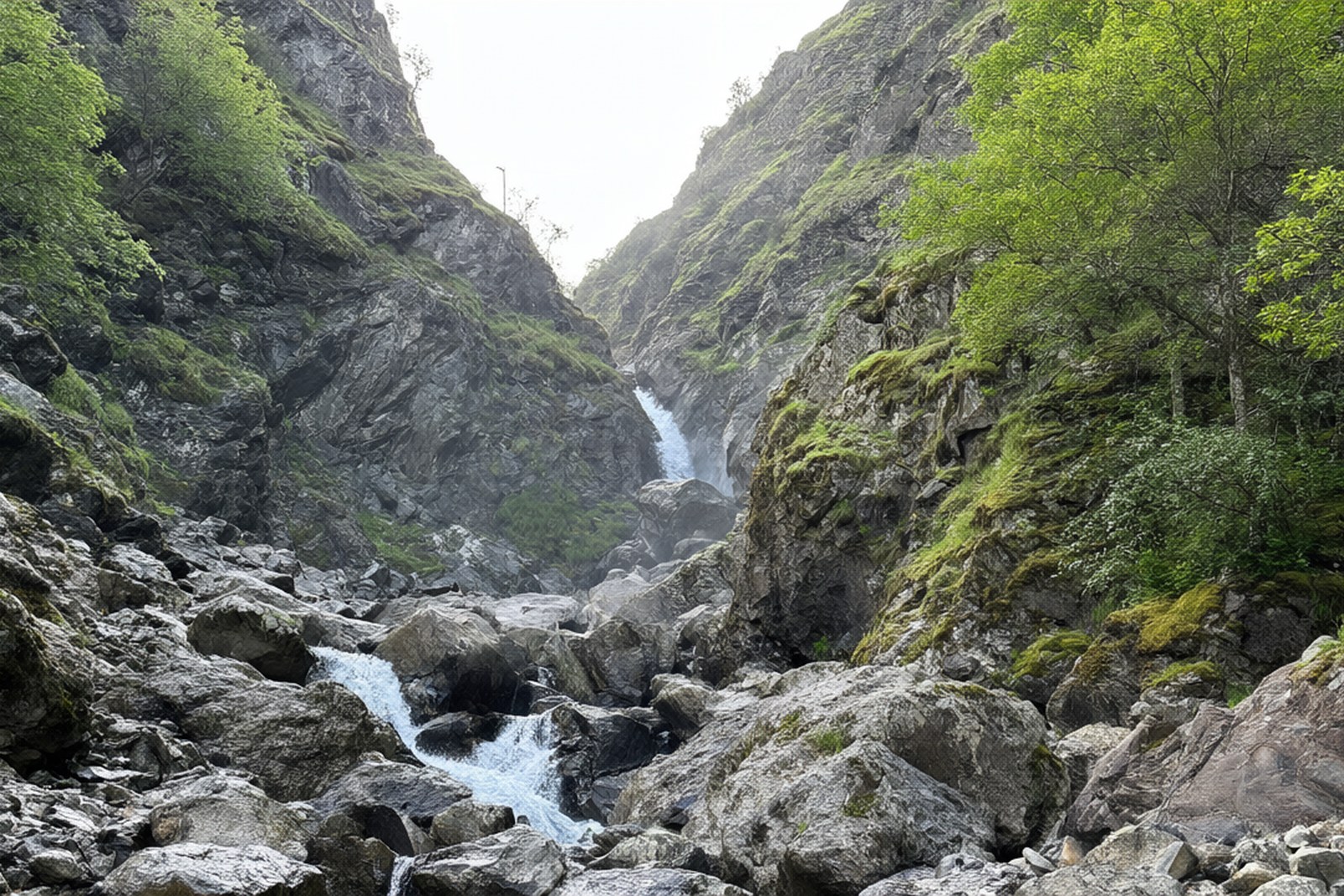
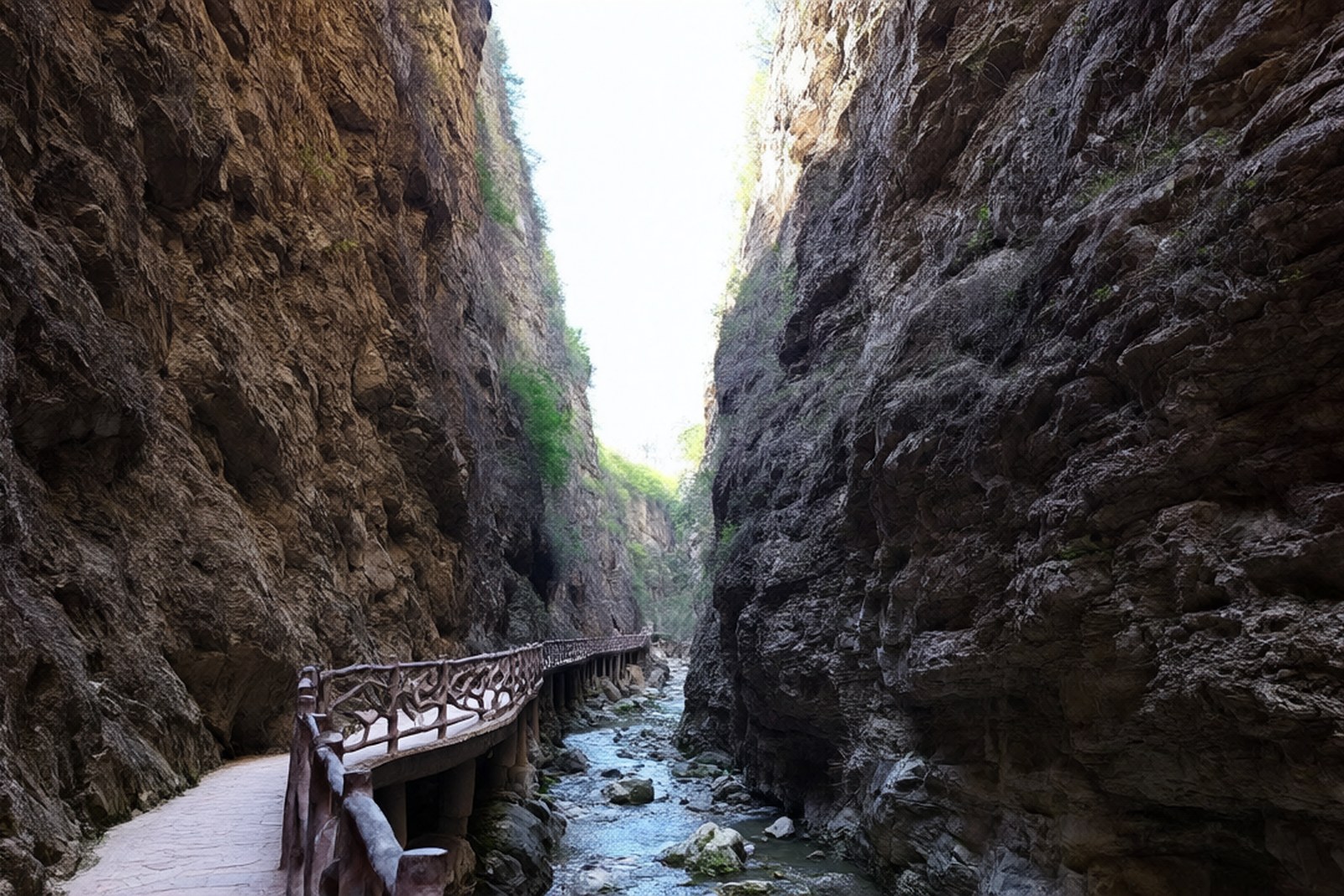
The gorge is the part that most people walk. The 大峡谷 runs up through 银涛峡, the Silver Wave gorge, ten kilometres of stream cutting between limestone walls, with a boardwalk and stone steps following the water rather than climbing above it: pools deep enough to swim in, small falls coming in off the sides, long flights of steps cut into the rock, and the 一线天 cleft near the top where the walls come within a metre of each other and the light comes down in a line. The 白水瀑布, the white-water fall, drops close to a hundred metres off a rock face and is at its heaviest in the wet months, with a viewing pavilion built opposite it. 罗山湖, the lake below the entrance, is where the boats are, and the walk from the gate to the top and back takes four or five hours, which is why the advice is to be in by nine.
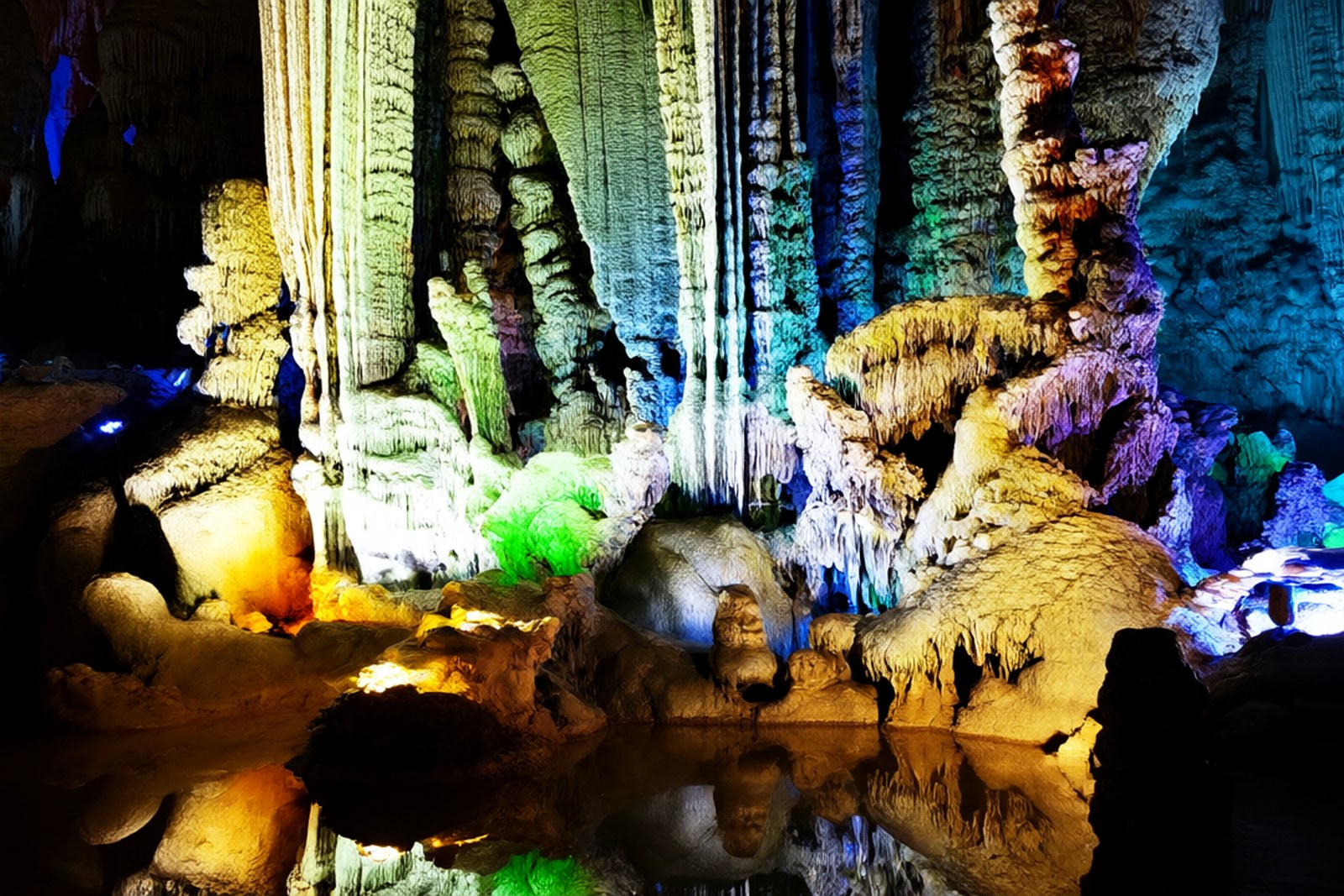
The cave is the other half of the visit and the reason the place is called a geological park. 白龙洞 Bái lóng dòng, the White Dragon Cave, is a river cave: a kilometre of underground waterway that is navigated by boat, with the roof of the chamber above it running to a hundred metres and a still pool at the bottom that doubles it, so that the boat appears to be crossing a sky. The county has been promoting that illusion for years and describes the display as the finest river cave in Asia, with the stalactites as a forest of coloured pools; what is unquestionably true is that the scale is unusual, that the water is cold and clear, and that the formation in the pool is a genuine puzzle rather than a caption. The 2026 rebuilding added moving light to the chamber and a sound-and-light telling of the local legend of the guardian dragon, which is either an improvement or a distraction depending on your taste, and there is a geological museum at the entrance that explains what the limestone has been doing for the last hundred million years.
The human layer of the place is thin but it is there. Two monasteries, one of them 两宜寺, stand in ruins up the valley on the old pilgrimage path, and the county has restored the hundred-year-old 白水古院, the old white-water courtyard house at the entrance, as a small cultural centre with calligraphy, painting and local craft in it. The rest of the rebuilding was spent on two new halls: a geological science hall, and a museum of Chinese medicine dedicated to 孙思邈 Sūn Sīmiǎo, the Tang physician and pharmacological writer, who is said to have gathered herbs on 龙山 Lóng shān, the mountain a few kilometres east. 龙山 itself is a forest park of the free sort: the highest summit, 岳平峰, is over fifteen hundred metres, there is a 药王殿, a hall to the medicine king, on the way up, and in the early morning the cloud sits in the valleys below the ridge. Below the mountain the county town has the night market, a bowl of 邵阳米粉 and the 猪血丸子 that are made all over this part of the prefecture.
Practicalities
Tickets. Buying the two parts together is the cheapest way: a combined ticket for the 大峡谷, the 白龙洞 and the shuttle bus costs about ¥90, or ¥55 for the gorge and the bus, or ¥50 for the cave and the bus. Bought singly the gorge is ¥45 and the cave ¥40. Children under a metre two and people over seventy go free, students and people over sixty pay half, and the shuttle bus is worth the money because the walk between the gate and the cave entrance is a road.
Opening hours. The gate keeps 08:00 to 17:30 every day, and the last admission for the cave is in the middle of the afternoon. The full circuit takes four to five hours, so the sensible arrival is between nine and ten; in the wet season the falls are heaviest and the paths are wettest, and in the dry season the cave is the better half of the day. Check the county’s own WeChat account, 白水洞旅游区, or ring 0739-3662328 before travelling, since the reopening arrangements are still new.
Getting there. The scenic area is at 严塘镇 Yán táng zhèn in 新邵县, twenty-three kilometres north of the centre of 邵阳市, which is about forty minutes by car. From 邵阳站 Shàoyáng zhàn a taxi takes about fifty minutes, and there are rural buses into 严塘 from 新邵 town about forty minutes away. By road from 长沙 it is about three hours. The mountain at 龙山 is a further hour to the east, and a car is needed for it.
Closing day. There is no weekly closing day, and the scenic area is open all year, though parts of the gorge paths close after heavy rain and the cave occasionally shuts for maintenance. The best months are April to June, when the water is up, and October and November, when the light is clear and the steps are dry; August is hot and busy, and midwinter is quiet and cold but rarely closed.
flowcloud would say that a valley named for the whiteness of its water, and then found to have a river running through a cave under a hundred-metre ceiling, has been rewarded twice for the same accident of limestone.
Getting there: the gate of 白水洞 is at 严塘镇, 新邵县, 邵阳市, twenty-three kilometres and about forty minutes by road north of the city centre and about fifty minutes from 邵阳站; the mountain at 龙山 is a further hour east and needs a car.