
Baiyun Mountain
You hear it before you see anything: the clatter of a hundred morning walkers, the flat slap of playing cards on a stone table, the tinny speaker of a man singing opera to nobody in particular — and then the trees close over the path and the noise of the city simply stops, as if someone had shut a door behind you.
白云山 (Báiyún Shān, “White Cloud Mountain”) is Guangzhou’s green lung — a range of low, forested hills on the northern edge of the city that catches the cloud, hence the name. It is not a wilderness and it has never pretended to be. It is a park the size of a small town, threaded with roads and steps and cable cars, and on any weekend tens of thousands of Guangzhou people come up here to walk, to eat, to sing, and to escape the heat that sits in the streets below.
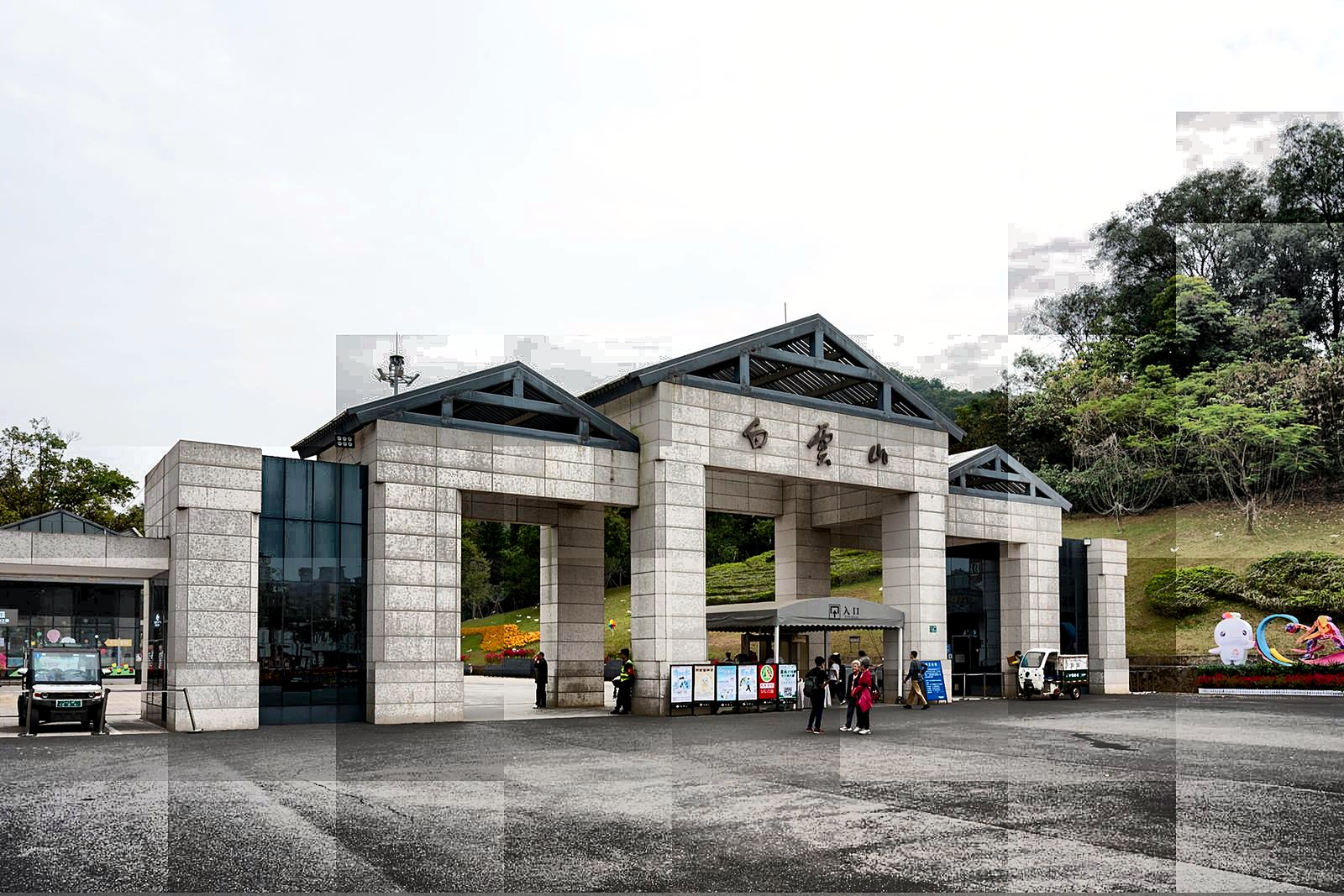
The Mountain
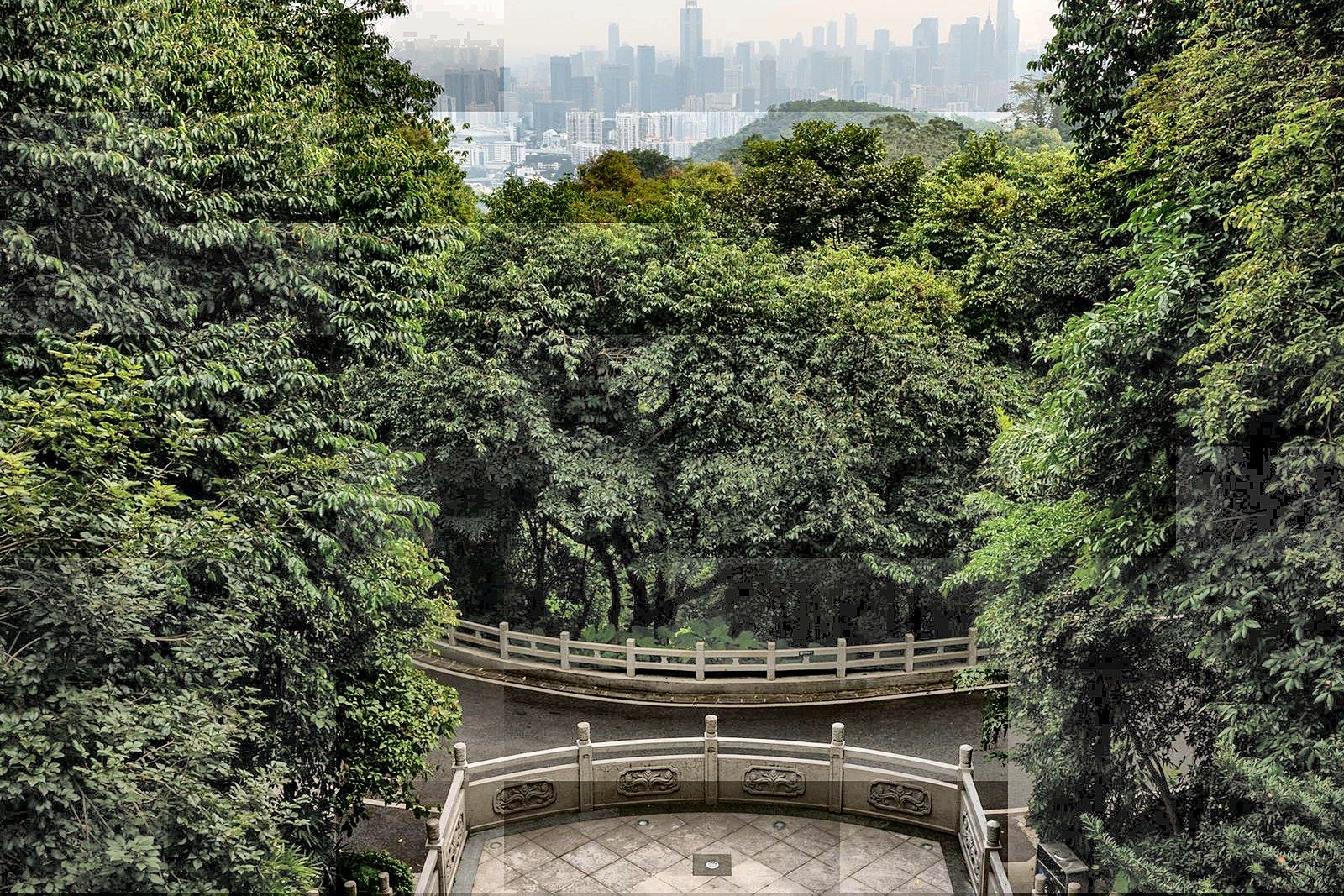
The highest point is 摩星岭 (Móxīng Lǐng, “Rub-the-Stars Ridge”), at a modest 382 metres — nothing by Chinese mountain standards, but enough to look out over the whole Pearl River Delta on a clear day, which is why “白云晚望” (báiyún wǎn wàng, “evening view from White Cloud”) has been counted among the classic sights of Guangzhou for centuries.
The mountain is a stack of separate hills, not one peak, and they are pleasant in different ways. There is 云台花园 (Yúntái Huāyuán), the flower garden at the foot, all fountains and parterres. There is 鸣春谷 (Míngchūn Gǔ), a huge walk-through birdcage where you climb inside with the birds. There is 蒲谷 (Púgǔ), a wooded valley with streams, and the 摩星岭 summit itself with its viewing platform and its little knot of souvenir sellers.
What You Actually Do
Most people come up in the morning, when it is cool and the mountain belongs to the retirees. The pattern is always the same: walk the shaded road, stop at a teahouse for 一盅两件 (yī zhōng liǎng jiàn — a pot of tea and two dim sum), do a few laps of the exercise machines bolted to the hillside, and then sit and argue about nothing for two hours.
Serious walkers take the stairways up through the trees to the summit; families take the cable car. Either way the reward is the same: a view of Guangzhou’s towers from above, seen across a band of green — the rare angle from which this very modern city looks almost gentle.
Practicalities
Tickets. The mountain is cheap by any measure: the main gate ticket is about ¥5, with the separate 云台花园 (flower garden) around ¥10 and the summit area included. Budget around ¥25 one way for the 白云山索道 (cableway) up and about ¥20 to ride it back down; the shuttle bus on the mountain roads is a few yuan.
Do you need to book? No. This is a public park — turn up, pay at the gate, and walk in. Only the cableway queues worth worrying about at holiday weekends.
Opening hours. The park is open very long hours, roughly 06:00 to 21:00, with the cableway running about 09:00–17:00. Early morning is the best and coolest time; late afternoon gives you the “evening view” the old poets liked.
Getting there. Baiyun Mountain is inside the city, which is the joy of it.
- By metro: Line 2 to 白云公园 (Baiyun Park) for the southern gates, or the 云台花园 side; buses run to several gates around the base.
- By taxi or Didi: tell the driver which gate — 南门 (South Gate) is the classic start.
- On foot from the city: the 云道 (Yúndào) greenway now links several parks on the mountain’s edge, so you can walk up from the city without touching a main road.
One warning. This is a subtropical hill: humid, mosquito-heavy in summer, and busy enough at weekends that the popular paths feel like a shopping street. Bring water, go early, and do not expect solitude — the mountain’s pleasure is its people as much as its trees.
flowcloud would say that a city is lucky when its highest ground is a forest and not a tower, and Guangzhou knows it — the morning belongs to the mountain.
Getting there: 白云山 (Baiyun Mountain), north Guangzhou — Metro Line 2 to 白云公园, or taxi to the 南门 (South Gate). Main gate ticket about ¥5, cableway about ¥25 up / ¥20 down. Open roughly 06:00–21:00 (cableway about 09:00–17:00). Come at dawn for the walkers and the cool air; the evening view from 摩星岭 is the classic.