
Cross the bridge and you are inside. The bridge is 接龙桥 Jiēlóng Qiáo, a three-arch stone structure of nine slabs over a stream called 板溪 Bǎn Xī, and the local rule is still that you have not really arrived until you have crossed it. On the other side, a long flagstone lane runs between walls of grey-black brick, and above them a sequence of stepped gables — 马头墙 mǎtóu qiáng, horse-head walls — climbs the hillside in the way that marks out a certain kind of southern Chinese merchant village, built when a place had money and enemies in roughly equal measure. 板梁古村 Bǎnliáng Gǔcūn has 360-odd surviving buildings from the Ming and Qing dynasties, more than a thousand rooms, three clan halls in a row, and roughly six hundred years of continuous occupation. It is called 湘南第一村 Xiāngnán dì yī cūn — the first village of southern Hunan — and it is still lived in.
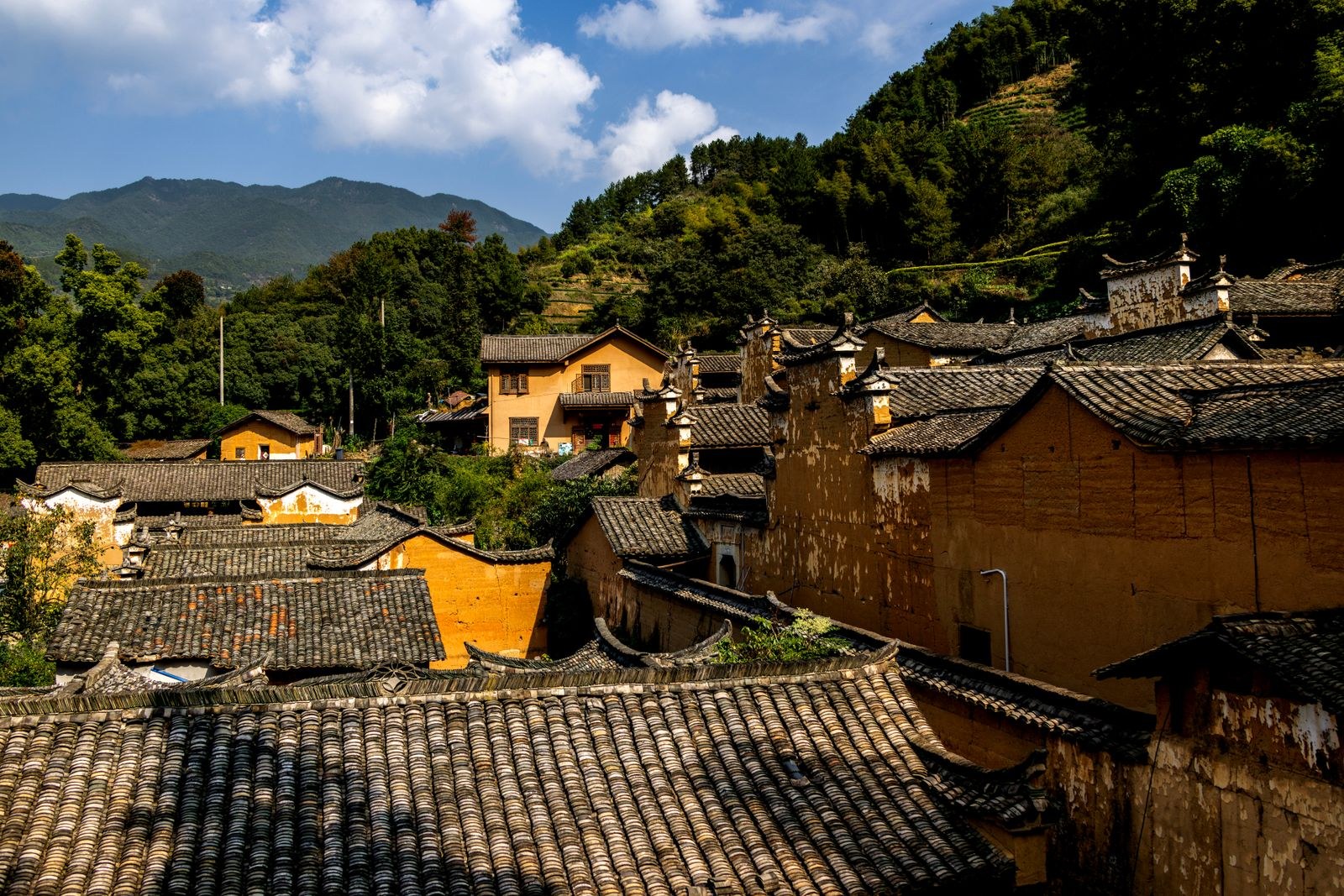
The village was founded in 1358, in the last years of the Yuan, by a single clan, the 刘 Liú, and it grew rich on the 金陵古驿道 Jīnlíng gǔ yìdào, a post road that ran south through here towards Guangdong and Guangxi. The story attached to the bridge explains the village’s name: when the clan was building its first ancestral hall in the Yongle period, the main beam vanished the night before it was due to be raised, and was eventually fished out of the stream upstream — a length of timber of exactly the right dimensions, drifting down towards the building site. 板梁, board-and-beam, commemorates it. The more prosaic truth is that this is a water-junction village whose men went away to trade and came back with money, which they spent on brick.
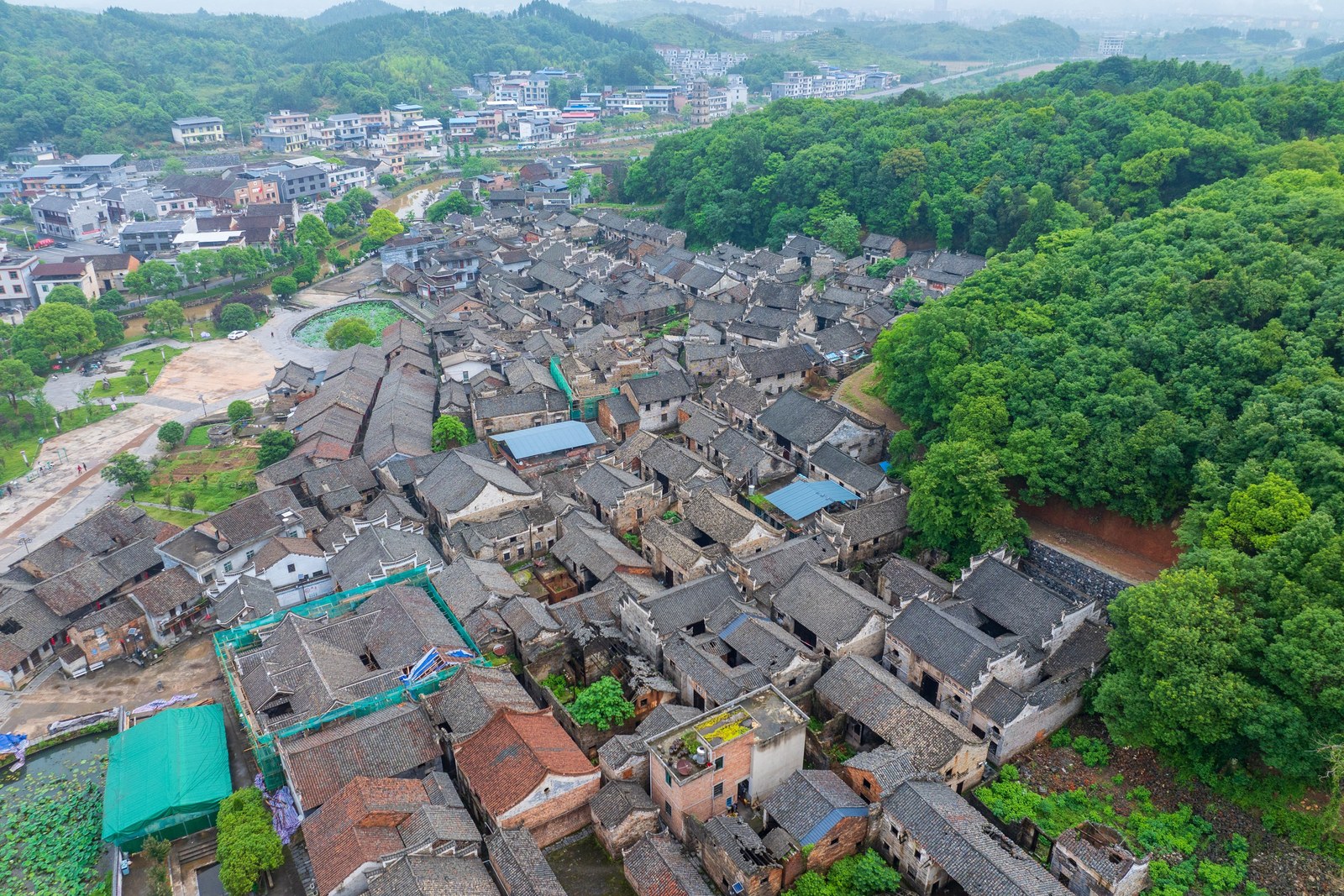
The plan is unusually clear on the ground. The lanes run three east to west and nine north to south — 三横九纵 — laid out in a grid that connects the halls, the wells, the 钱庄 qiánzhuāng money house, the 私塾 sīshú school, the shops and the piers. The buildings are water-polished grey brick with joints so fine the mortar is invisible, bonded with a mixture of glutinous rice, tung oil and lime that has held for six hundred years. Roof frames are 穿斗式 chuāndòu shì, a jointed construction with no nails at all. Entrances carry 门当 méndāng and 户对 hùduì, the paired stone drums and lintel studs that originally indicated rank; carved figures of 貔貅 píxiū guard the foundations; window lattices carry the Eight Immortals. The drainage runs under the paving slabs, which is why the lanes do not flood in a Hunan downpour.
Practicalities
Tickets. Admission is ¥32 for adults, ¥20 for students, seniors and veterans. There is no charge for walking through the village on the county road, but the seven main halls and the money house are inside the ticketed area.
Opening hours. The village is open daily from about 08:00 to 17:30, though the inhabited lanes remain walkable after hours because people live in them.
Closing day. There is no closing day. The village is open through the year, and the best seasons for photographs are the lotus-flowering weeks in July, when the pond in front of the village fills, and the clear cold days of late autumn.
Getting there. 板梁 Bǎnliáng is in 永兴县高亭司镇 Yǒngxīng Xiàn Gāotíngsī Zhèn, about an hour by car from 郴州 Chēnzhōu on the G4 and the county road; the 武广高铁 郴州西站 is the nearest high-speed station. Local buses run from 永兴 Yǒngxīng county town. Drivers should note that the 京广 high-speed line passes within a few hundred metres of the village, which is a strange thing to look at from a Ming dynasty lane.
flowcloud would say that the reason Banliang survives intact is the same reason it was built: it sits on a trade route that stopped mattering, so nobody had the money to knock it down and rebuild it in concrete.
Getting there: allow a full afternoon rather than an hour, and go counter-clockwise from the 接龙桥 Jiēlóng Qiáo, ending at the ancestral halls, so that you finish with the best of the carving rather than the car park.