
Baoqing’s Old City, the Wall and the River Temple
宝庆 Bǎoqìng is the old name of 邵阳市 Shàoyáng shì, which held it as a prefecture from the Song, and the old city is the wedge of ground between the 资江 Zī jiāng and the 邵水 Shào shuǐ, where the wall, the two pagodas, a pavilion built out over a cliff and a Ming opera stage all stand within a walk of one another. The name the place earned in that time is still the one people use: 铁打的宝庆 tiě dǎ de Bǎoqìng, Ironclad Baoqing. The town has been walled for some two and a half thousand years, and the reason the walls went up here rather than anywhere else is plain the moment you stand at the confluence and see the two rivers doing the work of three sides of a moat.
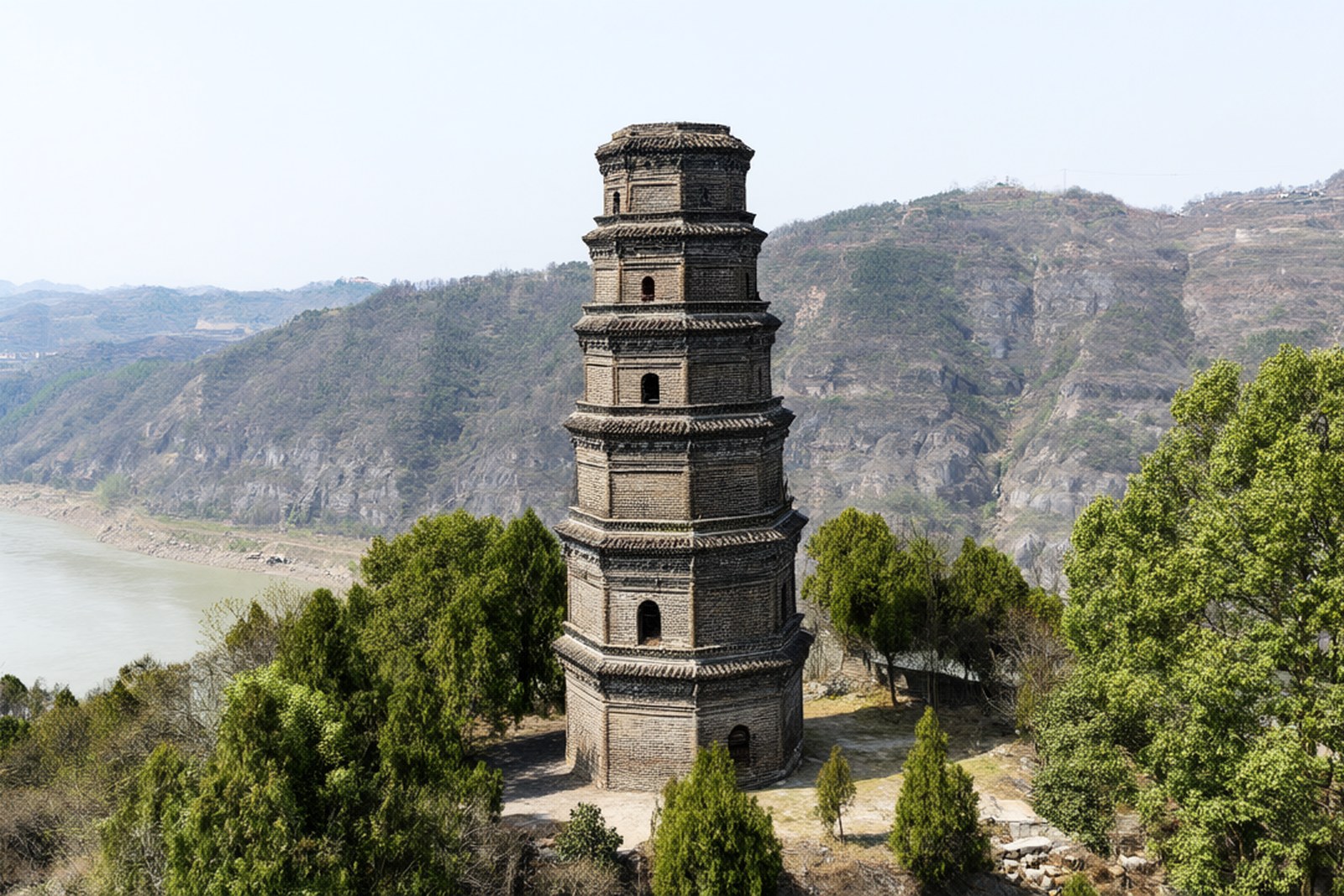
The wall is where to begin. It was first raised in the Han, and rebuilt as brick and stone under the Song into a circuit of four thousand three hundred and seventy metres, eight metres high and five metres thick, with the 邵水 on the east and the 资江 on the north, and it is that wall which turned 石达开 Shí Dákāi, at the height of his reputation, back from 宝庆 in 1859 after a siege of three months. The army that had walked through most of the south could not take this town, and the nickname dates from then. Seven hundred and sixty metres of the wall and two of its gates survive, the 庆丰门 and the 临津门, and the 古仙人井, one of the eight old views of 宝庆, sits under the wall where it always did. The riverfront outside what is left has been rebuilt as the 宝庆里文化街区, which runs along 资江南路 under the wall with the old shops and the evening lights. The two pagodas that face each other across the water are both still standing: the 北塔 Běi tǎ on the north bank, seven storeys of Ming brick raised in 1573 and the emblem of the city, and the 东塔 on the other side, dated by its inscription to 1834.
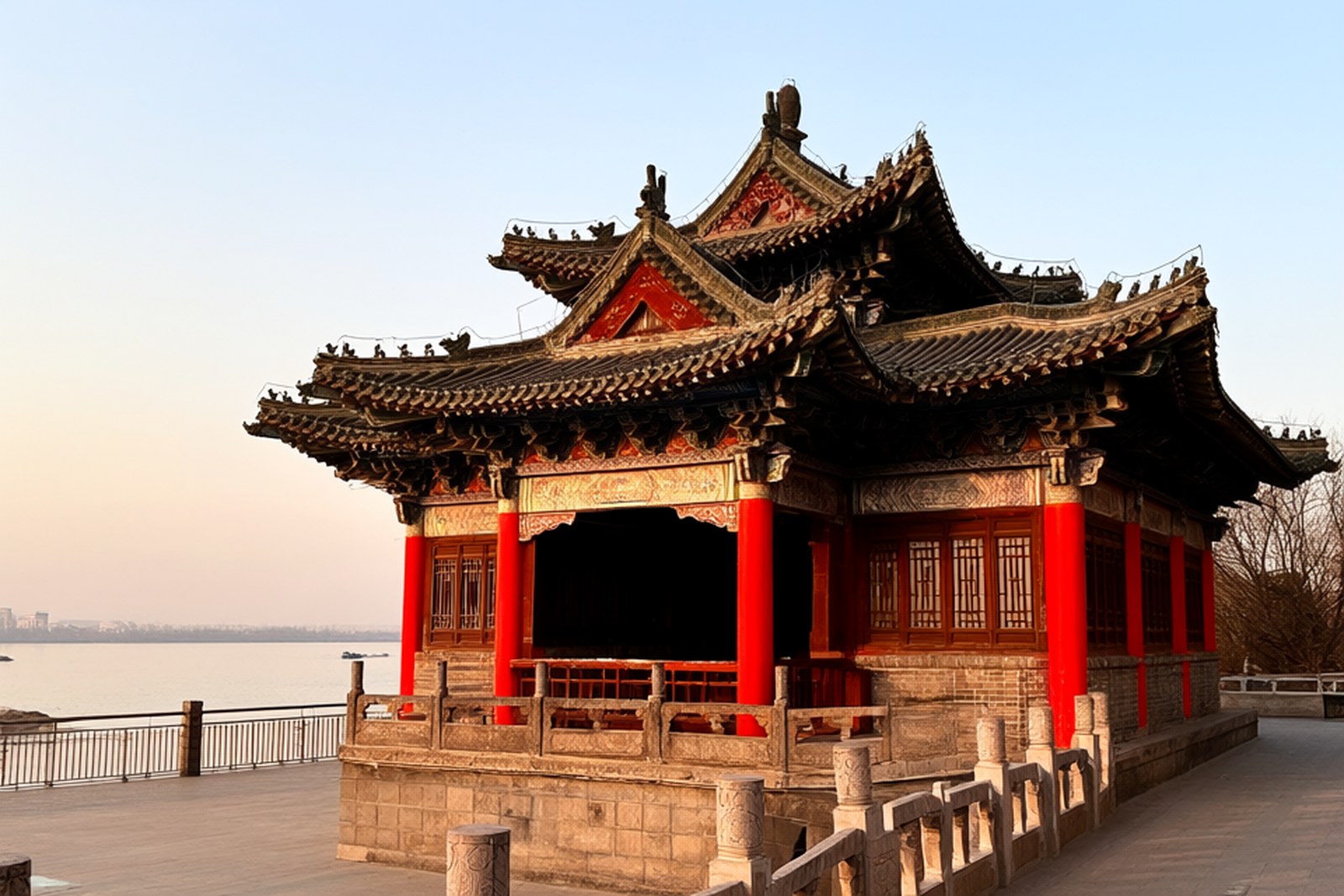
The 双清亭 is the set-piece. It is built out over the cliff on the south bank at the confluence, on the rock called 砥柱矶, and it has been the first of the twelve old 宝庆 views since long before anyone thought to list them; the cliffs below it are covered in carved inscriptions left by visitors over five centuries. The Ming poet 李青 wrote that heaven had unrolled a painting at 双清, the provincial governor 赵贤 cut 双清胜览 into the rock, and the couplet that everyone in the city can still recite is 徐小松 Xú Xiǎosōng’s: bells going off through the trees with the cloud, the pagoda’s shadow crossing the river with the moon. 魏源 Wèi Yuán, who was born in 隆回 and became the first Chinese writer to argue that the country should learn from the West, left the parallel line about the islet holding the two streams together with a city of mist inside it. The 双清公园 around the pavilion is the oldest public garden in the city.
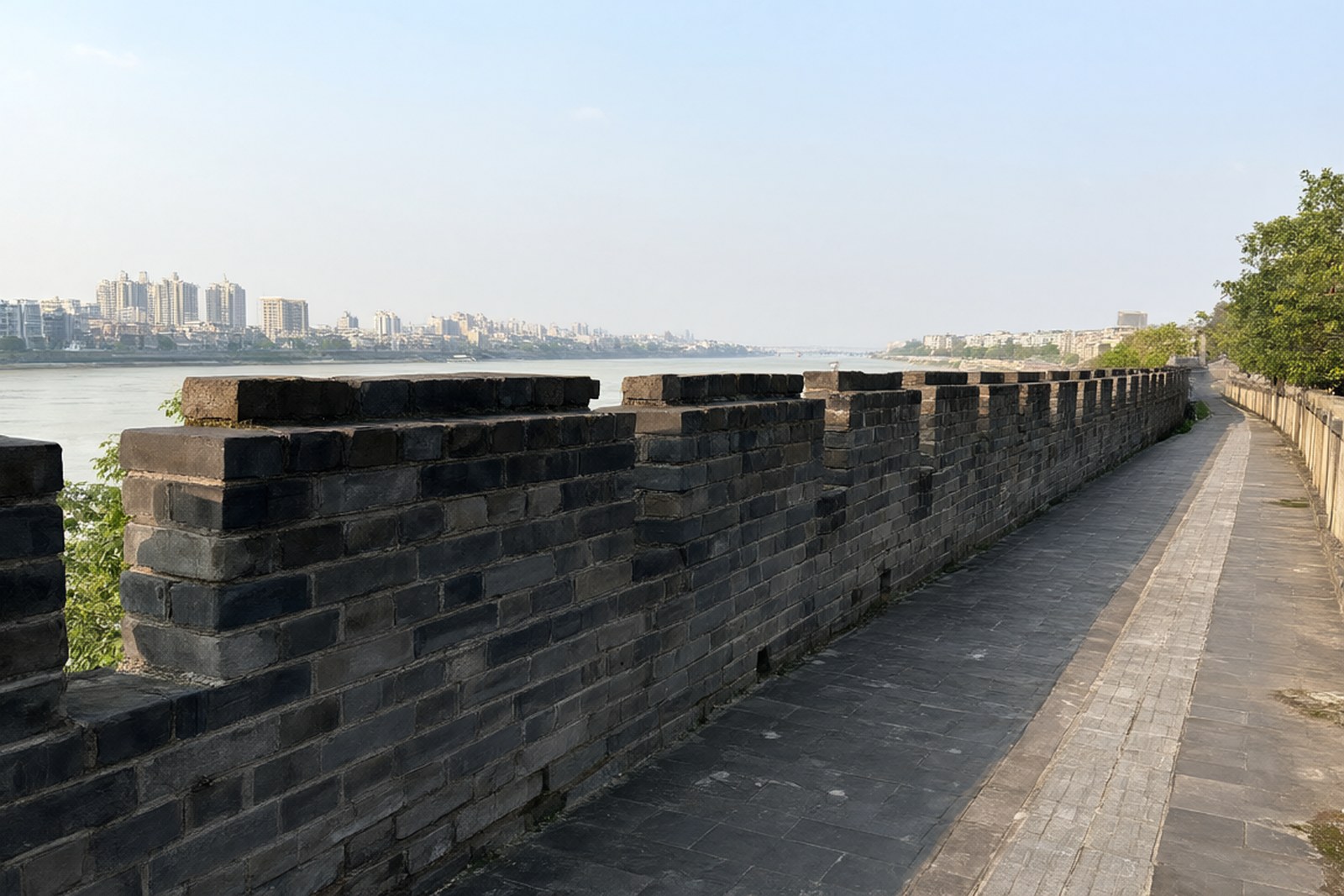
A few hundred metres upstream, at the mouth of the 邵水, the 水府庙 Shuǐ fǔ miào is the other building worth the walk. It is a three-storey Ming temple with a stage, raised in 1613, the forty-first year of the Wanli reign, and it is the river temple of a river city: the boatmen and the merchants who ran the trade down the 资江 to 益阳, 洞庭, 汉口 and 上海 came here before they sailed to burn incense and pay for a play, and the stage is built entirely of timber with eaves that lift at the corners and a red-painted wall behind it. Further out the city’s other monuments are spread through the districts: the 蔡锷故里文化博览园 in 大祥区, the compound around the childhood home of 蔡锷 Cài È, the general who took up arms against 袁世凯 Yuán Shìkǎi in 1915, with the house itself dated to the Jiaqing reign; the 八路军驻湘通讯处旧址 in 双清区, where the Eighth Route Army’s liaison office worked during the war; 佘湖山 and its 玉清宫 on the ridge, from which the whole city and both rivers are visible; and the city museum on 双清区, which is free, needs a booking, and holds the 滩头年画, the 宝庆竹刻 and the bronze and pottery dug out of the county. 宝庆竹刻 bǎo qìng zhú kè, the bamboo carving of 宝庆, is one of the first national intangible heritages, entered in 2006.
The city matters for one more thing, which is that the last campaign of the Second World War in China was fought out on the mountains around it. The 湘西会战 Xiāng xī huì zhàn, the battle of western Hunan, ran from April to June 1945 and turned on the 雪峰山 Xuě fēng shān ridge north-west of the town, where the Japanese advance towards the airfields at 芷江 was stopped and thrown back; the county has the 塘田战时讲学院 and the liaison office as its memorials, and the museum tells the story in full. Between that and the wall, the pagodas and the food, the old city is a full day on foot. Breakfast is 邵阳米粉 from a shop on 红旗路 before eight, lunch is 腊味合蒸 with smoked bacon and 猪血丸子, and the evening belongs to 红旗路夜市 and the 城北夜宵街, which run until late.
Practicalities
Tickets. Everything in the old city is free: the wall, both gates, 双清公园 and the pavilion, the 水府庙 from the street, and the 宝庆里街区. The city museum is free and requires a booking by phone or through its own account, and the 蔡锷故里文化博览园 charges only for guided service.
Opening hours. The wall, the riverfront, the parks and the streets are open all day and lit at night, and the best light on the water is in the hour before dark. The 水府庙 keeps roughly 08:30 to 17:00, and the museum 09:00 to 17:00 with the last entry at 16:00. The pavilion is a park building rather than a museum and is generally open with the park.
Getting there. The old city is in 双清区 and 大祥区, 邵阳市, between the 资江 and the 邵水. 邵阳站 Shàoyáng zhàn, on the 怀邵衡 and 娄邵 lines, is about three kilometres south of the riverfront, and 邵阳北站 Shàoyáng běi zhàn, on the 沪昆 high-speed line, is thirty kilometres north in 新邵县. 邵阳武冈机场 Wǔgāng jī chǎng is about ninety minutes by road. By car 长沙 is about two hundred kilometres, two and a half to three hours on the 沪昆 expressway. From the station the wall, the pavilion, the temple and the museum are all reachable on foot or in a ten-minute taxi.
Closing day. There is no closing day for the wall, the parks or the riverfront, which are open every day of the year. The city museum closes on Mondays. The busiest days are the October week and the days around the Spring Festival, when the riverfront fills in the evening.
flowcloud would say that a town which named itself Ironclad after refusing an army three months of siege, and which then put its best building out on a rock over the water so that everyone coming up the river would see it, understood exactly which of the two was the point.
Getting there: the old city of 宝庆 is the wedge between the 资江 and the 邵水 in 双清区 and 大祥区, 邵阳市, about three kilometres from 邵阳站 on the 怀邵衡 and 娄邵 lines and thirty from 邵阳北站 on the 沪昆 high-speed line; the wall, 双清亭 and the 水府庙 are all inside a twenty-minute walk.