
Basum Tso — the Green Lake and Its Island Monastery
碧水环岛古寺静,雪岭湖光接翠微 Bì shuǐ huán dǎo gǔ sì jìng, xuělǐng húguāng jiē cuìwēi – Green water circles the island where the old chapel rests; lake light meets the green shadow of snowy ridges
巴松措 Bāsōngcuò Basum Tso fills the bottom of its valley the way a jewel fills a setting: completely, and in impossible color. At around 3,480 meters in 工布江达县 Gōngbùjiāngdá Xiàn Gongbogyamda county, the lake glows green-gold where forest slides into water, and snow ridges ring the shore close enough that their reflections trail the boat wakes.
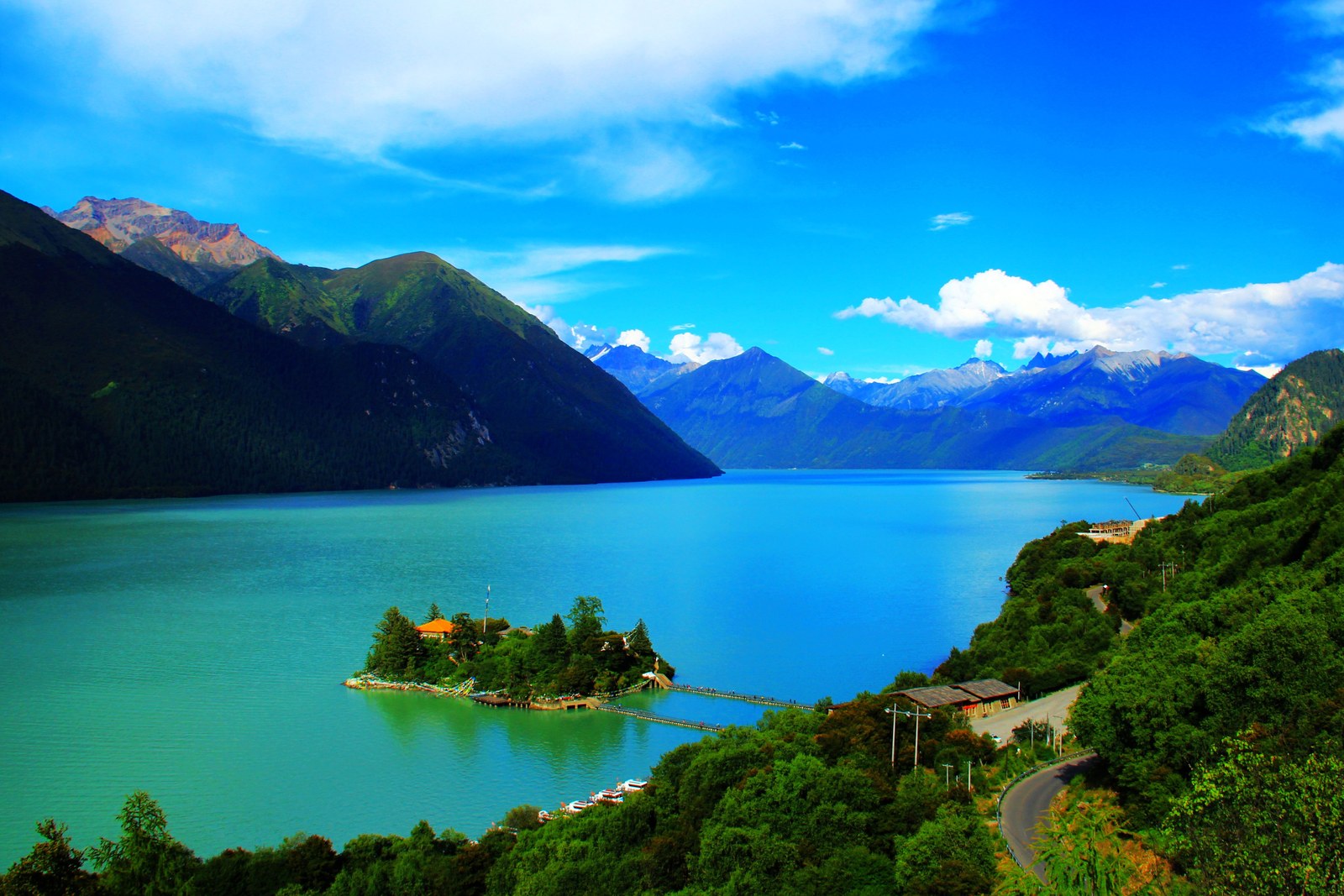
The centerpiece is 扎西岛 Zhāxī Dǎo Tashi Island, joined to the shore by a plank footbridge and crowned by 措宗寺 Cuòzōng Sì Tsozong Monastery, a Nyingma foundation whose whitewashed chapels and ancient courtyard trees hold murals, carvings and centuries of local devotion. Circling the island takes half an hour and delivers the lake’s moods one shore at a time: prayer flags on the pilgrimage path, a quiet beach of white pebbles, boardwalks over marsh where tadpoles school in the shallows.
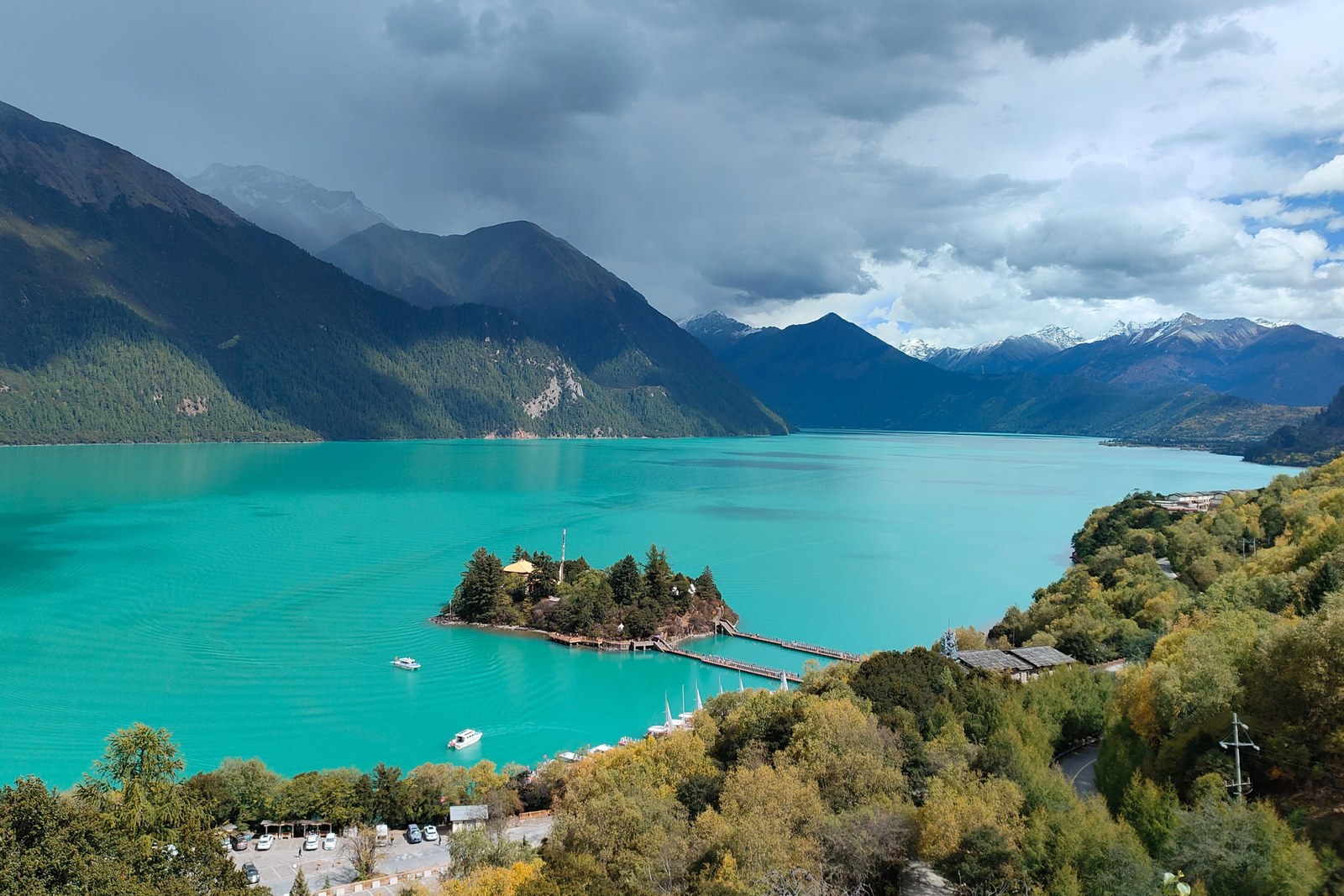
What sets Basum Tso apart from the plateau’s other great lakes is how much human life shares the shore. Villages of timber houses stand among barley fields at the lake’s outlet; herders bring yaks down to drink in the evening; the monastery still keeps its festival calendar, and on auspicious days pilgrims circle the island from dawn. Farther up the valley the water continues into the quiet reaches of 新措 Xīncuò the New Tso hiking area, a gentle day walk along streams below unclimbed-looking walls.
As the region’s best-known scenic reserve it runs smooth roads, tickets and visitor facilities – arrive early or stay overnight to see the sacred landscape before the day tours arrive. For travelers on the 林芝-拉萨 Línzhī-Lāsà Nyingchi-Lhasa highway the lake is the region’s finest half-day detour; for those who sleep at the shore, the misty dawn and the island’s morning bells are the reward the day-trippers miss.
Practicalities
- The lake lies about 120 kilometers west of Bayi town on the Nyingchi-Lhasa highway, then a side road up the Ba valley.
- Entry tickets cover the reserve; boats and the boardwalk circuit are easy walking for all ages.
- Stay lakeside in 结巴村 Jiébā Cūn Jieba village to see the island before the tour buses arrive mid-morning.
- Even summer mornings are cold at 3,500 meters – bring a jacket for the island circuit.
Words and Names
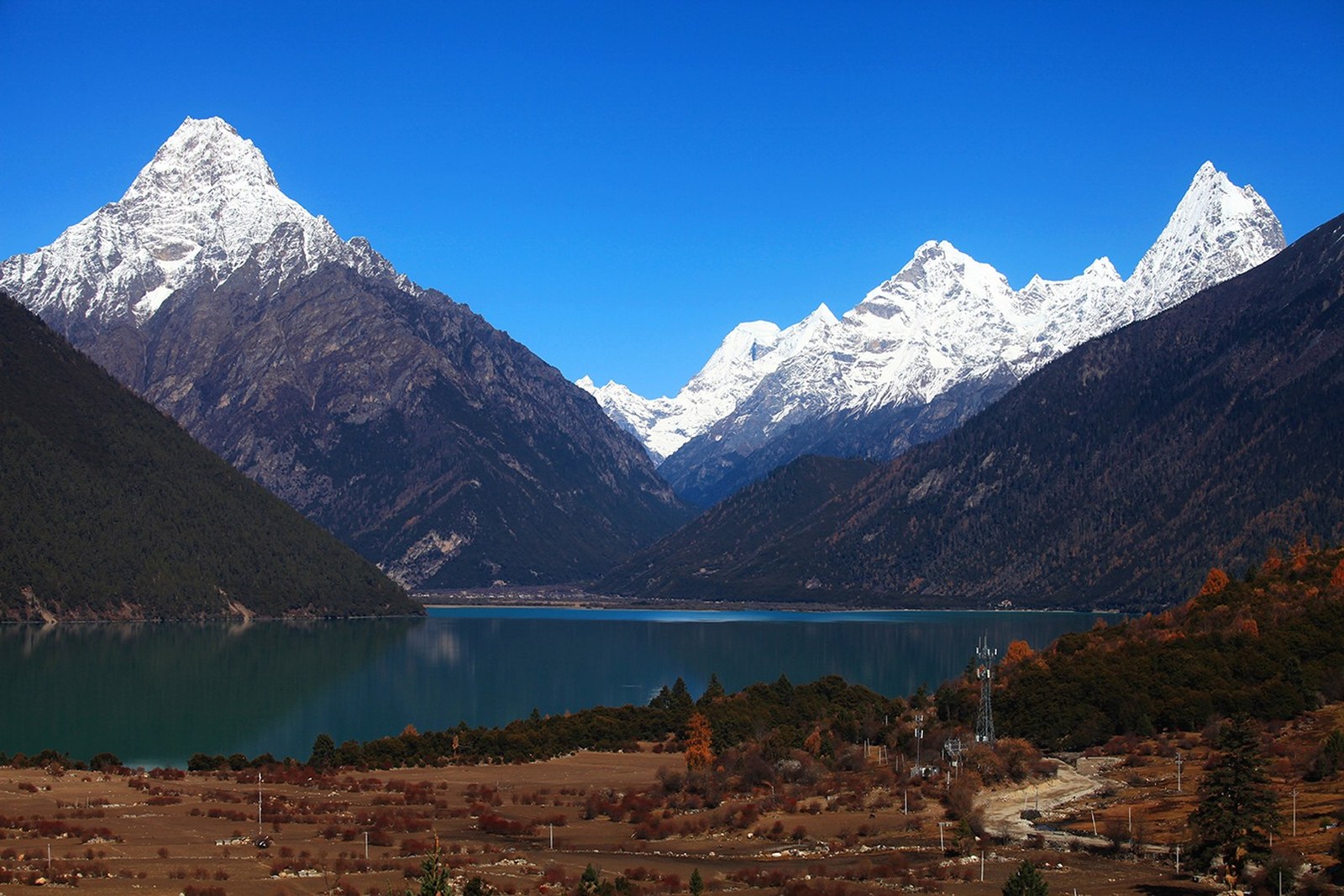
巴松措 Bāsōngcuò Basum Tso, the green lake of the Ba valley; 扎西岛 Zhāxī Dǎo Tashi Island, the lake’s central isle; 措宗寺 Cuòzōng Sì Tsozong Monastery, the island’s centuries-old Nyingma chapels; 工布江达县 Gōngbùjiāngdá Xiàn Gongbogyamda county, the lake’s home district; 新措 Xīncuò the upper-valley hiking lake. Beyond the lake, the same 林芝市 Línzhī Shì Nyingchi keeps more places worth the detour: 雅鲁藏布大峡谷 Yǎlǔzàngbù Dà Xiágǔ the great canyon of the Tsangpo, 南迦巴瓦峰 Nánjiābāwǎ Fēng the shy peak above the gorge, 鲁朗林海 Lǔlǎng Línhǎi the forest sea below the pass, or 米堆冰川 Mǐduī Bīngchuān the glacier in Bomi’s farm country – four more doors into the same Nyingchi. Once the island circuit is behind you, our Nyingchi food map fills the table.
flowcloud would say Basum Tso is the plateau’s quietest argument for sleeping outside the city – the lake votes at dawn, and the island rings the bell. All checked November 2026.
Getting there: The lake lies about 120 kilometers west of Bayi on the Nyingchi-Lhasa highway, then a side road up the Ba valley – roughly two hours by car. Come early or stay overnight to see the island before the day tours arrive. All checked November 2026.