
Nine Bends and a Kingdom of Swans: Reading the Kaidu River’s Writing on the Steppe
九曲银链穿碧野,天鹅栖处夕阳圆 Jiǔ qū yín liàn chuān bì yě, tiānéng qī chù xīyáng yuán – A silver chain of nine bends threads the green steppe; where swans rest, the evening sun sits round
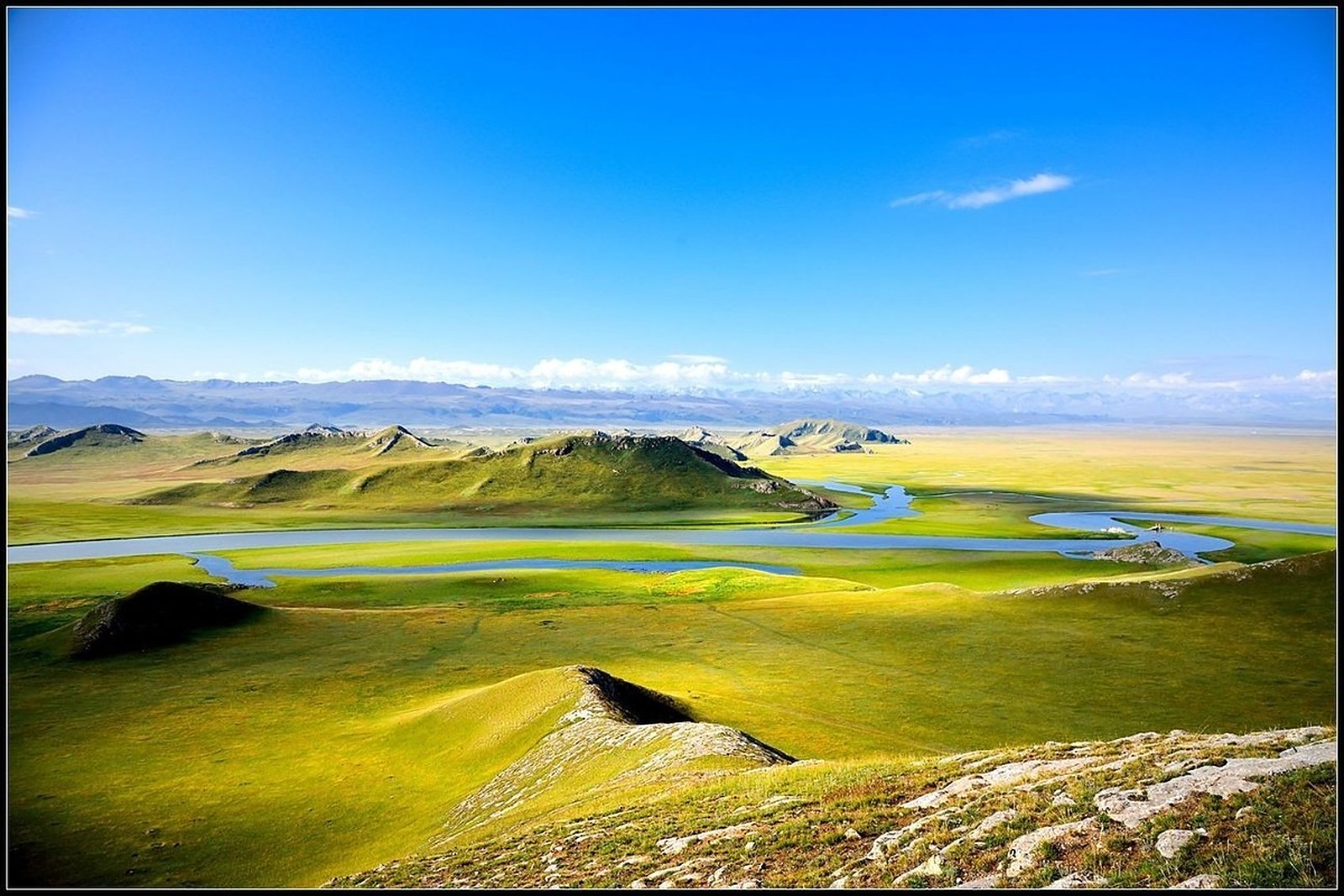
巴音布鲁克草原 Bāyīnbùlǔkè Cǎoyuán Bayanbulak Grassland fills the Yuerdus basin in Hejing county’s deep Tianshan, at about 2400 metres and more than twenty thousand square kilometres – China’s second-largest grassland. The name is Mongolian for 「rich springs」, and the Kaidu river threads the basin’s middle so slowly that spring snowmelt turns the whole floor into a soaked sponge of wetlands.
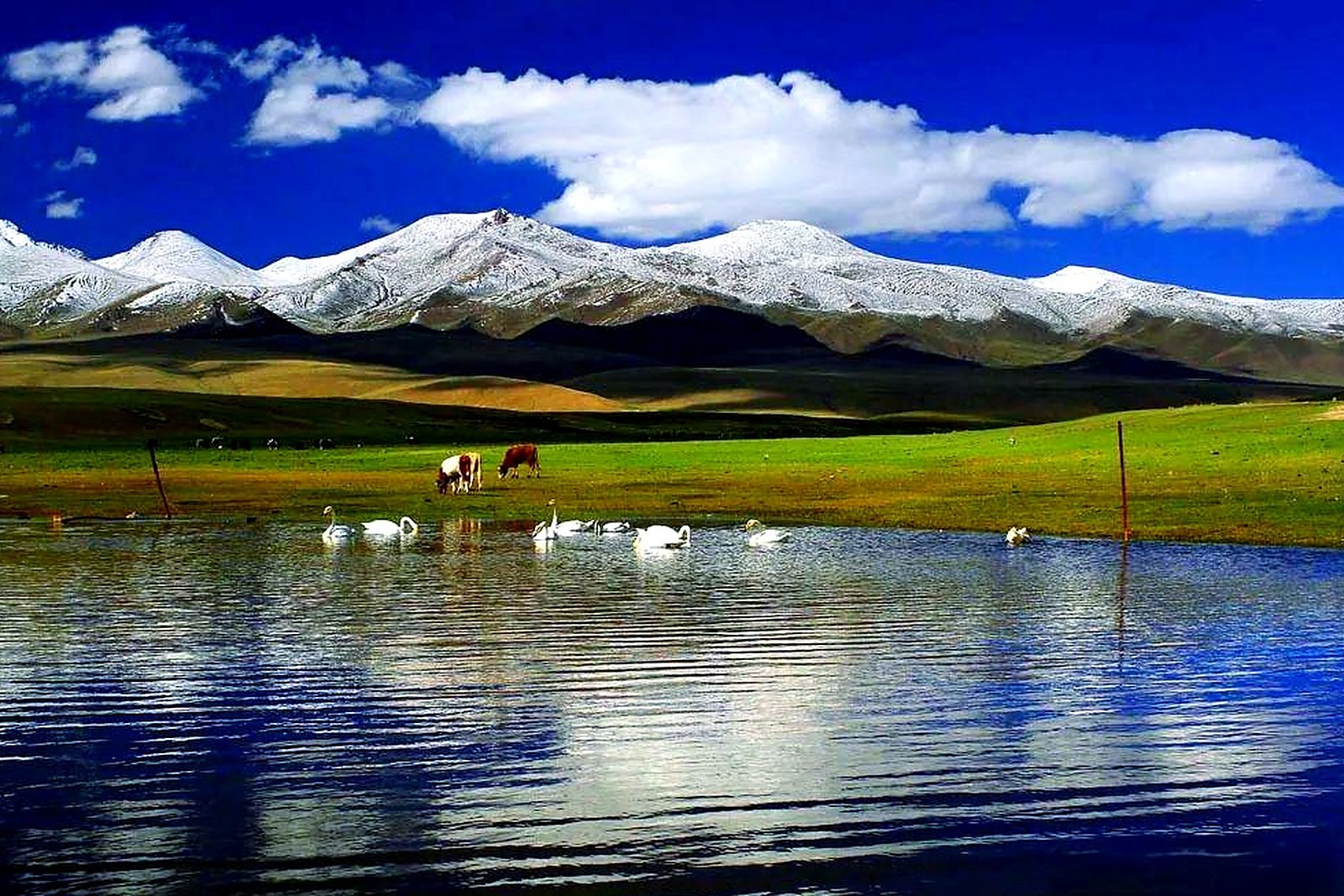
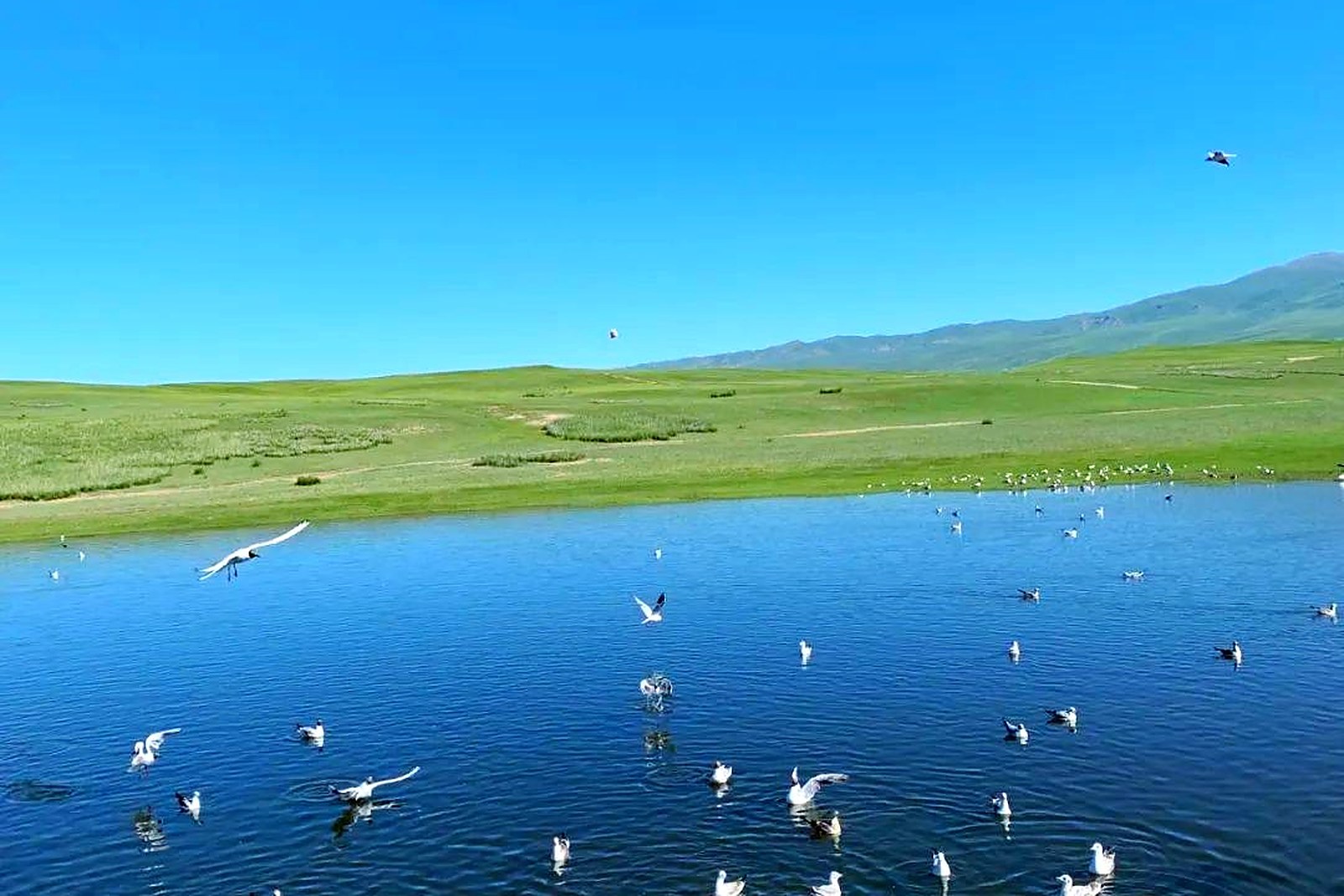
The Swan Lake national reserve is the grassland’s core: China’s largest swan breeding ground, where whooper swans return from southern wintering in March-April, nest in the wetlands, and lead the young south again in September. Boardwalks push from viewing platforms into the reeds, and a swan family gliding past at water level is routine here, not luck. Respect the rules – no landing on islets, no feeding, drone limits – and the swans’ peace ranks above any photo.
The nine-bend sunset of the Kaidu is Bazhou’s most famous single image: the river folds through a dozen consecutive curves, and as the sun touches the horizon every bend holds its own golden sun – photographers call it 「nine suns」. Climb to the high walkway deck, stake a position an hour before sundown, and note the solstice weeks give the cleanest angle.
The human layer runs just as deep: the Torghut Mongols returned from the Volga in 1771, an epic winter trek home, and the Qing court granted them Bayanbulak for pasture – two centuries later the yurts, long songs, and Naadam here still carry the returnees’ imprint. The valley’s lamasery and ovoo cairns mark the migration routes and make the first stop for reading nomadic faith. Catch July’s Naadam and horse racing, wrestling, and archery turn the grassland into a festival ground.
Livestock move with the seasons – flocks climb to summer pastures in spring and sink back to the basin in autumn – and vehicles yield to the herds as the steppe’s unwritten first rule. June carpets the ground in wildflowers, August turns the grass gold, and after October heavy snow closes the reserve seasonally, so keep winter off the plan.
Practicalities: admission and shuttle sell together, and the shuttle is compulsory – the core viewpoints lie tens of kilometres from the gate. The plateau swings hard day to night, so pack a fleece even in summer. Town food and beds run Mongolian-flavored and rustic – not city standard, unbeatable in position. From Korla the drive is about 260 kilometres and most of a day, with the Duku highway’s northern windows paying out Tianshan scenery the whole climb.
Sleep in Bayanbulak town itself: morning windows open onto wetland fog, swans before breakfast, and the day’s pace entirely yours. On moonless nights the stars are startling – the Milky Way lying across the Tianshan ridge, an encore no city money can buy.
The nine-bend shoot has two fallback positions: the high deck for the full sweep, mid-boardwalk for swans in the foreground. Still evenings give the perfect reflections; windy ones break the water into gold leaf, its own mood. On the drive back watch for marmots and foxes – dusk is their hour, and headlights keep finding surprises.
Mongolian food on the grassland is its own system: hand-held lamb with chive-flower sauce, milk skin with sugar, and stone-roast lamb cooked under scalding river cobbles – one fresh-killed meal on the steppe out-argues any guidebook. The town’s milk-tea houses open before dawn, and a bowl before the sunrise run settles the day’s cold.
Star photography wants a moonless night: at the lunar month’s ends Bayanbulak has almost no light pollution, the galactic core rising over Swan Lake, thirty-second exposures delivering. Some guesthouses keep telescopes, owners doubling as guides – better sky literacy than a city planetarium.
The East Return museum in town displays the whole epic free: Torghut’s route maps, ritual objects, household gear. See the exhibits before the grassland and every yurt and ovoo reads differently – behind each felt tent stands a homecoming epic.
Practicalities
Beyond the grassland, the same 巴音郭楞蒙古自治州 Bāyīnguōléng Měnggǔ Zìzhìzhōu Bayingolin Mongol Autonomous Prefecture holds more: 博斯腾湖 Bósīténg Hú Bosten Lake for the reed banks, 铁门关 Tiěménguān Tiemenguan Pass for the gorge lock, 罗布人村寨 Luóbùrén Cūnzhài Lop Nor Village for the poplar fisherfolk, and 轮台胡杨林 Lúntái Húyánglín Luntai Poplar Forest for the golden sea – four more doors into the same 巴音郭楞蒙古自治州 Bāyīnguōléng Měnggǔ Zìzhìzhōu Bayingolin Mongol Autonomous Prefecture. Steppe seen, our Bazhou food map adds the mountain milk and meat.
Practicalities
Words and Names
flowcloud would say Bayanbulak runs on water and patience: the river writes its nine bends slowly, the swans return every spring, and the steppe repays anyone who slows down to match them. All checked November 2026.
Getting there: The town lies some two hundred and sixty kilometres north-west of Korla over the Tobulao ridges on the G217/Duku highway corridor, four to five hours by car in good weather; there is no practical day return after the sunset, so plan an overnight, fill the tank in Korla, and expect cold nights even in July at this altitude. All checked November 2026.