
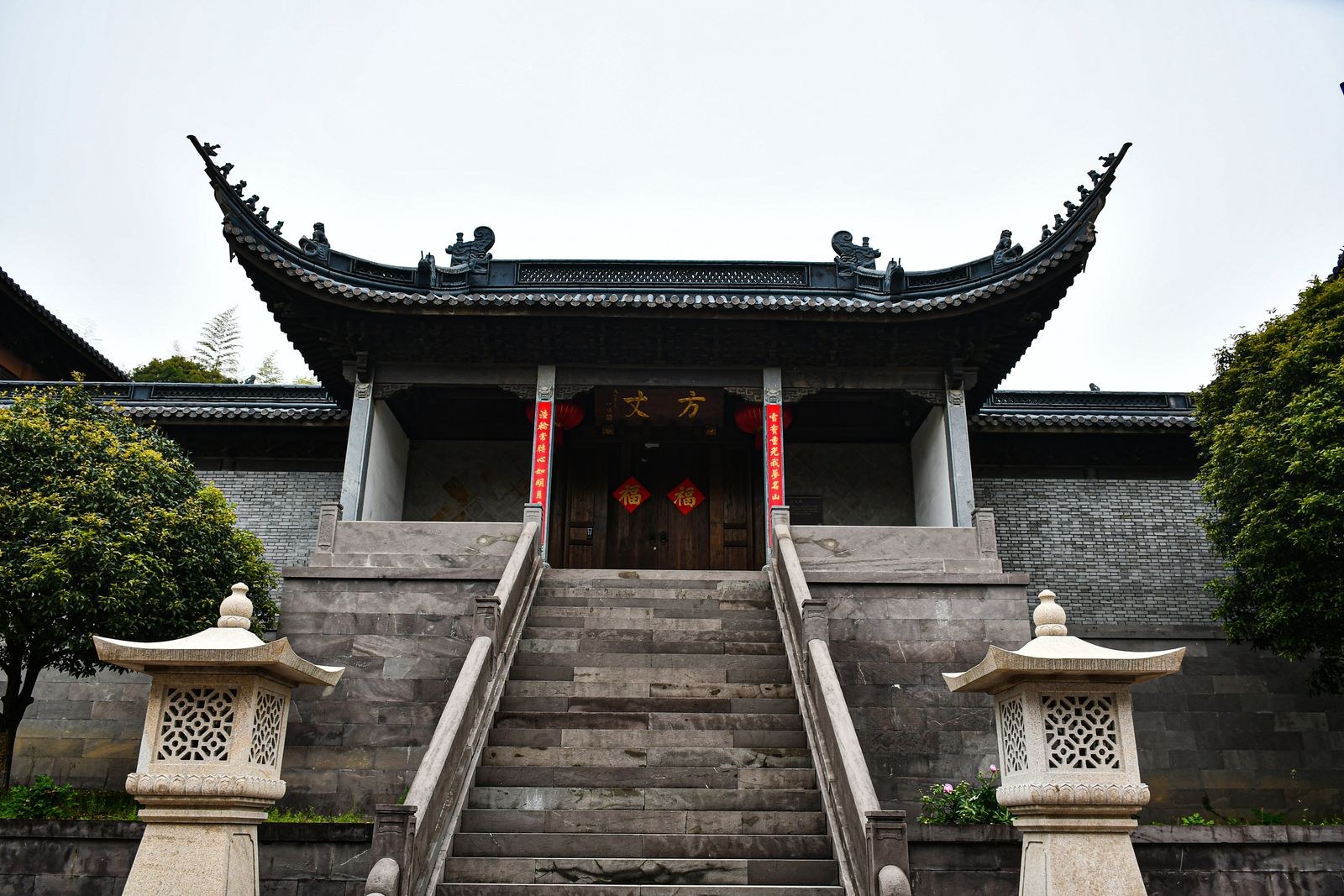
The easiest thing to do in 重庆市北碚区 Běibèi Qū, Beibei District, Chongqing, a municipality of southwest China, on a wet Monday is to walk into a room where the people who built this place are explained to you, because the district has arranged all of it under one set of hours and one telephone number. The shape of the district is recent enough to matter here: in November 2025 it gave up five units – the Wutuo, Fuxing and Caijiagang subdistricts and the Shijialiang and Tongjiaxi towns – which are now part of Liangjiang New Area, and took in five towns from Yubei, so that it now administers six subdistricts and eleven towns across roughly 1,100 square kilometres. None of the eight venues below sits in a place that changed hands, but a reader arriving with a 2024 map would be wrong about the district’s edges, and one address problem is worth flagging early because it is the only one the reorganisation created. The Beibei District government’s own 2021 directory lists eight district museum venues, the main hall and its branches, and every one of them keeps 09:00 to 17:00, stops admitting at 16:30, and closes on Mondays except on public holidays, all on 023-68325828. The main hall is at 77 Yunqing Road, building B on the first floor, and is a national second-grade museum, a rating the official directory gives and a platform description contradicts by calling it third-grade. The branches are the ones worth travelling between: 卢作孚纪念馆 Lú Zuòfú Jìniànguǎn, the Lu Zu-fu Memorial Hall, in the gorge defence bureau’s old Wenchang Palace; 四世同堂纪念馆 Sìshì Tóngtáng Jìniànguǎn, the Four Generations Under One Roof hall, in Lao She’s former house; the wartime Fudan campus at Xiaba; the former biological institute of the China Science Society; 梁实秋纪念馆 Liáng Shíqiū Jìniànguǎn, in Yashe; the Southwest Bureau’s wartime office on Jinyun Mountain; and the honour-dormitory hall at Chengjiang.
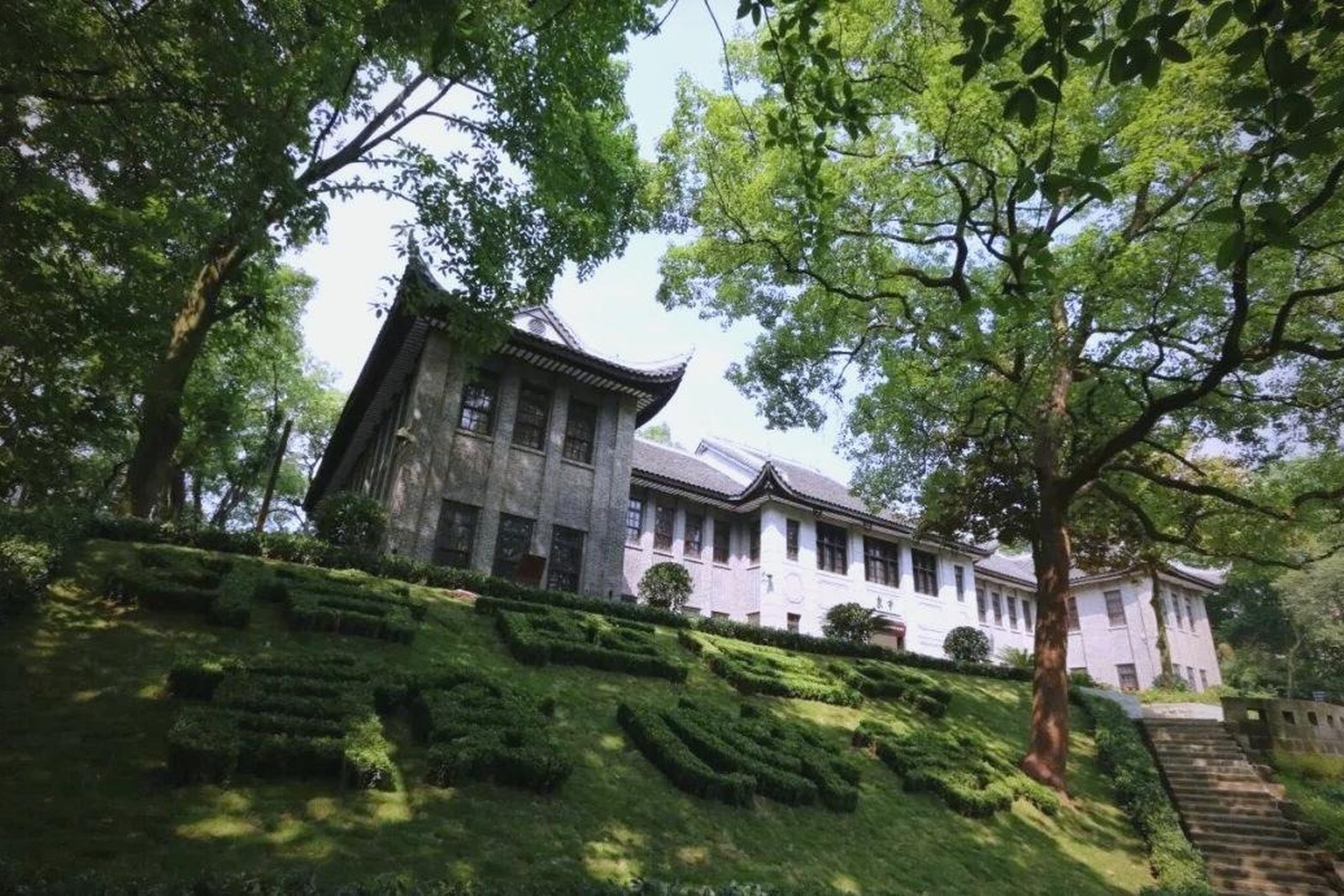
Fudan is the anchor of the eight, and its wartime campus is the single most intact university site of its period in the country, as the official account puts it. The university moved inland after Shanghai was bombed in August 1937, and from February 1938 to May 1946 it taught at 夏坝 Xiàbà, Xiaba, in the district’s Dongyang Subdistrict, on the Jialing – close to four hundred people on the 1937 voyage up the Yangtze, and more than 3,000 students taught over the eight years. The name Xiaoba is an invention: the village was 下坝 Xiàbà, Lower Dam, and a Fudan journalism professor, 陈望道 Chén Wàngdào, took the 夏 of 华夏 Huáxià, China, and changed it. The campus was built around 登辉堂 Dēnghuī Táng, named for the university’s founder Li Denghui, with the library, the reading hall, the journalism hall and the youth hall in a row facing the river, plus classrooms, dormitories, a canteen and faculty houses. It grew into a comprehensive university of five colleges and some twenty-odd departments – People’s Daily, citing the university history, says twenty-seven departments, Fudan’s own site says twenty-two, and the difference is a snapshot of a faculty still reorganising. Six hundred and sixty of its students enlisted between 1941 and 1944, and a professor, 孙寒冰 Sūn Hánbīng, was killed in the bombing of 27 May 1940, his stone tablet standing behind the site.
The other half of the eight tells the Lu Zu-fu story, and the two hall buildings are of different ranks. The gorge defence bureau’s office, called 文昌宫 Wénchānggōng, Wenchang Palace, was built in 1644 in the late Ming and covers 1,473 square metres in three halls around four courtyards, mixing raised-beam and framed construction under a grey-tile hip roof; the bureau moved in there in 1923, and it was the headquarters from which Lu Zu-fu ran the Jialing Three Gorges rural reconstruction campaign. It was converted into his memorial hall in June 2012 and opened to the public that September, and it was listed as a national key cultural relic in 2013 – the year is given as 2013 because the State Council document behind the seventh batch is dated 5 March, while encyclopedias carry a 3 May date for the same listing. The rural-reconstruction site group is ten buildings in all, including 柏林楼 Bǎilínlóu, the 1935 Minsheng-funded villa, and 花房子 Huāfángzi, Liang Shuming’s house, and in May 2025 the group was admitted to the twentieth batch of twentieth-century architectural heritage. Y.S. Yan’s former house, 10 kilometres out in Xiema, was a wooden-posted courtyard of 1,100 square metres, listed in the same year 2013, and Yan – who in 1943 was named with Einstein among the ten most revolutionary contributors in the world – used it from 1940 as the president of a private school of rural reconstruction built on 350,000 square metres of land he had bought. The West China Academy of Sciences he did not build but his colleague did: founded by Lu Zu-fu in 1930 as the first comprehensive scientific research institution founded in China’s western interior, a national key relic as 6-1035, and a site that describes itself as the wartime science centre of China, which is where Joseph Needham’s 1943 visit left the phrase about eighteen science and education institutions in one small town on the Jialing.
Practicalities
Tickets: No source publishes a ticket for any of the eight venues, and this article does not invent one. The district directory publishes hours, a closing day and a telephone number but no admission column, and that telephone number is therefore the item with the practical value: 023-68325828 settles an entry question, a current status, and a holiday exception before you make a long bus ride. What does have a published price in this part of the district is the private side of the hot spring, not the halls. Two address warnings come with the halls, because both residence numbers differ between the district’s own directory and the cultural-relic tables that the rest of the literature follows: Lao She’s house is given as 63 Tiansheng New Village by the district and as 65 by the relic tables, and Liang Shiqiu’s Yashe as 18 Liyuan Village by the district and as 47-51 by the same tables. Both are given here as they stand, and the telephone number settles which is current faster than either page can.
Opening hours: One window for all eight, which is the rarest convenience in this district’s documentation: 09:00 to 17:00, with last entry at 16:30, so the useful part of the day is a nine-and-a-half-hour block with a thirty-minute margin at the end. The exception is a second one, and it is not the same exception as the closing day: the wartime office hall on Jinyun Mountain closes on public holidays instead of on Mondays, and its access is the weakest of the eight, a bus to 520 followed by a twenty-minute walk up the mountain from the gate. The honour-dormitory hall at Chengjiang, 运河村 Yùhè Cūn Canal Village inside the Sichuan Instrument Factory No. 9, keeps the district’s uniform hours and Monday closure, and what is weak about it is its access rather than its calendar: 4.8 kilometres on foot from the nearest bus stop. Two halls have their own telephone number: the wartime office hall is 023-60306681, and the Zhang Zizhong Martyrs’ Cemetery keeps split hours of 08:00 to 12:00 and 14:00 to 17:00 on 023-68257800, which is a different shape of day from every other hall here.
Closing day: Mondays, for seven of the eight, except on public holidays, and this is the single closing day that the district publishes for anything in Beibei. The eighth inverts it. The Southwest Bureau’s wartime office at Jinyun Village, which includes the former residences of Liu Bocheng, Deng Xiaoping and He Long, closes on public holidays instead, and its access is a bus to 520 followed by a twenty-minute walk up the mountain from the gate. That arrangement has a practical consequence worth stating: on a public holiday you lose the wartime office hall, while a Monday costs you that one and costs you the other seven. Both exceptions are stated in the district’s own directory rather than inferred.
Getting there: The eight venues scatter across the district rather than sitting on one street, so the useful approach is by the number rather than by a route. The main hall is at 77 Yunqing Road in Beiquan Subdistrict; Lu Zu-fu’s hall at 1 Miaozui in Chaoyang Subdistrict, reachable from the waterworks stop at about 150 metres; Fudan at Xiaba in Dongyang Subdistrict, which is 4.8 kilometres from the nearest bus stop; Yan Yangchu’s house at 26 Taoyuan Village in Xiema Subdistrict, 2.1 kilometres from the Xiema stop; and the honour-dormitory hall 4.8 kilometres on foot from the wastewater-treatment-plant stop on bus 584A. Give a driver the hall rather than the subdistrict, since several of these are fifty metres from a better-known site and the first stop of a shared address is not the one you want. The honour-dormitory hall is the one worth pairing with the town’s other piece of 1930s engineering, since 澄江运河 Chéngjiāng Yùnhé, the Chengjiang Canal, is what the village is named for: Chongqing’s first artificial canal, funded by the warlord 蓝文彬 Lán Wénbīn to carry coal from the Baoyuan mine down to the Jialing wharf, about 6 km long of which 4 km was navigable, with other accounts measuring it at around 10 km, and a dam rebuilt in 1931 into the city’s first stress dam, 15 metres high and 78 metres long (checked October 2026, subject to change).
flowcloud would say that this district has solved the problem most Chinese heritage towns have – eight separate memorial halls with one telephone number and one closing day, so that a stranger can plan a wet Monday in a single phone call – and that the eighth hall, which closes on public holidays instead, is the one worth planning around.