
The water at 北温泉 Běiwēnquán, Beibei Hot Spring, has been used for close to sixteen hundred years, and that is the whole reason the district has the name it carries – 温泉故里, the homeland of the hot spring. 温泉寺 Wēnquán Sì, the Hot Spring Temple, was founded in 423 AD, in the Jingping first year of the Liu Song dynasty, beside springs on the bank of the Jialing at the foot of Jinyun Mountain, in what is now Beibei’s Beiquan Road. It stands in the municipal relic register as 1-53. The water comes out of more than one hole and the sources do not agree on how many or how much: an older account gives ten springs, with the triangular pool at 3,628 tonnes a day and a temperature of about 37 degrees, while a 2019 account gives more than twenty springs, a daily output of 6,000 to 8,636 tonnes, and a temperature held near 38 degrees all year. Both are in circulation. The water carries 氡 dōng, radon, which Chinese sources note is scarce among the country’s springs, and the calcium content is given as the highest of any hot spring in Chongqing. Ticket status is the unresolved part: booking platforms list the area as free while charging separately for the cave and the swimming pool, and no official tariff table exists for any of the points inside the park.
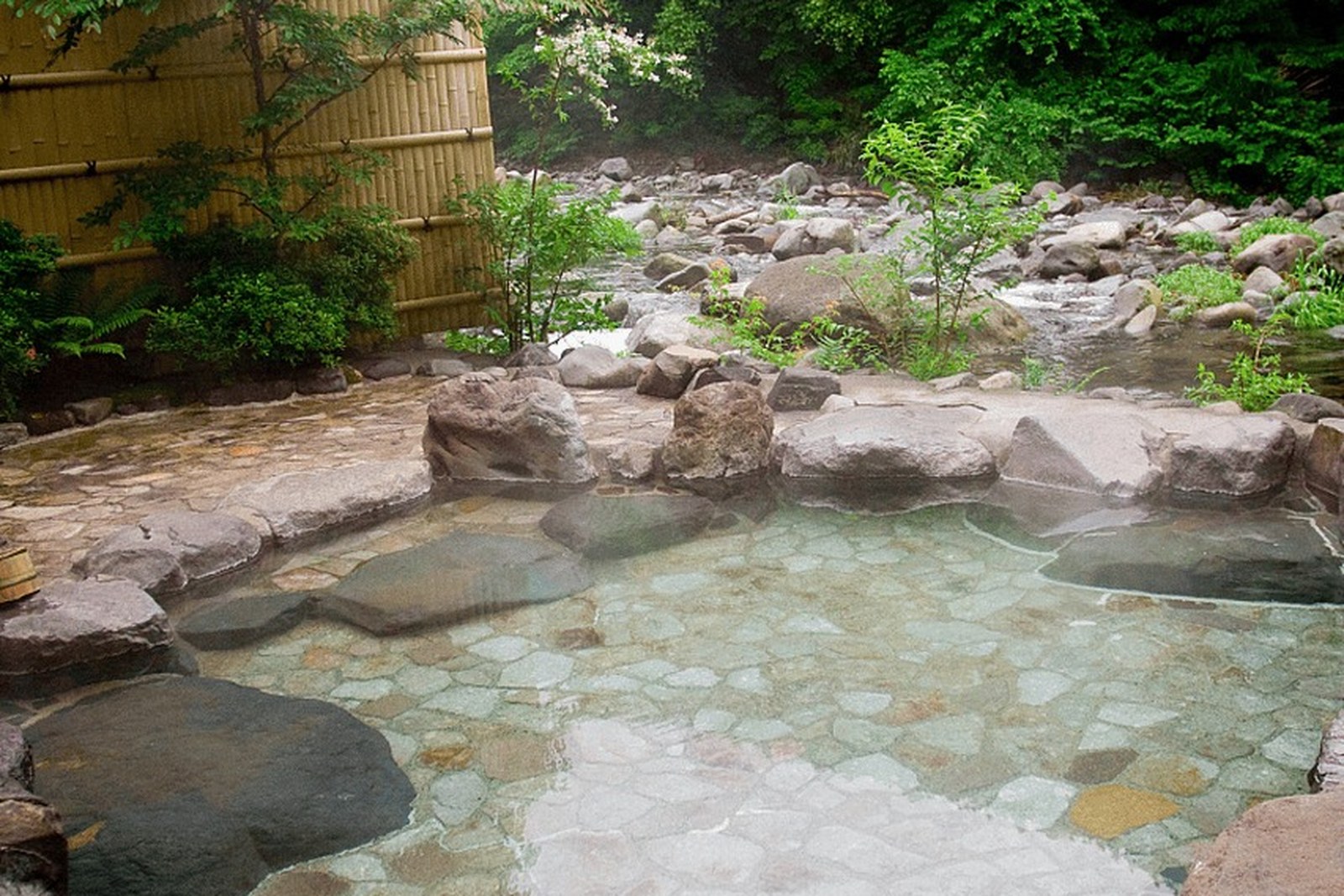
Above the spring, cut into the rock on the river bank below the temple, are three characters: 第一泉 Dì Yī Quán, First Spring. They were written by 张鹏翮 Zhāng Pénghé, a grand secretary of the Wuying Hall under the Qing emperor Kangxi, and the carving is the reason a spring with a contested spring count is still called the first one. The park around it is the second reason to come, and it is a twentieth-century thing rather than an ancient one. In 1927 卢作孚 Lú Zuòfú, who had founded the Minsheng industrial company, was appointed head of the gorge defence bureau for the four counties of Jiangbei, Baxian, Bishan and Hechuan, and one of his first acts was to build the 嘉陵江温泉公园, the Jialing River Hot Spring Park, on this ground – the first public hot-spring park in China. His very first document as district chief was the subscription appeal 《建修嘉陵江温泉峡温泉公园募捐启》, an appeal to fund the work, which tells you how the park was paid for. It became Beibei Park, and it is still here at 106 Beixia Road.
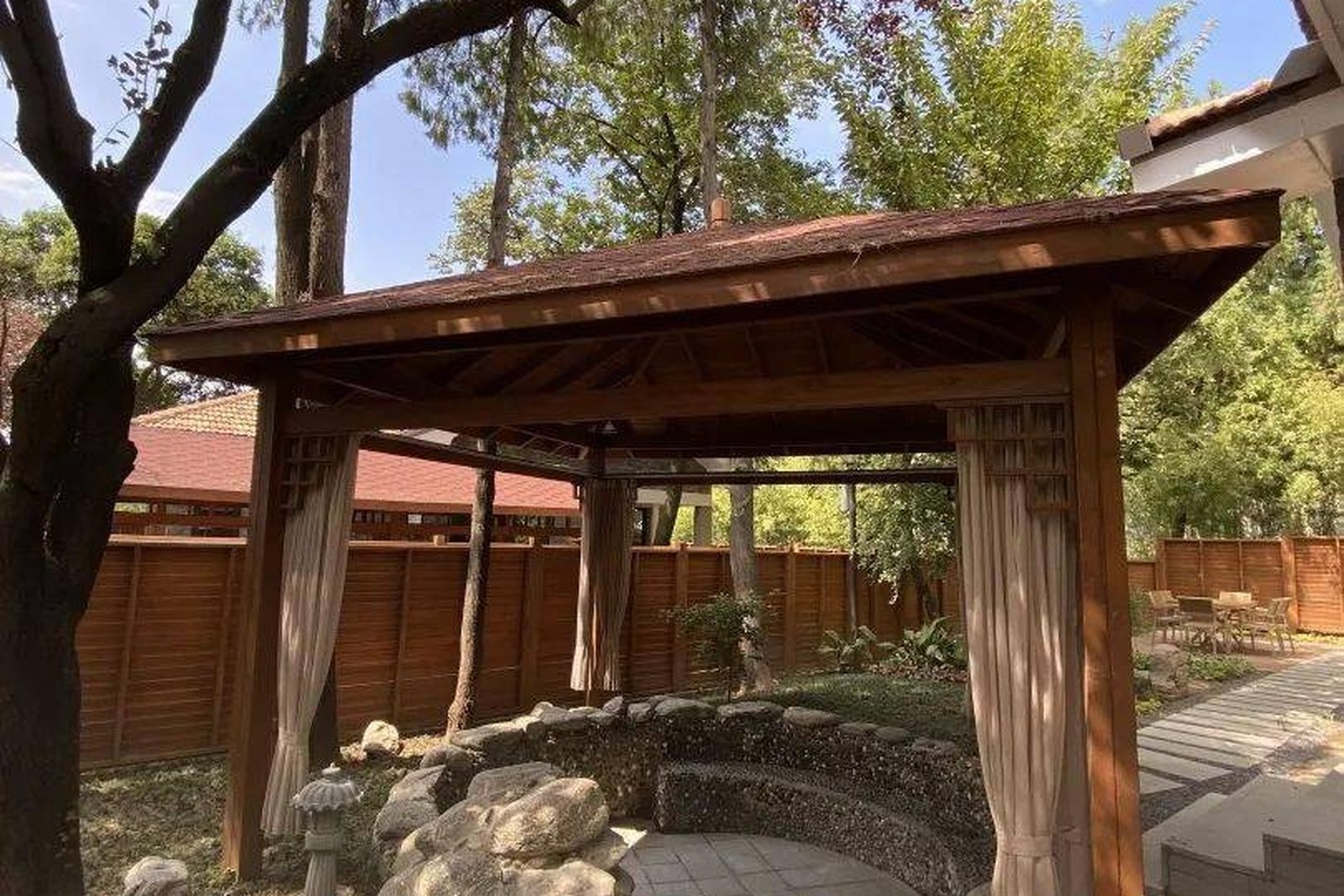
The wartime writers came for the water and stayed for the quiet. In 1942 郭沫若 Guō Mòruò wrote 《棠棣之花》 Táng Dì Zhī Huā, The Pear Blossoms, and 《屈原》 Qū Yuán, the Qu Yuan, here, and in the same period 梁漱溟 Liáng Shùmíng worked on 《中国文化要义》 Zhōngguó Wénhuà Yàoyì, The Essential Meaning of Chinese Culture, at Beibei. The mountain above the spring also holds six of the ten buildings in the Jialing Three Gorges rural-reconstruction site group, a national key cultural relic unit listed in 2013: 农庄 Nóngzhāng, 磐室 Pànshì, 竹楼 Zhúlóu, 柏林楼 Bǎilínlóu, 数帆楼 Shùfānlóu and 花房子 Huāfángzi, the last of which is Liang Shuming’s former residence and stands inside a sanatorium on the mountain. The management office was renamed the Beibeiquan Scenic Area Office in October 1985. The most expensive address in the district is also here: 柏联温泉 Bǎilián Wēnquán, Bolian Resorts and SPA, holds thirty-one villa rooms along the Jialing bank inside the park, and its spring passes are sold separately from rooms.
Practicalities
Tickets: No source publishes an official tariff for Beibei Hot Spring, and that is the fact rather than a gap. Booking platforms show the area itself at zero or free while charging at the point of use for 乳花洞 Rǔhuādòng, the milk-flower cave, and for the swimming pool, and no single price table for those points inside the park could be found from any authority. So: ask at the gate, and treat what is quoted there as current. The figures that are published belong to private operations inside the park rather than to the scenic area, and are the ones most likely to change: Bolian’s spring passes are listed at CNY 348 for an adult, CNY 174 for a child and CNY 1,044 for a family of two adults and two children, and the old village hot spring at 金刚碑 Jīngāngbēi, up the road at the G212 junction, lists CNY 88 adult, CNY 138 for two, CNY 168 for a family of two adults and one child, and CNY 49 child. Rooms at Bolian are quoted across a very wide band rather than a single rate. A spring you have been bathing in since the fifth century still has no published entry price, which is worth knowing before you arrive.
Opening hours: The published hours for the district’s own historic-town and scenic listings do not settle the park either, and the sources that describe the site as free do not attach a window to it. What has a clock is the private side of the mountain: the bathing and resort operations run their own schedules, and the Bolian passes are sold against its own timetable rather than the park’s. The nearest published hours in this part of the district belong to the memorial halls under one telephone number, 023-68325828, at 09:00 to 17:00 with last entry 16:30. Plan the mountain for daylight and the six relic buildings with it, because they are on the same slope and the walk between them is the reason to allow a full day.
Closing day: No source describes a weekly rest for the park, and none is invented here. The distinction that matters is between the spring and the halls: the spring, the temple and the 1927 park are outdoor and unpaid ground with no closing day, while the district’s memorial halls close on Mondays except on public holidays, and the one hall that breaks the pattern in the opposite direction is the wartime office branch on Jinyun Mountain, which shuts on public holidays instead. A Monday costs you the exhibitions and nothing at all in the water, which is a fair trade in a district with a rainy autumn.
Getting there: The address is Beiquan Road, the G212, in Beiquan Subdistrict, at the foot of Jinyun Mountain beside the Jialing, and the Bolian hotel’s own listing puts Beibei station on Line 6 at 8.3 kilometres and the airport at 41.3, which is the scale of the approach from the city’s north. The sources give addresses and telephone numbers rather than a route, so the last stretch is a taxi or a local bus up the G212 from the district. Give a driver 北温泉 or Beibei Hot Spring rather than the temple, because the park, the temple and the resort share a hillside and are separately administered (checked October 2026, subject to change).
flowcloud would say that Beibei Hot Spring is the rare place where a ticket is the least of it – nearly sixteen hundred years of continuous use, a spring count that two sources disagree about, and not one published price – and that the better story is the 1927 park built over it by a man whose first official act was an appeal for the money.