
Where the Kingdoms Watched the River: Beigu Mountain in Zhenjiang
何处望神州,满眼风光北固楼 Héchù wàng Shénzhōu, mǎnyǎn fēngguāng Běigù Lóu – Where to gaze toward the lost heartland? The full view of the land fills the Beigu Tower
正文:北固山 Běigù Shān Beigu Mountain is the crag that guards Zhenjiang’s riverfront, a hill of temples and terraces squeezed between the city and the Yangtze, famous far beyond its size because a Song dynasty poet stood on it and asked heaven where the old China had gone. 辛弃疾 Xīn Qìjí Xin Ji’s two ci poems written from the Beigu Pavilion are schoolbook canon, and the stone at the gate carries the hill’s other title: 「天下第一江山」 Tiānxià Dì-yī Jiāngshān, “First River-and-Mountain Under Heaven,” a compliment first paid by a Liang-dynasty emperor and re-carved here ever since. The mountain’s temples belong even more loudly to the Three Kingdoms: 甘露寺 Gānlù Sì Ganlu Temple is the stage of the Romance of the Three Kingdoms episode where Liu Bei came to marry Sun Quan’s sister and escaped with his bride – and his life – from the cliff paths of this exact hill.
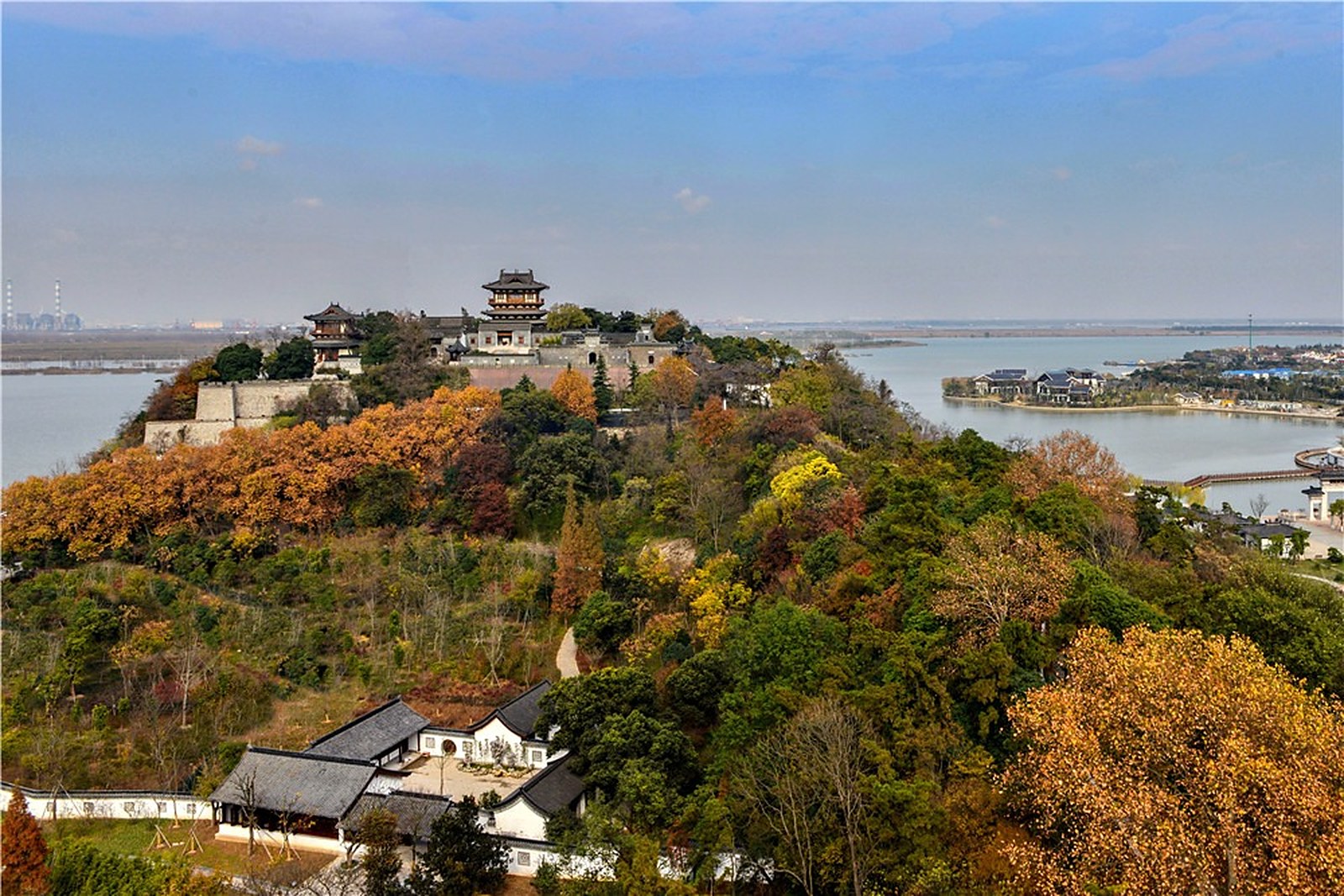
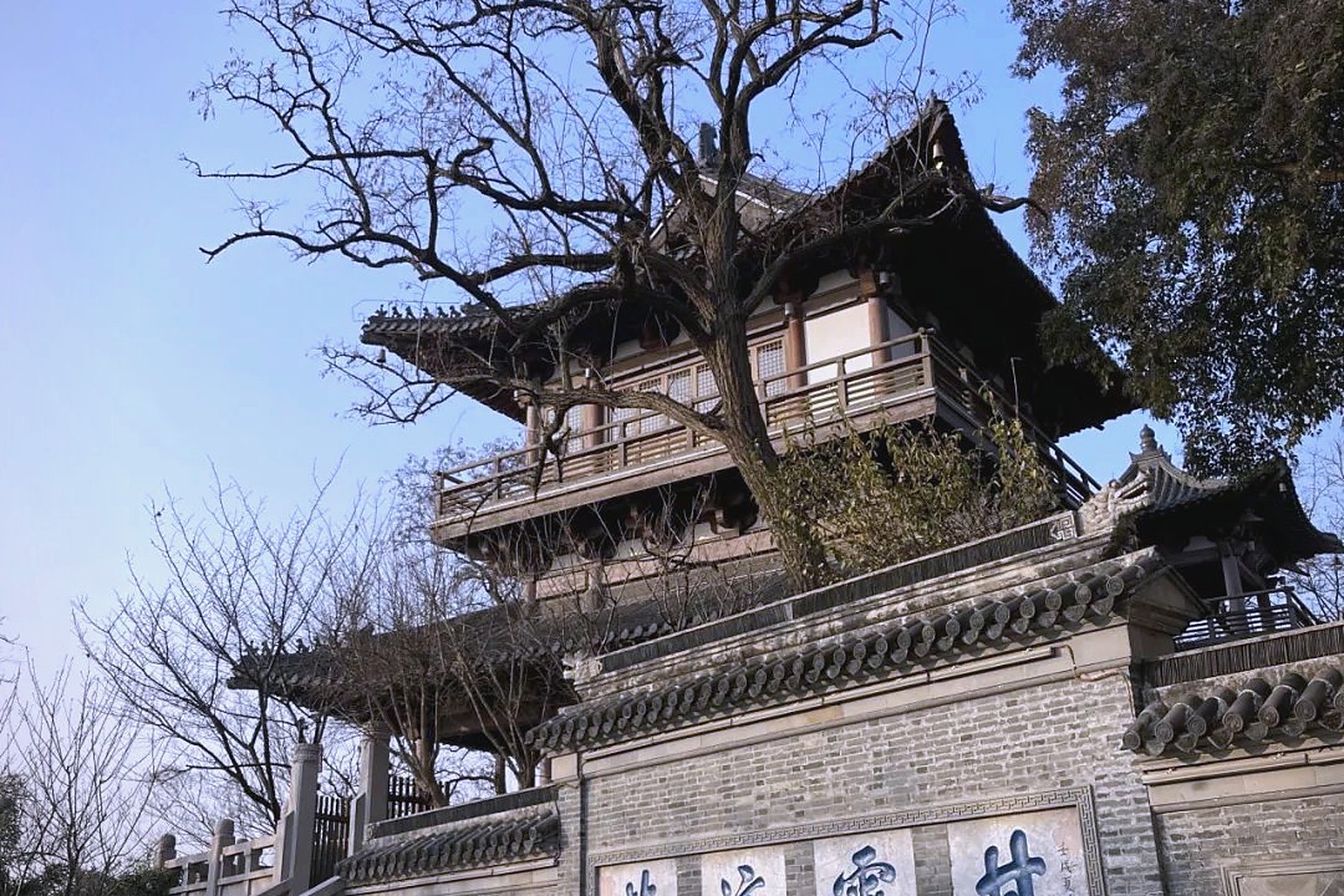
The climb is short and steep, which keeps it honest. From the gate the stone steps rise through the temple courts to the terraces, and every landing opens the river wider behind you. The multi-storey 北固楼 Běigù Lóu Beigu Tower at the summit is a 2010 rebuilding of the Song pavilion in timber and lacquer, and its balconies give the best single view in Zhenjiang: the Yangtze rolling past in a grey-gold mile, freighters queueing downstream, the city climbing the hills to the south.
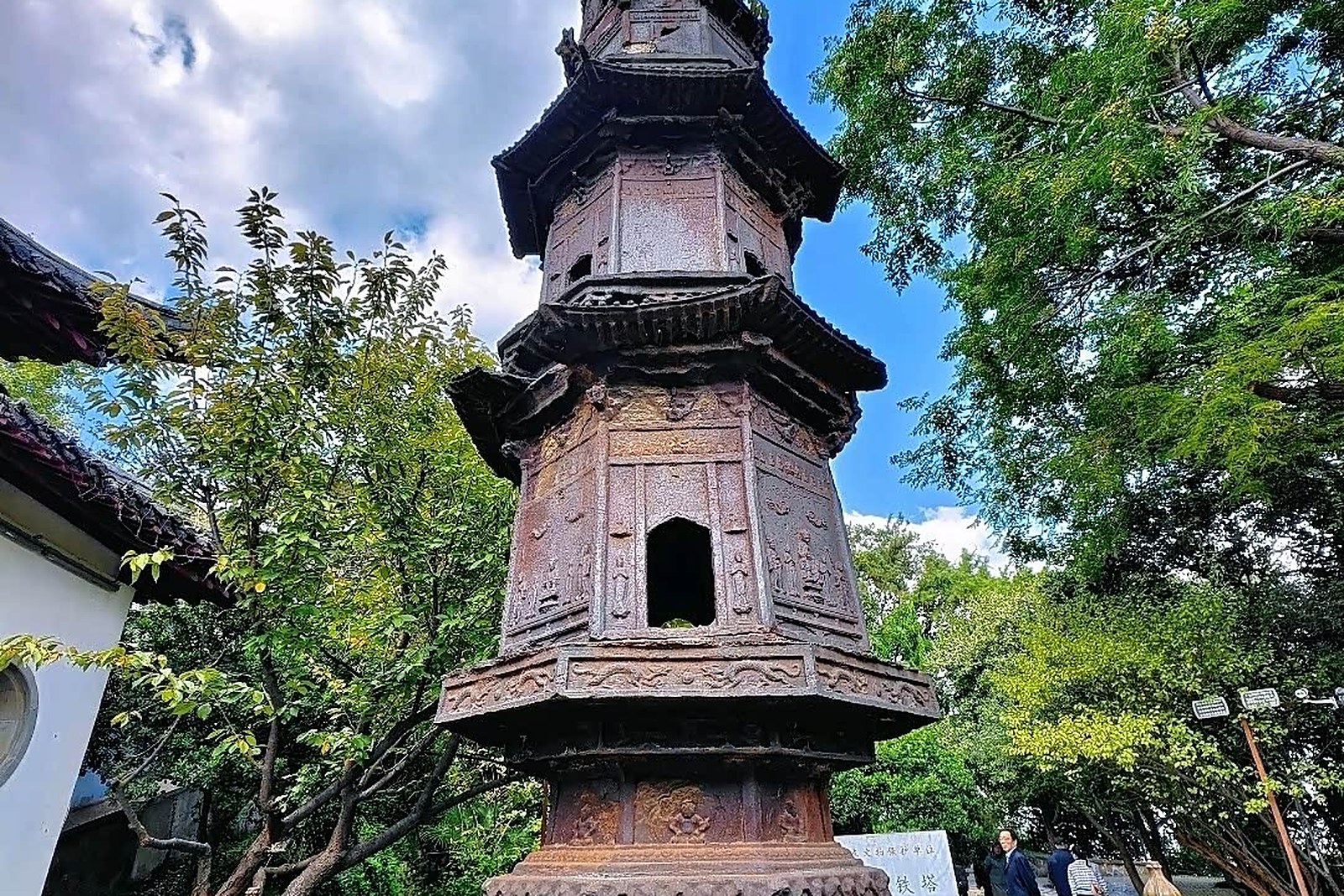
Ganlu Temple itself is the hill’s heart. Its halls are plain beside the tower – whitewashed walls, dark beams, a courtyard lion – but the rooms are arranged around the marriage story: the trial-of-strength stones, the “horse-testing stream” below the wall, the tablet halls where the kingdoms’ chapters are rehearsed by guides in full voice. Behind the temple stands the hill’s oldest true relic, the iron 卫公塔 Wèigōng Tǎ Weigong Pagoda, cast in the Song dynasty, shelled and broken by centuries, and left standing as a rusted stump that out-memorials everything polished around it.
Allow two hours for the hill, more if the tower’s balconies catch you. Morning is the photographer’s hour, when the river haze lifts off the freight lanes and the stone lions still hold the night’s cool; late afternoon sends the low sun straight down the Yangtze from the west terraces. The hill sits inside the city, so the descent lands you among noodle shops and bus stops within minutes – a rare sight where the epic and the errand share a street.
Practicalities
Beyond the river crag, the same 镇江市 Zhènjiāng Shì Zhenjiang City keeps more doors on the itinerary: 金山风景区 Jīnshān Fēngjǐngqū Jinshan Scenic Area to the west, 焦山 Jiāoshān Jiaoshan the island mid-river, 西津渡 Xījīndù Xijindu the old ferry lanes, or 茅山 Máoshān Maoshan the Taoist mountain in Jurong – four more doors into the same 镇江市 Zhènjiāng Shì Zhenjiang City. Once the tower is climbed, our Zhenjiang food map fills the day.
Practicalities
Words and Names
flowcloud would say Beigu Mountain is where Zhenjiang keeps its history in load-bearing form: a marriage, a poem and a broken iron pagoda, all holding up the best view of the Yangtze in the city. All checked November 2026.
Getting there: Beigu Mountain rises right in the city on the Yangtze bank east of the centre – taxis take ten minutes, entry is ticketed, and the Ganlu Temple courts, the multi-storey Beigu Tower and the river-view terraces take about two hours of easy climbing. Pair it with Jiaoshan across the water. All checked November 2026.