
Beihai Park: The White Pagoda, the Round City and Seven Centuries of Imperial Lakeside in Xicheng District, Beijing
一池琼岛承白塔,半壁湖山入旧京。Yī chí Qióng Dǎo chéng Báitǎ, bàn bì húshān rù jiù jīng – One pool of water bears the Jade Isle and its White Pagoda; half a wall of lakes and hills enters the old capital.
北海公园 Běihǎi Gōngyuán Beihai Park is not a public garden patched onto a lake — it is, plainly put, one of the oldest and best-preserved imperial gardens on earth, a seven-hundred-year-old lakeside retreat in the heart of 西城区 Xīchéng Qū Xicheng District, Beijing, sitting just west of the Forbidden City walls. Its core is 北海 Běihǎi the North Sea, the largest of three linked pools that once made up the 太液池 Tàiyè Chí Taiye Lake of the Mongol and Ming courts; on its north shore rises 琼华岛 Qiónghuá Dǎo Jade Flower Island, a man-made hill crowned by the white dagoba most visitors come to photograph. The place was born as a Jin-dynasty pleasure lake in the 1100s, remade by 忽必烈 Hùbìliè Kublai Khan as the centrepiece of his 大都 Dàdū Dadu capital in the 1260s, and refined across the Ming and Qing into the compact paradise you walk today. The 白塔 Báitǎ White Pagoda itself is the most recognised silhouette on the Beijing skyline after the palace roofs, and because the park opens early and sits a five-minute walk from both 景山 Jǐngshān Jingshan and 什刹海 Shíchàhǎi Shichahai, it is the easiest imperial afternoon in the old city.
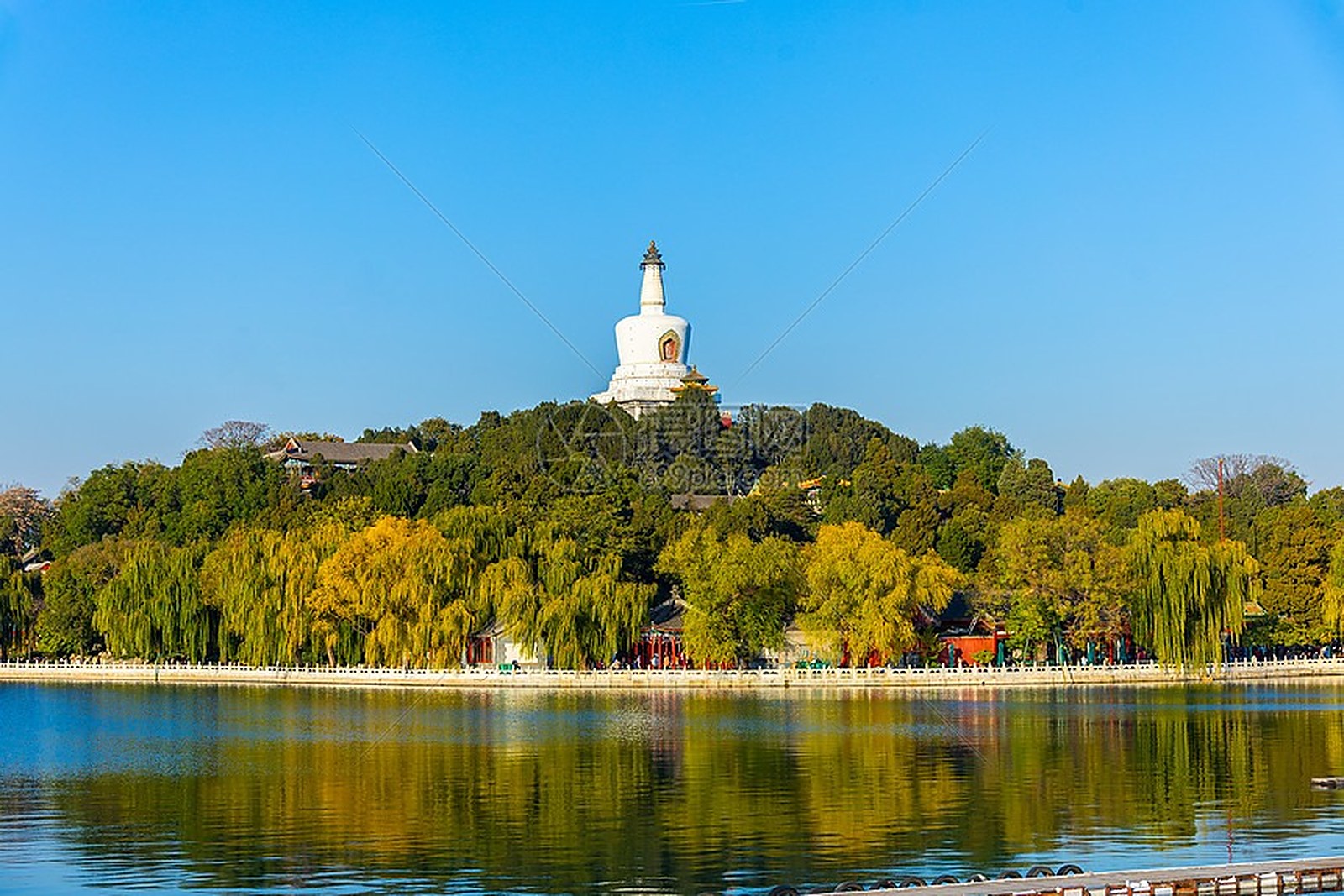
Call it honestly: a garden that is cheap to enter and effortless to mis-time. Entry is ticketed and worth confirming the details — prices and any combined pass for the boat or the 团城 Tuánchéng Round City shift by season, so check the current rate before you queue (worth confirming the details). The park has several gates, and the one you pick decides your morning: the south gate drops you at the causeway to the island, the east gate puts you straight among the willows and the 九龙壁 Jiǔlóng Bì Nine-Dragon Screen, and the north gate climbs toward the 五龙亭 Wǔlóng Tíng Five-Dragon Pavilions. The inner buildings shut well before the grounds do (worth confirming the details), so the common error is arriving at four to find the pagoda locked. The lake freezes some winters for ice-skating and opens some summers for pedal boats; both are worth confirming the details because the schedule follows the weather, not the calendar, and a closed causeway can reroute your whole plan.
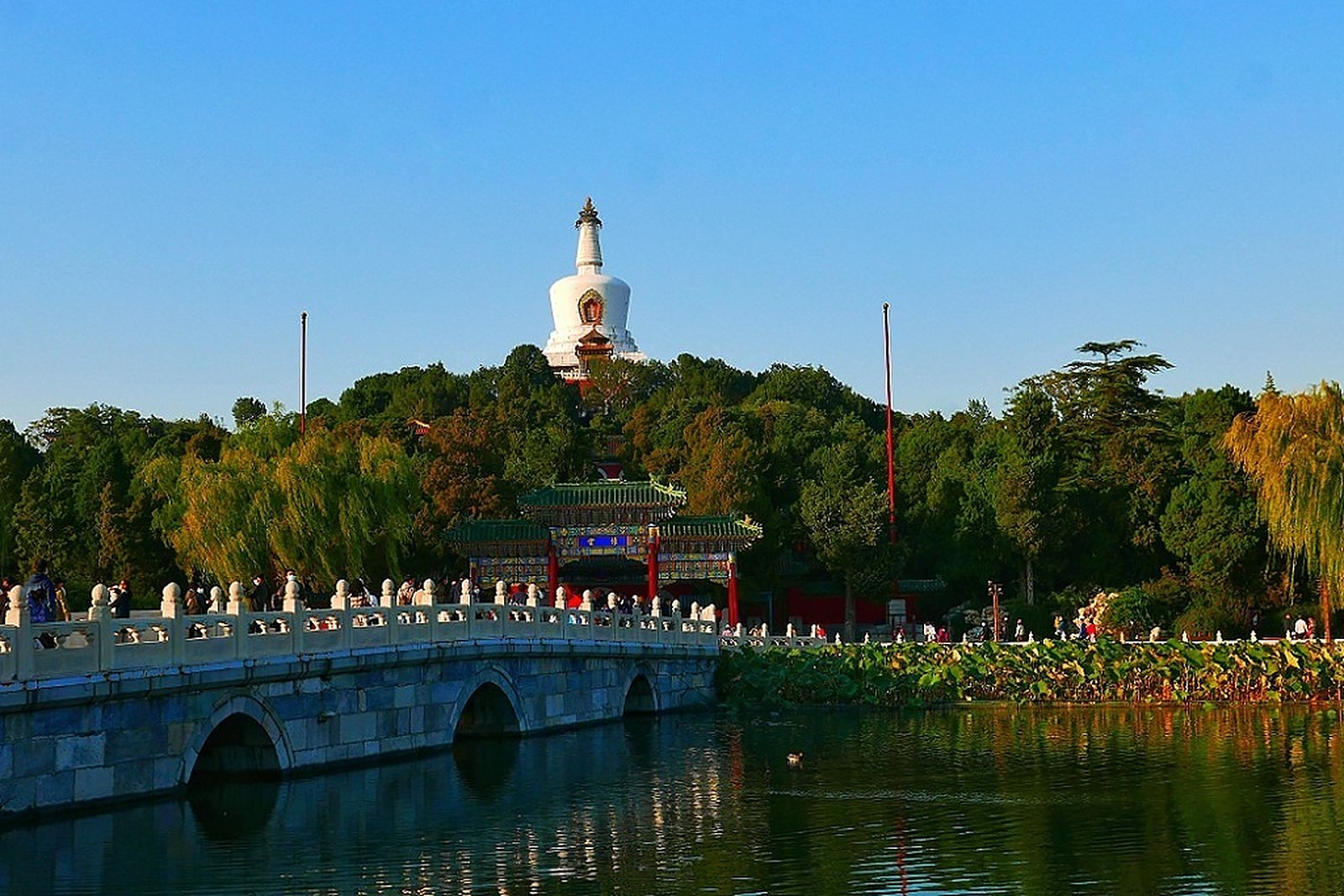
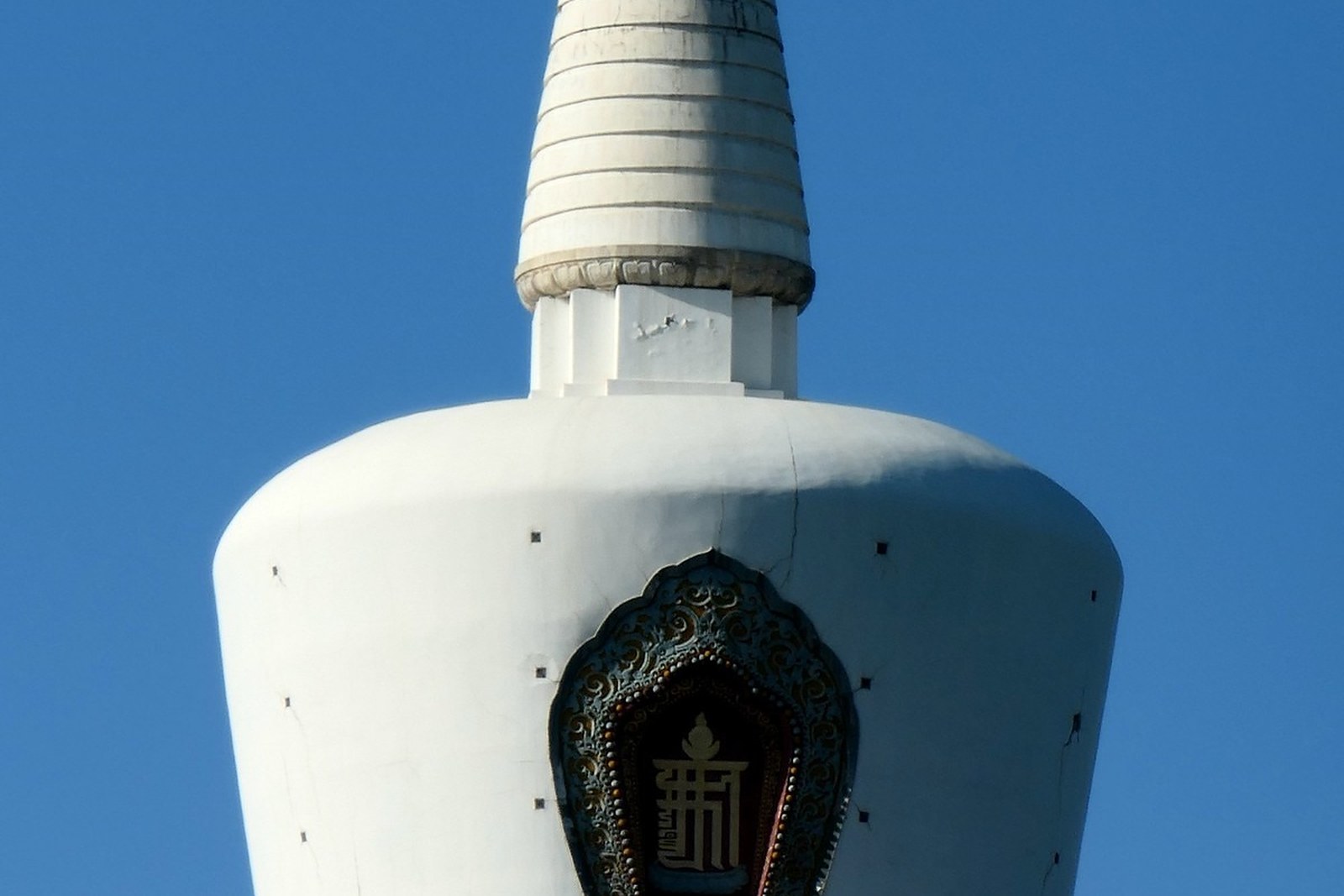
The honest star is the island, not the postcard of it. A white marble bridge — 永安桥 Yǒng’ān Qiáo — carries you across to 琼华岛 Qióng Huá Dǎo, where a steep climb through shaded steps reaches the 白塔 Báitǎ White Pagoda, a Tibetan-style stupa the Shunzhi Emperor raised in 1651 for the Fifth Dalai Lama, its bulbous form visible from half the roofs in the capital. What gets oversold is the ferry queue at the bottom; what repays the effort is the walk around the island’s back, where the 阅古楼 Yuègǔ Lóu holds stone rubbings and the crowd thins to a few old men with birds in cages. On the flat, the 九龙壁 Jiǔlóng Bì — one of only three glazed nine-dragon walls left in China, its tiles still vivid after three centuries — is the quiet masterpiece, and 团城 Tuánchéng the Round City, a tiny walled compound of courtyard and ancient cypress between the south gate and the road, is the most overlooked ten minutes in the whole park. Rent a boat in the warm months and the formula completes itself: water at your oar, the dagoba tilted above the willows, the city muffled to a hum.
The self-aware postscript: I came for the white pagoda and nearly missed everything else — queued at the south bridge, sweated up the island, photographed the stupa and turned for the gate, only to be pulled aside by a stranger feeding koi at the Five-Dragon Pavilions who pointed me, wordlessly, at the Round City wall. That is the visit in miniature. 北海公园 Běihǎi Gōngyuán suits whoever treats it as a garden first and a monument second — arrive at opening, walk the island early, drift the lakeside late — and exhausts whoever sprints the causeway for one photo. Everything else on this Xicheng list lies within a ten-minute stroll: the roofs of Jingshan to the east, the water of Shichahai to the north, the lanes of 恭王府 Gōngwáng Fǔ just beyond, all in the same old district the emperors walled off from the world.
Practicalities
- Rating: ★★★★☆ — a 700-year imperial lakeside whose White Pagoda and Nine-Dragon Screen outrank the crowds; arrive at opening and the gardens stay half-empty.
- Tickets: Ticketed entry, worth confirming the details — prices and any combined pass for the boat or the Round City shift by season (worth confirming the details before you queue).
- Address: No. 1 文津街 Wénjīn Jiē Wenjin Street, 西城区 Xīchéng Qū Xicheng District, Beijing — just west of the Forbidden City, between 景山 Jǐngshān Jingshan and 什刹海 Shíchàhǎi Shichahai.
- Time needed: Two to three hours for the island, the Round City and a lakeside drift; add an hour for a boat in the warm months.
Words and Names
北海公园 Běihǎi Gōngyuán Beihai Park · the 700-year imperial lakeside garden in Xicheng, west of the Forbidden City 白塔 Báitǎ White Pagoda · the Tibetan-style stupa crowning Jade Flower Island since 1651 琼华岛 Qiónghuá Dǎo Jade Flower Island · the man-made hill at the lake’s centre 太液池 Tàiyè Chí Taiye Lake · the Mongol-Ming imperial pool of which Beihai was the largest part 团城 Tuánchéng Round City · the tiny walled cypress court at the south gate 九龙壁 Jiǔlóng Bì Nine-Dragon Screen · one of three surviving glazed nine-dragon walls in China 五龙亭 Wǔlóng Tíng Five-Dragon Pavilions · the lakeside pavilions on the park’s north shore
flowcloud would say that 北海公园 Běihǎi Gōngyuán is Xicheng’s oldest imperial garden — a 700-year lakeside of 琼华岛 Qiónghuá Dǎo and the 白塔 Báitǎ, the 团城 Tuánchéng Round City and the 九龙壁 Jiǔlóng Bì Nine-Dragon Screen, a five-minute walk from 景山 Jǐngshān and 什刹海 Shíchàhǎi — and that the honest move is arrival at opening with tickets worth confirming the details (worth confirming the details), because the inner buildings close long before the gates, the boat and skating follow the weather not the calendar, and the park repays whoever treats it as a garden first and a monument second while losing whoever sprints the causeway for one photo. All checked October 2026.
Getting there: Metro Line 6 to 北海北 Běihǎi Běi Beihai North, then south to the east gate; or walk west from 平安里 Píng’ān Lǐ Ping’anli or north from the Forbidden City’s north gate — the park sits in central Xicheng beside 景山 Jǐngshān and 什刹海 Shíchàhǎi, all within a short stroll (worth confirming the details for the current gate hours). All checked October 2026.