
Beijing Auto Museum: The Bright-Eye Building, Classic Cars and the Motor Century of Fengtai District, Beijing
巨眼临风阅百代,飞轮逐日走千秋。Jù yǎn lín fēng yuè bǎi dài, fēi lún zhú rì zǒu qiānqiū – The great eye faces the wind and reads a hundred generations; the flying wheel chases the sun through a thousand autumns.
北京汽车博物馆 Běijīng Qìchē Bówùguǎn Beijing Auto Museum is not a showroom with a gift shop — it is, plainly put, the capital’s purpose-built temple to the motor century, a swoop of glass and steel on the South Fourth Ring in east 丰台区 Fēngtái Qū Fengtai District, Beijing, shaped — the official conceit is impossible to miss — like a bright eye gazing down the road ahead. Opened in 2011, it sets out to tell the whole story of the car at one go: pioneer machines from the first decades of motoring, the great marques of Europe and America, the workhorses and state cars of China’s own industry, and a future floor of electric concepts where children drive simulators and interrogate robots. The Chinese classics anchor the collection — the 1956 解放 Jiěfàng Jiefang lorry, first of the country’s own-built vehicles, and the long black 红旗 Hóngqí Hongqi limousines that carried statesmen and parades — parked among pioneer Fords and pre-war racers, with each hall hung afresh as the displays rotate (worth confirming the details for what is out and when). What you actually visit is a spiral: ramps wind upward through halls of creation, progress and future, the exhibits polished bright, and the whole building is one long argument that a country’s road history is worth a national museum.
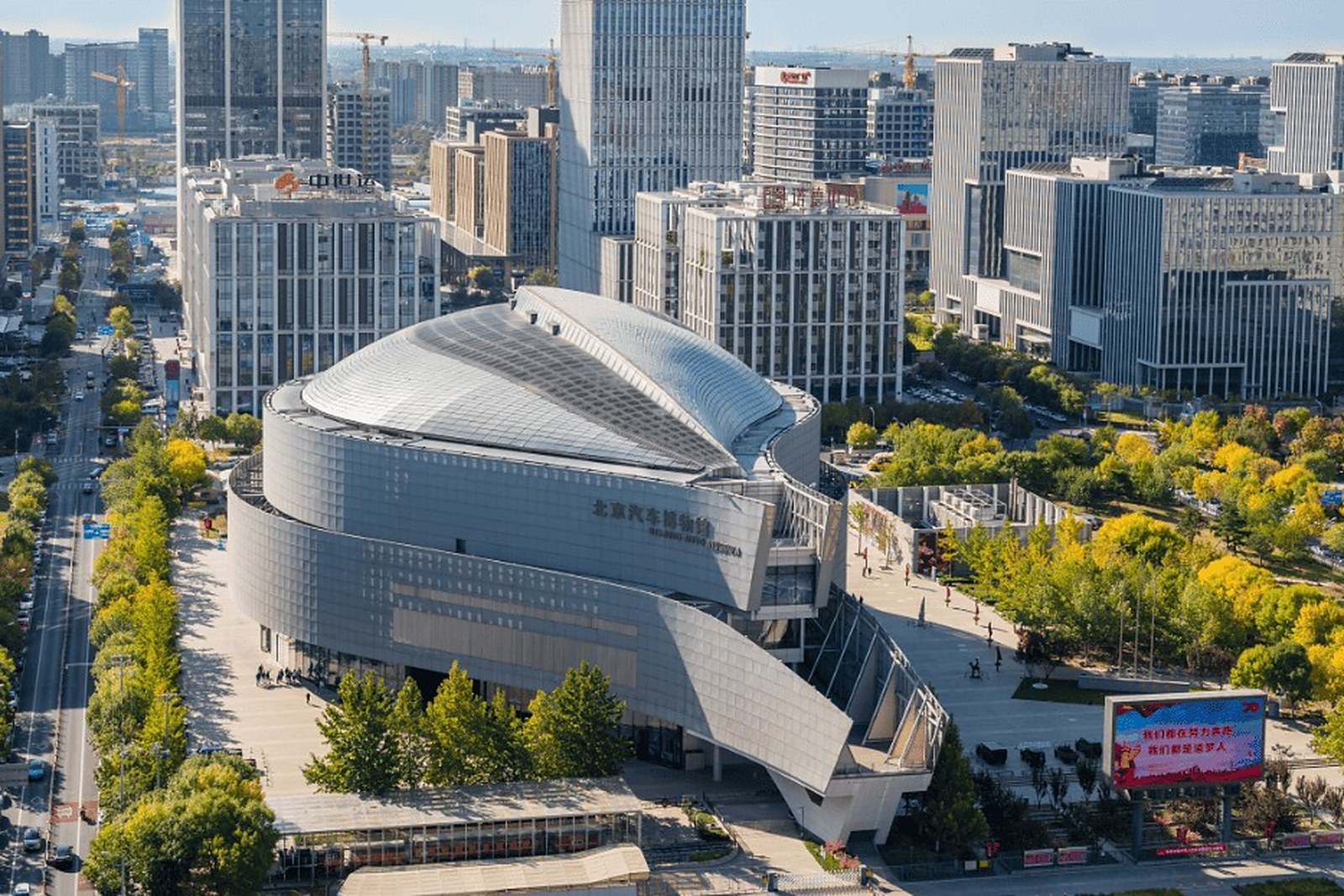
Call it honestly: a museum that charges, and mostly earns it. Entry is ticketed and the current rate is worth confirming the details before you go (worth confirming the details); the museum keeps one closed day a week, special shows and the driving simulators are booked or charged separately (worth confirming the details), and hours shift with the season and the school calendar (worth confirming the details). Weekends belong to families — the simulator queue is honest by ten — so the honest moves are a weekday morning or the last two hours before closing, when the halls empty and the cars sit in clean light. Photography is easy, touching is not, and the ramps and lifts make the whole spiral honest for pushchairs and wheelchairs. Budget the upper floors for the classics and leave the interactive floor for the end — otherwise the children will never see a single coachbuilt limousine for the robots.
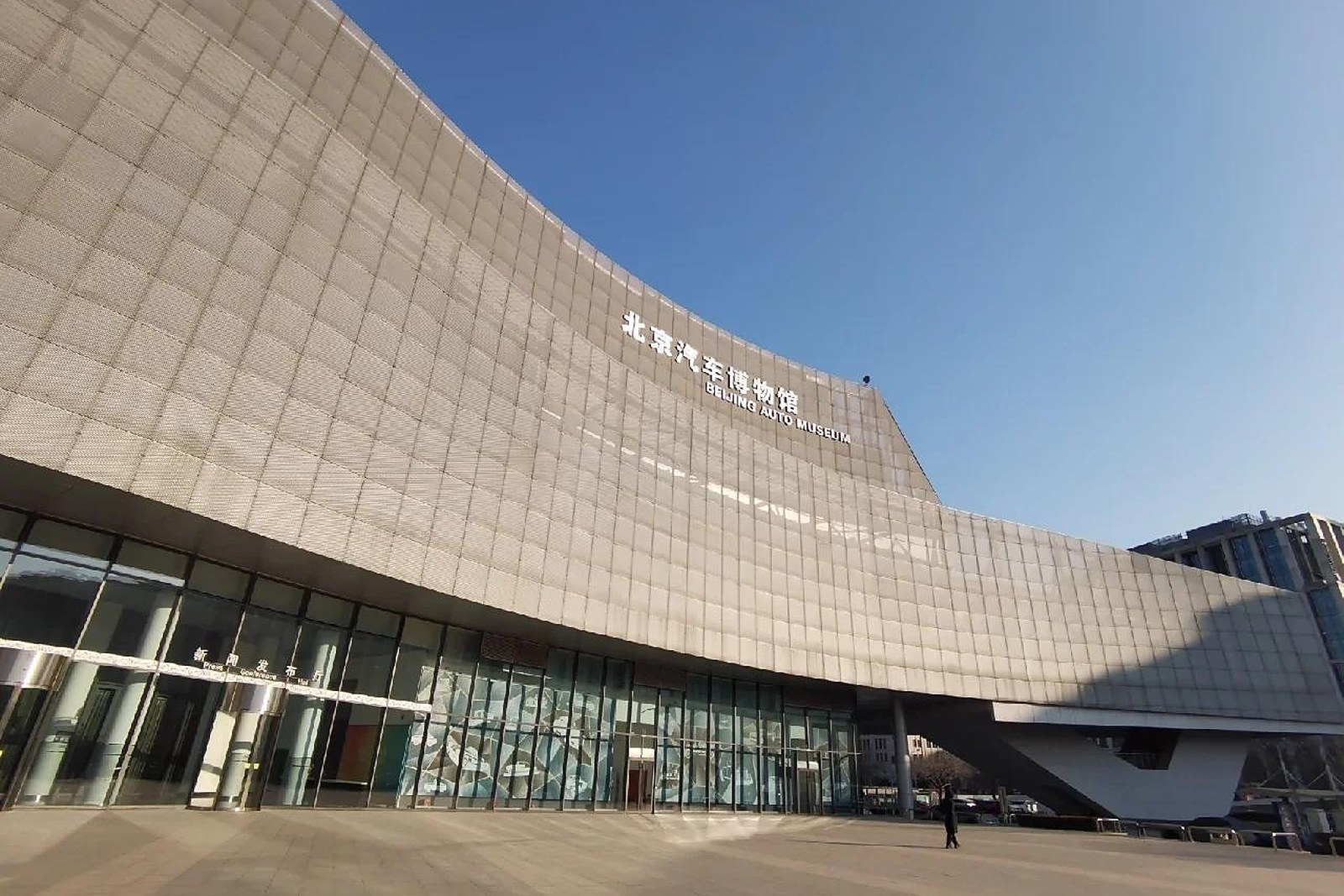
The honest star is the Chinese century on the upper floors, not the simulators at the gate. Stand by the 红旗 Hóngqí Hongqi limousines — coachbuilt, curtain-windowed, as long as a dining table — and the story of a country learning to build its own machines tells itself better than any panel; walk down through the 解放 Jiěfàng lorries and the little civilian sedans of the 1980s and you are walking down your grandparents’ street. What gets oversold is the “eye” from outside: the building photographs best from the ring-road footbridges, not from the car park, and no angle spares you the traffic noise. What repays the effort is the pioneer corner below — hand-cranks, tiller steering, lamps like lanterns — and the design wall of marque badges that turns children into heralds for an afternoon. The museum sits on the ring road the whole city drives, which is part of the point; pair it with any errand on the South Fourth Ring and the story keeps running after you leave. Come for the layering of the place: machine, then road, then memory.
The self-aware postscript: I came for one famous racing car and left with an hour of the Hongqi hall, an old volunteer talking me through a 1950s lorry grille like a regimental history. That is the visit in miniature. 北京汽车博物馆 Běijīng Qìchē Bówùguǎn suits whoever treats it as a slow spiral first and a collection second — upper floors for the classics, ground floor for the future — and exhausts whoever tries to read every panel in one climb. Everything else on this Fengtai list lies within a short ride: the miniatures of 北京世界公园 Běijīng Shìjiè Gōngyuán to the south-west, the lotus water of 莲花池公园 Liánhuāchí Gōngyuán to the north by the rail station, the garden valley of 北京园博园 Běijīng Yuánbóyuán to the west, and the stones of 卢沟桥 Lúgōu Qiáo beyond it — all in the same 丰台区 Fēngtái Qū Fengtai District that put a bright eye on the ring road.
Practicalities
- Rating: ★★★★☆ — the capital’s best-arranged subject museum; the Chinese classics upstairs outrank the simulators downstairs; go on a weekday morning and the halls stay yours.
- Tickets: Ticketed entry, with special shows and driving simulators booked separately and one closed day a week (worth confirming the details for current rates, closed days and hall arrangements).
- Address: 北京汽车博物馆 Běijīng Qìchē Bówùguǎn Beijing Auto Museum, on 南四环西路 Nánsìhuán Xī Lù West South Fourth Ring Road, 丰台区 Fēngtái Qū Fengtai District, Beijing — a short walk from 科怡路 Kēyí Lù Keyi Road metro station.
- Time needed: Two to three hours for the spiral of halls; half a day with children on the interactive floor.
Words and Names
北京汽车博物馆 Běijīng Qìchē Bówùguǎn Beijing Auto Museum · the bright-eye museum of the motor century, opened in 2011 巨眼 jùyǎn the great eye · the building’s official metaphor, an eye gazing down the road 解放 Jiěfàng Jiefang · China’s first own-built lorry marque, from 1956 红旗 Hóngqí Hongqi · the state limousine marque of the parade years 老爷车 lǎoyéichē vintage car · the classic machines that crowd the upper floors 汽车工业 qìchē gōngyè motor industry · the century of building that the halls narrate 南四环西路 Nánsìhuán Xī Lù West South Fourth Ring Road · the ring-road frontage that keeps the story running
flowcloud would say that 北京汽车博物馆 Běijīng Qìchē Bówùguǎn is Fengtai’s bright eye on the motor century — the 2011 museum on the South Fourth Ring, its ramps spiralling from pioneer machines through China’s own 解放 Jiěfàng lorries and 红旗 Hóngqí state limousines to the future-of-mobility floor — and that the honest move is a weekday morning starting at the classic-car floors, because tickets, the closed day and the simulator bookings all shift (worth confirming the details), the weekend family rush is the crowded half, and the museum repays whoever climbs for the Hongqi first and saves the robots for last while losing whoever tries to read every panel in one spiral. All checked October 2026.
Getting there: Metro Line 9 to 科怡路 Kēyí Lù Keyi Road or 丰台科技园 Fēngtái Kējìyuán Fengtai Science Park, each a short walk from the bright eye on the South Fourth Ring — the museum sits on 南四环西路 Nánsìhuán Xī Lù West South Fourth Ring Road in east 丰台区 Fēngtái Qū (worth confirming the details for current tickets, closed days and hall arrangements). All checked October 2026.