
The Bell and Drum Towers: The Timekeeping Heart of Old Beijing’s North Axis in Xicheng District, Beijing
晨钟暮鼓催更漏,十万人家听此声。Chén zhōng mù gǔ cuī gēnglòu, shí wàn rénjiā tīng cǐ shēng – Morning bell and evening drum urge the water-clock; a hundred thousand households hear that sound.
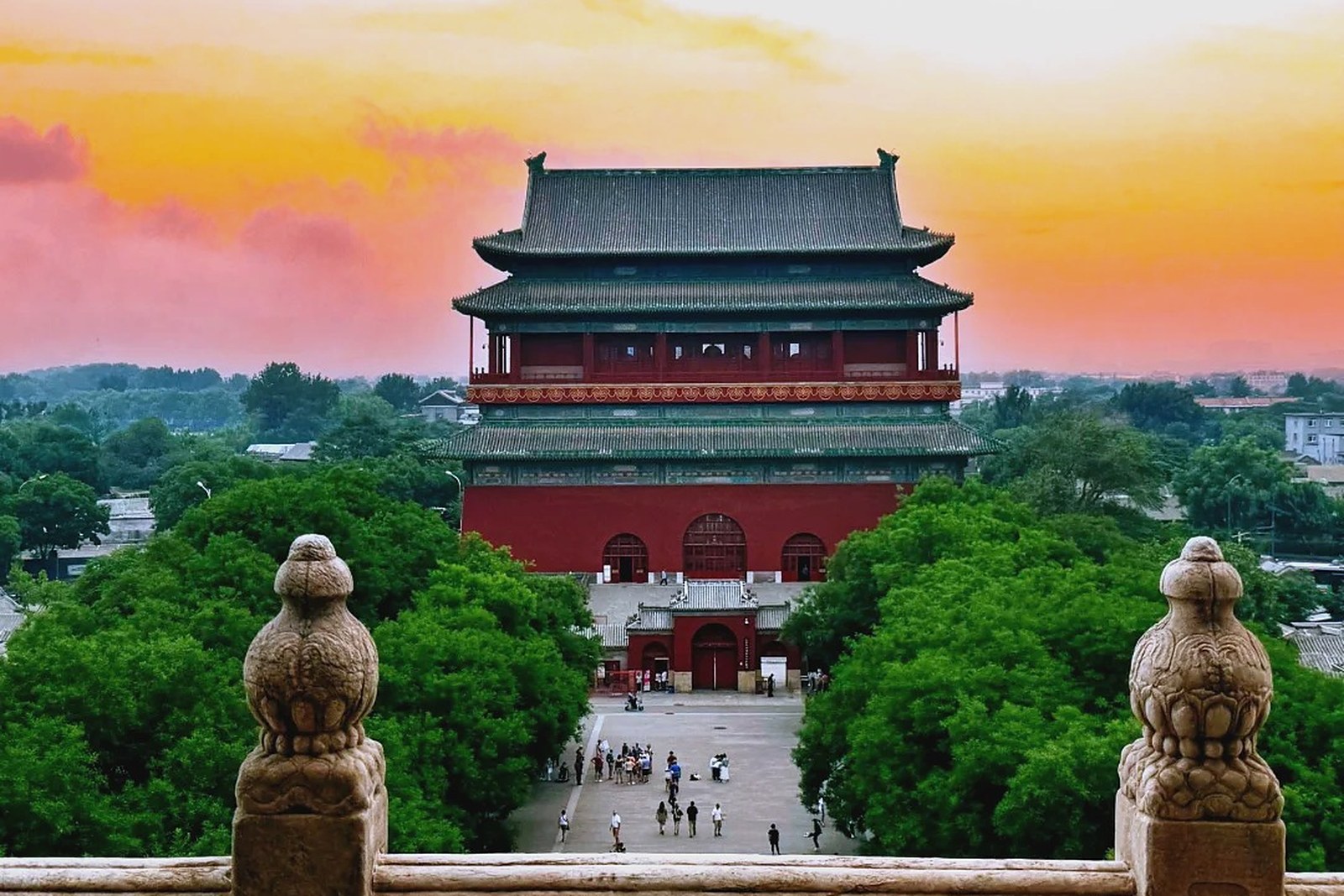
钟鼓楼 Zhōnggǔlóu the Bell and Drum Towers are not two clock-towers with a plaza — they are, plainly put, the timekeeping head of old Beijing, a paired pair of stone towers at the northern end of the 北京中轴线 Běijīng zhōngzhóuxiàn Beijing central axis, in 西城区 Xīchéng Qū Xicheng District, Beijing, just north of 地安门 Dì’ānmén the old Di’anmen gate. The 鼓楼 Gǔlóu Drum Tower came first under the Yuan, rebuilt in the Ming and Qing, and the 钟楼 Zhōnglóu Bell Tower stands a stone’s throw behind it, a heavier, quieter mass of grey brick. For five hundred years these two told the city the hour: drums marked the night watches, the great bell the dawn, and a strike from either rolled across the tiled roofs to a hundred thousand courtyards. What you actually visit is the best-preserved example of Chinese urban timekeeping left standing — climb either for a timber-and-brick interior and a rooftop view back down the axis toward the palace — and because they sit at the top of the hutong quarter, they make a natural full stop to a day in the Xicheng lanes.
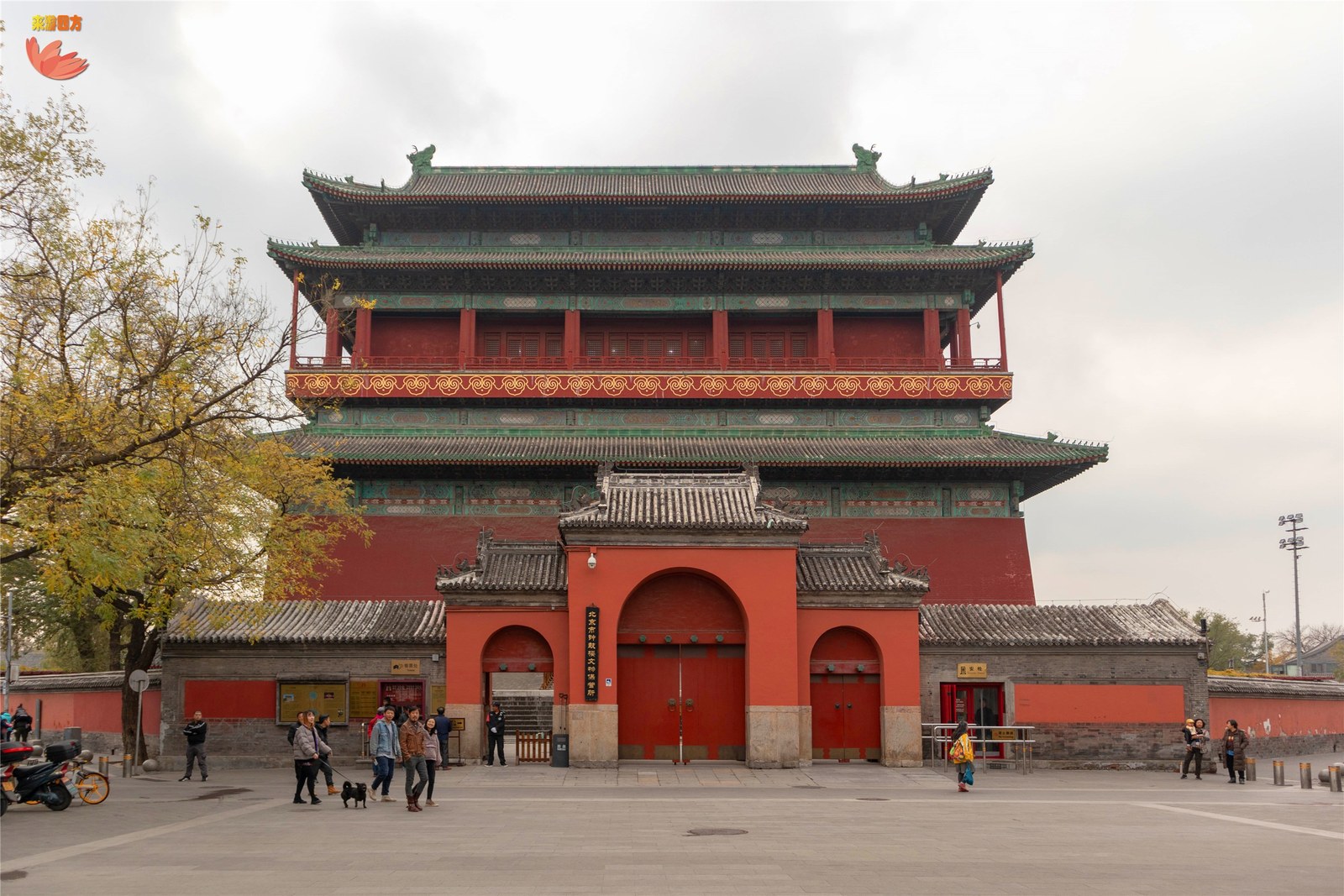
Call it honestly: two towers you can climb, one ticket you should check. Entry is ticketed and worth confirming the details — the drum and bell towers sell either separate or combined tickets and the prices and the opening hours shift by season, so verify the current rate and the last-climb time before you queue (worth confirming the details). The drum tower still beats its great hide drums on a published schedule (worth confirming the details), and the bell tower’s colossal iron bell — cast in the Yongle era — is shown but not struck for visitors. The square between them, 钟鼓楼广场 Zhōnggǔlóu Guǎngchǎng the Bell and Drum Towers Square, is free and is the better photograph: low, open, with the brick towers squared against the sky. The tourist trap is the same as the lakes’ — 人力车 rénlì chē rickshaw touts at the foot of the towers — so walk in on foot from 烟袋斜街 Yāndài Xiéjiē and skip the ride. Metro Line 2 or 8 to 鼓楼大街 Gǔlóu Dàjiē Gulou Dajie drops you a few minutes south.
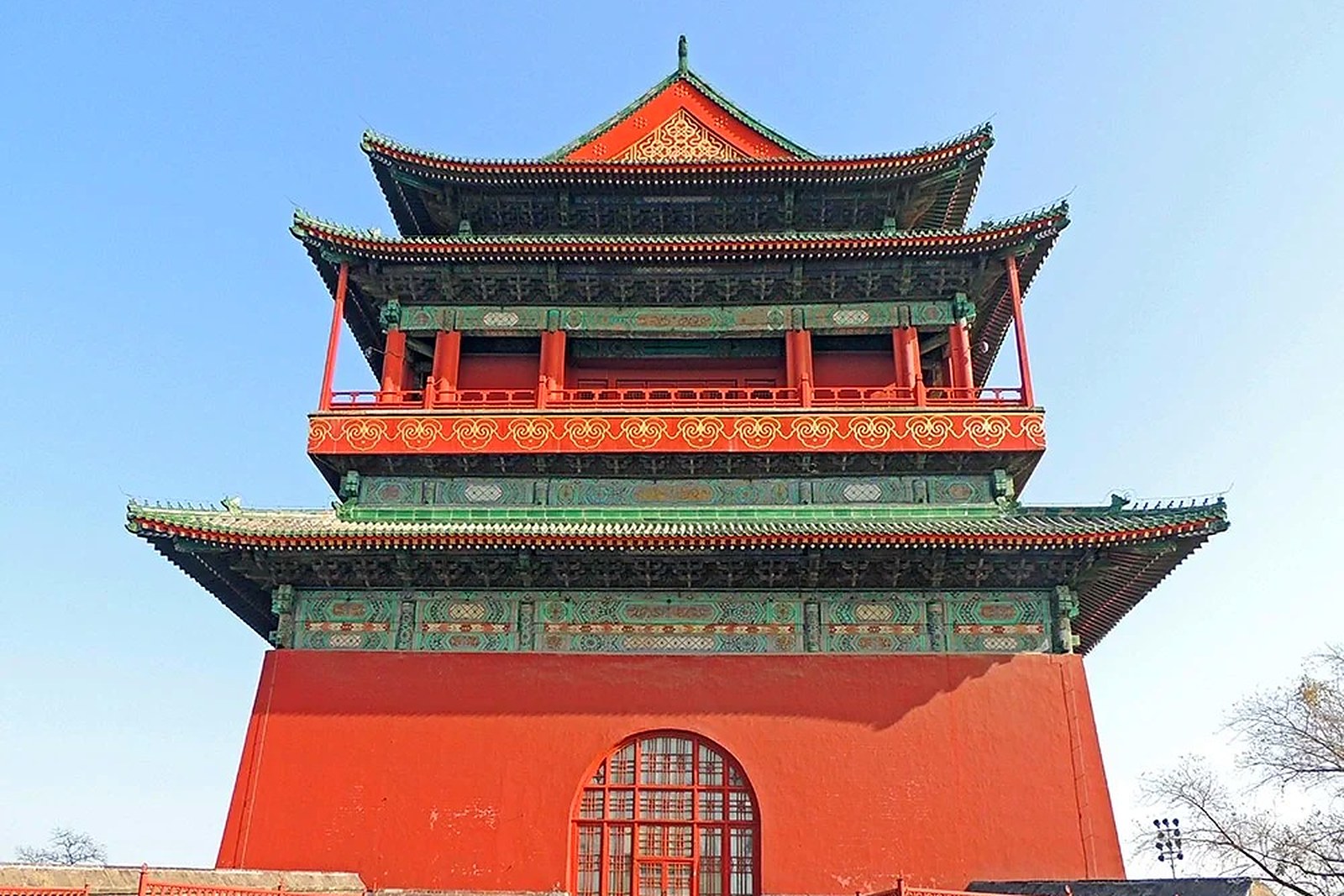
The honest star is the drum tower’s upper hall, not the bell’s silence. Inside 鼓楼 Gǔlóu a row of great barrel drums — twenty-five in the set, only a few original — lines the chamber, and the view from the rail takes in the grey sea of hutong roofs rolling south toward the palace, the only high-angle on the old city’s fabric that doesn’t cost a fortune. What gets oversold is the bell tower interior, impressive but bare; what repays the effort is the square at dusk, when the lanterns come up and the towers turn to silhouette against the last light, and a few old men still play 象棋 xiàngqí Chinese chess on the stone. The Ming water-clock and the 更 gēng night-watch system that these towers served are long gone, but the legend survives — the 铸钟娘娘 zhùzhōng niángniang Bell-Casting Lady, who by the tale threw herself into the molten metal to make the great bell ring true — and the towers still read, even silent, as the city’s northern punctuation.
The self-aware postscript: I climbed the drum tower expecting a view and got a lesson — stood among the great hides while a keeper tapped out the old watch on a practice drum, and realised the whole capital once jumped to this rhythm. That is the visit in miniature. 钟鼓楼 Zhōnggǔlóu suits whoever climbs one tower, photographs the square, and walks the lanes south toward 什刹海 Shíchàhǎi, and loses whoever pays for both climbs and the rickshaw hustle. Come late, watch the drums beat if the schedule allows (worth confirming the details), and end on the square as the light goes — the northern end of the same Xicheng axis that began, miles south, at the palace gate.
Practicalities
- Rating: ★★★★☆ — the best-preserved timekeeping pair in China; one climb and the free square at dusk beat paying for both towers.
- Tickets: Ticketed climb, worth confirming the details — separate or combined drum-and-bell tickets with seasonal prices and a last-climb time to verify (worth confirming the details before you queue).
- Address: 钟鼓楼 Zhōnggǔlóu, 西城区 Xīchéng Qū Xicheng District, Beijing — at the north end of the central axis, just north of 地安门 Dì’ānmén, a walk from 什刹海 Shíchàhǎi.
- Time needed: One to two hours for one tower and the square; add time if you climb both and wait for the drum-beating.
Words and Names
钟鼓楼 Zhōnggǔlóu Bell and Drum Towers · the timekeeping pair at the axis’s north end in Xicheng 鼓楼 Gǔlóu Drum Tower · the front tower whose great drums marked the night watches 钟楼 Zhōnglóu Bell Tower · the grey-brick tower behind, housing the Yongle-era iron bell 钟鼓楼广场 Zhōnggǔlóu Guǎngchǎng Bell and Drum Towers Square · the free plaza between the two towers 鼓楼大街 Gǔlóu Dàjiē Gulou Dajie · the metro-served avenue at the towers’ south 更 gēng night watch · the old system these towers sounded across the city
flowcloud would say that 钟鼓楼 Zhōnggǔlóu are Xicheng’s timekeeping head — the 鼓楼 Gǔlóu Drum Tower and the 钟楼 Zhōnglóu Bell Tower closing the 北京中轴线 Běijīng zhōngzhóuxiàn from the north, with 25 great drums and a Yongle iron bell — and that the honest move is one climb with the ticket and last-climb time worth confirming the details (worth confirming the details), because the square 钟鼓楼广场 Zhōnggǔlóu Guǎngchǎng is the better photograph, the 人力车 rénlì chē rickshaw touts hustle at the foot, and the towers repay whoever climbs one, shoots the square at dusk and walks south to 什刹海 Shíchàhǎi. All checked October 2026.
Getting there: Metro Line 2 or Line 8 to 鼓楼大街 Gǔlóu Dàjiē Gulou Dajie, a few minutes south of the towers; walk in on foot from 烟袋斜街 Yāndài Xiéjiē and skip the rickshaw ride — the 钟鼓楼 Zhōnggǔlóu stand at the north end of Xicheng’s central axis, a stroll from 什刹海 Shíchàhǎi (worth confirming the details for the current drum-beating schedule and tower hours). All checked October 2026.