
A City Built by Soldiers: the Bingtuan Military Reclamation Museum at Shihezi
放下钢枪拿起锹,荒原从此起新城 Fàngxià gāngqiāng náqǐ qiāo, huāngyuán cóngcǐ qǐ xīnchéng – They set down their rifles and took up spades, and from the wasteland a new city began to rise
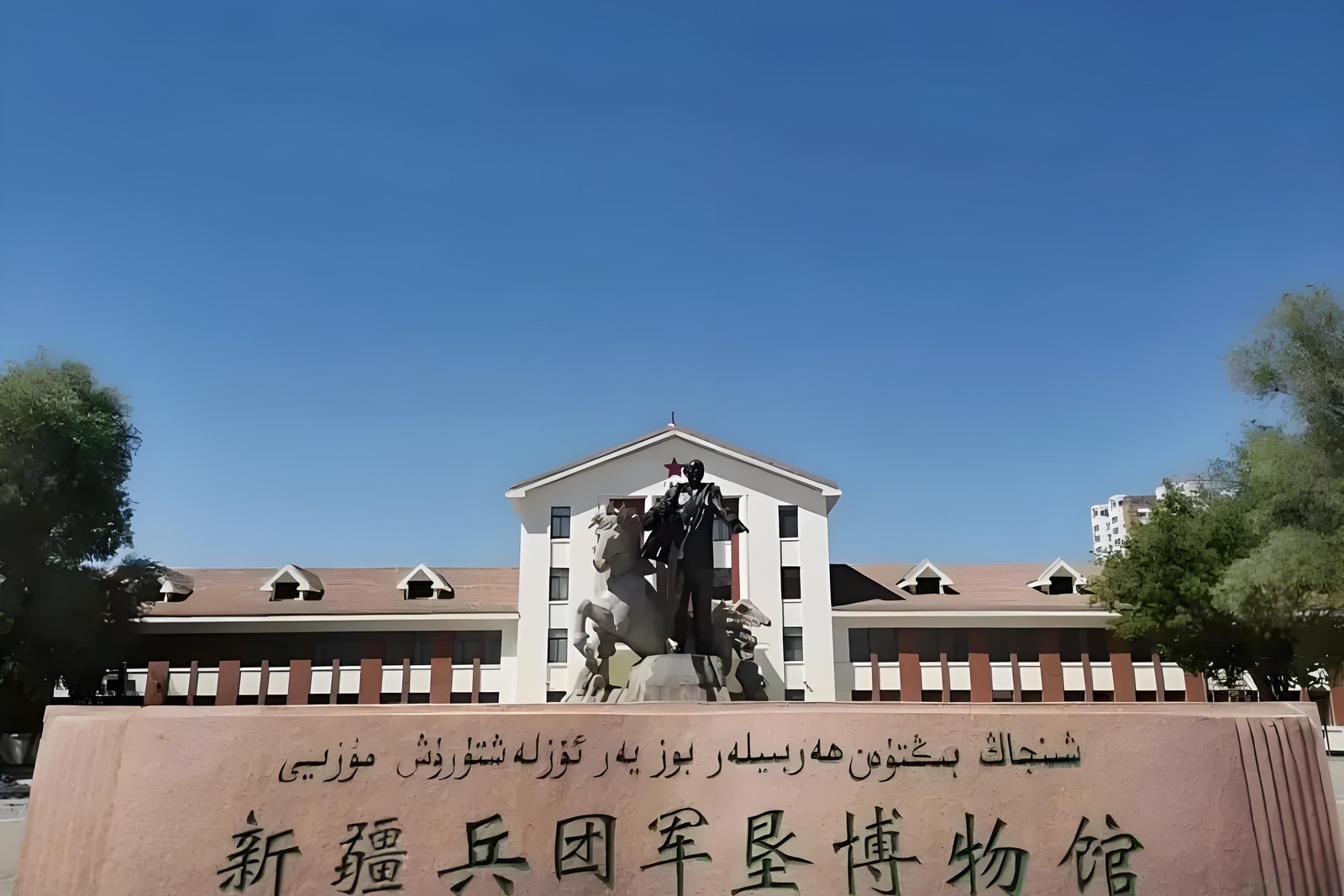
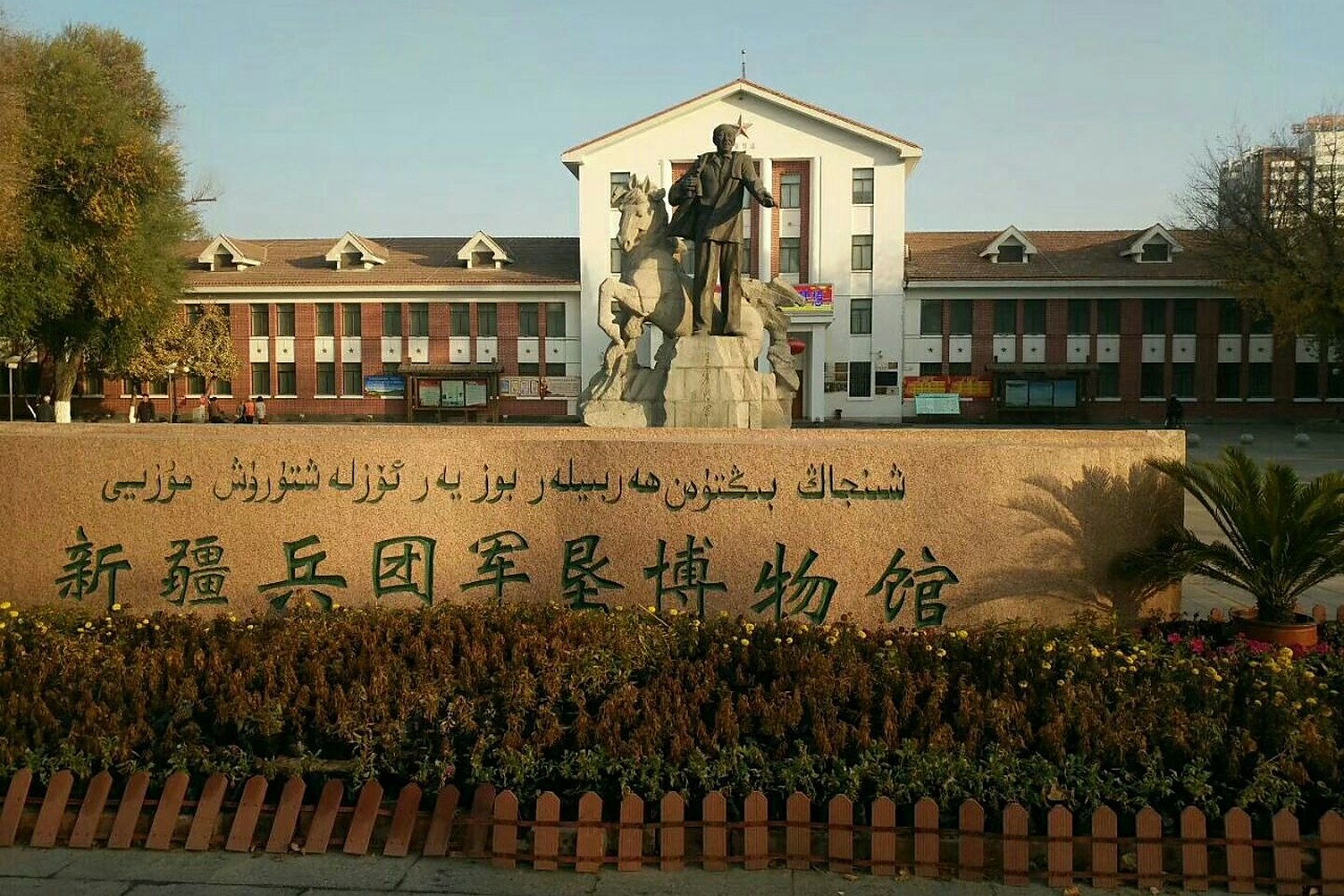
正文:兵团军垦博物馆 Bīngtuán Jūnkěn Bówùguǎn the Bingtuan Military Reclamation Museum is the room where Shihezi’s founding argument is told in full: soldiers put down their rifles in 1950 and picked up shovels, and the desert answered with canals, streets and a university. The building itself is a piece of the story – a reconstruction of the Corps headquarters that once stood here – and the galleries walk a visitor from the first survey of the Manas River valley to the farms and factories that grew out of it.
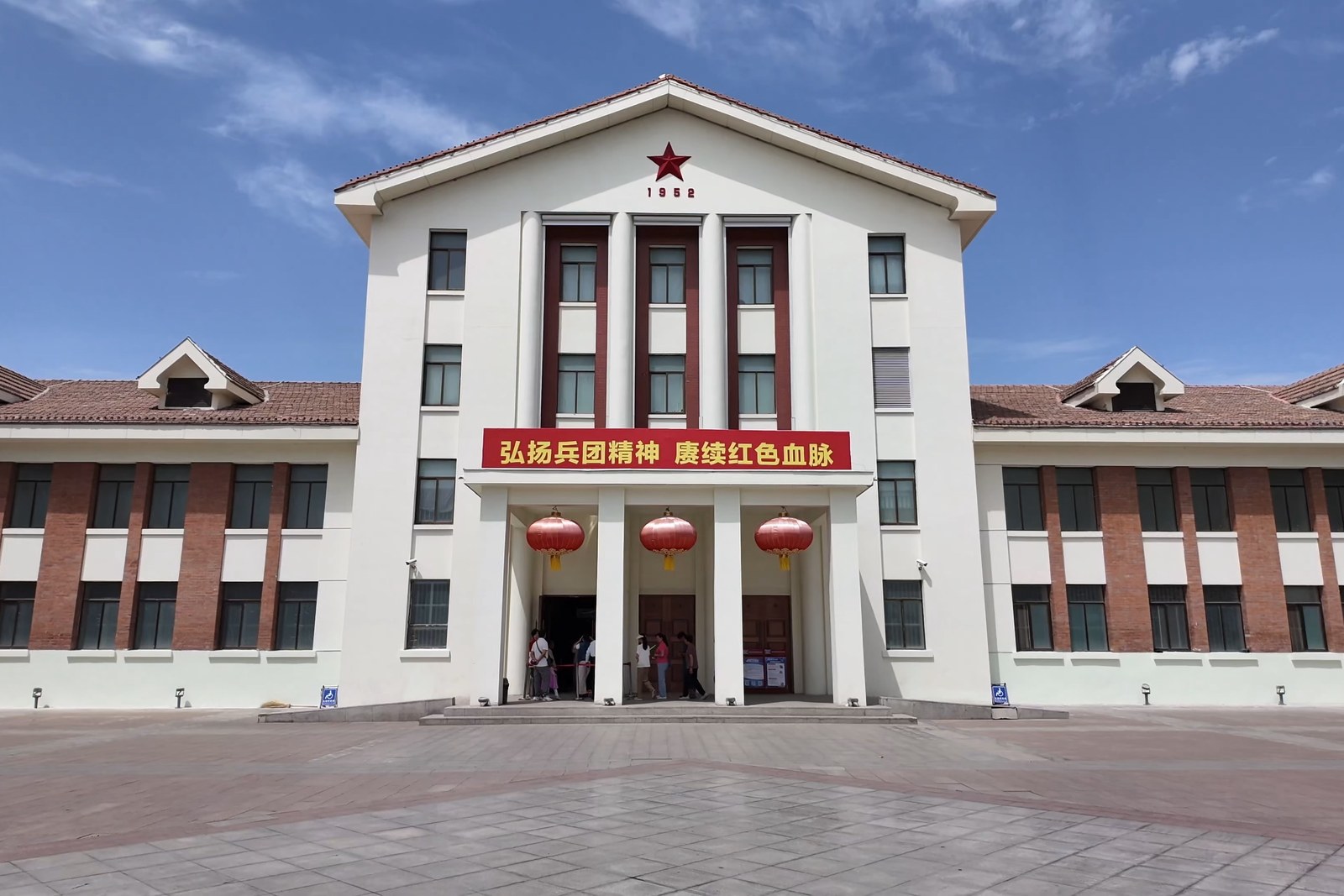
The museum’s most talked-about section is the sod-dugout room. Visitors step down into a half-buried shelter roofed with brush, the kind the first settlers slept in while they dug the irrigation canals that still water the city’s poplar rows. Beside it sit the tools themselves: worn ploughs, rifles converted to farm use, small stoves that heated rooms where ten men slept in bunks. Bilingual labels keep the story legible, and the curators have resisted glossing over the hardship – the winter mortality figures are printed plainly on the wall.
Upstairs the story turns from survival to building. Photographs document the moment the Corps drew street grids before there were streets, planting windbreaks so the young city would one day stand inside greenery – the reason Shihezi’s boulevards today feel like a park that happens to have buildings. A hall of everyday objects shows what “military reclamation” meant in practice: uniforms remade as work clothes, children’s schoolbooks from the first regiment schools, and the honor rolls of the women who joined the 1954 march west and founded half the farm households of the basin.
The museum anchors the northern half of the city center, and most visitors pair it with the First Plow statue in Youxi Square a few minutes away – two monuments making one argument, one in bronze and one in documents. Allow two hours, take the English labels slowly, and finish in the bookshop, which sells a small English-language history of the Corps that is the best souvenir Shihezi offers.
Practicalities
Beyond the museum, the same 石河子市 Shíhézǐ Shì Shihezi City keeps more places worth the detour: 周总理纪念碑 Zhōu Zǒnglǐ Jìniànbēi the Zhou Enlai memorial for the 1965 visit, 艾青诗歌馆 Ài Qīng Shīgēguǎn the poetry hall for the exile years, 军垦第一犁广场 Jūnkěn Dì-yī Lí Guǎngchǎng the First Plow square for the bronze argument, or 蘑菇湖水库 Mógū Hú Shuǐkù the Mushroom Lake reservoir for the bird country – four more doors into the same 石河子市 Shíhézǐ Shì Shihezi City. Once the museum is walked, our Shihezi food map fills the day.
Practicalities
Words and Names
flowcloud would say the reclamation museum is the city’s founding document set in glass: rifles traded for ploughs, a dugout remembered without varnish, and a desert that learned to hold its water. All checked November 2026.
Getting there: The museum sits on Beisan Road in the city core; city buses stop within a block, the entrance is free with ID, and two to three hours covers the galleries comfortably – go early, as tour groups fill the sod-dugout hall by late morning. All checked November 2026.