
一弯抱孤岛,众教共山阿。Yī wān bào gūdǎo, zhòng jiào gòng shān ē – One bend cradles a lone island; many faiths share the same hillside.
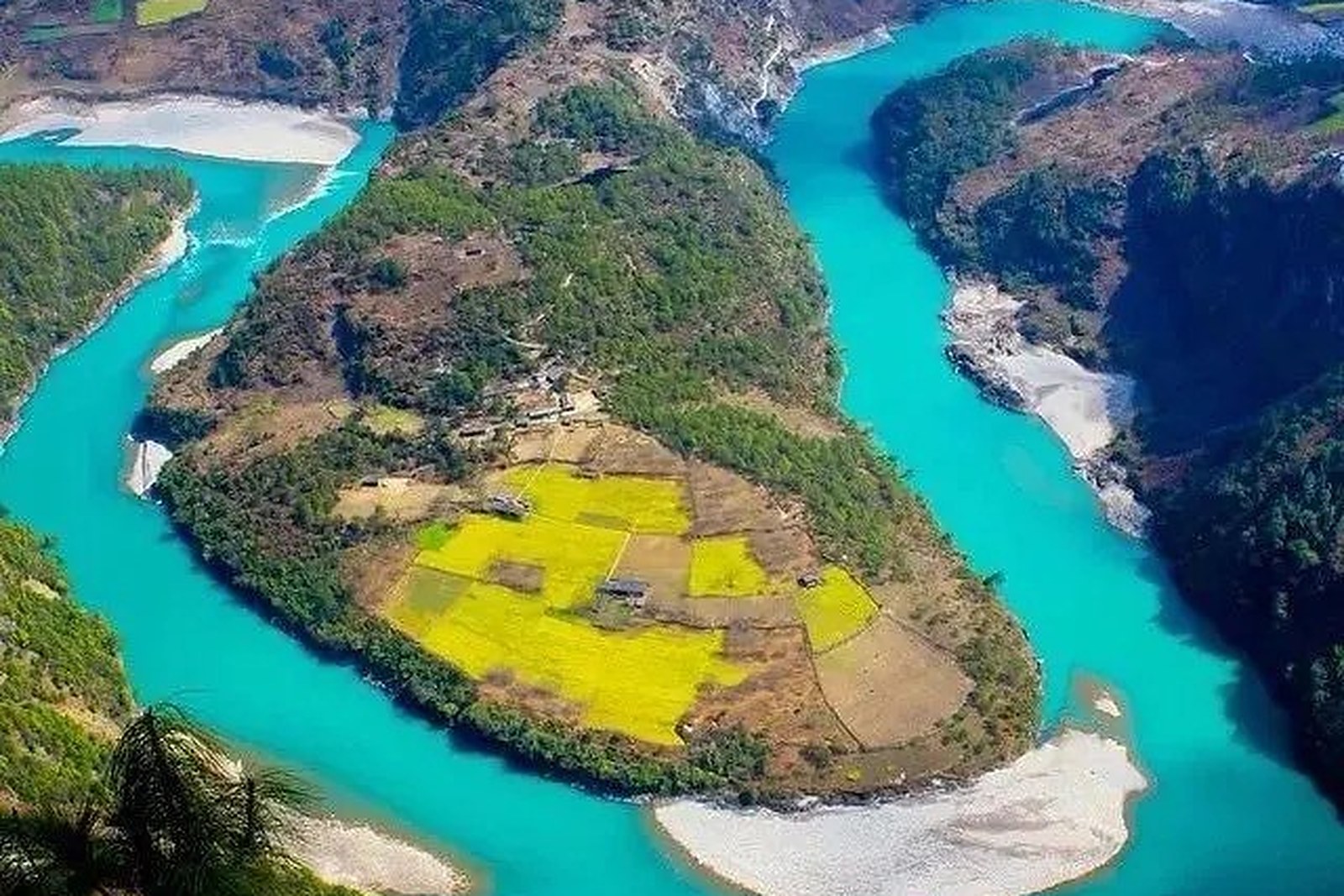
丙中洛 Bǐngzhōngluò Bingzhongluo is the far north of 贡山独龙族怒族自治县 Gòngshān Dúlóngzú Nùzú Zìzhìxiàn Gongshan Derung and Nu Autonomous County, the last populated pocket of the 怒江 Nùjiāng Nu valley before the road either climbs toward 西藏 Xīzàng Tibet or drops into the 察瓦龙 Cháwǎlóng Zayu corridor of the 茶马古道 Chámǎ Gǔdào Tea-Horse Road. It is a high basin where the river suddenly relaxes, and the headline sight is the 怒江第一湾 Nùjiāng Dìyī Wān First Bend of the Nu River — the 怒江 Nùjiāng swinging almost all the way back on itself around a green 半岛 bàndǎo peninsula, leaving an oxbow 桃花岛 Táohuā Dǎo Peach Blossom Island (the village of 坎桶 Kǎntǒng Kantong, ringed by blossom in spring) sitting in the crook of the water. Above the fields, 丙中洛 Bǐngzhōngluò is famous as a place where 藏传佛教 Zàngchuán Fójiào Tibetan Buddhism, 基督教 Jīdūjiào Christianity, 天主教 Tiānzhǔjiào Catholicism and older 原始宗教 yuánshǐ zōngjiào animist practice coexist in the same hamlets — a multi-faith valley that feels less like a slogan than a daily habit, with a 教堂 jiàotáng church and a 喇嘛寺 lǎma sì lamasery often within walking distance of each other.
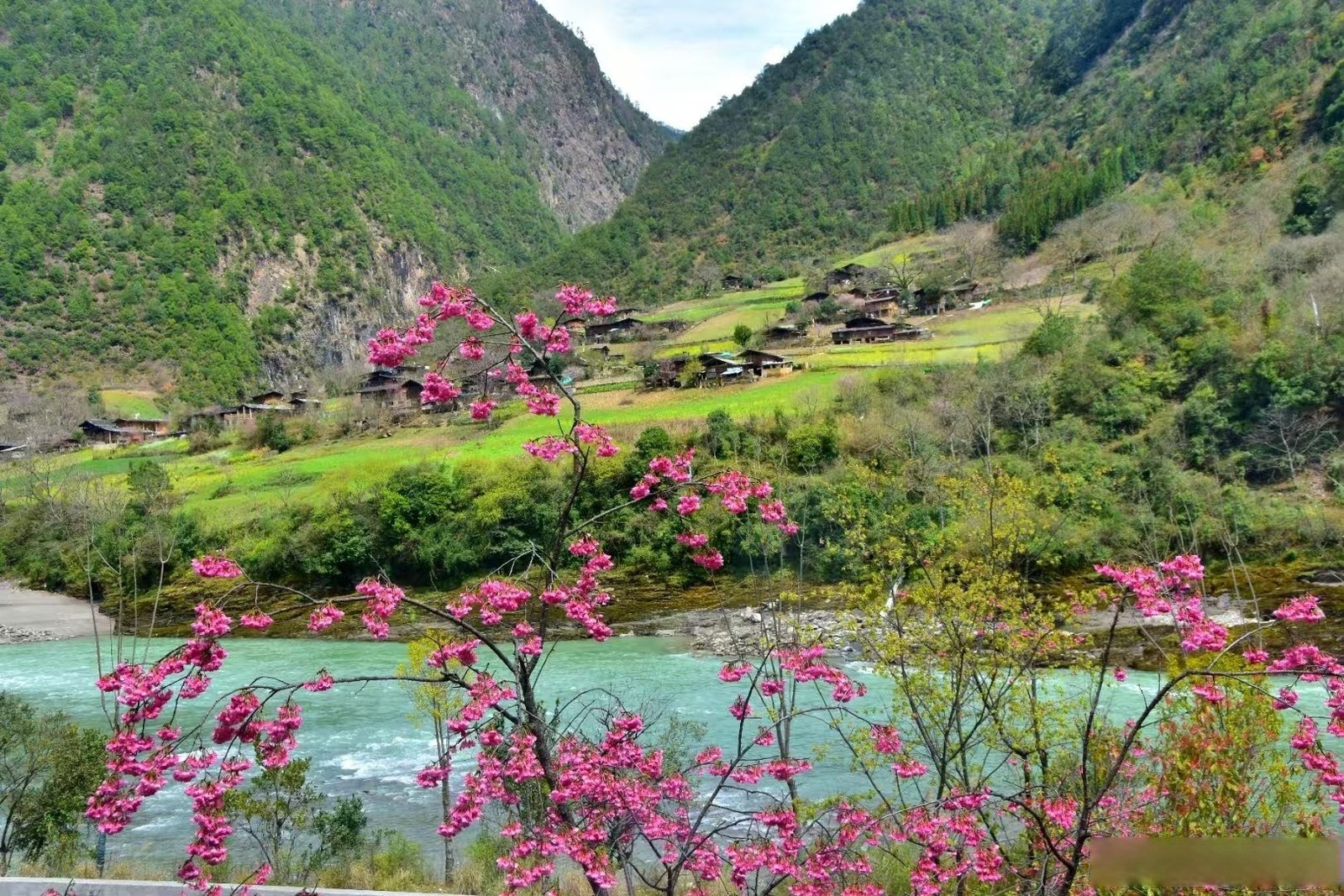
The honest grade is “a free, lived-in valley, not a ticketed show,” but the access is the catch. From 贡山 Gòngshān Gongshan town, 丙中洛 Bǐngzhōngluò is still another three hours of slow road north (worth confirming the current drive time — the sealed road improved, but “three hours beyond Gongshan” remains the honest order of magnitude because the mileage is short and the surface is slow), and from 六库 Liùkù Liuku the whole run is a long, landslide-prone day. There is no rail and no realistic flight; you earn Bingzhongluo by road. The old 溜索 liūsuǒ and the 茶马古道 Chámǎ Gǔdào plank path above 雾里村 Wùlǐ Cūn Wuli Village — a stone-ledged mule track pinned to the cliff — are the valley’s signature walk, and the nearby 秋那桶 Qiūnàtǒng Qiunatong village is the prettiest of the 怒族 Nùzú Nu settlements. The 重丁教堂 Chóngdīng Jiàotáng Chongding Church (Catholic, rebuilt on an older mission site) is the most-photographed building, but treat it as a working parish, not a backdrop. None of this carries a gate fee; the money is petrol, a guesthouse and a local guide if you want the cliff plank road without guessing.
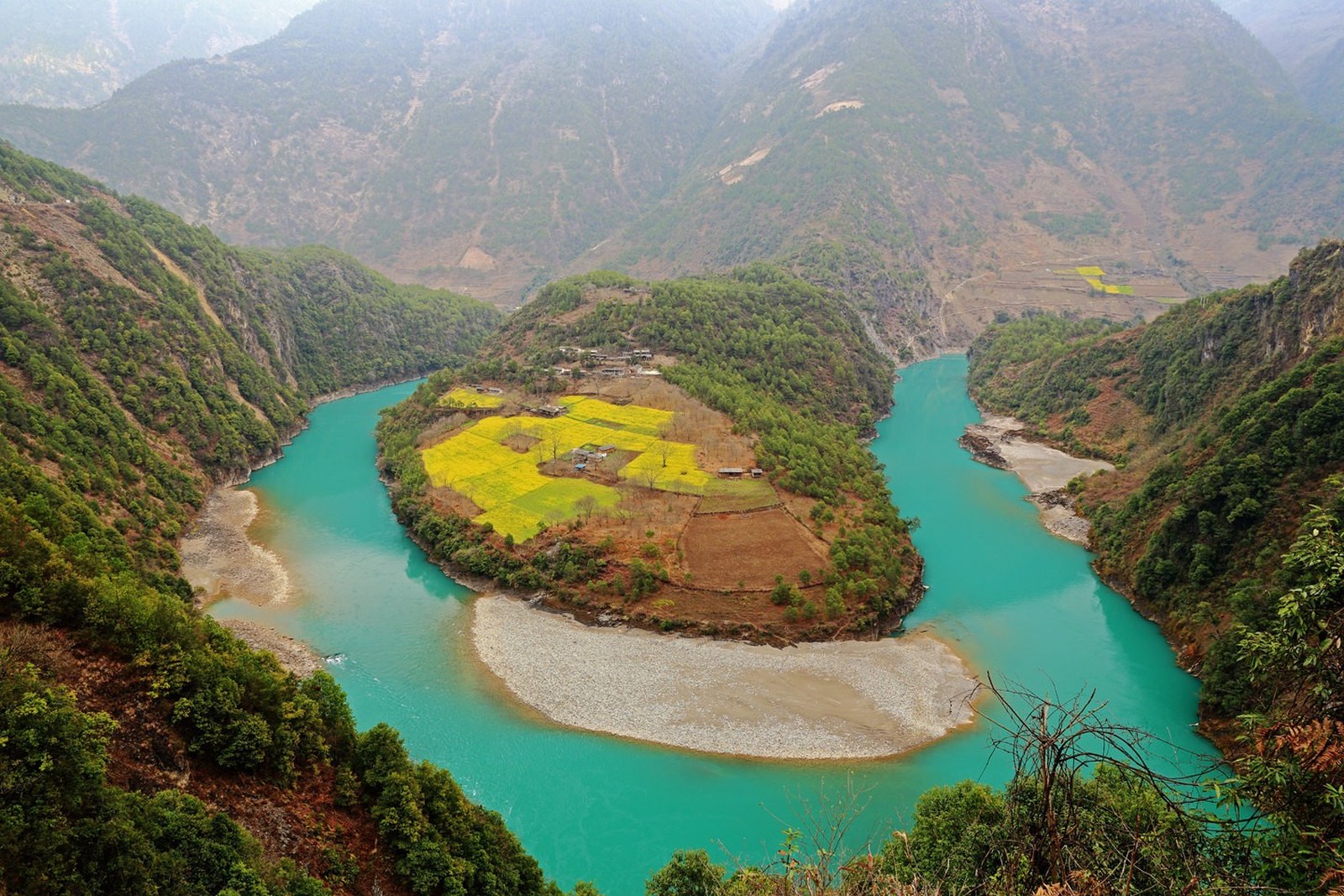
The wry take is that Bingzhongluo is sold as a “Shangri-La of the Nu,” and the trouble is it is half true and half tour-brochure. What is overrated is the idea that you have arrived somewhere untouched — the basin has phone signal, tarmacked lanes and a growing row of 客栈 kèzhàn guesthouses — but what is genuinely worth it is real: the First Bend at first light before the coaches, the spring 桃花 táohuā blossom on the island, and the quiet fact that the 卡瓦格博 Kǎwǎgébó Kawagarbo pilgrimage route (the great 梅里雪山 Méilǐ Xuěshān Meili snow mountain to the north) historically passed through here, so 丙中洛 Bǐngzhōngluò is also the southern 朝圣 cháoshèng approach to a sacred peak. Best season is October to April for clear, dry roads and snow on the high ranges; the June-to-September rains turn the climb to 贡山 Gòngshān into a 塌方 tāfāng lottery. Carry your ID for the routine checks, do not photograph any frontier or military installation (the Tibet corridor is sensitive), and remember the valley closes in on itself at dusk — there is nowhere to flee to if the weather strands you.
Practicalities
- Rating: The northern basin of Gongshan County, a free, lived-in multi-faith valley inside the Three Parallel Rivers landscape; not a graded ticketed scenic area in the 5A sense.
- Tickets: No gate fee for the valley, the First Bend or the villages; costs are petrol, a guesthouse and optional local guide. The cliff plank road above 雾里村 Wùlǐ Cūn is free to walk (worth confirming no new managed fee has been added).
- Address: 丙中洛镇 Bǐngzhōngluò Zhèn, Gongshan County, Nujiang — about three hours by road north of 贡山 Gòngshān and a long day from 六库 Liùkù; no rail.
- Time needed: At least one overnight; two nights lets you catch the First Bend at both dawn and the 秋那桶 Qiūnàtǒng walk without rushing the slow northern road.
Words and Names
丙中洛 Bǐngzhōngluò Bingzhongluo · the multi-faith northern basin of Gongshan, the Nu valley’s last outpost 怒江第一湾 Nùjiāng Dìyī Wān First Bend of the Nu River · the near-closed loop of the river, the valley’s headline sight 桃花岛 Táohuā Dǎo Peach Blossom Island · the oxbow islet of 坎桶 Kǎntǒng Kantong, blossom in spring 贡山独龙族怒族自治县 Gòngshān Dúlóngzú Nùzú Zìzhìxiàn Gongshan Derung and Nu Autonomous County · the county that holds Bingzhongluo 茶马古道 Chámǎ Gǔdào Tea-Horse Road · the cliff plank path above 雾里村 Wùlǐ Cūn, once a caravan route 雾里村 Wùlǐ Cūn Wuli Village · the cliff-side Nu hamlet above the old mule track 秋那桶 Qiūnàtǒng Qiunatong · the prettiest Nu village near the valley head 重丁教堂 Chóngdīng Jiàotáng Chongding Church · the rebuilt Catholic parish, the valley’s most-photographed building 卡瓦格博 Kǎwǎgébó Kawagarbo · the sacred Meili peak whose pilgrimage route historically passed through here 察瓦龙 Cháwǎlóng Zayu · the Tibet-corridor town the northern road leads toward
flowcloud would say that 丙中洛 Bǐngzhōngluò is the free, multi-faith basin at the end of the Nu — the 怒江第一湾 Nùjiāng Dìyī Wān looping around 桃花岛 Táohuā Dǎo, 藏传佛教 Zàngchuán Fójiào and 天主教 Tiāzhǔjiào sharing one hillside, three slow hours beyond 贡山 Gòngshān — and that the honest move is dawn at the bend and the cliff 茶马古道 Chámǎ Gǔdào walk above 雾里村 Wùlǐ Cūn, because the “untouched Shangri-La” is now tarmacked, the road is a rainy-season lottery, and the Tibet corridor is not a place to wave a camera. All checked October 2026.
Getting there: 贡山 Gòngshān county seat and about 44 km further north on the G219 – roughly an hour and a half by van or the daily minibus from 贡山 Gòngshān (worth confirming times), with the 怒江第一湾 Nùjiāng Dì-yī Wān viewpoint a few kilometres before the village; the honest plan is two nights, one for the bend and one for 雾里村 Wùlǐ Cūn across the river. All checked October 2026.