
Gates and Departure Light: Binhai International Airport
银翼排云凌碧落,津门从此接五洲 Yínyì páiyún líng bìluò, Jīnmén cóngcǐ jiē wǔzhōu – Silver wings part the clouds and ride the blue; from Tianjin’s gate the five continents connect
天津滨海国际机场 Tiānjīn Bīnhǎi Guójì Jīchǎng Tianjin Binhai International Airport is 天津市东丽区 Tiānjīn Shì Dōnglì Qū Dongli District’s most consequential address – a full international gateway sitting closer to the city center than any airport has a right to be. The terminal’s long roofline bends like a drawn bow, red flags line the forecourt, and the whole complex hums with the particular energy of a city that ships, flies and manufactures at industrial scale.
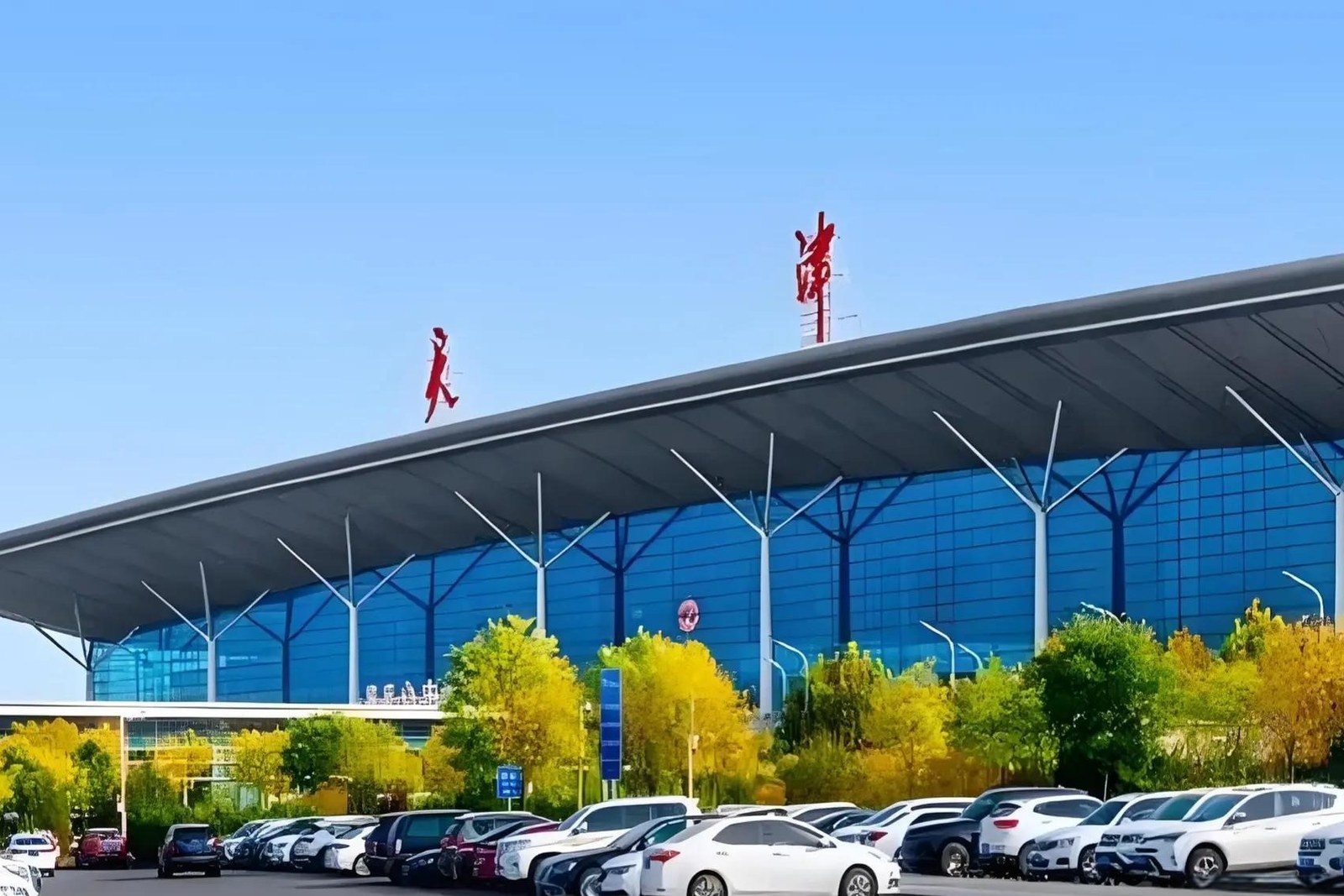
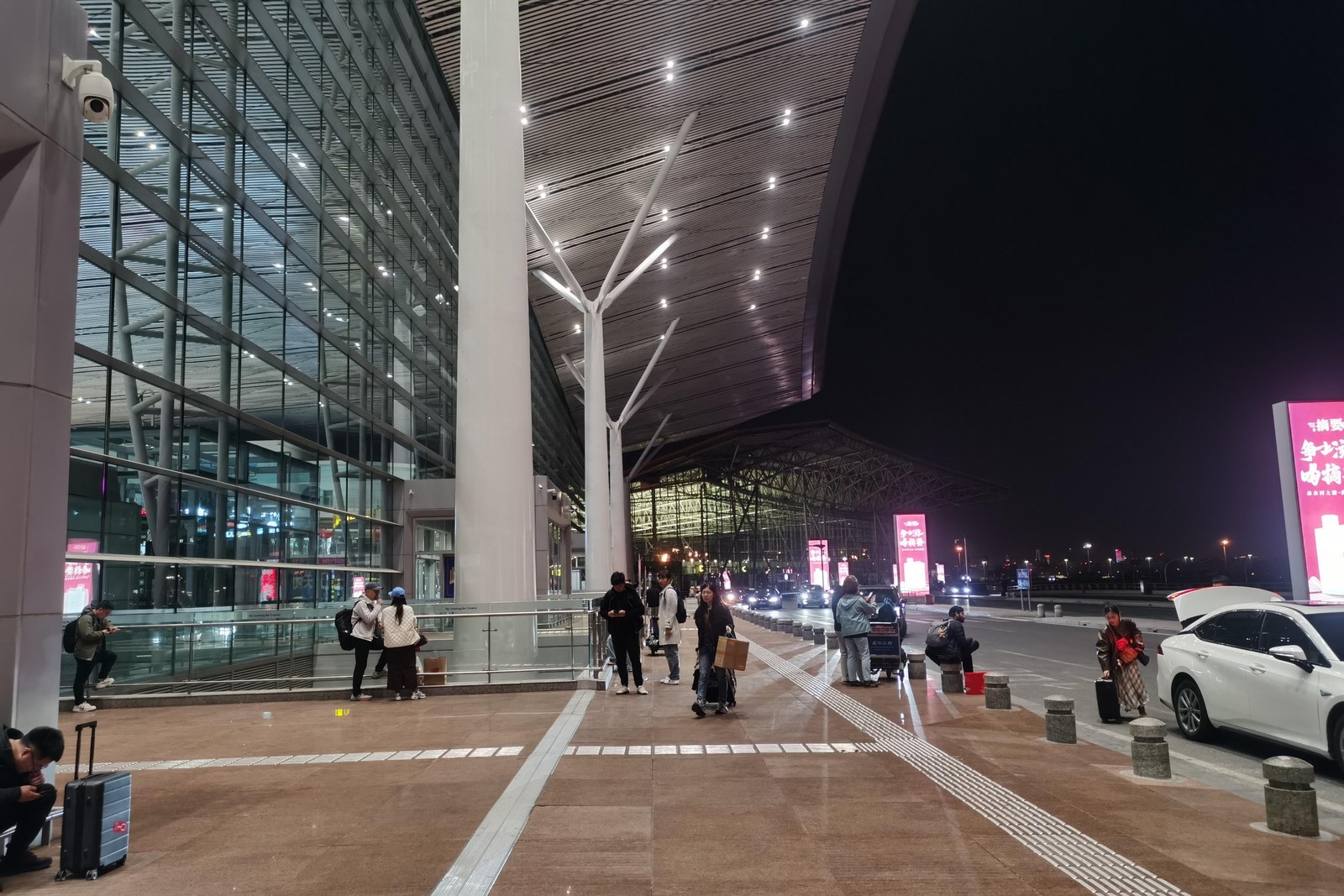
The terminal exterior rewards the arriving passenger first. The sweeping roof gathers check-in halls, gates and transit links under one arc, and the forecourt’s flag lines frame the approach road. Inside, the vaulted halls run bright and wide – morning light lands on the departure boards, and the walk from security to the gates passes planting beds and seating long enough to feel like a garden promenade.
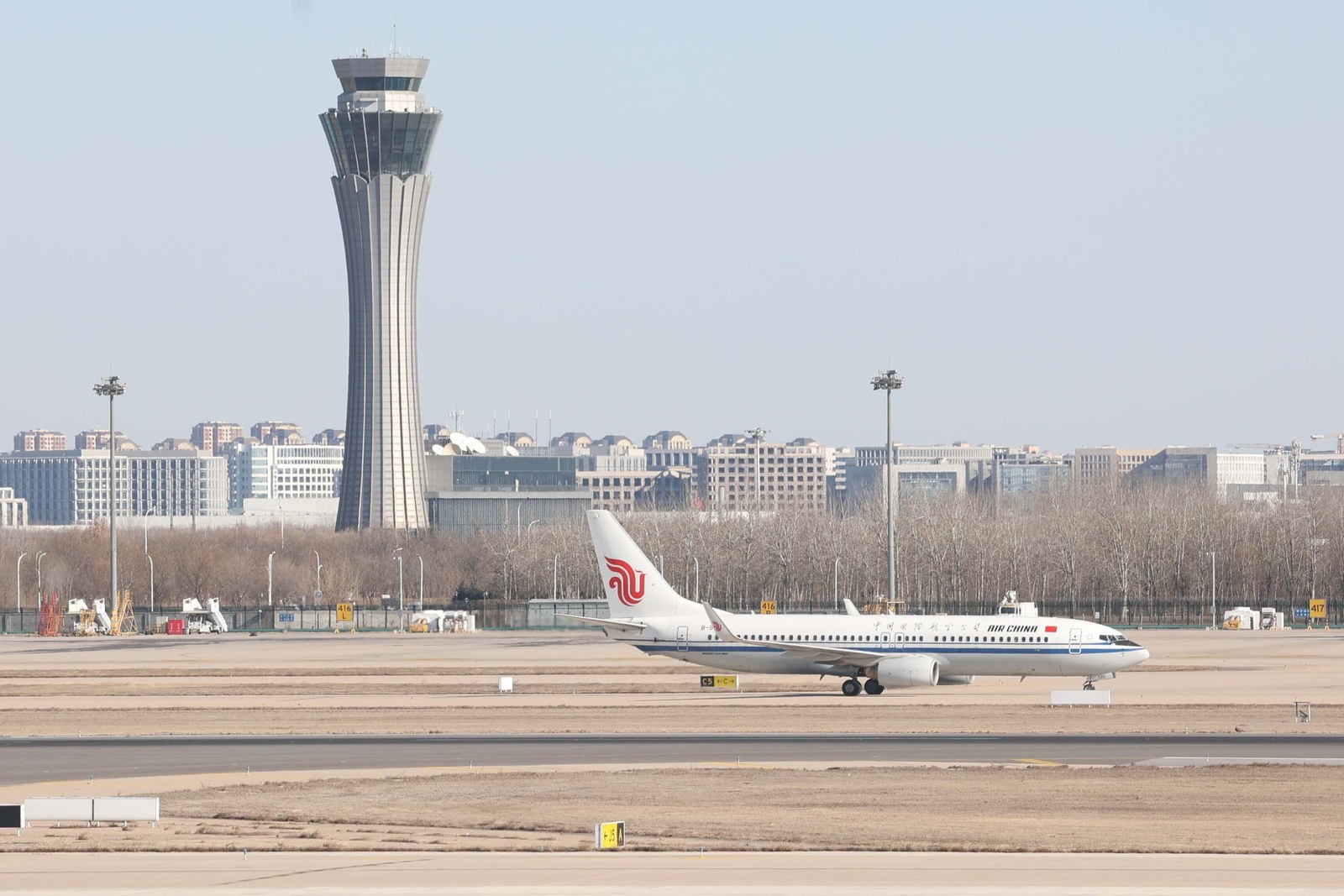
Airside, the airport is a working stage. The control tower stands over a ramp of parked aircraft, pushback tugs thread between bays, and the runway views from the boarding gates give you departures in close-up: gear folding, flaps setting, the long climb over the coastal plain. Rail links put the airport twenty minutes from the downtown stations, which is why so many Tianjin travelers wave goodbye to the city they can almost still see.
The airport’s neighborhood matters too. Around the passenger halls sprawls the airport economic zone – cargo sheds, logistics parks, and the industrial clusters that give the airport its freight weight. For visitors, the practical poetry is simple: land, ride the metro or a taxi, and be at the river in half an hour with the whole city ahead.
Practicalities
- Metro Line 2 runs from the terminal to the city center in about twenty minutes.
- Domestic departures dominate; international links cover the region’s major hubs.
- Security and check-in run briskly off-peak; morning banks are the busiest.
- The airport sits well inside 东丽区 Dōnglì Qū Dongli District – hotels cluster around the terminals and the adjacent 空港 kōnggǎng airport economic zone.
Words and Names
天津滨海国际机场 Tiānjīn Bīnhǎi Guójì Jīchǎng Tianjin Binhai International Airport; 航站楼 hángzhànlóu the terminal halls; 塔台 tǎtái the control tower; 停机坪 tíngjīpíng the apron of parked aircraft; 空港经济区 kōnggǎng jīngjìqū the airport economic zone next door. Beyond the runway, the same 天津市东丽区 Tiānjīn Shì Dōnglì Qū Dongli District keeps more places worth the detour: 东丽湖 Dōnglì Hú Dongli Lake, 天津欢乐谷 Tiānjīn Huānlègǔ Tianjin Happy Valley, 军粮城 Jūnliángchéng Junliangcheng, or 华明镇 Huámíng Zhèn Huaming Town – four more doors into the same Dongli District. Once the flight has landed, our Dongli food map fills the table.
flowcloud would say the airport is the district’s front door with a clock on it: one arc of roof gathering the city’s departures, a tower watching the ramp, and a metro line that folds the sky back into the street grid. All checked November 2026.
Getting there: Metro Line 2 terminates beneath Terminal 2, with the rail hall signing itself from arrivals – taxis and airport buses run the expressways, and the economic zone sits one shuttle stop east. All checked November 2026.