
The Sea Goddess of the Reclaimed Coast: Binhai Mazu Cultural Park
石像临波佑四海,香灯不灭海风清 Shíxiàng lín bō yòu sìhǎi, xiāngdēng bù miè hǎifēng qīng – The stone statue faces the waves, blessing the four seas; incense lamps burn on while the sea wind stays clear
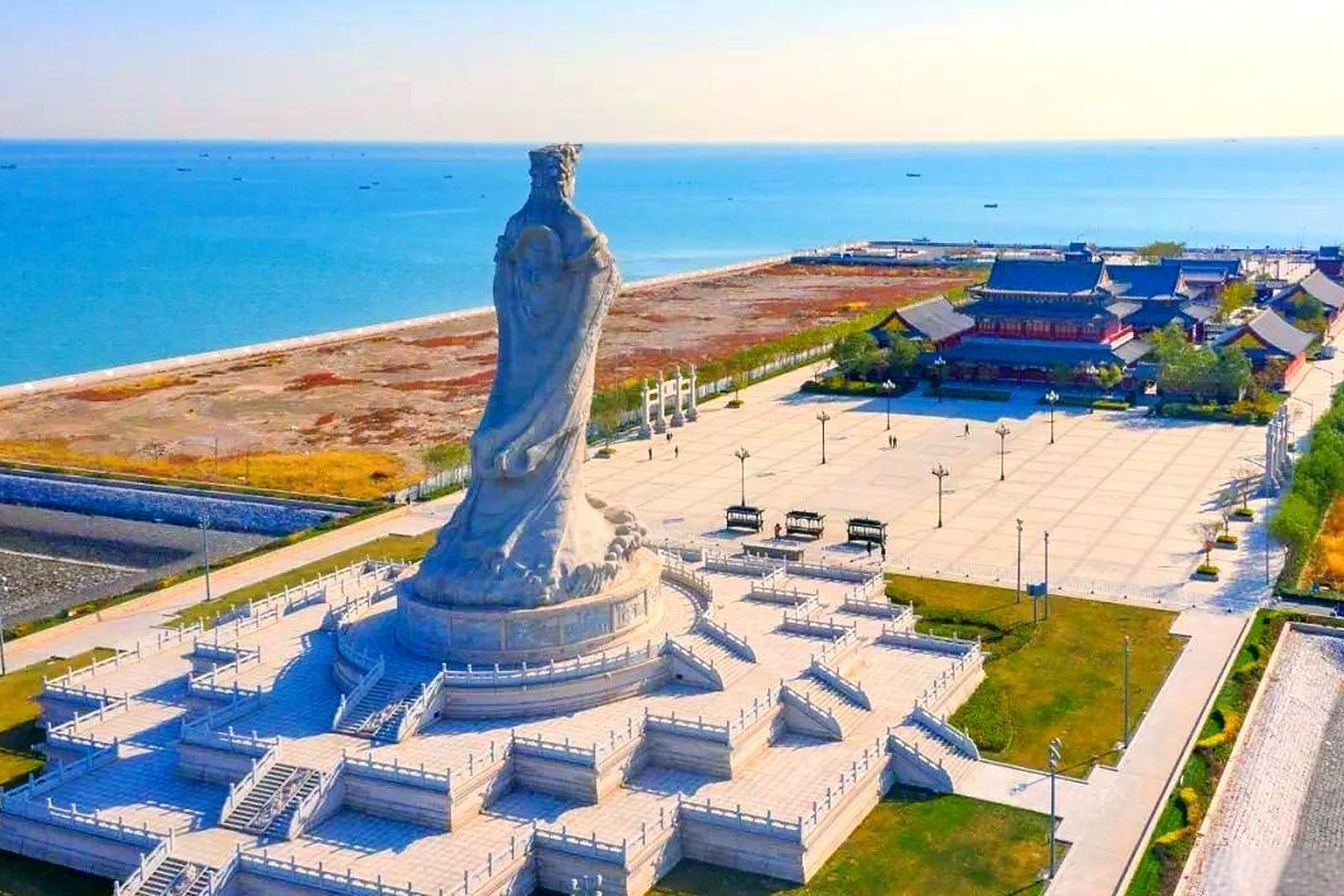
滨海妈祖文化园 Bīnhǎi Māzǔ Wénhuà Yuán raises one of the world’s tallest Mazu statues on reclaimed land off Hangu in 天津市滨海新区 Tiānjīn Shì Bīnhǎi Xīn Qū Binhai New Area – the stone goddess faces the Bohai from a plaza of carved railings and palace halls, fishing families still burn incense for safe seasons, and the seawall walk frames the statue against open water and sky. What was once a flat of mud and tide now carries the coast’s most photographed deity.
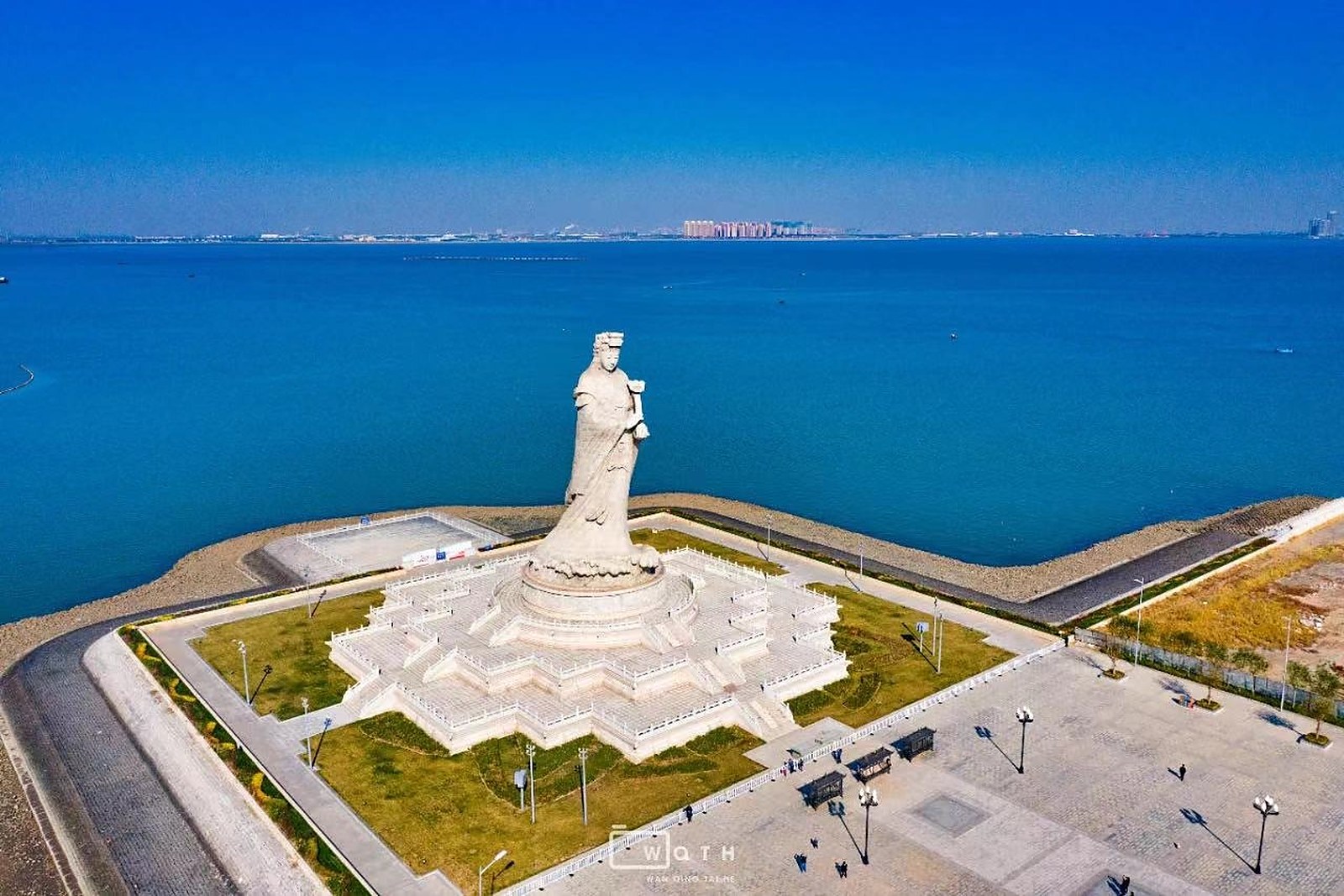
The statue is the destination. She rises from the plaza’s triple terrace in flowing stone robes, face turned toward the shipping lanes she once guarded in fishermen’s prayers, and from the base the seawall runs straight to the horizon. On clear mornings the statue catches the sunrise first – the plaza fills with photographers before the tour buses.
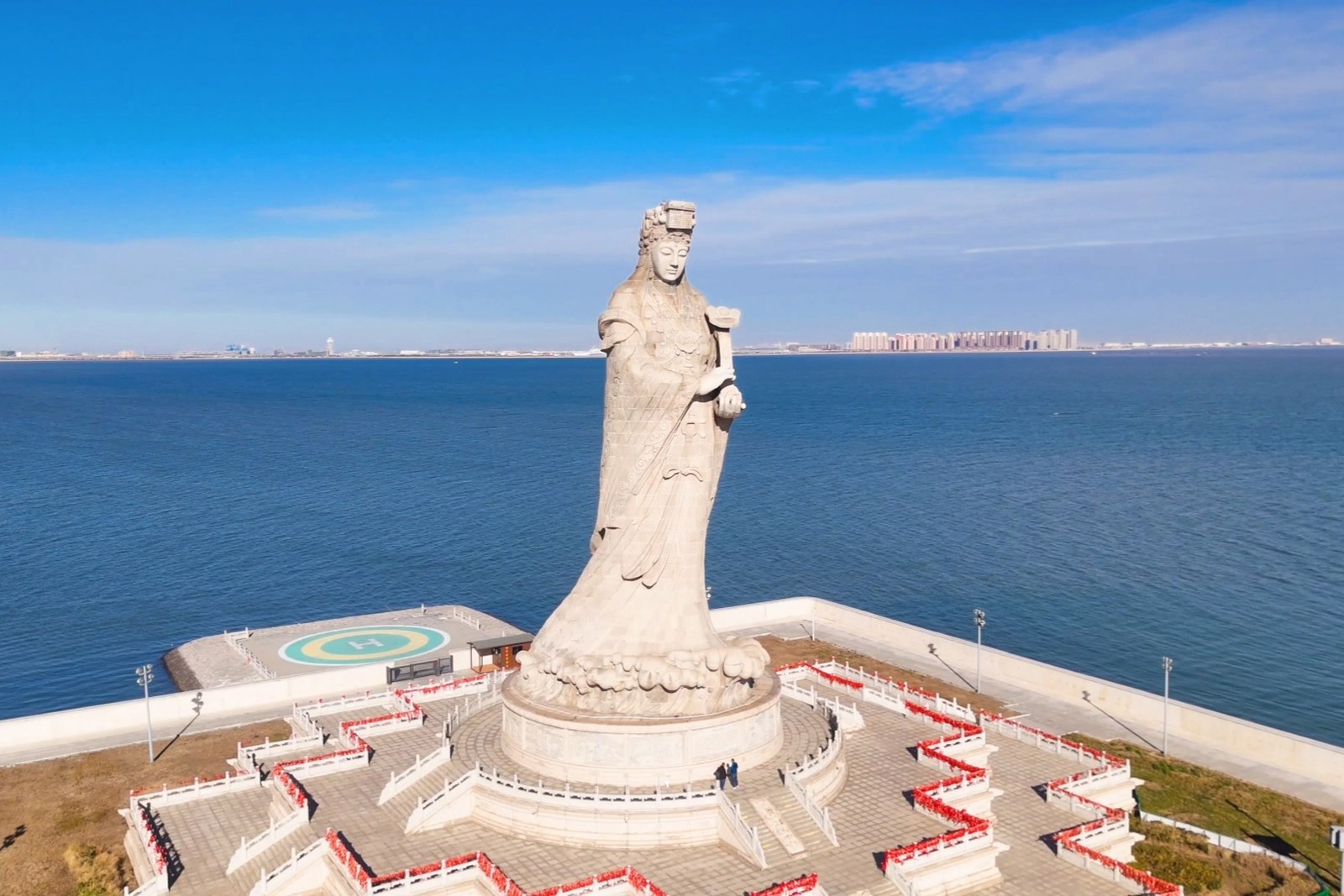
The palace halls behind her keep the cultural program. Mazu’s story panels trace the Fujian fisher-girl who became the sea’s patron saint; the hall altars carry the incense coals local families tend by season; and the courtyard steles record the donations of boat owners past and present. Even non-believers read the hall as a working archive of coastal gratitude.
The seawall walk closes the visit. The reclaimed shore stretches flat to the reed flats, gulls work the tide line below the railings, and the park’s scale – statue, plaza, halls, wall – photographs best from the wall’s midpoint where the whole composition lines up. Come late afternoon, the statue turns to silhouette and the incense smoke reads in the low sun.
Practicalities
- The plaza and seawall are open-air – sun protection and wind layers both earn their space.
- Incense is provided at the hall altars; the lighting etiquette is posted in the courtyard.
- The seawall midpoint is the best single photo position for the full statue-and-wall composition.
- Pair the park with a Hangu seafood lunch – the town’s dining streets sit ten minutes inland.
Words and Names
妈祖 Māzǔ Mazu, the sea goddess; 文化园 wénhuà yuán cultural park; 石像 shíxiàng the stone statue; 海堤 hǎidī the seawall walk; 汉沽 Hàngū Hangu, the northern district that hosts the park. Beyond the seawall, the same 天津市滨海新区 Tiānjīn Shì Bīnhǎi Xīn Qū Binhai New Area keeps more places worth the detour: 大沽口炮台遗址 Dàgǔ Kǒu Pàotái Yízhǐ the river-mouth fort ruins, 泰达航母主题公园 Tàidá Hángmǔ Zhǔtí Gōngyuán the aircraft carrier park, 国家海洋博物馆 Guójiā Hǎiyáng Bówùguǎn the national maritime museum, or 东疆湾沙滩 Dōngjiāng Wān Shātān the man-made beach – four more doors into the same Binhai New Area. Once the incense smoke clears, our Binhai food map fills the table.
flowcloud would say the Mazu park is new land carrying old faith: reclaimed ground, a stone goddess facing the shipping lanes, and incense that keeps the ledger of safe returns. All checked November 2026.
Getting there: The park stands on the reclaimed coast off Hangu – drive the tourism-ring road to the plaza lots, or join a coastal day route from the city; the seawall walk and statue base are the two photo stops to plan around. All checked November 2026.